
Views: 222 Author: Wenva Machine Publish Time: 2026-06-23 Origin: Site
Content Menu
● Introduction: Why Automation Is Now a Strategic Decision
● What Is an Automated Biscuit Production Line?
● From Manual Baking to Intelligent Automation
>> Why Traditional Biscuit Production Struggles to Scale
>> What Changes When the Line Is Automated
● Key Types of Automated Biscuit Lines and Their Use Cases
>> Wire‑Cut Cookie Production Lines
>> Rotary Moulded Biscuit Lines
>> Hard‑Biscuit and Cracker Lines
● How Automation Improves Productivity and Cost Structure
>> 1. Higher Throughput and Less Downtime
>> 2. Lower Waste and Energy Consumption
>> 3. Consistent Quality and Easier Compliance
● Smart Automation: Data, AI, and Future‑Ready Lines
● Where the Original Article Falls Short—and How This One Goes Further
● How Factory Layout and Product Strategy Shape Line Design
● A Practical Productivity and TCO Checklist for Decision‑Makers
● Why Wenva Machine Is a Strong Partner for Global Biscuit Factories
● Side‑by‑Side: Manual vs Automated Biscuit Production
● How to Start Your Automation Project
● Call to Action: Design Your Next High‑Yield Line with Wenva
● FAQs
When I talk with biscuit manufacturers today, one theme appears in almost every conversation: manual and semi‑automatic lines are becoming a bottleneck for growth. At the same time, retailers and brand owners are pushing for tighter quality tolerances, faster delivery, and more frequent product changes. [blog.saleslayer]
For factories that want to scale profitably, an automated biscuit production line is no longer just a nice‑to‑have; it is a strategic decision that directly impacts ROI, labor risk, and long‑term competitiveness. With over 40 years focused on biscuit machinery, Wenva Machine has seen this transition from both sides: as engineering experts and as long‑term partners to biscuit plants in Asia, Africa, and Latin America. [blog.saleslayer]
In this article, I will break down how automated biscuit lines actually improve productivity, where they deliver quantifiable gains, and what factory leaders should evaluate before upgrading. The perspective comes from real‑world projects, not theory.
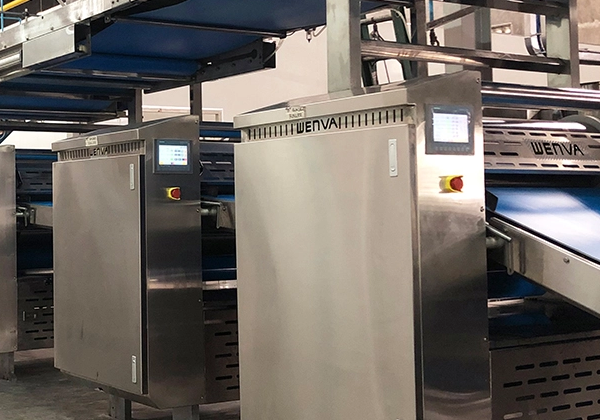
An automated biscuit production line is a fully integrated system that covers dough mixing, forming, baking, cooling, sandwiching (if needed), and automatic stacking and conveying to packaging, with minimal manual intervention. Instead of operators managing each step separately, the line works as one controlled process, typically coordinated through PLC and HMI systems. [blog.saleslayer]
Modern lines combine high‑precision mechanical design (e.g., rotary moulders, tunnel ovens, sandwiching units) with smart controls that stabilize temperature, speed, and pressure across the entire process. This integration is what allows factories to maintain consistent product quality at high output, shift after shift. [blog.saleslayer]
In traditional plants, most critical steps—sheeting, cutting, loading into ovens, and even cooling—depend heavily on manual labor. That creates several constraints:
- Inconsistent product quality due to human variability in thickness, spacing, and baking time.
- Limited output per hour because upstream and downstream steps are not synchronized.
- Higher labor costs and training burden, especially when turnover is high. [blog.saleslayer]
- Greater hygiene risk, as more product surfaces are exposed to direct handling. [cassel-inspection]
As volumes increase, these pain points compound. Many factories find that even adding more workers does not solve the fundamental bottlenecks.
By replacing manual operations with automated forming, baking, conveying, and stacking, factories can:
- Run at a stable, higher throughput, often measured in thousands of kilograms per hour for large rotary‑moulded or hard‑biscuit lines.
- Keep biscuit weight, size, and color within tight tolerances, which is critical for brand consistency and retailer audits. [blog.saleslayer]
- Reduce dependency on hard‑to‑hire skilled operators, shifting them into monitoring and quality roles. [blog.saleslayer]
- Improve hygiene by using stainless‑steel contact surfaces and enclosed transfer points. [cassel-inspection]
For many of our customers, this transition from manual to intelligent automation is the single biggest step change in their OEE (Overall Equipment Effectiveness) in the past decade. [blog.saleslayer]
Different biscuit portfolios require different line configurations. Below is a practical overview of the main automated lines used in modern plants. [blog.saleslayer]
Wire‑cut lines handle soft, high‑fat doughs such as butter cookies, shortbread, and center‑filled cookies. The depositing and cutting process is fully automated, ensuring each piece has the same weight and profile.
- Ideal for: Premium cookies, center‑filled treats, seasonal designs.
- Core benefit: Hand‑made look with industrial‑scale consistency and throughput.
Rotary moulders and synchronized tunnel ovens are the backbone for high‑volume digestive, milk, and emblem‑imprinted biscuits. [blog.saleslayer]
- Typical capacity: Up to 2000 kg/hour on large‑format lines.
- Core benefit: Uniform thickness and sharp surface details at scale.
Hard‑biscuit lines integrate sheeting, gauging, cutting, scrap recovery, and controlled‑zone tunnel ovens into a single continuous process. [blog.saleslayer]
- Ideal for: Marie biscuits, soda crackers, savory snacks, bread bars.
- Core benefit: Tight control of moisture and "oven spring" for crisp texture and long shelf life. [blog.saleslayer]
For cream‑filled products, sandwiching units automatically align base biscuits, deposit filling, and close sandwiches with precise weight control. [blog.saleslayer]
- Typical performance: Up to 1500 sandwiches per minute with minimal cream loss.
- Core benefit: Hygienic, high‑speed sandwiching that supports multiple flavors and SKUs.
Automated lines are designed for continuous, stable production, which naturally lifts output per hour compared with batch processes. Self‑diagnostics and modular designs reduce unplanned downtime and make planned maintenance more predictable.
When lines integrate PLC‑based controls and HMIs, operators can adjust key parameters—such as oven temperature curves or line speed—without stopping production. This alone can reclaim many "micro‑stops" that previously went unnoticed.
Scrap is one of the silent profit killers in biscuit plants. Automated sheeting and scrap‑return systems can reduce dough waste by more than 30% in well‑optimized hard‑biscuit lines.
Modern tunnel ovens with multi‑zone temperature control and, in some cases, exhaust heat recovery, help factories cut specific energy consumption while improving baking consistency. In competitive markets with rising energy prices, this is a critical lever for protecting margins. [cassel-inspection]
Retailers and regulators are increasingly strict about food safety and quality documentation. Automated lines make it easier to: [food-safety]
- Keep consistent baking curves and product dimensions, reducing QA rejects.
- Document critical parameters (e.g., temperatures, belt speeds) for audits. [cassel-inspection]
- Apply HACCP and related standards more reliably across shifts. [cassel-inspection]
For factories targeting export markets, this consistency often becomes a non‑negotiable requirement.
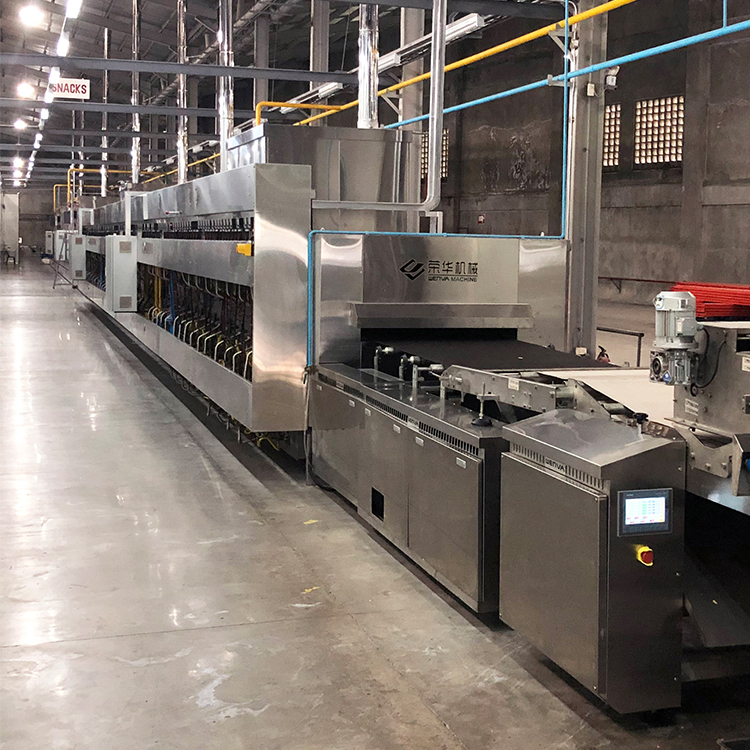
The latest generation of automated biscuit production lines goes beyond mechanical automation to embrace data‑driven optimization and AI‑assisted maintenance. [sciencedirect]
- Real‑time monitoring: Sensors feed live data on temperatures, motor loads, and line speeds into PLC/HMI systems, giving supervisors a clear view of performance at any moment.
- Predictive maintenance: By analyzing vibration, temperature, and current patterns, AI models can flag components that are likely to fail, allowing maintenance teams to intervene before a breakdown occurs. [sciencedirect]
- Recipe and SKU flexibility: Recipe management systems store multiple product profiles, so switching from a standard cream biscuit to a gluten‑free variant becomes a controlled, repeatable process instead of trial‑and‑error. [blog.saleslayer]
This smart layer is particularly important as brands launch more vegan, gluten‑free, organic, and low‑sugar SKUs to match consumer trends without sacrificing efficiency. [mostlyserious]
The source article on automated biscuit machines already covers core benefits like higher output, reduced labor, and basic hygiene advantages. However, from an expert and buyer‑focused perspective, it leaves several gaps:
- It does not address total cost of ownership (TCO), payback period, or ROI modeling.
- It touches on AI and machine learning but lacks concrete, factory‑level implications.
- It does not guide decision‑makers on line selection and layout based on plant constraints. [ko.decaomachine]
This reworked version adds:
- A more strategic view of capex justification and risk reduction.
- Practical insights from a 40‑year manufacturer's field experience, including typical capacities and configurations. [blog.saleslayer]
- Additional UX‑oriented sections to help technical and non‑technical stakeholders quickly find the information they need. [mostlyserious]
One of the most common mistakes I see is plants trying to "fit" a catalogue line into a constrained building. In reality, layout and product strategy should drive line design, not the other way around. [ko.decaomachine]
Key factors to evaluate with your equipment partner include:
- Available floor space and ceiling height: Influences oven length, cooling conveyors, and stacking systems. [ko.decaomachine]
- Product portfolio and future roadmap: If you plan to add sandwich biscuits or dual‑color cookies later, design modularity up front. [blog.saleslayer]
- Flow of raw materials and finished goods: Align flour feeding, dough mixing, baking, cooling, and packaging to avoid cross‑traffic and bottlenecks. [ko.decaomachine]
An experienced manufacturer like Wenva can simulate different layouts—from straight lines to U‑shaped or multi‑line arrangements—to maximize throughput while respecting existing building constraints. [blog.saleslayer]
When you are evaluating automated biscuit production lines, use this practical checklist to compare options with your team:
1. Output and flexibility
- Does the line comfortably meet your peak hourly and daily output targets?
- How quickly can you switch between SKUs and recipes?
2. Energy and waste
- What is the specific energy consumption per kg of finished biscuits?
- How is scrap handled and reintegrated into the process?
3. Maintenance and uptime
- Are critical components accessible for cleaning and replacement?
- Does the supplier offer remote diagnostics and predictive maintenance support?
4. Food safety and certifications
- Are all product‑contact parts food‑grade and easy to clean?
- Does the manufacturer support CE, ISO, and relevant food‑equipment standards? [food-safety]
5. Service and training
- How quickly can field engineers respond in your region?
- Is there structured training for operators, maintenance, and QA teams?
Using a structured checklist like this not only clarifies internal discussions but also reflects well in your investment proposal to top management.
From an expert perspective, what differentiates Wenva is not only the hardware, but the combination of engineering depth and industry focus.
- 40 years of specialization in biscuit machinery means the company's R&D has been continuously refined against real plant challenges—from dough rheology to oven zoning and cooling curves. [blog.saleslayer]
- A 30,000 m² modern production base with advanced laser cutting and CNC bending equipment ensures high manufacturing precision and stability over the equipment's lifetime. [blog.saleslayer]
- Over 70% of biscuit enterprises in Fujian and Guangdong already rely on Wenva, with installations across Asia, Africa, and Latin America, which gives the team real‑world references in diverse climates and power conditions. [blog.saleslayer]
In addition, Wenva offers a Biscuit Production Line Experience Center where customers can see running lines, test formulations, and discuss layout options before committing to a full project. For B2B buyers, this reduces risk and accelerates internal buy‑in. [blog.saleslayer]
| Aspect | Manual / Semi‑Automatic Line | Automated Biscuit Production Line |
|---|---|---|
| Output per hour | Limited by human speed and fatigue | High, stable throughput over long shifts (blog.saleslayer) |
| Product consistency | Variable size, weight, and color | Tight tolerances and repeatability |
| Labor dependence | High; many critical tasks manual | Operators supervise and fine‑tune, not handle every biscuit |
| Food safety risk | More direct product contact, higher contamination risk (cassel-inspection) | Enclosed transfers, stainless‑steel surfaces (blog.saleslayer) |
| Energy and material waste | Higher scrap and unoptimized ovens | Scrap recovery and multi‑zone ovens reduce losses (blog.saleslayer) |
| Changeover flexibility | Slow, often needing manual re‑setups | Recipes and SKUs switched via controls and modular tooling (blog.saleslayer) |
| Data and traceability | Limited records, manual logs | Integrated data logging and diagnostics (sciencedirect) |
| Long‑term competitiveness | Difficult to meet retailer and export demands | Designed for compliance and scalable growth (blog.saleslayer) |
From a user‑experience standpoint inside the factory, the most successful projects follow a clear, step‑by‑step approach:
- Clarify your product roadmap for the next 3–5 years, not just today's SKUs. [mostlyserious]
- Map current bottlenecks in mixing, forming, baking, cooling, or packing so the line design explicitly addresses them. [blog.saleslayer]
- Involve cross‑functional stakeholders—production, QA, maintenance, and finance—early in the design phase to avoid late‑stage surprises. [mostlyserious]
- Visit a running reference line similar to your target configuration; seeing OEE and real changeovers builds confidence. [blog.saleslayer]
A seasoned manufacturer can then translate your needs into a tailored design, from flour feeding and dough mixing through to tunnel ovens, sandwiching units, and automated stackers. [blog.saleslayer]
If your current biscuit production line is limiting your growth, now is the time to evaluate a fully automated solution built around your products, your layout, and your market strategy. Wenva Machine can help you:
- Analyze existing constraints in your plant and propose a realistic upgrade path.
- Configure a line—wire‑cut, rotary moulded, hard‑biscuit, sandwich, or a combination—that matches your capacity and quality targets. [blog.saleslayer]
- Implement automation, training, and after‑sales service that support long‑term OEE and ROI. [blog.saleslayer]
Reach out to Wenva's engineering team to discuss your biscuit portfolio, factory layout, and investment plan, and start designing the automated biscuit production line that will support your next decade of growth. [blog.saleslayer]
1. What types of biscuits can an automated Wenva line produce?
Wenva's automated lines can handle shortbread, tough biscuits, sandwich biscuits, soda crackers, crispy snacks, and various cookies, depending on the configured forming and baking modules. This includes wire‑cut cookies, rotary‑moulded biscuits, and cream‑filled sandwiches on a single or combined line. [blog.saleslayer]
2. How does an automated line improve hygiene and food safety?
Automated lines reduce direct human contact with the product and use stainless‑steel, food‑grade components at critical contact points. Combined with easier cleaning access and compliance with standards such as CE and ISO, this makes it simpler to align with HACCP principles and retailer audits. [food-safety]
3. Can Wenva customize lines for special recipes or plant layouts?
Yes. Wenva specializes in one‑stop customized solutions, from formula adaptation to production line layout, with modular equipment that can be tuned to specific ingredients, shapes, and packaging formats. This includes adapting to different factory footprints and climate conditions across global markets. [blog.saleslayer]
4. What kind of after‑sales support does Wenva provide?
Wenva offers installation, operator training, regular maintenance, spare‑parts support, and ongoing technical assistance, supported by its branch office network and experience center. This long‑term partnership approach helps factories maintain high uptime and continuously improve OEE. [blog.saleslayer]
5. How long does it typically take to see ROI from automating a biscuit line?
While exact payback depends on labor costs, energy prices, and volume, many factories see significant ROI within a few years thanks to higher throughput, lower scrap, reduced labor dependency, and improved quality stability. A structured TCO analysis with your supplier can make these benefits visible to management before investment. [blog.saleslayer]
1. New Era Machines. "Automated Biscuit Making Machines Improve Productivity."
[https://www.neweramachines.com/automated-biscuit-making-machines-improve-productivity/]
2. Wenva Machine – Biscuit Machinery Manufacturer (Company Profile, Products, News).
[https://www.wenvamachine.com]
3. Sales Layer. "SEO for Manufacturing Companies: The 2026 Strategy Guide."
[https://blog.saleslayer.com/seo-for-manufacturing-companies]
4. CASSEL Inspection. "Food Safety Compliance: 7 Best Practices for Brands."
[https://www.cassel-inspection.com/blog/food-safety-compliance-best-practices-for-brands]
5. Mostly Serious. "How to Write Expert Content: A Step-by-Step Guide."
[https://www.mostlyserious.io/insights/how-to-write-expert-content-step-by-step]
6. DeCao Machine. "The Ultimate Guide to Biscuit Production Line Layout and Design."
7. Food Safety Magazine. "Top 7 Processing and Foodservice Equipment Standards."
[https://www.food-safety.com/articles/4659-top-7-processing-and-foodservice-equipment-standards]
8. ScienceDirect. "Harnessing Artificial Intelligence to Safeguard Food Quality and Safety."
[https://www.sciencedirect.com/science/article/pii/S0362028X25001735]
9. Absolute Digital. "9 Key Elements of a High-Converting Product Page."
[https://absolute.digital/sa/insights/the-key-elements-of-a-high-converting-product-page/]
10. Wenva Machine. "A Cookie Maker Machine: An Expert Review for Modern Automated Biscuit Production."


