
Views: 222 Author: Wenva Machine Publish Time: 2026-06-04 Origin: Site
Content Menu
● Understanding Dual-Color vs. Single-Color Extruders
● Market Differentiation with Dual-Color Extruders
● Technical Comparison: Dual-Color vs. Single-Color Extruders
>> Process and Engineering Differences
>> Performance and Cost Comparison Table
● Product Portfolio Strategy: When to Choose Which
>> Best Use Cases for Dual-Color Extruders
>> Best Use Cases for Single-Color Extruders
● Operational Impacts: Line Design and Factory Layout
● Cost, ROI, and Payback: A Practical View
● From an Engineer's Perspective: Process Stability and Quality Control
● From a Marketer's Perspective: Branding and Consumer Perception
● Practical Implementation Steps for Swirl Cookie Projects
● Frequently Asked Questions (FAQ)
Dual-color extruders give cookie brands a powerful way to differentiate in the premium market, while single-color extruders remain a cost-efficient workhorse for core SKUs and high-volume production. Choosing between them is not a simple "better or worse" question, but a strategic decision about market positioning, product portfolio, and factory ROI. [wenvamachine]

In high-end swirl cookie production, an extruder shapes and deposits dough onto the baking tray in precise patterns. A single-color extruder handles one dough stream, creating classic cookies with uniform texture and appearance. A dual-color extruder synchronizes two dough streams, enabling visually striking swirls, centers, stripes, or half–half cookies that stand out on the shelf. [wenva668.en.made-in-china]
For a manufacturer like Wenva Machine, which has specialized in automated biscuit production lines for over 40 years, both technologies must integrate seamlessly with mixers, tunnel ovens, cooling conveyors, and packaging systems to deliver stable, high-speed performance. This end-to-end integration is what ultimately determines whether a line can scale from pilot runs to hundreds of kilograms per hour without compromising product quality. [wenva668.en.made-in-china]
From a marketing and product strategy perspective, dual-color extruders are a premiumization engine for swirl and sandwich-style cookies. They allow you to produce visually complex products like chocolate–vanilla swirls, filled "volcano" cookies, or two-tone logos that command higher price points and margin. [wenva668.en.made-in-china]
Key differentiation angles for dual-color swirl cookies:
- Shelf impact: High-contrast swirls and patterns create stronger visual cues in transparent or windowed packaging.
- Perceived quality: Consumers often associate dual-color products with more elaborate recipes and craftsmanship.
- Limited editions: Seasonal color combinations (e.g., cocoa + red dough, cocoa + matcha) support campaigns and brand storytelling.
- Private label upgrading: Retailers can move their store brands closer to national-brand look and feel with dual-color designs.
From my experience working with biscuit and cookie brands, the first high-end dual-color SKU often becomes the hero product in marketing campaigns, even if it represents a smaller share of total volume. This "halo effect" can lift the entire range, including simpler single-color SKUs.
- Single-color extruders use one hopper and one set of pumps or screws to deliver dough at constant pressure and volume to the nozzle plate. [wenva668.en.made-in-china]
- Dual-color extruders use two coordinated hoppers and two delivery systems, along with a specially designed nozzle that controls the interface between the two dough streams. [wenva668.en.made-in-china]
In practical terms, this means dual-color machines require tighter control of:
- Dough rheology (plasticity, temperature, moisture) for both colors
- Synchronization of flow rates to maintain clean swirl or layered patterns
- Nozzle design and quick-change modules for different shapes and patterns
Wenva-style lines typically combine extruders with servo-driven depositors and programmable logic controllers (PLCs), allowing operators to fine-tune deposit weight, speed, and pattern from the HMI rather than through purely mechanical adjustments. This is especially valuable for dual-color products, where small deviations can break pattern integrity. [wenva668.en.made-in-china]
Below is a high-level comparison from an industrial-bakery perspective:
| Dimension | Dual-Color Extruder (High-End Swirl Cookies) | Single-Color Extruder (Standard Cookies) |
|---|---|---|
| Visual effect | Complex swirls, stripes, centers, two-tone logos; strong premium look | Classic shapes and ridges; simple, consistent appearance |
| Product positioning | Premium, seasonal, gift boxes, flagship SKUs | Everyday snacks, family packs, price-sensitive channels |
| CAPEX | Higher initial investment due to dual systems and advanced controls | Lower investment; simpler mechanical structure |
| Changeover complexity | Higher; more parameters, two dough types, nozzle pattern changes | Lower; quicker flavor or shape changes |
| Throughput potential | High, but pattern quality limits maximum speed | High; often slightly faster at equivalent width |
| Recipe flexibility | Allows dual flavor, dual texture, filled designs | Single dough matrix; fillings usually need separate process |
| Operator skill requirement | Higher; requires trained staff for pattern control and troubleshooting | Moderate; easier for teams with basic experience |
| Maintenance | More components, more seals and interfaces to maintain | Fewer components, simpler routine maintenance |
| Risk of waste | Higher during setup and parameter tuning | Lower once basic settings are established |
From a strategic standpoint, most high-performing biscuit factories do not replace single-color extruders; they layer dual-color capacity on top. Both play distinct roles in a profitable portfolio.
- Launching hero swirl cookies for premium retail channels or exports
- Upgrading existing single-color SKUs with eye-catching two-tone designs
- Supporting co-branding or licensing projects where a two-tone cookie matches brand colors
- Creating limited-time offers for festivals or holidays (e.g., Valentine's Day, Mid-Autumn, Christmas)
- High-volume core SKUs where unit cost and line speed are critical
- Markets with limited purchasing power where visual complexity adds less willingness to pay
- Plants with smaller teams or limited experience in advanced pattern control
- Early-stage factories that need to stabilize processes before adding dual-color complexity
In many Wenva customer projects, single-color lines anchor baseline revenue, while dual-color lines drive incremental margin and brand equity. Planning capacity around this complementarity tends to deliver better long-term ROI than a one-dimensional approach. [wenvamachine]
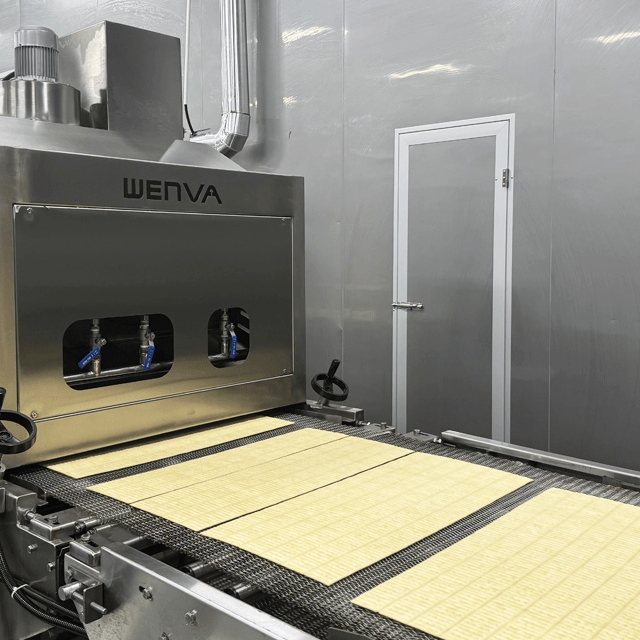
For a supplier offering full-factory solutions, the extruder choice influences upstream and downstream equipment. Wenva's automated biscuit lines integrate mixers, forming, tunnel ovens, cooling conveyors, inspection, and packaging into a continuous flow. [wenvamachine]
Key layout and integration considerations:
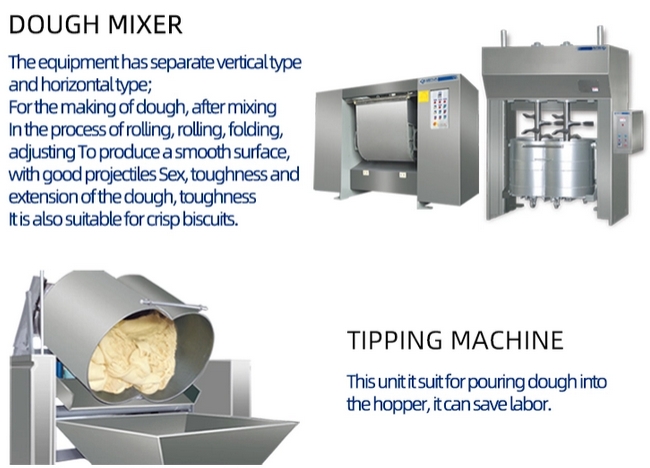
- Mixing capacity: Dual-color production requires parallel dough preparation, often with separate mixers or staggered batches.
- Proofing & holding: Both doughs must reach similar temperature and consistency before entering the extruder.
- Baking profile: Swirl cookies may require slightly adjusted baking curves to preserve pattern contrast and edge definition.
- Cooling and handling: Dual-color cookies can be more fragile at swirl interfaces, so cooling and transfer speeds must be optimized.
This is where a 40-year manufacturer can add real engineering value by simulating throughput, layout, and changeover scenarios during project design, rather than leaving customers to learn through costly trial and error. [wenva668.en.made-in-china]
Most decision-makers will ask: "Will dual-color extruders pay for themselves?" The answer depends on how well you use them to unlock premium pricing and higher-margin SKUs.
Typical cost and ROI drivers include:
- Incremental margin per kilogram on premium swirl cookies vs. standard cookies
- Expected volume share of dual-color products in the product mix
- Additional setup time and scrap during changeovers
- Training costs for operators and maintenance teams
- Marketing investment to support the premium range
In practice, plants that treat dual-color capacity as a strategic brand asset—supported by focused product launches and marketing—tend to see faster payback than plants that treat it as a purely technical upgrade. A tightly engineered Wenva line can further compress payback by minimizing waste and unplanned downtime through stable process design and robust components. [wenva668.en.made-in-china]
As an equipment engineer or plant manager, your top concerns are process stability, repeatability, and food safety. Dual-color extruders introduce more variables, but with the right design they can still run as reliably as single-color machines.
Critical engineering and QA factors:
- Dough formulation windows for each color, including acceptable variation in moisture and fat content
- Clear SOPs for startup and shutdown to avoid color contamination and off-spec patterns
- Preventive maintenance schedules for seals, pumps, and nozzles to maintain pattern sharpness
- Integration with vision systems or checkweighers to detect pattern drift or weight variance early
Automation features such as recipe management, servo drives, and digital parameter storage are particularly useful for dual-color lines, as they allow operators to recall validated settings for each SKU rather than manually resetting dozens of variables. On single-color lines, the same features further improve changeover speed and product consistency, even if the dough stream is simpler. [wenvamachine]
From a brand and marketing standpoint, dual-color swirl cookies are powerful storytelling tools. They naturally lend themselves to narratives about craft, indulgence, and innovation, especially when the visible swirl corresponds to distinct flavors or textures.
Ways marketers can leverage dual-color extruders:
- Develop a "signature swirl" that becomes visually associated with your brand
- Create visual codes for different sub-lines (e.g., cocoa–vanilla for classic, cocoa–matcha for modern, cocoa–strawberry for kids)
- Highlight production technology in B2B sales materials: "Made on advanced dual-color extruders from a 40-year specialist in automated biscuit lines"
- Use cross-sectional product photography on packaging and digital channels to show the swirl in detail
Single-color cookies still play a critical role in brand portfolios, often carrying nostalgic associations and enabling strong price promotions. The most resilient brands mix both: emotional, eye-catching swirl cookies for differentiation and trustworthy classics for volume.
For factories planning to add or upgrade swirl cookie production, a structured implementation roadmap can reduce risk and accelerate time-to-market:
1. Define market positioning
- Clarify whether dual-color SKUs will target premium retail, export, foodservice, or private label.
2. Co-develop product and process
- Work with your equipment partner to align recipe, shape, and pattern with realistic process capabilities.
3. Simulate layout and throughput
- Validate factory layout, dough flow, oven length, and cooling capacity before ordering equipment.
4. Pilot and refine
- Run pilot trials to refine dough recipes, swirl patterns, and bake profiles before full-scale launch.
5. Standardize SOPs
- Document recipes, parameter sets, cleaning procedures, and quality checks for both dual-color and single-color runs.
6. Train cross-functional teams
- Involve R&D, production, maintenance, and marketing teams early so that everyone understands both the opportunities and limitations of the technology.
A partner like Wenva, which offers complete lines and project support from design to installation and commissioning, can coordinate these steps and shorten the learning curve for plants upgrading from single-color-only production. [youtube]
If you are evaluating dual-color vs. single-color extruders for high-end swirl cookies, the most effective next step is a data-driven feasibility study. Based on your target markets, recipes, and plant layout, Wenva can help you model the optimal mix of dual-color and single-color capacity, estimate payback, and design a scalable automated biscuit line around that strategy. [wenvamachine]
Contact Wenva's engineering team to discuss your swirl cookie project, request sample layouts, or schedule a line demonstration, and turn technical choices into real market differentiation.
1. Are dual-color extruders always more profitable than single-color extruders?
Not necessarily. Profitability depends on your price premium, achievable volume, and how efficiently your team runs changeovers and maintains pattern quality. Single-color lines often deliver higher throughput at lower complexity, while dual-color lines create higher-margin products when supported by strong branding and sales strategies.
2. Can I retrofit an existing single-color line to produce dual-color swirl cookies?
In some cases, yes, but retrofits are limited by line layout, available space, and control systems. Often a dedicated dual-color extruder with integrated controls and matched upstream/downstream equipment is more stable and easier to optimize in the long run.
3. Do dual-color swirl cookies require special dough recipes?
They require recipes that match in plasticity, bake expansion, and color stability. The two doughs must behave similarly under pressure and heat to avoid pattern distortion, so small formulation adjustments are usually needed compared with standard single-color cookies.
4. How difficult is it to train operators on dual-color extruders?
Compared with single-color extruders, there is a steeper learning curve because operators manage two dough streams, more parameters, and visual pattern quality. However, modern PLC-controlled lines with stored recipes and clear SOPs make training significantly faster and more consistent.
5. What if my market is very price-sensitive—should I still invest in dual-color capacity?
If most consumers are focused on price, single-color lines will remain your backbone. Dual-color capacity can still make sense for export markets, private label contracts, or small premium segments that deliver higher margins, but it should be justified by a clear commercial plan.
1. Wenva Machine – Automated Biscuit Production Line: Expert Guide from 40 Years of Manufacturing Excellence. Available at: [https://www.wenvamachine.com/automated-biscuit-production-line-expert-guide-from-40-years-of-manufacturing-excellence.html] [wenvamachine]
2. WENVA: Customized Biscuit Production Line, Dough Mixer, Tunnel Oven, and Auxiliary Equipment. Available at: [https://www.wenvamachine.com] [wenvamachine]
3. Wenva New Style Sweet Soft Biscuit Production Line – Company and Product Profile. Available at: [https://wenva668.en.made-in-china.com/product/wFZJkbPoQGcd/China-Wenva-New-Style-Sweet-Soft-Biscuit-Production-Line.html] [wenva668.en.made-in-china]
4. Wenva Multi-Purpose Full Automatic Biscuit Production Line. Available at: [https://wenva668.en.made-in-china.com/product/xKRmWeEYvHVb/China-Wenva-Multi-Purpose-Full-Automatic-Biscuit-Production-Line.html] [wenva668.en.made-in-china]
5. Wenva Best-Seller Automatic Cookie Making Machine. Available at: [https://wenva668.en.made-in-china.com/product/ZOaxpiFcEmWs/China-Wenva-Best-Seller-Automatic-Cookie-Making-Machine.html] [wenva668.en.made-in-china]
6. Wenva Biscuit Machine. Available at: [https://wenva668.en.made-in-china.com/product/IbREYMDFhdpT/China-Wenva-Biscuit-Machine.html] [wenva668.en.made-in-china]
7. WENVA Fully Automatic Biscuit Production Line – Video Overview. Available at: [https://www.youtube.com/watch?v=n_GLmf_LCrw] [youtube]
8. Wenva Machinery – Complete Automatic Biscuit Production Line Equipment. Available at: [https://www.youtube.com/watch?v=Bld3Gxy6T0E] [youtube]


