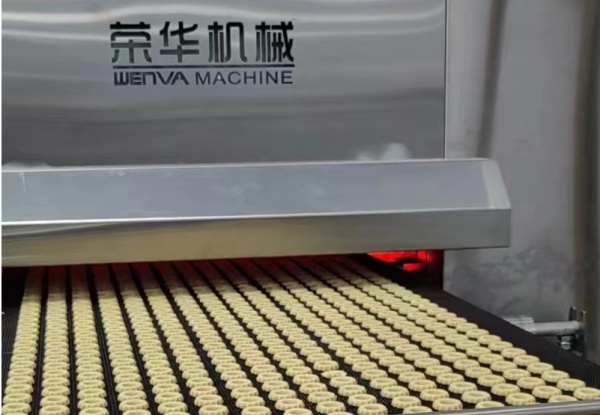
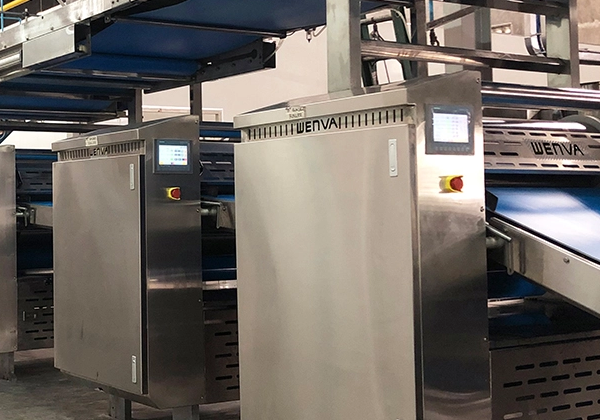
As a leading tunnel oven manufacturer, we pride ourselves on delivering cutting-edge baking solutions for industrial bakeries worldwide. Our expertise in designing and producing high-quality tunnel ovens has positioned us at the forefront of the baking industry. In this comprehensive guide, we'll explore the world of tunnel ovens, their types, functions, and why choosing the right tunnel oven manufacturer is crucial for your baking success.
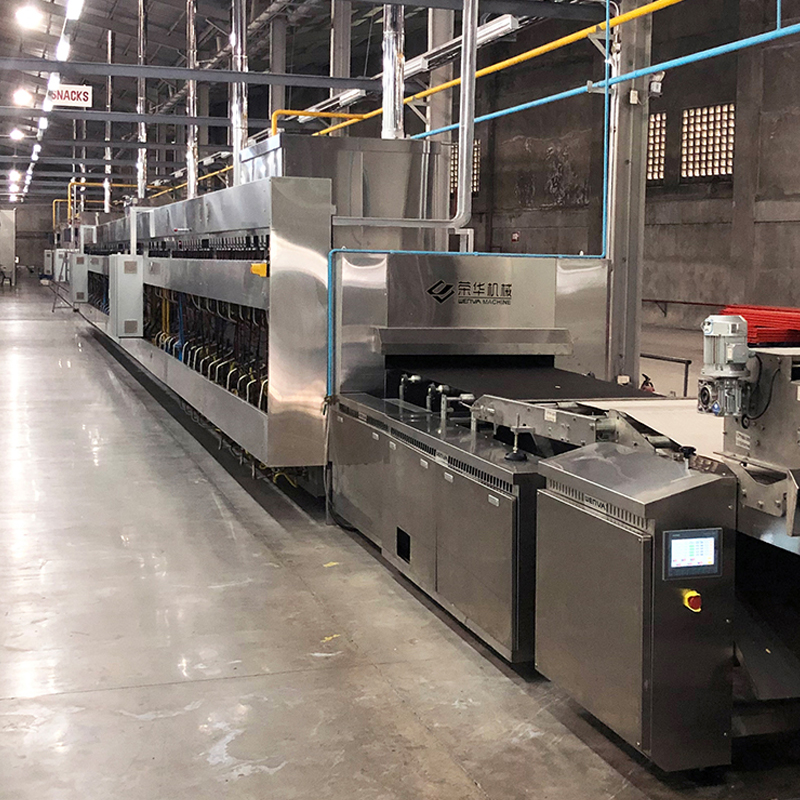
A tunnel oven is a sophisticated piece of industrial baking equipment designed for large-scale, continuous production of baked goods. As a tunnel oven manufacturer, we understand the importance of efficiency and consistency in the baking process. These ovens are characterized by their long, tunnel-like structure, through which products move on a conveyor belt system. This design allows for a high volume of products to be baked simultaneously, making tunnel ovens an essential component in modern industrial bakeries.
The basic principle behind a tunnel oven is simple yet effective. Products enter one end of the oven on a conveyor belt, pass through various heating zones, and exit fully baked at the other end. This continuous flow ensures uniform baking results and significantly increases production capacity compared to traditional batch ovens.
As a tunnel oven manufacturer, we've perfected this technology to meet the diverse needs of our clients in the baking industry. Our tunnel ovens are engineered to provide precise temperature control, even heat distribution, and optimal baking conditions for a wide range of products.

As a leading tunnel oven manufacturer, we offer a variety of tunnel oven types to cater to different baking requirements. Each type has its unique features and benefits, designed to meet specific production needs and product characteristics. Let's explore the main types of tunnel ovens we produce:
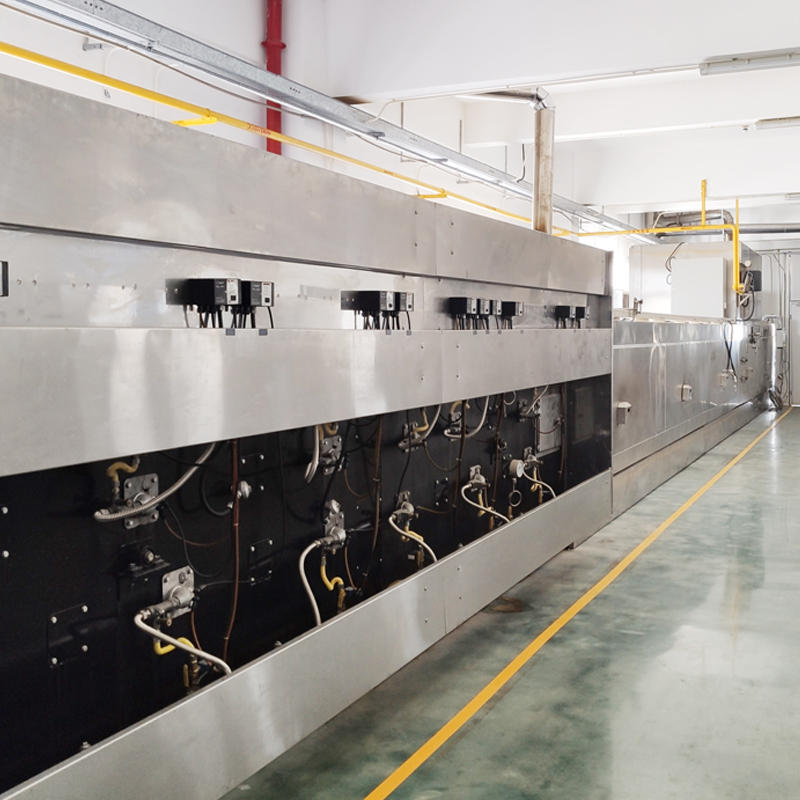
These ovens use direct gas combustion to generate heat. As a tunnel oven manufacturer, we design these ovens with burners that produce flames directly in the baking chamber. This type of oven is known for its rapid heating capabilities and is particularly suitable for products that require high temperatures and quick baking times. Direct gas-fired tunnel ovens are often used for baking pizzas, flatbreads, and certain types of crackers.
In contrast to direct-fired ovens, indirect gas-fired tunnel ovens use a heat exchanger to separate the combustion gases from the baking chamber. As a tunnel oven manufacturer, we recommend this type for products that are sensitive to direct heat or require a more gentle baking process. These ovens provide excellent temperature control and are ideal for baking bread, rolls, and delicate pastries.
Electric tunnel ovens use heating elements to generate heat, offering precise temperature control and even heat distribution. As a tunnel oven manufacturer, we design these ovens for bakeries that require clean energy solutions or have limited access to gas. Electric tunnel ovens are versatile and can be used for a wide range of products, from cookies to artisanal bread.
Combining the benefits of different heating methods, hybrid tunnel ovens are a testament to our innovation as a tunnel oven manufacturer. These ovens typically incorporate both gas and electric heating elements, allowing bakers to take advantage of the rapid heating of gas and the precise control of electricity. Hybrid ovens offer unparalleled flexibility and are ideal for bakeries that produce a diverse range of products.
 |  |  |
Convection tunnel ovens use forced air circulation to enhance heat transfer and ensure even baking. As a tunnel oven manufacturer, we equip these ovens with powerful fans that distribute hot air throughout the baking chamber. This design is particularly effective for products that benefit from a crisp exterior, such as puff pastry or certain types of cookies.
These ovens rely on radiant heat transfer, where heat is emitted from hot surfaces within the oven. As a tunnel oven manufacturer, we design radiant heat tunnel ovens to provide gentle, consistent heat that's ideal for products that require even browning and moisture retention, such as certain types of bread and cakes.
Impingement ovens use high-velocity hot air jets directed at the product from above and below. As a tunnel oven manufacturer, we've perfected this technology to provide rapid, even heating that's particularly suitable for products like pizza, flatbreads, and par-baked goods.
These sophisticated ovens feature multiple baking zones, each with independent temperature and humidity controls. As a tunnel oven manufacturer, we design multi-zone tunnel ovens for products that require different baking conditions throughout the process. This could include bread that needs initial steam injection followed by dry heat, or products that benefit from a carefully controlled cooling zone at the end of the baking process.
As a leading tunnel oven manufacturer, we design our ovens to perform a variety of essential functions in the industrial baking process. Understanding these functions is crucial for bakeries to maximize the potential of their tunnel ovens:
The primary function of a tunnel oven is to provide continuous, uninterrupted baking. This is achieved through the conveyor belt system that moves products through the oven at a controlled speed. As a tunnel oven manufacturer, we calibrate this system to ensure optimal baking times for different products, allowing for high-volume production with consistent results.
Precise temperature control is a critical function of tunnel ovens. As a tunnel oven manufacturer, we incorporate advanced temperature sensors and control systems in our ovens. These allow bakers to set and maintain exact temperatures throughout the baking process, ensuring product consistency and quality.
Even heat distribution is essential for uniform baking results. Our tunnel ovens are designed with sophisticated heating elements and air circulation systems to ensure that heat is evenly distributed throughout the baking chamber. This function is particularly important for large-scale production where consistency across batches is crucial.
Many baked goods require specific moisture levels during the baking process. As a tunnel oven manufacturer, we equip our ovens with steam injection systems and humidity controls. These features allow bakers to create the ideal environment for products that require initial moisture (like bread) or to maintain a dry atmosphere for crispy products.
Advanced tunnel ovens offer the ability to create and store multiple baking profiles. This function allows bakers to quickly switch between different product types, each with its own specific baking requirements. As a tunnel oven manufacturer, we provide user-friendly interfaces that make profile management intuitive and efficient.
Modern tunnel ovens are designed with energy efficiency in mind. As a responsible tunnel oven manufacturer, we incorporate features like heat recovery systems, insulation, and smart power management to reduce energy consumption without compromising baking quality.
Some of our advanced tunnel ovens include product tracking functions. These systems use sensors or vision technology to monitor products as they move through the oven, providing real-time data on baking progress and allowing for automated adjustments to ensure optimal results.
Maintaining a clean baking environment is crucial in industrial bakeries. As a tunnel oven manufacturer, we design our ovens with features that facilitate easy cleaning and sanitation. This includes removable parts, accessible interiors, and in some cases, automated cleaning systems.
Tunnel ovens often need to integrate seamlessly with other equipment in a bakery production line. As a tunnel oven manufacturer, we ensure our ovens can be easily synchronized with proofing systems, cooling conveyors, and packaging equipment to create a smooth, efficient production flow.
Modern tunnel ovens often include data logging capabilities. This function allows bakeries to record and analyze baking parameters over time, helping to optimize processes, troubleshoot issues, and maintain consistent quality.

Selecting the right tunnel oven manufacturer is a critical decision for any industrial bakery. Here's why our company stands out in the industry:
With years of experience as a tunnel oven manufacturer, we bring a wealth of knowledge to every project. Our team of engineers and baking experts understand the intricacies of industrial baking and can provide tailored solutions to meet your specific needs.
As a forward-thinking tunnel oven manufacturer, we continuously invest in research and development. Our ovens incorporate the latest advancements in baking technology, ensuring that our clients stay ahead of the competition.
We recognize that every bakery has unique requirements. As a flexible tunnel oven manufacturer, we offer customization options to ensure that our ovens fit perfectly into your production line and meet your specific product needs.
Our reputation as a tunnel oven manufacturer is built on the quality and reliability of our products. We use premium materials and rigorous quality control processes to ensure that our ovens deliver consistent performance over many years of operation.
In today's environmentally conscious world, energy efficiency is a top priority. As a responsible tunnel oven manufacturer, we design our ovens to minimize energy consumption without compromising on baking quality.
Our commitment doesn't end with the sale. As a customer-focused tunnel oven manufacturer, we provide comprehensive after-sales support, including installation, training, maintenance, and rapid response to any issues that may arise.
We pride ourselves on being at the forefront of baking innovation. As a tunnel oven manufacturer, we're constantly developing new features and technologies to improve baking processes and product quality.
With a global network of offices and partners, we can provide local support and service no matter where your bakery is located. This international presence also allows us to stay attuned to global baking trends and technologies.
As a leading tunnel oven manufacturer, we're committed to advancing the art and science of industrial baking. Our range of tunnel ovens, from direct gas-fired to sophisticated multi-zone systems, is designed to meet the diverse needs of modern bakeries. By focusing on continuous innovation, energy efficiency, and customer support, we ensure that our clients have the tools they need to produce high-quality baked goods consistently and efficiently.

Choosing the right tunnel oven manufacturer is a crucial decision that can significantly impact your bakery's success. With our expertise, cutting-edge technology, and commitment to customer satisfaction, we're ready to be your partner in baking excellence. Whether you're expanding your production capacity, upgrading your existing equipment, or starting a new bakery venture, our team is here to guide you through the process of selecting, installing, and optimizing the perfect tunnel oven for your needs.
In the ever-evolving world of industrial baking, staying ahead of the curve is essential. As your trusted tunnel oven manufacturer, we're dedicated to providing not just equipment, but comprehensive baking solutions that will help your business thrive in today's competitive market. Contact us today to learn more about how our tunnel ovens can revolutionize your baking process and take your products to the next level.