
Views: 224 Author: Wenva Machinery Publish Time: 2026-01-12 Origin: Site
In industrial biscuit manufacturing, baking is one of the most decisive processes affecting product quality. The color, texture, moisture content, and structural stability of biscuits are all formed during baking.
To meet the demand for high output, consistent quality, and automated production, most factories today rely on a biscuit tunnel oven rather than traditional batch ovens.
A tunnel oven is not simply a heating chamber. It is a highly controlled thermal system designed to bake biscuits continuously, efficiently, and uniformly.
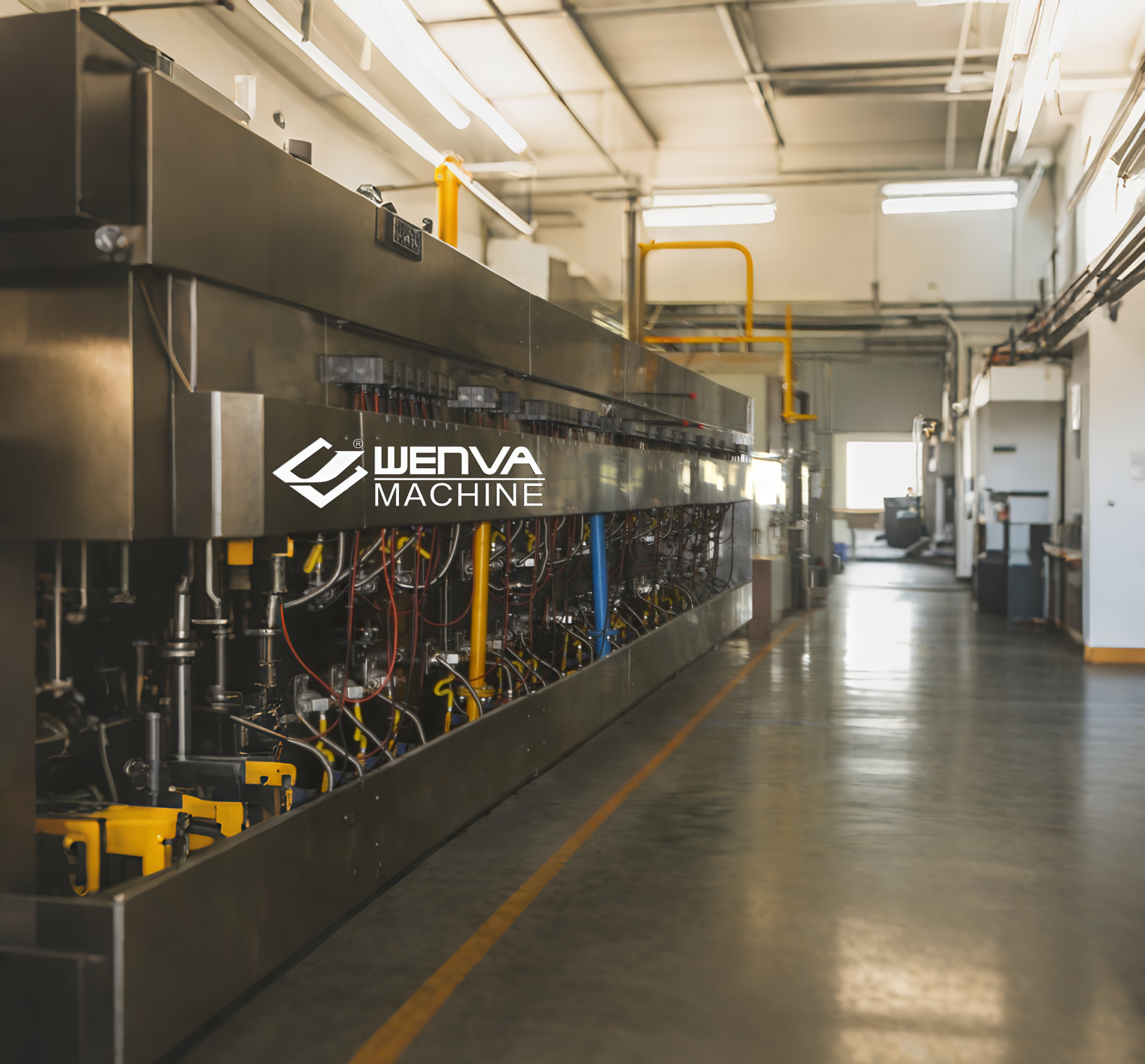
A tunnel oven is a long, enclosed baking system that operates continuously. Biscuit dough pieces enter the oven on a steel band or wire mesh belt and travel through multiple temperature zones until fully baked.
Key characteristics of a biscuit tunnel oven include:
Continuous feeding and discharge
Stable and repeatable baking conditions
Precise control of temperature and baking time
Easy integration with forming machines and cooling conveyors
Because of these features, tunnel ovens are widely used for hard biscuits, soft biscuits, crackers, cookies, and sandwich biscuit bases.
After forming, biscuit dough pieces are transferred directly onto the oven belt. The belt moves at a constant and adjustable speed through the oven chamber.
The total baking time is determined by:
Oven length × Belt speed = Baking duration
This continuous conveying principle ensures that every biscuit experiences the same heat exposure, which is essential for uniform product quality in large-scale production.
A biscuit tunnel oven typically uses one or a combination of the following heating methods:
Gas-fired heating (direct or indirect)
Electric heating elements
Hot air convection
Radiant heat from top and bottom
In most industrial applications, convection and radiant heating are combined to achieve even baking, proper expansion, and consistent surface coloring.
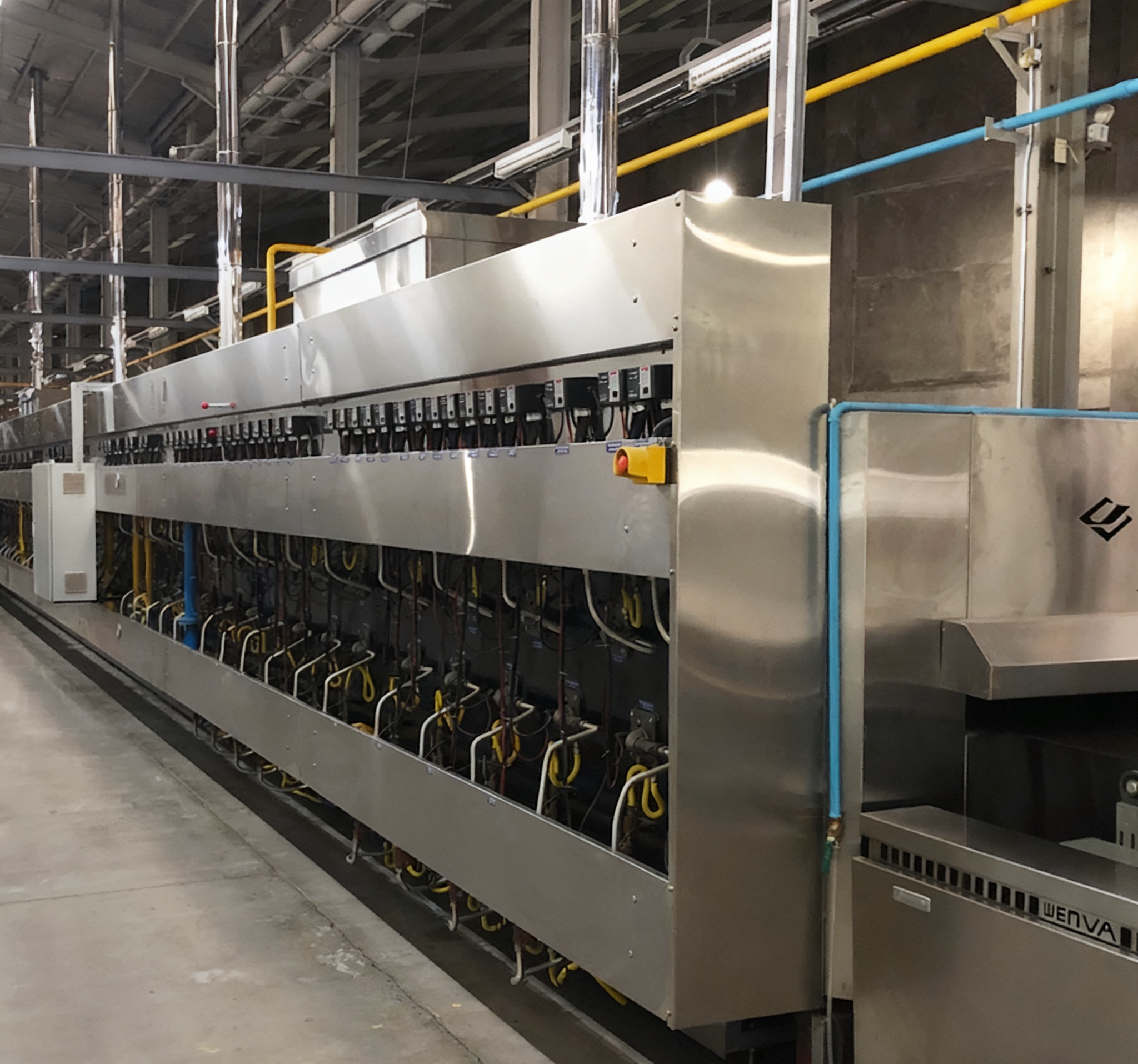
One of the most important design principles of a tunnel oven is multi-zone temperature control. Instead of using a single temperature throughout the oven, the baking chamber is divided into several functional zones.
Main functions:
Gradual temperature increase of the dough
Initial moisture evaporation
Activation of internal heat transfer
In this zone, the biscuit dough begins to expand, but its structure has not yet been fixed.
This is the core zone of the biscuit tunnel oven.
Key physical and chemical changes include:
Starch gelatinization
Protein denaturation
Formation of internal pore structure
Final setting of biscuit thickness and shape
Improper control in this zone may lead to defects such as collapsing centers or uneven surfaces.
This zone usually operates at higher temperatures.
Its main purposes are:
Further moisture reduction
Development of uniform golden color
Enhancement of flavor through Maillard reactions
Different biscuit types require different temperature curves in this zone.
Near the oven outlet, temperatures are gradually reduced to:
Minimize internal stress
Stabilize biscuit structure
Prepare products for cooling and downstream handling
This step helps prevent cracking and moisture reabsorption after baking.
Compared with batch ovens, a tunnel oven for biscuit production offers significant advantages:
1. High product consistency
Continuous operation ensures uniform baking results.
2. Stable and scalable capacity
Output can be adjusted by changing oven length or belt speed.
3. Improved energy efficiency
Zoned heating and hot air circulation reduce heat loss.
4. High level of automation
Easy integration with forming machines, oil spraying systems, and cooling lines.
As a professional manufacturer of biscuit production equipment, Wenva Machine provides customized tunnel oven solutions designed specifically for industrial biscuit lines.
Wenva Machine's biscuit tunnel ovens are engineered with:
Independently controlled temperature zones
Stable and durable conveying systems
Compatibility with gas or electric heating sources
Flexible designs to match different biscuit recipes and capacities
By adopting a modular structure, Wenva Machine enables biscuit manufacturers to optimize baking performance while allowing future production expansion.
Choosing the right tunnel oven requires more than comparing oven length or heating power. Important factors include:
Biscuit type (hard, soft, or sandwich biscuits)
Target production capacity (kg/h)
Available energy source (gas or electricity)
Factory layout and available space
Long-term expansion plans
The best tunnel oven is one that matches the product formulation and baking process, not simply the largest or most powerful option.
1: How many temperature zones does a biscuit tunnel oven usually have?
Most biscuit tunnel ovens are designed with 3 to 5 temperature zones, depending on the product and baking requirements.
2: Is a tunnel oven suitable for small or medium biscuit factories?
Yes. By adjusting oven length and belt speed, tunnel ovens can be configured for medium or even relatively small-scale production.
3: Should I choose a gas or electric tunnel oven?
The choice depends mainly on local energy costs and availability. Gas ovens are generally more energy-efficient, while electric ovens offer precise temperature control.
4: Can different biscuit products be baked in the same tunnel oven?
Yes, but temperature settings and belt speed must be adjusted. Some products may require dedicated baking profiles.
5: What is the most critical factor affecting biscuit quality in a tunnel oven?
Proper temperature zone distribution combined with correct baking time has the greatest impact on biscuit texture, color, and moisture content.


