
Views: 226 Author: Wenva Machinery Publish Time: 2026-01-07 Origin: Site
In pretzel biscuit manufacturing, baking is not just a heating step—it is a core process that defines product color, texture, and flavor. Because pretzel biscuits undergo alkaline dipping before baking, their requirements for temperature control, heat stability, and baking time are significantly higher than those of ordinary biscuits.
Choosing the right tunnel oven for pretzel biscuits is therefore a critical decision that affects product quality, energy consumption, and long-term operating costs.
This article provides a technical comparison of gas, electric, and diesel heating tunnel ovens, with a special focus on energy efficiency, maintenance, market suitability, and the importance of customizable oven length.
A typical pretzel biscuit production process includes:
Forming → Alkaline Dipping → Tunnel Baking → Cooling
The alkaline solution changes the dough surface chemistry, triggering a strong Maillard reaction during baking. As a result, pretzel biscuits require:
Stable and evenly distributed heat
Precisely controlled temperature zones
Sufficient baking time after alkaline treatment
Consistent results across long production runs
If a standard biscuit baking oven is used without proper design, manufacturers may face:
Uneven browning or patchy surface color
Over-baked crust with under-baked interiors
Unstable product quality between batches
High energy consumption with poor efficiency
For this reason, pretzel biscuit production lines rely on purpose-designed tunnel ovens rather than generic baking equipment.
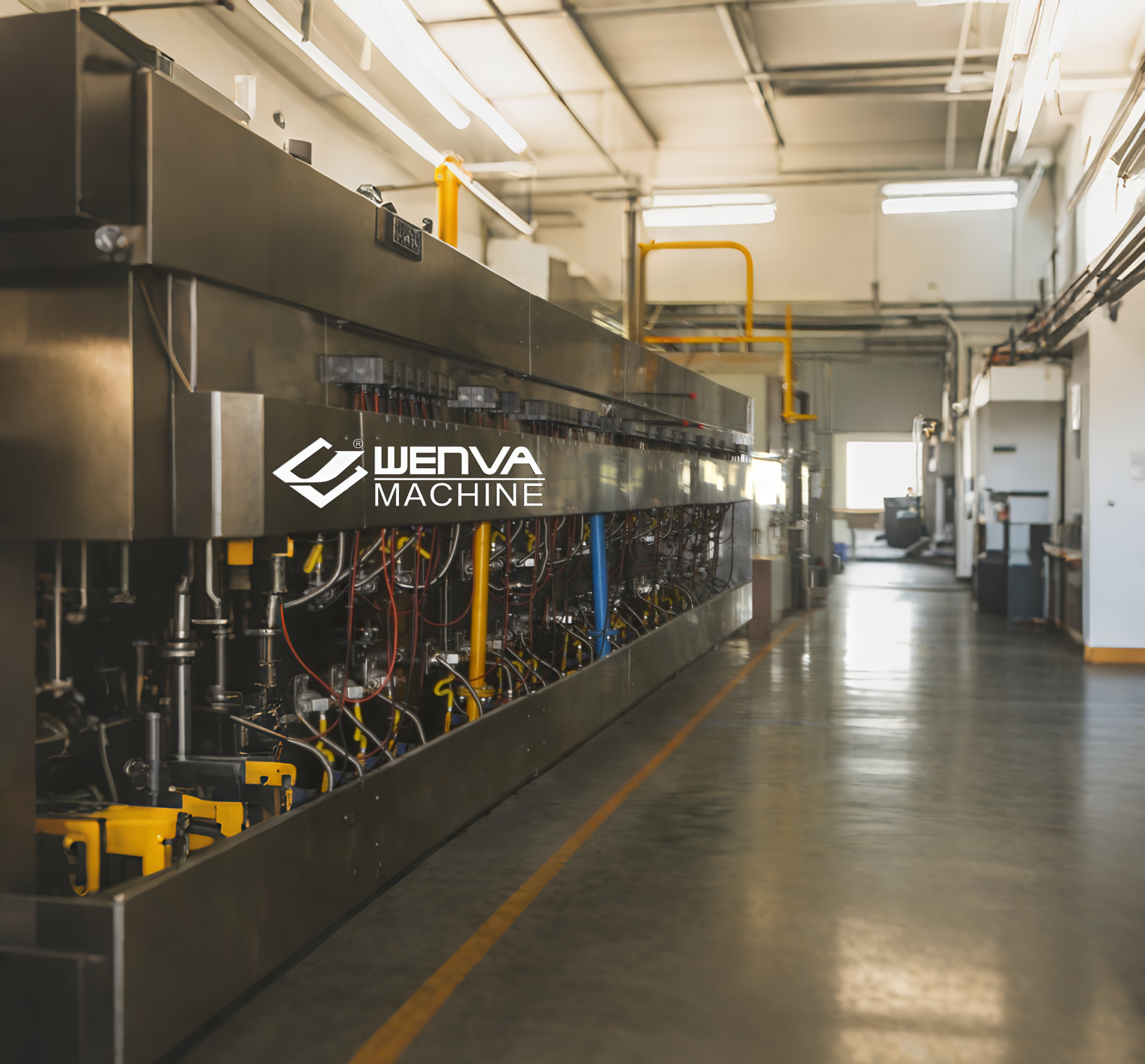
The most common heating systems used in pretzel biscuit tunnel ovens include:
Gas Tunnel Oven
Electric Tunnel Oven
Diesel Tunnel Oven
Each heating method has distinct characteristics in terms of energy cost, control accuracy, maintenance requirements, and regional suitability.
Gas tunnel ovens use natural gas or LPG burners to generate heat, which is distributed through a controlled hot-air circulation system inside the baking chamber.
Low energy cost per unit output
Excellent performance in continuous production
Highly suitable for medium to large-scale pretzel biscuit factories
Mature burner technology
Reliable long-term operation
Fast temperature response and stable heat output
Regions with stable natural gas supply
Industrial-scale pretzel biscuit production
Export-oriented manufacturing facilities
Technical Conclusion:
Gas tunnel ovens are the most widely used solution in modern pretzel biscuit production lines, offering the best balance between efficiency, stability, and operating cost.
Electric heating elements generate heat directly, combined with forced hot-air circulation for even baking.
Operating cost highly dependent on local electricity prices
Higher energy cost compared to gas in most regions
Ideal for small to medium production volumes
Extremely precise temperature control
No combustion, no exhaust gas
Clean, quiet, and easy to maintain
Regions with low electricity costs
Facilities with strict environmental regulations
Pilot lines or specialty pretzel biscuit products
Technical Conclusion:
Electric tunnel ovens are best suited for high-precision baking and lower production capacities, where environmental and control requirements outweigh energy cost concerns.
Diesel fuel is burned to generate heat, which is transferred through a heat exchange system into the baking chamber.
Flexible fuel availability
Higher operating cost than gas
Requires regular burner and fuel system maintenance
Regions without reliable gas or electricity supply
Developing markets with diesel infrastructure
Temporary or transitional production setups
Technical Conclusion:
Diesel tunnel ovens are a region-specific solution, primarily used where other energy sources are unavailable.
| Aspect | Gas | Electric | Diesel |
|---|---|---|---|
| Operating Cost | Low | Medium–High | High |
| Temperature Control | High | Very High | Medium |
| Maintenance | Medium | Low | Higher |
| Environmental Impact | Good | Excellent | Moderate |
| Recommended Capacity | Medium–Large | Small–Medium | Medium |
In tunnel baking, oven length directly determines effective baking time.
Pretzel biscuits typically require multi-stage baking zones:
1. Structure setting zone
2. Color development zone
3. Final drying zone
If the tunnel oven is too short, increasing temperature alone cannot compensate. This often leads to:
Surface burning with incomplete internal baking
Poor flavor development
Reduced product consistency
Precise matching of baking time to production capacity
Optimized temperature zone distribution
Lower unit energy consumption
Greater flexibility for different dough formulas and thicknesses
For pretzel biscuit manufacturers, custom oven length design is not an option—it is a necessity for stable, scalable production.
A tunnel oven is the heart of any pretzel biscuit production line. Whether choosing gas, electric, or diesel heating, manufacturers must evaluate:
Local energy availability and cost
Target production capacity
Product positioning and quality requirements
Long-term operating and maintenance costs
Most importantly, the tunnel oven must support customizable length and zone configuration to fully meet the technical demands of alkaline pretzel biscuit baking.
Q1: Can standard biscuit tunnel ovens be used for pretzel biscuits?
A: Not recommended. Pretzel biscuits require alkaline-specific baking conditions and precise temperature control.
Q2: Which heating method offers the lowest long-term cost?
A: Gas tunnel ovens typically provide the lowest operating cost where natural gas is available.
Q3: Are electric tunnel ovens suitable for large-scale production?
A: Generally no, due to higher electricity costs at high output levels.
Q4: Can tunnel oven length be extended later?
A: Technically possible, but costly. Proper length planning at the initial stage is strongly recommended.
Q5: How do I know if a tunnel oven is truly customizable?
A: A customizable oven allows adjustment of length, temperature zones, and airflow based on capacity and product requirements.


