
Views: 227 Author: WENVA machine Publish Time: 2025-12-16 Origin: Site
As population growth and urbanization continue across Africa, biscuits have become an increasingly important everyday food product. Their convenience, shelf stability, and suitability for multiple consumption occasions make them a consistent choice for households, retailers, and food service channels alike. For investors and manufacturers, this represents not only a market opportunity, but also a long-term industrial commitment.
From the perspective of a biscuit production line manufacturer, truly successful biscuit factories are not defined by short-term output peaks or rapid product diversification. Instead, their success is built on the ability to operate continuously, reliably, and efficiently under local conditions over many years. This long-term operational stability forms the foundation for cost control, product consistency, and sustainable market competitiveness.
This article shares practical insights from a manufacturer's perspective, focusing on how appropriate production line planning and equipment selection can support the long-term, sustainable operation of biscuit factories across African markets.
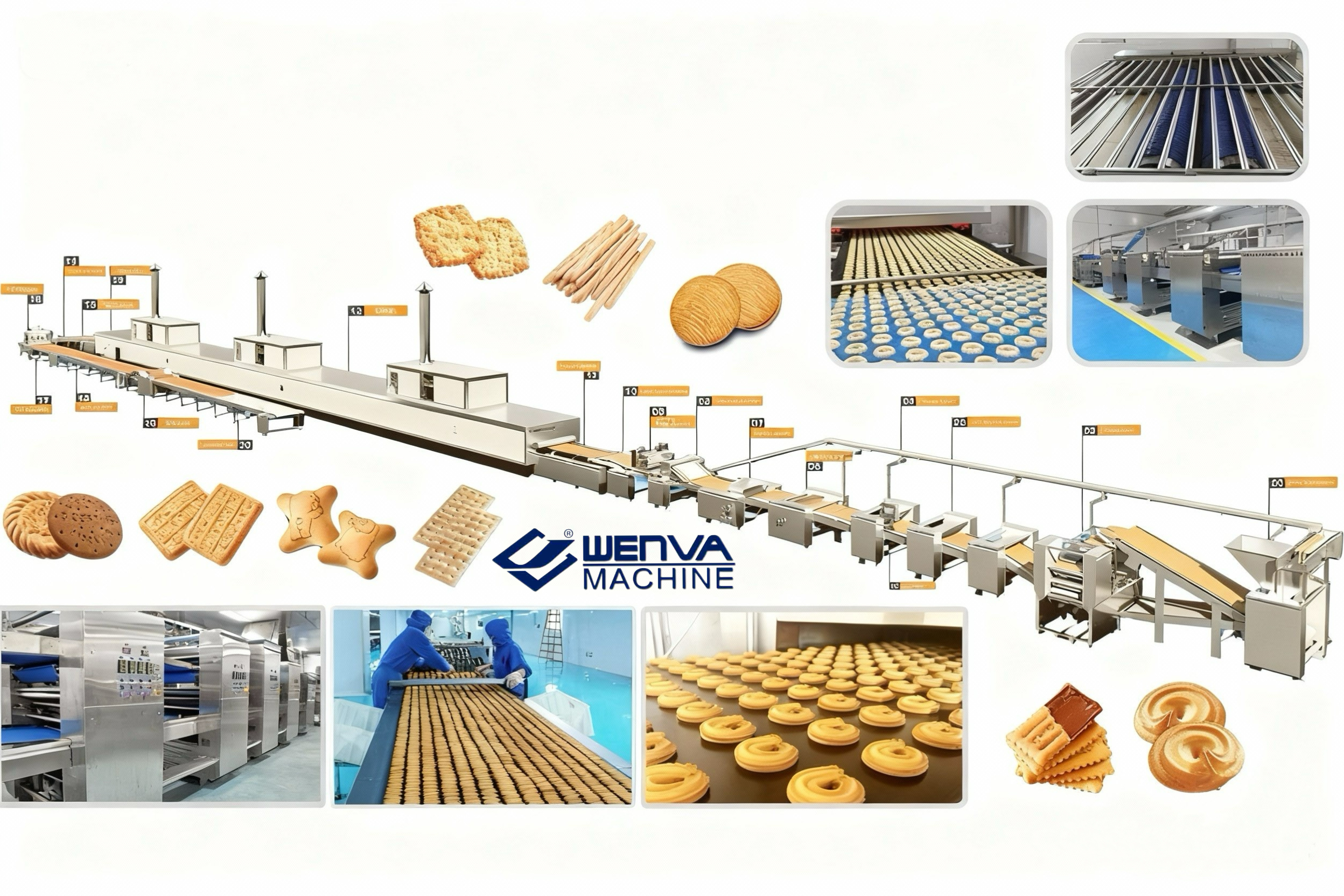
When planning a biscuit factory, a clear understanding of local production conditions is essential. Climate characteristics, energy structures, and operational rhythms vary from region to region, and these factors directly influence how a production line should be designed and operated.
In warmer climates, continuous operation capability, structural stability, and adaptability to environmental changes become especially important. Well-balanced equipment configurations and realistic production scheduling help ensure smooth operation and consistent product quality.
Production planning with a long-term operational goal prioritizes adaptability and stability. Rather than pursuing maximum theoretical capacity, selecting proven equipment designs with clear operating logic enables factories to maintain steady production and gradually build operational experience and market presence.
The first biscuit production line often determines the future development trajectory of a factory. A stable and well-considered starting point allows manufacturers to establish consistent production performance and quality control systems from the outset.
In most cases, beginning with mature product categories and well-established production processes supports smoother operation and more predictable results. At this stage, reliability, ease of operation, and maintenance accessibility are often more valuable than extreme speed or multifunctionality.
While meeting current production needs, it is equally important to plan for future growth. Modular layouts and upgrade-friendly designs allow production lines to increase capacity or introduce additional product varieties over time, while maintaining control over investment pace and minimizing future modification costs.
Across many African markets, core biscuit products continue to demonstrate strong and consistent acceptance. These products typically rely on mature processes and stable formulations, which support continuous operation and clear quality standards.
From an equipment perspective, such production models reduce process fluctuations and improve equipment utilization, forming a solid foundation for long-term stable manufacturing.
As markets evolve, factories can gradually expand their product range to include cream-filled biscuits or crackers. With appropriate planning of process sections and equipment configurations, production lines can support this gradual diversification while preserving operational stability.
Production lines designed for long-term operation emphasize mechanical stability and durability. Robust frame structures, proven transmission systems, and continuous-operation-oriented design principles help equipment maintain reliable performance over extended production periods.
Stable mechanical structures also contribute to consistent product quality and simplified maintenance management.
Control system design plays a critical role in long-term operation. Clear, intuitive operating logic enables operators to quickly understand production processes and reduces the likelihood of operational errors.
Appropriate control configurations also support daily maintenance and operational management, contributing to sustained production stability.
In real production environments, variations in raw material characteristics can affect forming behavior, baking performance, and product appearance. Production lines with sufficient adjustment ranges are better positioned to maintain stable operation and consistent quality under varying raw material conditions.
Well-designed adjustment capabilities allow production lines to accommodate different formulations without compromising stability. This flexibility enhances long-term reliability and provides manufacturers with greater freedom to adapt products as market needs evolve.
Simplified operating procedures and clearly defined control points contribute to standardized production. Intuitive interfaces and logical adjustment mechanisms make production lines easier to manage and replicate across shifts or facilities.
Structured training programs and ongoing technical support play an important role in maintaining stable operation. Through continuous knowledge sharing and practical guidance, manufacturers can steadily build strong operational systems around their production lines.
Stable production conditions contribute directly to improved operational efficiency and more predictable energy consumption. By optimizing production rhythms and equipment configurations, factories can achieve a balanced and controllable long-term cost structure.
Effective maintenance planning and spare parts strategies help extend equipment service life and reduce unplanned downtime. Preventive maintenance and standardized management practices support consistent operation over the long term.
In biscuit factory projects, equipment manufacturers often participate not only in equipment supply, but also in early-stage planning and solution design. Through close communication and alignment on production goals, more sustainable production line solutions can be developed.
Long-term collaboration enables continuous optimization during operation. Ongoing technical exchanges and experience sharing help both manufacturers and factory operators achieve stable and progressive development.
For biscuit factories in Africa, true competitiveness lies in the ability to operate continuously and reliably over the long term. Thoughtful production line planning, appropriate equipment design, and cooperative long-term support models all contribute to this objective.
From a manufacturer's professional perspective, focusing on sustainable operation helps biscuit factories steadily build operational advantages, expand market presence, and achieve predictable, long-term returns.
As a manufacturer dedicated to biscuit production line solutions, Wenva Machine remains committed to providing stable, practical, and long-term-oriented production systems for African markets, and welcomes open dialogue with partners seeking sustainable factory development.


