
Views: 222 Author: Wenva Machine Publish Time: 2026-05-12 Origin: Site
Selecting the right automated biscuit production line requires understanding not just machinery specifications, but the real-world performance, reliability, and support that come from decades of manufacturing expertise. As a manufacturer with 40 years of dedicated experience in biscuit production automation, Wenva Machine has witnessed firsthand how the industry has evolved from manual operations to fully integrated smart production systems that deliver measurable ROI and operational excellence. [wenvamachine]
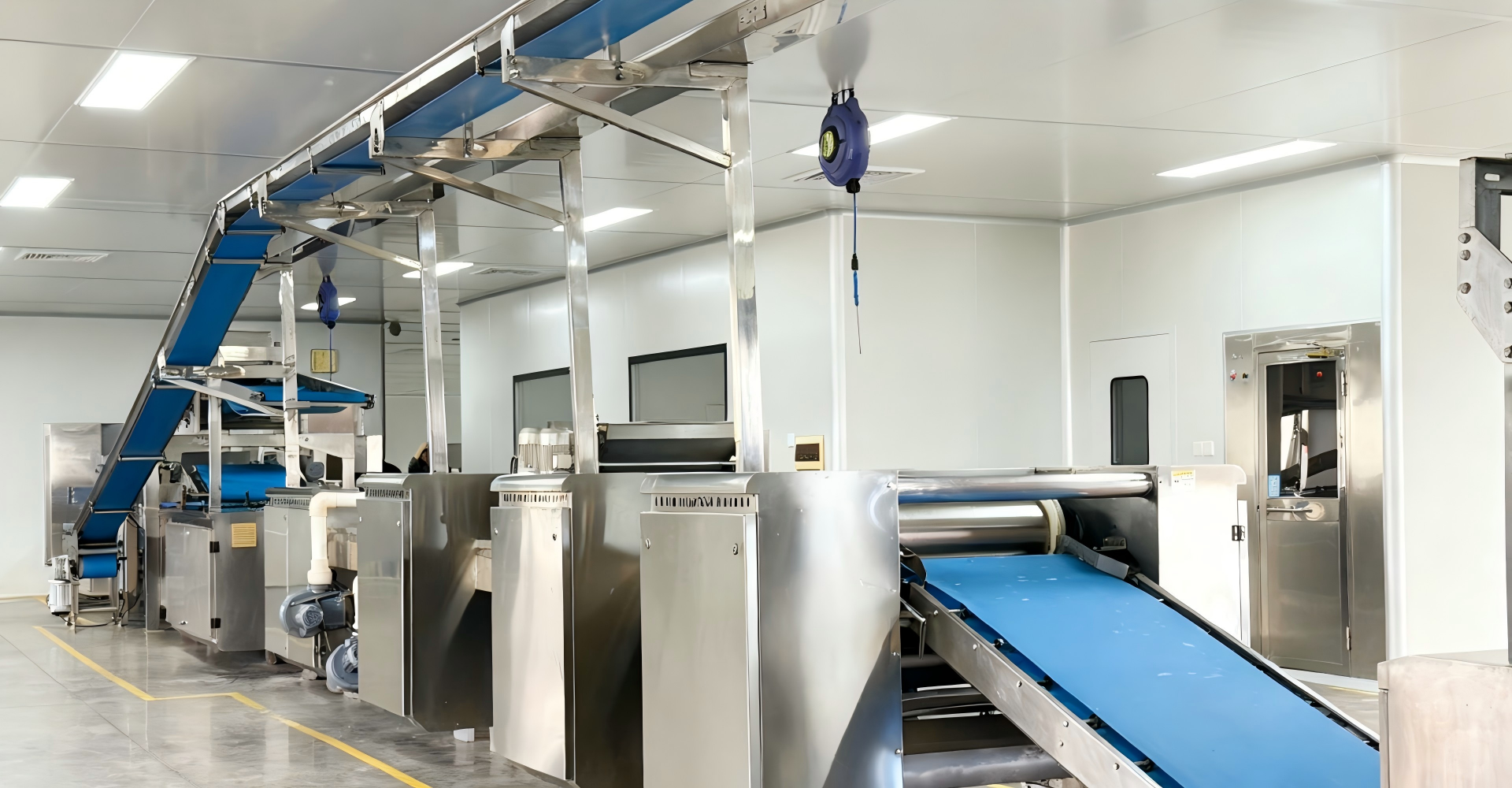
A comprehensive automated biscuit production line integrates multiple precision-engineered systems working in synchronization to transform raw ingredients into finished products. The production process encompasses several critical stages that determine final product quality and production efficiency. [wenvamachine]
Dough Mixing and Preparation Systems form the foundation of consistent biscuit quality. Modern planetary mixers and horizontal dough mixers utilize temperature-controlled environments and precision ingredient dispensing to ensure uniform dough consistency, which directly impacts the texture and appearance of the final product. Advanced mixing systems now incorporate IoT sensors that monitor viscosity, temperature, and mixing time in real-time, allowing operators to maintain consistent batch quality across thousands of production cycles. [bakingeurope]
Dough Forming and Shaping Equipment represents where production efficiency meets product innovation. Rotary molding machines, wire-cut depositors, and extruders each serve specific product categories, from delicate cream-filled cookies to robust crackers. The capability to switch between different product formats without extensive downtime has become a critical competitive advantage, with modern modular systems enabling changeovers in under 30 minutes compared to several hours with legacy equipment. [bakingeurope]
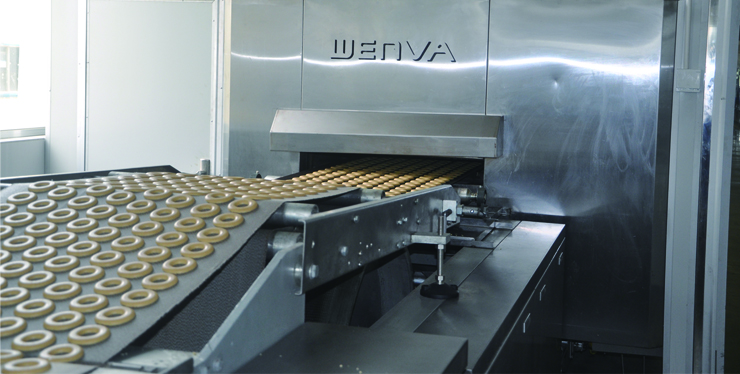
Tunnel Baking Ovens with Energy Recovery constitute the most energy-intensive component of any biscuit production line. Industrial tunnel ovens utilizing infrared and convection heating technologies can achieve uniform temperature distribution across multiple baking zones, ensuring consistent color and texture. Heat recovery systems that capture exhaust heat to preheat incoming air have demonstrated energy savings of 15-23% in documented case studies, translating to substantial operational cost reductions. [bura.brunel.ac]
Automated Cooling and Packaging Integration completes the production cycle while maintaining product integrity. Multi-tier cooling conveyors utilize controlled airflow to gradually reduce product temperature, preventing thermal shock that can cause cracking or deformation. Direct integration with high-speed packaging systems minimizes manual handling, reducing contamination risk and labor costs while increasing throughput by up to 30%. [linkedin]
The biscuit manufacturing sector has undergone a dramatic transformation over the past two decades, driven by automation technologies that address both efficiency and quality imperatives. Wenva Machine's development journey from producing China's first 1mm thickness cracker line in 1999 to current Industry 4.0-enabled systems exemplifies this evolution. [wenva]
Industry 4.0 Integration and Smart Manufacturing now enables predictive maintenance capabilities that reduce unplanned downtime by up to 20%. Production lines equipped with AI-driven process optimization continuously analyze sensor data from mixing, forming, baking, and cooling stations to identify efficiency opportunities and quality deviations before they impact production. Manufacturers implementing these smart systems report throughput increases of 20% and operational cost reductions of 15%. [linkedin]
Flexibility and Rapid Product Changeover capabilities address the growing consumer demand for product variety. Modern automated systems support production of wirecut cookies, deposited biscuits, co-extruded filled products, and continuous extruded bars within the same production line. This flexibility enables manufacturers to respond quickly to market trends without significant capital investment in specialized equipment. [insights.made-in-china]
Quality Control Automation and Consistency has advanced significantly through vision inspection systems and automated rejection mechanisms. Real-time quality monitoring using high-resolution cameras and AI algorithms can detect dimensional variations, surface defects, and color inconsistencies at production speeds exceeding 1,000 pieces per minute. These systems reduce product giveaway by up to 20% while ensuring regulatory compliance and brand consistency. [linkedin]
Environmental sustainability has transitioned from optional consideration to core requirement in biscuit production line design. The global biscuit production equipment market increasingly prioritizes energy-efficient technologies as manufacturers face rising energy costs and stricter environmental regulations. [linkedin]
Heat Recovery and Insulation Technologies deliver immediate and measurable energy savings. Advanced ceramic fiber and aerogel insulation materials provide superior heat retention compared to traditional fiberglass, reducing fuel consumption while maintaining precise temperature control. Waste heat recovery systems that capture oven exhaust to preheat combustion air or generate hot water for cleaning operations can reduce overall facility energy consumption by 190 tons of CO2 annually in medium-scale operations. [foodsmachine]
Energy-Efficient Motor Systems and Variable Frequency Drives optimize power consumption across conveyor systems, mixers, and fans. High-efficiency motors combined with intelligent control systems adjust operational parameters based on actual production load, reducing power consumption by up to 20% compared to constant-speed systems. These improvements contribute directly to better return on investment, with many manufacturers achieving payback periods of 12-18 months on energy efficiency upgrades. [wiss]
Sustainable Production Practices extend beyond energy to encompass waste reduction and resource conservation. Automated ingredient handling systems minimize raw material waste through precise dispensing and recipe management. Water recycling systems integrated with cleaning-in-place (CIP) technologies reduce water consumption by 30-40% while maintaining stringent hygiene standards required by FDA and EFSA regulations. [insights.made-in-china]
Choosing the right biscuit production line manufacturer requires evaluating multiple factors beyond initial equipment cost. Long-term partnership considerations including technical support, customization capabilities, and proven track record significantly impact operational success. [foodsmachine]
Manufacturing Experience and Technical Expertise provide the foundation for reliable equipment performance. Manufacturers with extensive industry experience understand the nuanced requirements of different biscuit categories and can recommend optimal configurations. Wenva Machine's 40 years of specialization in biscuit production automation, combined with study of advanced European and Japanese technologies, enables delivery of solutions that address real-world production challenges. [wenvamachine]
Customization Capabilities and Engineering Support ensure production lines fit specific facility layouts and product requirements. Standard equipment rarely addresses unique space constraints, capacity targets, or product specifications that individual manufacturers face. Comprehensive custom services from initial design through installation and commissioning prevent costly modifications and production delays. [wenvamachine]
After-Sales Service and Training Programs determine how quickly manufacturers can resolve issues and optimize production. Access to responsive technical support, readily available spare parts, and comprehensive operator training directly impacts overall equipment effectiveness. Manufacturers offering lifetime after-sales support and on-site training demonstrate commitment to long-term customer success. [instagram]
Return on Investment and Total Cost of Ownership analysis should encompass equipment purchase price, installation costs, energy consumption, maintenance requirements, and expected production capacity. Published deployment data from 2025-2026 shows manufacturers implementing comprehensive automation achieving positive ROI within one to three years through combined labor savings, yield improvements, and energy cost reductions. [foodsmachine]
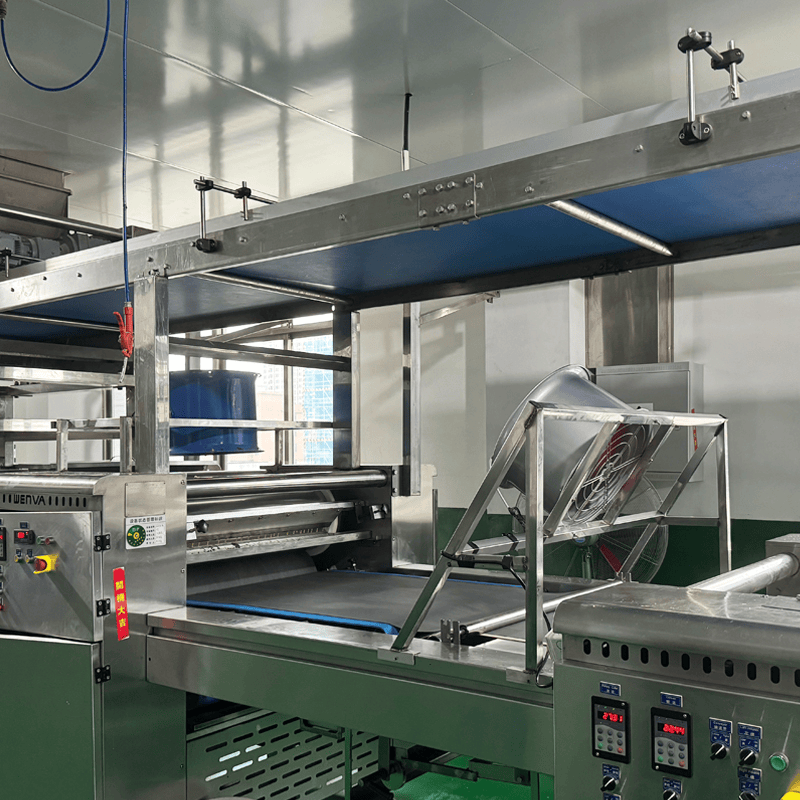
The global automated biscuit production equipment market, valued at USD 1.2 billion in 2024, is projected to reach USD 2.5 billion by 2033, growing at a 9.2% CAGR. This growth reflects both expanding production capacity in emerging markets and technology upgrades in established manufacturing regions. [linkedin]
Health-Conscious and Specialized Product Demand is driving equipment flexibility requirements. Consumer preferences for gluten-free, low-sugar, high-protein, and organic biscuits require production systems capable of handling alternative ingredients and formulations. Automated systems with quick-changeover capabilities enable manufacturers to produce specialized products economically in smaller batch sizes. [bakingeurope]
Regulatory Compliance and Food Safety requirements continue to intensify globally. Equipment designed with hygienic construction principles, including stainless steel contact surfaces, tool-free disassembly for cleaning, and documented validation protocols, facilitates compliance with WHO, FDA, and EFSA standards. Automated traceability systems that track ingredient batches through production to finished goods enable rapid response to any quality concerns. [linkedin]
Digital Transformation and Data Analytics enable continuous improvement through production intelligence. Manufacturing execution systems (MES) integrated with production lines provide real-time visibility into key performance indicators including overall equipment effectiveness, yield rates, and energy consumption. Data-driven decision making allows manufacturers to identify optimization opportunities that traditional manual monitoring cannot detect. [recomaze]
Achieving optimal performance from automated biscuit production lines requires attention to operational best practices beyond equipment selection. Systematic approaches to production management, preventive maintenance, and continuous improvement distinguish high-performing operations from average ones. [fdf.org]
Preventive Maintenance Programs prevent costly unplanned downtime and extend equipment lifespan. Scheduled inspections, lubrication, and component replacement based on manufacturer recommendations and actual usage patterns maintain reliability. Predictive maintenance technologies using vibration analysis, thermal imaging, and AI-powered diagnostics identify developing problems before they cause production interruptions, keeping production lines running smoothly. [fdf.org]
Operator Training and Skill Development directly impact production quality and efficiency. Comprehensive training programs covering equipment operation, basic troubleshooting, quality standards, and safety protocols empower operators to maintain consistent production. Cross-training operators on multiple line functions provides operational flexibility and reduces vulnerability to personnel changes. [parashifttech]
Process Optimization and Continuous Improvement methodologies identify incremental efficiency gains. Regular review of production data to identify bottlenecks, waste sources, and quality variations enables targeted improvements. Manufacturers implementing systematic continuous improvement programs report annual efficiency gains of 5-10% through accumulated small optimizations. [jymachinetech]
Successful biscuit production line implementation extends beyond equipment installation to encompass project planning, commissioning, and production ramp-up. Wenva Machine's experience with comprehensive turnkey services demonstrates the value of integrated project management. [instagram]
Site Preparation and Infrastructure Requirements must address electrical capacity, compressed air supply, water and drainage systems, and structural loading. Inadequate site preparation causes installation delays and compromises equipment performance. Detailed facility assessment during the design phase prevents costly modifications during installation. [wenvamachine]
Commissioning and Production Validation ensure equipment meets performance specifications before handover. Systematic testing of individual components followed by integrated production trials using actual recipes verifies capacity, quality, and reliability. Documentation of validation results provides baseline performance data for ongoing optimization. [instagram]
Production Ramp-Up Strategy manages the transition from installation to full-capacity operation. Phased production increases allow operators to develop proficiency while identifying and resolving minor issues before they impact large production volumes. Manufacturers typically achieve design capacity within 30-60 days of commissioning when following structured ramp-up protocols. [wenvamachine]
The trajectory of biscuit production technology points toward increased intelligence, sustainability, and customization capabilities. Manufacturers investing in advanced automation position themselves to capitalize on evolving market opportunities. [wiss]
Artificial Intelligence and Machine Learning will enable autonomous production optimization. Future systems will automatically adjust process parameters based on ingredient variations, ambient conditions, and quality targets without operator intervention. Self-optimizing production lines will continuously improve efficiency and quality through accumulated operating experience. [recomaze]
Personalized Nutrition and Mass Customization represent emerging market opportunities. Advanced production systems capable of modifying ingredient formulations on a per-batch or even per-unit basis will enable manufacturers to serve niche markets and premium segments. This technological capability requires sophisticated recipe management and automated ingredient handling systems. [insights.made-in-china]
Circular Economy and Zero-Waste Production will become competitive differentiators. Equipment designed for ingredient recovery, byproduct utilization, and minimal environmental impact addresses both regulatory requirements and consumer preferences. Manufacturers demonstrating measurable sustainability improvements will gain advantage in environmentally conscious markets. [bura.brunel.ac]
1. What is the typical return on investment period for an automated biscuit production line?
Manufacturers implementing comprehensive automation typically achieve positive ROI within one to three years through combined labor savings, yield improvements, and energy cost reductions. Specific payback periods depend on production volume, labor costs, and energy prices in each market, with high-volume operations in high-labor-cost regions seeing faster returns. [foodsmachine]
2. How much energy can be saved through modern biscuit production line technology?
Energy-efficient biscuit production lines incorporating heat recovery systems, advanced insulation, and variable frequency drives can reduce overall energy consumption by 15-23% compared to conventional equipment. A documented case study in medium-scale biscuit production identified potential annual savings of €40,534 and 190 tons of CO2 through better production line management and energy efficiency enhancements. [foodsmachine]
3. What production capacity should I expect from an automated biscuit line?
Production capacity varies significantly based on biscuit type, size, and line configuration, typically ranging from 50 kg/hour for small artisanal systems to over 3,000 kg/hour for high-speed industrial lines. Wenva Machine offers customized configurations across multiple width categories (620mm, 800mm, 1000mm, 1200mm) to match specific capacity requirements and facility constraints. [wenvamachine]
4. How long does it take to install and commission a complete biscuit production line?
Complete installation and commissioning timelines range from 4-12 weeks depending on line complexity, facility readiness, and customization requirements. This includes equipment installation, utility connections, initial testing, operator training, and production validation. Manufacturers with proper site preparation and experienced installation partners achieve shorter timelines with fewer complications. [wenvamachine]
5. What maintenance is required to keep a biscuit production line operating efficiently?
Effective maintenance programs include daily cleaning and inspection, weekly lubrication of moving components, monthly calibration of control systems, and quarterly comprehensive inspections. Predictive maintenance technologies using sensors and AI analytics can reduce unplanned downtime by up to 20% by identifying developing issues before they cause failures. Manufacturers should budget approximately 3-5% of equipment value annually for preventive maintenance and spare parts. [fdf.org]
1. WENVA Machine - Customized Biscuit Production Line, Dough Mixer. https://www.wenvamachine.com
2. WENVA Machine History and Development. http://www.wenva.net/about/fz/
3. WENVA Customized Biscuit Production Line Manufacturers. https://www.wenvamachine.com/biscuit-production-line.html
4. WENVA Machine Full Turnkey Service. https://www.instagram.com/reel/DXgUmkqDKmF/ (注:该链接为Instagram内容,无法直接获取摘要)
5. WENVA About Us - Company Overview. https://www.wenvamachine.com/aboutus.html
6. Fully Automatic Biscuit Production Equipment Market Analysis (2024-2033). https://www.linkedin.com/pulse/fully-automatic-biscuit-production-equipment-market-key-y589f
7. The Ultimate SEO Guide for Commercial Food Manufacturers. https://www.archeratr.com/articles/ultimate-seo-guide-commercial-food-manufacturers
8. Industrial Biscuit Production Faces Automation Push (IBA 2025). https://www.bakingeurope.com/news/industrial-biscuit-production-faces-automation-push
9. Truths and Misconceptions about Automated Biscuit Production Lines. https://insights.made-in-china.com/Truths-and-Misconceptions-about-Automated-Biscuit-Production-Lines-Meeting-Future-Trends
10. How Automation is Transforming Confectionery Manufacturing. https://www.linkedin.com/pulse/how-automation-transforming-confectionery-manufacturing-txrtf
11. Top 2025 Biscuit Machines: Features, Benefits, and Buying Guide. https://www.py-foodmachine.com/blog/top-biscuit-machines-2025-features-and-buying-guide/
12. Biscuit Machine Manufacturer: Top 5 for 2025. https://www.foodsmachine.net/a-biscuit-machine-manufacturer-top-5-for-2025-2.html
13. Modern Biscuit Production Line ROI Analysis. https://www.jymachinetech.com/modern-biscuit-production-line-how-factories-make-millions-of-cookies-daily/
14. Future Factory Report - Food and Drink Manufacturers (November 2025). https://www.fdf.org.uk/globalassets/resources/publications/reports/future-factory-report---november-2025-update.pdf
15. Stand Out in Manufacturing SEO with E-E-A-T. https://www.parashifttech.com/blog/stand-out-in-manufacturing-seo-using-e-e-a-t-to-build-real-online-trust-and-growth
16. Reducing GHG Emissions in Biscuit Industry. https://bura.brunel.ac.uk/handle/2438/23771
17. Manufacturing Automation ROI: Financial Justification Guide (2026). https://wiss.com/manufacturing-automation-roi-financial-justification/
18. E-E-A-T and Content Strategy for Building Trust. https://www.intelegencia.com/blog/content-marketing/eeat-and-content-strategy-for-building-trust-and-authority
19. Exploring Energy Efficiency in Industrial Biscuit Ovens. https://www.foodsmachine.net/exploring-energy-efficiency-in-industrial-biscuit-ovens.html
20. E-E-A-T and AI Content: Google Quality Guidelines (2026). https://recomaze.ai/e-e-a-t-and-ai-content-how-to-meet-google-quality-guidelines
21. 7 Steps To Drive Immediate Efficiency In Biscuit Production. https://www.neweramachines.com/efficiency-in-biscuit-production/
22. 21 EEAT Strategies To Boost Your Business. https://www.aspectusgroup.com/insights/21-eeat-strategies-to-supercharge-seo/


