
Views: 272 Author: Wenva Machine Publish Time: 2026-07-05 Origin: Site
Content Menu
● Why Biscuit-Making Mistakes Are Different in Factories
● Common Biscuit-Making Mistakes (Home vs. Industrial)
>> Mistake 1: Poor Dough Management on Automated Lines
>> Mistake 2: Ignoring Equipment Calibration and Preventive Maintenance
>> Mistake 3: Weak Quality Control and Data Tracking
>> Mistake 4: Overloading the Line and Poor Flow Planning
>> Mistake 5: Food Safety Gaps and Foreign Material Contamination
>> Mistake 6: Underestimating Operator Training and SOPs
● A Practical Troubleshooting Framework for Biscuit Lines
● Design Considerations When Choosing an Automated Biscuit Production Line
● Case-Inspired Scenario – From High Scrap Rate to Stable Production
● Practical Checklist: Avoiding Common Mistakes on Your Biscuit Line
● How an Experienced Line Supplier Adds Value
● Simple Table: Home vs. Industrial Biscuit Mistakes
● Call to Action: Design a More Reliable Biscuit Line
● Frequently Asked Questions (FAQ)
A well-designed automated biscuit production line can eliminate many "home kitchen" mistakes, but in factories new problems appear: unstable dough, inconsistent baking, unplanned downtime, and food safety risks. This guide combines on-site experience from Wenva Machine's 40+ years in biscuit line design with common issues seen across industrial biscuit plants worldwide. [foodsmachine]
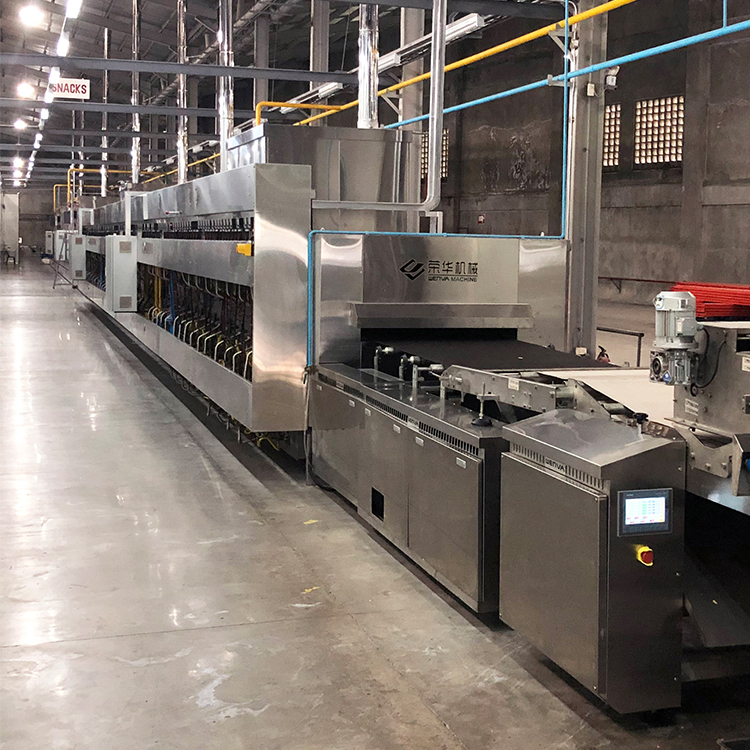
In a home oven, mistakes such as warm butter, overworked dough, or old baking powder mainly ruin one batch. In an industrial plant, similar process errors can waste tons of raw materials, damage brand reputation, and even lead to product recalls. [es.scribd]
Modern automated biscuit lines run at high speeds and integrate mixing, forming, baking, cooling, and packaging in one continuous system, so any small deviation—dough temperature, oven profile, conveyor speed—quickly multiplies into large-scale defects. [jymachinetech]
Even though home baking and industrial production are very different, the underlying science is the same. [agriculture]
Typical home-level mistakes: [foodsmachine]
- Using warm butter, leading to flat, spread-out biscuits.
- Overworking the dough, causing tough texture.
- Using old baking powder, resulting in poor rise.
- Skipping buttermilk or acid sources, reducing tenderness.
- Overcrowding biscuits on the tray, causing uneven baking.
How these translate to industrial lines: [hg-machine]
- Inconsistent dough temperature behaves like "warm butter" at scale, causing spread and shape loss.
- Overmixing in high-capacity mixers triggers gluten overdevelopment and tough texture.
- Incorrect leavening dosage or degraded ingredients acts like "old baking powder," creating low volume and dense biscuits.
- Poor line loading or tray layout can mimic "overcrowding," leading to uneven color and baking.
By understanding this connection, plant teams can translate familiar baking logic into structured production parameters and SOPs. [es.scribd]
In industrial plants, the most expensive mistake is often poor dough quality, because every downstream defect begins here. [foodsmachine]
Key risks in dough management: [es.scribd]
- Inaccurate flour, fat, sugar, or water dosing.
- Dough temperature exceeding target range due to mixer friction or warm ambient conditions.
- Mixing time not adapted to batch size or flour quality.
- Inconsistent resting time before sheeting or molding.
Consequences on biscuits: [hg-machine]
- Shrinky or spready biscuits and unstable dimensions.
- Flat or blistered surfaces.
- Irregular texture and bite.
- Uneven color and off-flavors.
Expert tip from production lines:
On modern automated biscuit production lines, it is critical to treat dough temperature as a critical process parameter (CPP) and log it batch by batch, not only "feel it by hand" as in small bakeries. [foodsmachine]
Many plants underestimate how small mechanical deviations—worn rollers, misaligned cutters, uncalibrated ovens—gradually push product outside specification. [smartpack-eg]
Common equipment-related mistakes: [smartpack-eg]
- No routine calibration of oven temperature and conveyor speed.
- Irregular cleaning of conveyor belts, cutters, and forming tools.
- Running the line beyond its designed capacity without parameter revalidation.
- Skipping scheduled lubrication and inspection of critical components.
Typical impact on biscuits: [es.scribd]
- Uneven baking (dark edges, pale centers).
- Poor impressions or patterns on molded biscuits.
- Line jams at transfer points or at the infeed of packaging machines.
A preventive maintenance plan, combined with trained operators, is far more cost-effective than emergency repairs once defects appear on finished products. [smartpack-eg]
Many factories still rely on visual checking only, without strong data tracking across batches, shifts, and product SKUs. [hg-machine]
Typical QC mistakes: [foodsmachine]
- No clear sampling plan for weight, size, moisture, and color.
- Quality checks done only at end-of-line, not at critical control points.
- No structured root cause analysis for repeated faults.
- Poor documentation of process deviations and corrective actions.
Why this is dangerous:
Without data, it is almost impossible to link process parameters (dough temperature, oven zone settings, speed) to final product quality. As a result, the same problem keeps returning, even after rework or short-term fixes. [hg-machine]
Industrial biscuit manufacturing failures often start at the planning stage, not just during production. [linkedin]
Planning-related mistakes: [linkedin]
- Overestimating demand and installing capacity that will never run at optimal utilization.
- Choosing equipment based only on purchase price, not lifecycle cost.
- Designing a plant layout that causes bottlenecks between baking, cooling, and packaging.
On the line itself, another operational mistake is overloading conveyors or trays to "push production", which leads to: [smartpack-eg]
- Colliding and overlapping biscuits.
- Irregular spacing in the oven, affecting airflow and baking uniformity.
- Increased risk of mechanical jams and unplanned downtime.
A well-designed automated biscuit production line balances speed, dwell time in each process, and accumulated buffer capacity, from dough feeding to final packaging. [jymachinetech]
For branded biscuit manufacturers, foreign matter complaints and additive misuse are among the most serious risks. [hg-machine]
Frequent food safety-related mistakes: [hg-machine]
- Inadequate control of raw material suppliers and incoming inspection.
- Lack of metal detectors or magnets at critical points.
- Non-standard use or overuse of certain additives and flavors.
- Insufficient line cleaning practices, causing buildup and cross-contamination.
Potential consequences: [hg-machine]
- Foreign objects such as hair, plastic, or metal fragments in finished biscuits.
- Excess sulfur dioxide or other chemical residues from misuse of dough modifiers.
- Regulatory non-compliance and damage to consumer trust.
From an engineering standpoint, continuous, enclosed conveying and storage, combined with detection devices, drastically reduces the risk of physical contamination on automatic lines. [m.loyalfoodmachine]
Even the most advanced automated biscuit production line cannot run stably without trained operators and clear SOPs. [smartpack-eg]
Common human factor mistakes: [smartpack-eg]
- No structured onboarding or skills matrix for operators and technicians.
- SOPs not updated after recipe changes or line upgrades.
- Troubleshooting knowledge "locked" in a few senior technicians instead of documented.
Best practices from successful plants: [linkedin]
- Formal training by equipment suppliers on operation, safety, and basic troubleshooting.
- Documented standard operating procedures for each stage (mixing, forming, baking, cooling, packaging).
- Regular refresher training and cross-training across stations to increase flexibility.
Well-trained teams spot early warning signals—such as color drift or slight shape changes—before a full-scale defect occurs. [es.scribd]
To move from reactive firefighting to systematic improvement, many leading manufacturers use a structured troubleshooting framework combining dough science, mechanical engineering, and data. [foodsmachine]
Simple 5-step troubleshooting loop for biscuit lines: [es.scribd]
1. Define the defect
- Describe visually (color, shape, thickness, cracks).
- Quantify (weight deviation, moisture level, breakage percentage).
2. Check recent changes
- New raw material lot, new operator, updated parameter, or maintenance work.
3. Trace backward along the line
- From packaging to cooling, baking, forming, and dough preparation, look for any abnormal conditions.
4. Adjust one variable at a time
- For example, reduce oven zone 3 temperature or change mixing time in small increments and record results.
5. Document and standardize
- Once a fix works, write it into SOPs and train operators so the same issue can be resolved quickly next time.
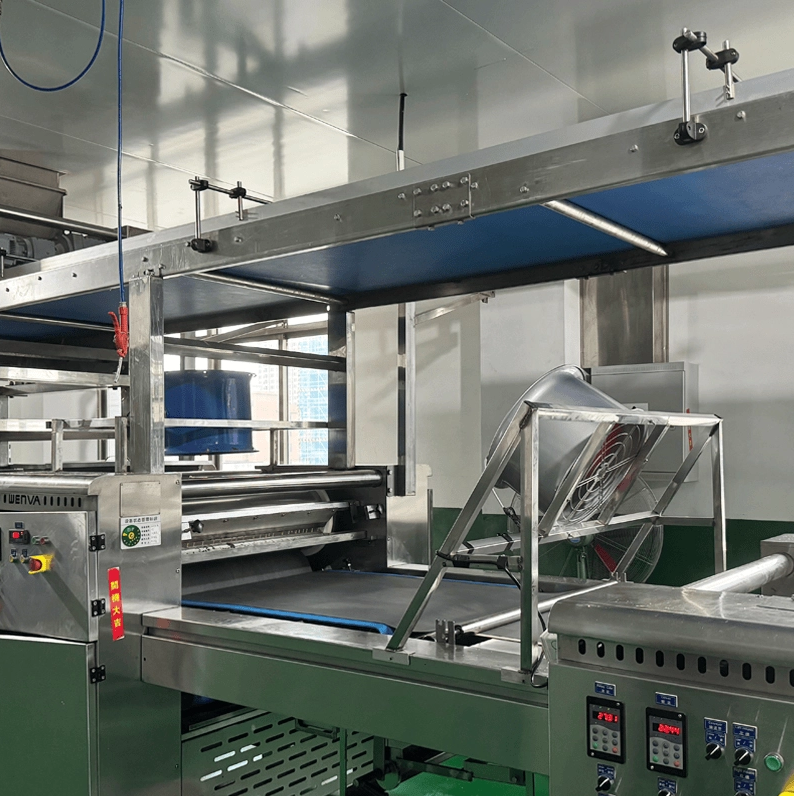
Many "mistakes in biscuit making" are actually design mistakes made when the line is specified or purchased. [m.loyalfoodmachine]
Key design questions manufacturers should ask: [m.loyalfoodmachine]
- Product portfolio
- Hard biscuits, soft biscuits, sandwich biscuits, or mixed?
- Will the line handle frequent recipe or shape changeovers?
- Capacity and flexibility
- Required throughput per hour and expected growth in 3–5 years.
- Need for quick changeover of molds or cutters and adjustable baking profiles.
- Automation and integration level
- From semi-automatic to fully automatic with smart controls, recipe management, and centralized data logging.
- Hygiene and cleanability
- Design for easy cleaning, minimal product retention, and safe access for maintenance.
Suppliers with long-term biscuit line experience can help simulate different layouts and choose a configuration that balances initial investment with long-term ROI. [abelyfashion.livepositively]
Consider a mid-size biscuit factory that recently upgraded to an automatic biscuit production line but kept reporting: high breakage, color inconsistency, and frequent jams at the packaging infeed. [foodsmachine]
After a combined review by the plant team and equipment engineers, the following root causes were identified: [linkedin]
- Dough temperature fluctuated by more than 4–5 °C between batches.
- Oven zones were never calibrated after installation, causing hot and cold spots.
- No buffer conveyor between oven and packaging, leading to product pile-up.
- Operators had no formal SOPs for startup and shutdown sequences.
Improvement steps implemented: [smartpack-eg]
- Installed dough temperature monitoring and adjusted water temperature and mixing time.
- Recalibrated oven temperature sensors and re-balanced airflow.
- Added an intermediate cooling and accumulation section before packaging.
- Developed step-by-step SOPs and trained operators across all shifts.
Result: scrap rates dropped, color consistency improved, and unplanned downtime decreased, demonstrating how process, equipment, and people must be optimized together. [linkedin]
Use this quick checklist during daily production meetings or audits. [es.scribd]
Dough and ingredients
- Are all key ingredients within spec and within shelf life?
- Is dough temperature consistently measured and recorded?
- Are mixing time and speed controlled according to SOP?
Forming and cutting
- Are rollers, molds, and cutters clean and undamaged?
- Are biscuits released cleanly without sticking or tearing?
Baking and cooling
- Are oven zones calibrated and logged regularly?
- Is product color uniform across belt width and direction?
- Is cooling time sufficient before packaging to avoid condensation?
Packaging and food safety
- Are metal detectors and checkweighers tested according to schedule?
- Is primary packaging intact, with good seals and no contamination?
People and documentation
- Are operators trained for current recipes and equipment?
- Are deviations and corrective actions recorded and reviewed?
Regularly walking through this checklist helps teams prevent mistakes before they become customer complaints. [foodsmachine]
An experienced manufacturer like Wenva Machine, focused on automated biscuit production lines, can help biscuit factories avoid many of these mistakes from day one. [abelyfashion.livepositively]
Key ways a specialist supplier supports you: [abelyfashion.livepositively]
- Jointly defining production requirements, plant layout, and automation level.
- Providing tailored line configurations for different biscuit types and capacities.
- Offering commissioning support, on-site training, and remote troubleshooting.
- Advising on preventive maintenance, spare parts, and future upgrades.
By combining process know-how and mechanical engineering, a strong partner ensures that your investment delivers stable quality, high efficiency, and long-term profitability—not just installed machines. [abelyfashion.livepositively]
| Aspect | Home Baking Mistake | Industrial Line Equivalent |
|---|---|---|
| Fat temperature | Warm butter, biscuits spread too much (foodsmachine) | High dough temperature, poor shape control (foodsmachine) |
| Dough handling | Overworking dough, tough biscuits (foodsmachine) | Overmixing in high-capacity mixer, gluten overdevelopment (es.scribd) |
| Leavening | Old baking powder, no rise (foodsmachine) | Degraded/incorrect leavening, low volume (es.scribd) |
| Tray spacing | Overcrowded biscuits (foodsmachine) | Overloaded belts/trays, line jams (foodsmachine) |
| Quality control | Only visual check | Weak data tracking, late defect detection (foodsmachine) |
If you are planning to set up or upgrade an automated biscuit production line, it is not enough to buy equipment—you need a complete, well-engineered system supported by experts who understand biscuit technology and factory realities. [m.loyalfoodmachine]
By collaborating early with a specialized line provider, you can:
- Avoid costly design errors and mismatched capacities.
- Build in food safety, quality control, and maintainability from day one.
- Train your team to run the line efficiently and troubleshoot confidently.
To explore a tailored solution for your biscuit plant layout, product portfolio, and budget, reach out to an experienced biscuit line partner and discuss your project specifications in detail. [abelyfashion.livepositively]
1. What are the most common quality problems in industrial biscuit production?
Common problems include shape deformation, uneven color, low volume, surface blisters, breakage, foreign matter contamination, and packaging defects such as poor seals or crushed biscuits in bags. [es.scribd]
2. How often should I calibrate the oven on an automatic biscuit line?
Oven temperature and airflow should be verified at commissioning, after major maintenance, and then periodically—often monthly or quarterly—depending on production intensity and internal QA policies. [smartpack-eg]
3. What is the best way to control dough temperature in large-scale biscuit production?
Control starts with managing ingredient temperatures, water temperature, and mixer load, and may include jacketed mixers or chilled water systems; dough temperature should be measured and recorded for every batch. [hg-machine]
4. How can we reduce line jams and unplanned downtime on biscuit lines?
Key actions include proper product spacing, optimized conveyor speeds, regular cleaning and lubrication, correct transfer design between modules, and training operators on early detection of abnormal accumulation. [foodsmachine]
5. Why is supplier selection so important when installing a biscuit production line?
A capable supplier provides not only machinery but also process know-how, layout design, training, and long-term service, which together determine real ROI, uptime, and product consistency. [m.loyalfoodmachine]
1. Foodsmachine – "What Are the Common Mistakes to Avoid in Biscuit Making?" (2024). <https://www.foodsmachine.net/a-news-what-are-the-common-mistakes-to-avoid-in-biscuit-making.html> [foodsmachine]
2. Foodsmachine – "Biscuit Production Line: A Comprehensive Troubleshooting Guide." <https://www.foodsmachine.net/a-news-biscuit-production-line-a-comprehensive-troubleshooting-guide.html> [foodsmachine]
3. HG Machine – "Common quality problems of biscuit production line and preventive measures." <https://www.hg-machine.com/news/industry-information/common-quality-problems-of-biscuit-production-line-and-preventive-measures.html> [hg-machine]
4. Smartpack – "Automatic biscuit production line project and product packaging." <https://www.smartpack-eg.com/index.php/en/blog/139> [smartpack-eg]
5. Crechord Innovative Technology – "Common Mistakes in Biscuit Manufacturing Planning." <https://www.linkedin.com/posts/crechord-innovative-technology-pvt-ltd_biscuitmanufacturing-foodprocessingindustry-activity-74297> [linkedin]
6. JY Machine – "Modern Biscuit Production Line: How Factories Make Millions of Cookies Daily." <https://www.jymachinetech.com/modern-biscuit-production-line-how-factories-make-millions-of-cookies-daily/> [jymachinetech]
7. Wenvamachine – Product information and integrated solutions for fully automatic biscuit production lines. <https://www.wenvamachine.com/products.html> [abelyfashion.livepositively]
8. TROUBLE SHOOTING in Biscuit Industry – technical PDF. <https://es.scribd.com/document/109123246/TROUBLE-SHOOTING-in-Biscuit-Industry-1> [es.scribd]
9. Agriculture Institute – "Common Biscuit Faults and How to Fix Them." <https://agriculture.institute/baking-and-flour-confectionary/common-biscuit-faults-and-fixes/> [agriculture]


