
Views: 242 Author: Wenva Machine Publish Time: 2026-07-07 Origin: Site
Content Menu
● Understanding Sandwich Biscuit Filling Technologies
● What Is a Single-Filling Sandwich Machine?
● What Is a Dual-Filling Sandwich Machine?
● Core Technical Differences at a Glance
● Emerging Trends in Premium Multilayer Snacks
● Product Portfolio Strategy: When Single-Filling Still Wins
● Value Proposition of Dual-Filling for Premium Multilayer Snacks
● Operational Efficiency and Throughput Considerations
● Flexibility, Customization, and Future-Proofing
● Quality Control and Consistency in Multilayer Snacks
● Case Insight: Upgrading from Single to Dual-Filling
● Practical Checklist: Choosing Between Dual and Single-Filling
● Expert Perspective: Designing Future-Ready Sandwich Lines
● How Wenva Machine Supports Dual and Single-Filling Strategies
● Call to Action: Plan Your Next-Generation Sandwich Line
● Frequently Asked Questions (FAQ)
Dual-filling sandwich machines are rapidly becoming the standard for premium multilayer snacks, while single-filling systems still offer an efficient and cost-effective solution for mainstream sandwich biscuits. For manufacturers like Wenva Machine, choosing between dual-filling and single-filling technology is now a strategic decision that directly impacts product positioning, line flexibility, and long-term ROI. [landpacking]
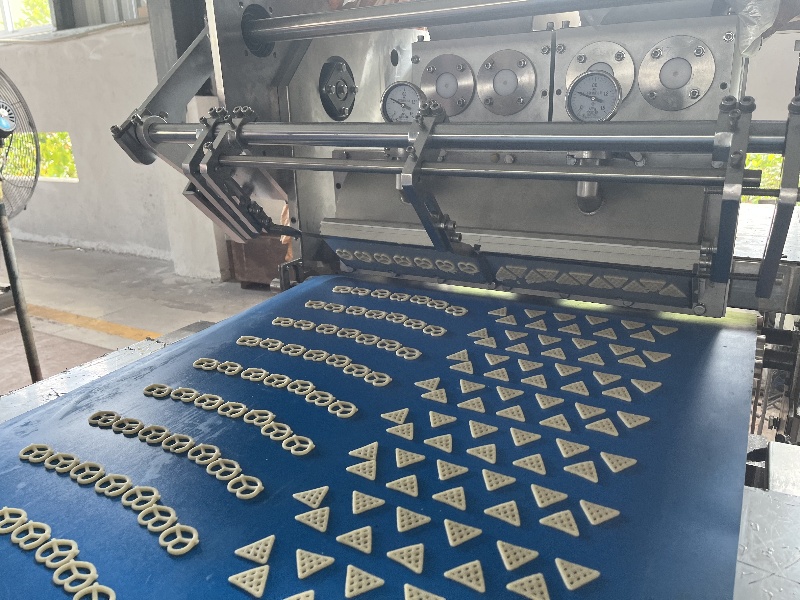
Modern sandwich biscuit production lines rely on automated sandwiching machines that place a controlled dose of cream or jam onto a bottom biscuit, then cap it with a top biscuit at high speed. These machines integrate feeding, dosing, sandwiching, and often direct connection to cooling or packaging equipment. [laserbiscuit]
For a manufacturer, the critical choice is whether to invest in single-filling capability (one flavor, one color) or dual-filling capability (two flavors, two colors, or multilayer structures) as part of a fully integrated biscuit production line. This decision shapes your product portfolio, equipment complexity, and the level of premiumization you can offer to global brands and private labels. [gdlison]
A single-filling sandwich machine is designed to deposit one type of filling—typically cream, chocolate, or jam—between two biscuits in a consistent pattern. It usually features a single cream tank, a single dosing system, and one lane or limited number of lanes with standardized configurations. [chlbpack]
Key characteristics of single-filling machines:
- One flavor and one color of cream or jam per production run. [gdlison]
- Typical capacities in the range of 100–600 sandwiches per minute, depending on the model and configuration. [chlbpack]
- Suitable for round, square, or rectangular biscuits in standard size ranges (roughly 35–65 mm diameter or edge length). [gdlison]
For many biscuit plants, especially those focused on classic sandwich SKUs (vanilla cream, chocolate cream), single-filling remains a proven, stable, and easy-to-operate choice with relatively lower investment and simpler changeovers. [chlbpack]
A dual-filling sandwich machine incorporates two independent filling systems—typically two hoppers and two dosing lines—to deliver two different flavors, colors, or textures into a single sandwich product. It can create more complex structures such as dual-color centers, cream-plus-jam combinations, or layered fillings inside a multilayer snack. [youtube]
Key characteristics of dual-filling machines:
- Two separate hoppers and pumping systems for different fillings, with precise dosage control. [landpacking]
- Design options for dual-color or dual-flavor fillings (e.g., chocolate + vanilla, cream + fruit jam). [youtube]
- High-speed outputs, often up to 1000–1200 sandwiches per minute, especially with multi-lane and row-multiplier configurations. [lison-machinery.en.made-in-china]
These systems are typically servo-driven, with PLC control, photoelectric sensors (e.g., "no biscuit, no cream"), and integration with downstream packaging or coating lines, making them ideal for premium multilayer snacks and diversified product lines. [gdlison]
Technical comparison of single vs. dual-filling sandwich machines
| Aspect | Single-Filling Sandwich Machine | Dual-Filling Sandwich Machine |
|---|---|---|
| Number of fillings | One flavor/color per run (chlbpack) | Two flavors/colors per product or per run (landpacking) |
| Typical capacity | Around 100–600 sandwiches/minute (chlbpack) | Up to 1000–1200 sandwiches/minute with multi-lane setups (youtube) |
| Hopper configuration | Single cream or jam tank (chlbpack) | Two independent hoppers with separate drives (landpacking) |
| Product complexity | Standard sandwich biscuits (2+1 structure) (chlbpack) | Dual-color, dual-flavor, multilayer and premium snacks (landpacking) |
| Control and automation | PLC with basic cream volume control (chlbpack) | PLC + multiple servo motors for precise dosing and lane control (youtube) |
| Changeover complexity | Faster changeover, fewer parameters (chlbpack) | More complex cleaning and setup due to multiple fillings (landpacking) |
The premium snack segment—particularly in biscuits and cookies—is being driven by visual differentiation, layered textures, and flavor combinations. Dual-filling and multilayer structures allow brands to offer products that look and feel "gourmet" while still produced at industrial speeds. [landpacking]
Three clear trends stand out from recent biscuit sandwiching innovations:
1. Dual-color creams (e.g., chocolate–vanilla swirls) and inner/outer color combinations that enhance shelf impact. [youtube]
2. Hybrid fillings—cream plus fruit jam, hazelnut cream plus chocolate, etc.—designed to deliver layered taste experiences. [gdlison]
3. Integration with chocolate enrobing and coating lines to create multi-texture snacks such as coated multilayer biscuits. [lison-machinery.en.made-in-china]
For a manufacturer like Wenva Machine, aligning equipment design with these trends means building platforms that combine high-speed performance with recipe flexibility and precise multi-component control. [lison-machinery.en.made-in-china]

From a strategy perspective, single-filling sandwich machines are still the best fit when a factory's key objective is high-volume production of a narrow SKU range. These machines excel in standard cream or jam sandwiches for mass markets or private labels where cost per unit and line uptime are critical. [gdlison]
Typical use cases where single-filling is optimal:
- Legacy flagship products with stable formulations and predictable demand.
- Emerging markets where purchasing power focuses on affordability rather than complex flavors.
- Lines where quick start-up, easy operator training, and low maintenance are top priorities. [chlbpack]
In such scenarios, single-filling solutions integrated into a full biscuit production line—from dough forming to baking, sandwiching, and packaging—can deliver excellent OEE (Overall Equipment Effectiveness) with a smaller initial investment and lower running costs. [gdlison]
Dual-filling sandwich machines bring added value by unlocking new product concepts and enabling premium pricing. For brand owners, the ability to run dual-flavor combinations, limited editions, and co-branded flavor concepts on a single line is a significant marketing advantage. [landpacking]
From an engineering and business standpoint, dual-filling offers:
- Expanded SKU flexibility while sharing the same mechanical platform. [gdlison]
- Capability to target multiple consumer segments (kids, adults, health-conscious) through diversified flavor combinations.
- Enhanced visual and sensory differentiation, which supports higher price points and premium brand positioning. [youtube]
When combined with row multipliers and direct connection to coating or packaging equipment, dual-filling technology becomes a central element of premium multilayer snack ecosystems, rather than just another step in the production line. [lison-machinery.en.made-in-china]
From a production manager's viewpoint, the decision between dual-filling vs. single-filling is not just about product design—it is also about throughput and efficiency.
- Modern single-filling lines can achieve up to 600 sandwiches per minute, which already satisfies many mid-size factories with one or two main SKUs. [chlbpack]
- Dual-filling systems, especially multi-lane configurations with row multipliers, can reach 1000–1200 sandwiches per minute, supporting higher-volume premium portfolios. [youtube]
However, this higher capacity comes with more complex cleaning and changeover processes due to multiple fillings, which require careful planning and SOPs to avoid cross-contamination and maintain hygienic standards. For Wenva Machine, the challenge—and opportunity—is to design dual-filling lines that optimize CIP (clean-in-place) design, quick-release components, and smart recipe management to minimize downtime. [landpacking]
In today's snack market, product lifecycles are shorter, and brands often run frequent promotions and seasonal SKUs. This reality shifts the value equation in favor of flexible machinery.
Dual-filling platforms are inherently more future-proof because they:
- Allow simple recipes (single-filling mode) and complex recipes (dual-filling mode) on the same line. [gdlison]
- Support rapid reconfiguration for new fillings, including creams, jams, or functional fillings such as reduced-sugar blends or fortified creams. [landpacking]
Single-filling lines can still be part of a flexible ecosystem when they are modular and integrated into a broader automated biscuit production line that allows capacity rebalancing and layout optimization according to plant needs. But in a market where innovation speed is crucial, dual-filling architecture often provides more long-term strategic flexibility. [gdlison]
As multilayer snacks become more complex, quality control becomes a critical differentiator. Consistent filling weight, position, and structure directly impact both sensory quality and regulatory compliance.
Dual-filling systems rely heavily on:
- Servo-driven dosing to maintain precise deposit volumes and patterns across two different fillings. [lison-machinery.en.made-in-china]
- Photoelectric detection, ensuring that cream is only deposited when a biscuit is present ("no biscuit, no cream"), reducing waste and contamination risk. [youtube]
Single-filling machines also use similar controls, but with fewer variables, making them easier to validate and maintain. From an E‑E‑A‑T perspective, a manufacturer like Wenva Machine can demonstrate expertise by highlighting metrology, process control, and traceability built into both single and dual-filling platforms. [chlbpack]
Many biscuit factories start with single-filling capabilities and later upgrade to dual-filling as their product portfolio matures. A typical journey includes:
1. Stage 1 – Single-filling line installation: Focus on establishing core SKUs, stabilizing process parameters, and building operator competence using an automated single-filling sandwich line. [gdlison]
2. Stage 2 – Incremental automation and capacity: Adding automatic feeding, stacking, and more lanes to the existing single-filling line to handle growing volumes.
3. Stage 3 – Dual-filling integration: Introducing a dual-filling line that can handle premium SKUs while the single-filling line continues to produce mainstream products. [gdlison]
For a 40-year specialist like Wenva Machine, this staged approach allows clients to spread capex, de-risk technology adoption, and align their equipment roadmap with brand portfolio evolution rather than making a single, high-risk leap.
To decide objectively, plant managers and decision-makers can run through the following practical checklist:
1. Product mix:
- If over 80% of volume comes from 1–2 standard SKUs, single-filling might be sufficient.
- If you plan to launch multiple premium SKUs with dual flavors, dual-filling becomes more attractive.
2. Market positioning:
- Value and mainstream brands can thrive on single-filling platforms.
- Premium, export-oriented, or co-branded products benefit from dual-filling's differentiation.
3. Line utilization and downtime:
- Single-filling reduces cleaning complexity and changeover times.
- Dual-filling requires robust cleaning SOPs but offers broader SKU coverage.
4. Long-term strategy:
- If your 3–5 year roadmap includes coated biscuits, multi-layer snacks, or functional fillings, dual-filling provides better future alignment. [landpacking]
By working closely with a technology partner like Wenva Machine, you can model different scenarios—volumes, SKUs, and investment profiles—to arrive at a data-driven equipment decision.
From an industry expert viewpoint, the equipment discussion is no longer just about "machine type A vs. B"; it is about system design. A future-ready sandwich biscuit line should:
- Integrate single and dual-filling modules within a harmonized control architecture.
- Provide consistent high-speed performance with smart diagnostics and remote support capability. [lison-machinery.en.made-in-china]
- Align with food safety and hygiene standards, for example via stainless-steel contact parts, easy-to-disassemble components, and temperature-controlled cream circuits. [youtube]
This is where Wenva Machine's four decades of engineering experience in automated biscuit production lines can be leveraged to design customized solutions that match factory layouts, capacity requirements, and regional compliance needs, from design and installation to commissioning and long-term service. [chlbpack]
As a manufacturer specializing in automated biscuit production lines, Wenva Machine can act as both technology provider and process partner. By combining our experience with current market trends, we support customers through:
- Process consulting: Definition of product portfolio, line layout, and filling strategy (single vs. dual) to fit actual market goals.
- Customized line design: Engineering of sandwiching stations, ovens, cooling tunnels, and packaging systems into a seamless architecture.
- Lifecycle support: From installation and commissioning to operator training, remote diagnostics, and continuous improvement projects.
Whether you need a compact single-filling line for a focused product range or a high-speed dual-filling multilayer snack platform, Wenva Machine's goal is to deliver reliable, scalable, and future-ready solutions that align with your brand and operations. [gdlison]
If your organization is evaluating dual-filling vs. single-filling sandwich machines, now is the ideal moment to align your equipment roadmap with your brand strategy. Our engineering team at Wenva Machine can help you:
- Analyze current and future SKUs,
- Simulate capacity and ROI for different line configurations, and
- Design a tailor-made automated biscuit production line that balances flexibility, throughput, and investment.
Contact Wenva Machine's technical team to schedule a consultative discussion, and let us co-develop the next generation of premium multilayer snacks for your brand's global markets. [landpacking]
1. Can a dual-filling sandwich machine also run single-filling products?
Yes, most modern dual-filling systems can operate in a single-filling mode, allowing manufacturers to run basic SKUs without using both hoppers. This makes dual-filling lines highly flexible for mixed product portfolios. [gdlison]
2. How does dual-filling affect cleaning and maintenance time?
Dual-filling systems have more components in contact with product, which increases cleaning requirements and complexity. However, hygienic design, quick-release parts, and well-defined SOPs can minimize additional downtime while maintaining food safety standards. [lison-machinery.en.made-in-china]
3. Are single-filling machines still relevant in a premium snack context?
Yes, single-filling machines remain highly relevant, especially for core SKUs and cost-sensitive products that depend on stable, high-volume output. Many factories operate a mix of single and dual-filling lines to balance cost efficiency with innovation capacity. [chlbpack]
4. What is the typical capacity difference between single and dual-filling lines?
Single-filling lines commonly deliver 100–600 sandwiches per minute, while dual-filling multi-lane configurations can reach 1000–1200 sandwiches per minute. The exact capacity depends on biscuit size, product structure, and line configuration. [youtube]
5. How do dual-filling lines impact product development speed?
Dual-filling lines accelerate product development by enabling quick trials of new flavor combinations and visual designs on an existing platform. This capability supports faster time-to-market for seasonal products and limited editions without requiring new dedicated equipment. [gdlison]
1. High Speed Cream Biscuit Sandwiching Machine with Dual Filling – LandPacking. https://www.landpacking.com/product/up-paper-flow-pack-machine/cream-biscuit-sandwiching-machine.html
2. Sandwich Machine – Biscuit Sandwich Filler with Cream Dispenser – LASER SRL. https://www.laserbiscuit.com/sandwich/
3. 121L Single Feeder High Speed Biscuit Sandwiching Machine – CHLBPACK. https://www.chlbpack.com/machine/121l-single-feeder-high-speed-biscuit-sandwiching-machine/
4. EVERSMART Four-row Double-color Biscuit Sandwiching Machine – YouTube. https://www.youtube.com/watch?v=77zN0jOtZOE
5. Double Flavor Biscuit Sandwiching Machine with Row Multiplier – Lison Machinery. https://www.gdlison.com/sale-54926828-two-lane-fruit-jam-filling-machine-double-flavor-biscuit-sandwich-machine-6kw-with-row-multiplier.html
6. Stable Performance Double Lane Cream Filled Biscuit Cookies Sandwich Machine – Lison Machinery. https://lison-machinery.en.made-in-china.com/product/ZmNradcufvkD/China-Stable-Performance-Double-Lane-Cream-Filled-Biscuit-Cookies-Sandwich-Machine-with-Row-Multiplier-for-Chocolate-Encrusting-Machine.html
7. Single Lane Biscuit Sandwich Machine for Cream & Jam Filling – Lison Machinery. https://www.gdlison.com/sale-54778284-220v-biscuit-sandwich-machine-plc-control-cream-biscuit-machine-4-5kw.html


