
Views: 222 Author: Wenva Machine Publish Time: 2026-06-21 Origin: Site
Content Menu
● 1. Industrial Bakery Ovens: The Heart of Biscuit Production
>> Key Oven Types for Biscuit and Bakery Plants
>> Multi-Zone Tunnel Ovens for Biscuits
● 2. Dough Sheeters and Forming Equipment: Shaping Consistency
>> Interchangeable Molds vs. Dedicated Rollers
● 3. Industrial Mixers: Building Dough Quality at Scale
>> Planetary Mixers: Flexible Generalists
>> Spiral and Horizontal Mixers: Industrial Workhorses
● 4. Proofers and Conditioning Systems: Controlling Fermentation
● 5. Baking Sheets, Pans, and Bands: The "Silent" Quality Drivers
>> Trays, Molds, and Steel Strips
● 6. Display, Stacking, and Packaging Interfaces: From Oven to Market
>> Stacking and Handling for Biscuits
● 7. Beyond the Basics: Three Expert Upgrades for Modern Biscuit Lines
>> 7.1 Automated Ingredient Feeding and Weighing
>> 7.2 Energy Efficiency and Heat Recovery
>> 7.3 Modular Design for Future Expansion
● 8. Why an Integrated Automated Biscuit Production Line Beats Isolated Bakery Machines
>> Key Advantages of an Integrated Line
● 9. Practical Checklist: Choosing the Right Equipment for Your Biscuit Plant
● 10. When to Move From Standalone Bakery Equipment to an Automated Biscuit Line
● Call to Action: Design Your Next High‑Yield Biscuit Line
● Frequently Asked Questions (FAQ)
When I walk into a biscuit factory, I can tell within five minutes whether the plant will hit its output and quality targets just by looking at its core bakery equipment. The right combination of an industrial oven, dough handling systems, proofing, and auxiliary equipment will decide if you run a smooth, profitable operation—or lose money to downtime, waste, and inconsistent products. Drawing on 40 years of designing and installing automated biscuit production lines, this guide explains the six must-have bakery machines for a modern biscuit plant, while showing how a fully integrated line from Wenva Machine helps you go beyond small bakery setups into scalable, export-ready production. [wenvamachine]
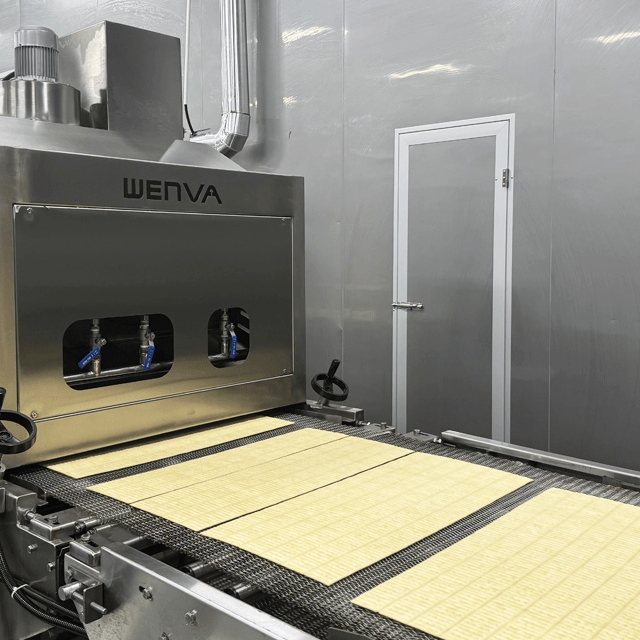
In any bakery or biscuit plant, the oven defines your throughput, texture, color, and energy cost per kilo of product. For industrial biscuit manufacturing, your choice is rarely "any oven will do"—you are really choosing your baking curve, moisture profile, and long‑term cost per ton. [bakeryequipment]
Most industrial producers will work with one of three main oven technologies. [bakeryequipment]
- Deck ovens – Ideal for artisan bread, pastries, and pizzas where bottom heat and traditional baking are critical. [amfbakery]
- Convection ovens – Useful for diversified product ranges such as cookies, cakes, and pies, thanks to forced air circulation and even heat distribution. [amfbakery]
- Rotary ovens – Designed for higher volumes with rotating racks that keep product moving and bake uniformity high. [amfbakery]
For industrial biscuit lines, however, dedicated tunnel ovens—electric, gas, or hybrid—are usually the backbone of the line. Wenva's tunnel ovens (electric, gas, and hybrid) are engineered specifically around biscuit baking curves, helping manufacturers precisely control color, moisture, and "bite" across long production runs. [wenvamachine]
Modern biscuit plants increasingly rely on multi‑zone tunnel ovens to fine‑tune baking stages and extend shelf life. Multi‑zone designs allow you to: [wenvamachine]
- Pre‑dry and set the surface to control spread and shape.
- Bake through the center without over‑coloring the surface.
- Finish and equalize moisture for long shelf life and stable packaging.
Recent engineering case studies from Wenva show how multi‑zone ovens outperform single‑zone models in precision moisture removal for crackers and long‑shelf‑life biscuits. When you scale to export volumes, these differences translate into fewer rejects, more consistent packaging performance, and stronger brand perception in new markets. [blog.saleslayer]
If the oven is your heart, your dough sheeter and forming section are the hands of the line—they define weight, thickness, and shape consistency long before products reach the oven. [bakeryequipment]
A professional dough sheeter gradually reduces the dough sheet thickness while maintaining dough structure, laminations (if needed), and gluten alignment. This ensures: [amfbakery]
- Consistent thickness and piece weight across thousands of cuts.
- Stable baking results and even color.
- Lower scrap and re‑work in cutting and forming.
In bakery environments, sheeters integrate with automatic dividers, moulders, and other forming equipment to deliver a streamlined production process. On a biscuit production line, Wenva integrates dough sheeters, rotary cutters, and moulding systems to match the final biscuit texture (short, hard, sandwich, soda, etc.) and to fit different factory layouts. [wenvamachine]
For producers running multiple SKUs or seasonal shapes, mold strategy directly impacts changeover time and OEE (Overall Equipment Effectiveness). Wenva's recent engineering content compares interchangeable mold inserts with dedicated rollers, showing how hybrid approaches can cut downtime while keeping tooling costs under control for specialized biscuits. For small or mid‑size factories expanding into export markets, this flexibility often becomes a critical competitive advantage. [bakeryequipment]
Mixers are far more than "big kitchen tools" in industrial baking—they are process equipment that determines dough development, water absorption, and final texture. [blog.saleslayer]
Planetary mixers are the multitaskers of commercial kitchens and smaller bakeries. They support: [amfbakery]
- Batters, creams, whipped fillings, and light dough.
- Multiple tools (hooks, whisks, paddles, scrapers) and interchangeable bowls.
- Cafes, pastry shops, and test bakeries that need high versatility.
In a biscuit factory context, planetary mixers are often used in pilot labs, R&D, or for low‑volume specialty products. [amfbakery]
For high‑volume biscuit lines, spiral or horizontal dough mixers are the real workhorses. [wenvamachine]
- Designed for large dough batches with high energy efficiency.
- Optimized to achieve specific dough development for short and hard biscuits.
- Available with fixed or tilting bowls and integration into automatic flour feeding systems.
Wenva's production lines integrate horizontal and vertical dough mixers with automatic flour feeding and weighing systems, helping factories reduce manual handling, improve recipe accuracy, and stabilize product quality from batch to batch. [wenvamachine]
For certain biscuits and crackers—especially alkaline water biscuits, soda crackers, and some specialty products—controlled fermentation and resting are crucial. [wenvamachine]
A professional proofer provides:
- Stable temperature and humidity for predictable dough development.
- Uniform fermentation across trays or bands.
- Consistent volume, texture, and internal structure in the final product.
Even when your main SKUs are non‑yeasted biscuits, rest times and dough conditioning stages between mixing, laminating, and cutting can be critical to control shrinkage and surface defects. Well‑designed lines include rest conveyors, intermediate proofing, or controlled resting hoods depending on the product category. [blog.saleslayer]
In many bakery articles, baking sheets and pans are treated as secondary equipment, but in industrial operations they are primary process surfaces. Material, coating, and maintenance directly affect heat transfer, color, and release. [amfbakery]
- High‑quality non‑stick trays help reduce breakage and product deformation, especially for soft cookies and cakes. [amfbakery]
- Specialized molds allow shaped products, filled items, or Hello Panda‑style biscuits, which Wenva also supports with dedicated injection machines. [wenvamachine]
- For high‑speed cookie production, steel strip bands provide a stable surface that works seamlessly with tunnel ovens and depositing systems. [wenvamachine]
Wenva's product portfolio includes steel strip cookie lines, pretzel lines, alkaline biscuit lines, and stackable potato chip lines, giving manufacturers a path to diversify SKUs on top of their core biscuit products while reusing as much infrastructure as possible. [wenvamachine]
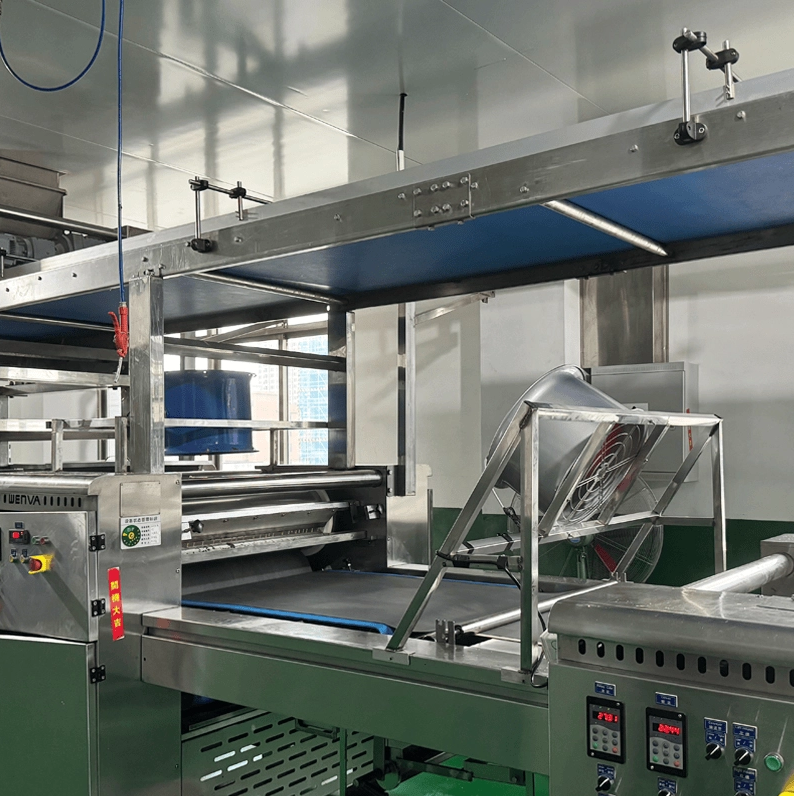
The original bakery article emphasizes display cases as a core element of customer experience in retail bakeries. In industrial biscuit manufacturing, the equivalent "display" stage is: [amfbakery]
- Stacking and cooling systems.
- Handling before packaging.
- The integration to downstream packers and cartoners.
Automated biscuit stackers, turning machines, and conveying systems are essential to preserve product integrity between oven discharge and packaging. At high speeds, manual handling is not only inefficient but also a major source of breakage and contamination risk. Wenva's auxiliary equipment portfolio (stackers, turning conveyors, sprinkling machines, oil sprayers, egg printers, etc.) is designed to close the gap between the oven and your packaging line so that your operators can focus on quality assurance instead of manual transfers. [food-safety]
To go beyond basic bakery equipment lists and truly compete in 2026 and beyond, successful biscuit manufacturers tend to invest in three strategic areas. [bakingbusiness]
Manual flour and ingredient handling quickly become bottlenecks as your plant scales. Automated flour feeding and weighing systems:
- Improve recipe precision and batch‑to‑batch consistency.
- Reduce dust, contamination risk, and manual labor.
- Provide traceability data that supports audits and brand trust.
Wenva offers automatic flour feeding and weighing systems as part of its auxiliary equipment range, allowing plants to integrate dosing, mixing, and dough preparation into one controlled process. [wenvamachine]
Energy costs in tunnel ovens and dryers are a major component of biscuit production OPEX. Recent engineering work in the sector has compared exhaust heat recovery systems with standard venting in biscuit factories, showing that reclaiming waste heat can significantly lower energy consumption while supporting corporate sustainability goals. [bakingbusiness]
By pairing hybrid tunnel ovens with exhaust heat recovery, many plants can:
- Cut fuel consumption per kilo of product.
- Stabilize baking curves even in changing ambient conditions.
- Improve ESG positioning for export buyers and retail chains.
Markets evolve fast: low‑sugar, high‑fiber, cleaner labels, and regional flavor profiles are all growing trends in bakery products. A rigid line design makes it expensive to respond to these shifts. Wenva's long‑term work with customers shows that modular biscuit lines—where ovens, forming, decoration, and packaging interfaces can be extended or re‑configured—offer a safer investment over a 10‑year horizon. [pmc.ncbi.nlm.nih]
For a small bakery, buying a single oven, mixer, or sheeter makes sense. For a biscuit manufacturer targeting national distribution or export, a fully integrated automated biscuit production line is almost always more efficient. [blog.saleslayer]
- End‑to‑end consistency – From dough mixing to stacking, all machines are engineered to work together, reducing micro‑stoppages and quality variation. [wenvamachine]
- Layout optimization – Lines can be designed around your existing building constraints, with U‑shaped, L‑shaped, or straight configurations that optimize space and material flow. [wenvamachine]
- Standardized controls and automation – A single control philosophy makes it easier to train operators and troubleshoot issues.
- Scalable capacity – Adding zones, cooling conveyors, or packaging legs is more straightforward when starting from a modular system design. [blog.saleslayer]
With 40 years of experience, over 30,000 m² of production space, and hundreds of biscuit lines installed across Asia, Africa, and Latin America, Wenva Machine brings both engineering expertise and field feedback into every new project. That accumulated learning helps new customers avoid common pitfalls—from poor oven sizing to under‑designed cooling sections—and reach target OEE faster. [bakeryequipment]
When I advise new or upgrading biscuit factories, I encourage teams to use a simple checklist instead of focusing only on machine price. [geniuserp]
Before buying, answer these questions:
1. What are your primary and secondary biscuit SKUs (short, hard, sandwich, soda, special shapes)?
2. What is your target capacity (kg/hour now, and in 3–5 years)?
3. Do you need export‑level consistency and documentation (for retailers, auditors, or brand owners)?
4. How flexible must your line be for seasonal shapes or recipe changes?
5. What are your constraints in factory layout, energy type (electric/gas), and labor availability?
Once you have clarity on those points, discuss with your equipment partner:
- Oven zones and heat source (electric, gas, hybrid).
- Dough mixing and feeding strategy (manual vs. automatic).
- Sheeting, cutting, and molding configuration.
- Stacking, cooling, and packaging interfaces.
- Future expansion options (extra ovens, decorating, or new product formats).
Wenva's project teams typically start with a one‑to‑one consultation, then develop a tailored line configuration that respects both budget and long‑term growth plans. [wenvamachine]
You may be at a turning point if you recognize some of these warning signs in your current operation:
- Operators frequently adjust ovens to chase color and moisture.
- Manual loading/unloading and stacking cause high breakage.
- Spare parts and service are fragmented across multiple brands.
- You cannot guarantee the same texture and color across lots for key customers.
At this stage, upgrading to an automated biscuit production line is no longer just an efficiency choice—it becomes a requirement for maintaining customer trust and margin. Partnering with a dedicated biscuit line manufacturer like Wenva helps you move beyond generic bakery equipment and into a system engineered specifically around biscuits, cookies, crackers, and related products. [geniuserp]
If you are planning a new biscuit plant or upgrading an existing bakery into a fully automated line, now is the time to define your equipment strategy instead of buying machines one by one. Share your target products, capacity, and layout constraints with Wenva, and their engineering team can help you design a customized automated biscuit production line that delivers stable quality, higher output, and a clear roadmap for future expansion. [blog.saleslayer]
Q1. What is the minimum scale where an automated biscuit production line makes sense?
For most manufacturers, a fully automated line becomes attractive once daily throughput targets move beyond what a single rotary or convection oven can handle, or when they must supply consistent product to major distributors or export markets. [blog.saleslayer]
Q2. Can I produce multiple biscuit styles on a single automated line?
Yes, modern lines can switch between short biscuits, hard biscuits, sandwich biscuits, and certain crackers using interchangeable molds, adjustable baking curves, and standardized oven controls, though each product typically requires its own validated settings. [bakeryequipment]
Q3. How important is energy efficiency in biscuit production line design?
Very important—ovens, dryers, and cooling systems form a large share of operational costs, and solutions such as hybrid tunnel ovens and exhaust heat recovery can significantly reduce energy consumption while supporting sustainability and branding goals. [bakingbusiness]
Q4. What certifications should I look for in a biscuit equipment supplier?
Industrial buyers typically prioritize CE and ISO certifications, as well as patent coverage on key mechanical and automation innovations, which indicate that the supplier invests in engineering, safety, and continuous improvement. [bakeryequipment]
Q5. How does Wenva support factories after installation?
Beyond delivering equipment, Wenva provides layout design, commissioning, operator training, and ongoing technical support, supported by its experience center, Foshan branch office, and a global customer base spanning dozens of countries. [bakeryequipment]
1. New Era Machines. “6 Must‑Have Bakery Equipments For A Flourishing Business.” https://www.neweramachines.com/6-bakery-equipment-for-your-business/
2. Wenva Machine. “Biscuit Machinery Manufacturer – Biscuit Production Line, Dough Mixer, Tunnel Oven, Auxiliary Equipment.” https://www.wenvamachine.com
3. Sales Layer. “SEO for Manufacturing Companies: The 2026 Strategy Guide.” https://blog.saleslayer.com/seo-for-manufacturing-companies
4. BakingBusiness.com. “Baking Transparency: Rebuild Consumer Trust in 2025.” https://www.bakingbusiness.com/articles/63270-baking-transparency-rebuild-consumer-trust-in-2025
5. NCBI / NIH. “New Alternatives to Healthier Bakery Products.” https://pmc.ncbi.nlm.nih.gov/articles/PMC6963723/
6. Genius ERP. “How To Use SEO to Market Your Business.” https://www.geniuserp.com/resources/blog/how-to-use-seo-to-market-your-business/
7. Food Safety Magazine. “Handling Food Safety Risks in a Retail Bakery.” https://www.food-safety.com/articles/5850-handling-food-safety-risks-in-a-retail-bakery


