
Views: 222 Author: Wenva Machine Publish Time: 2026-06-05 Origin: Site
Content Menu
● Understanding the Two Options
● Core Cost-Benefit Trade-Offs
>> Cost vs. Flexibility Overview
● How Each Option Fits Small-Batch Specialized Biscuits
● Tooling Investment and ROI (with Practical Example)
● Production Efficiency and Downtime
● Quality, Consistency, and Wear
● Design Innovation and Time-to-Market
● Maintenance, Sustainability, and Lifecycle Costs
● Expert Insight: A Practical Hybrid Strategy
● How Wenva Machine Designs for Both Technologies
● Step-by-Step Decision Framework for Factory Owners
● Call to Action: Optimize Your Next Biscuit Line with Wenva
● Frequently Asked Questions (FAQ)
Interchangeable mold inserts can dramatically lower tooling costs and increase flexibility for small-batch, specialized biscuits, while dedicated rollers deliver superior stability and throughput for long, repeated runs of the same SKU. For many small and mid-sized biscuit factories, the best ROI often comes from a hybrid strategy that combines interchangeable mold inserts for new-product development with dedicated rollers for high-volume winners. [kenmold]
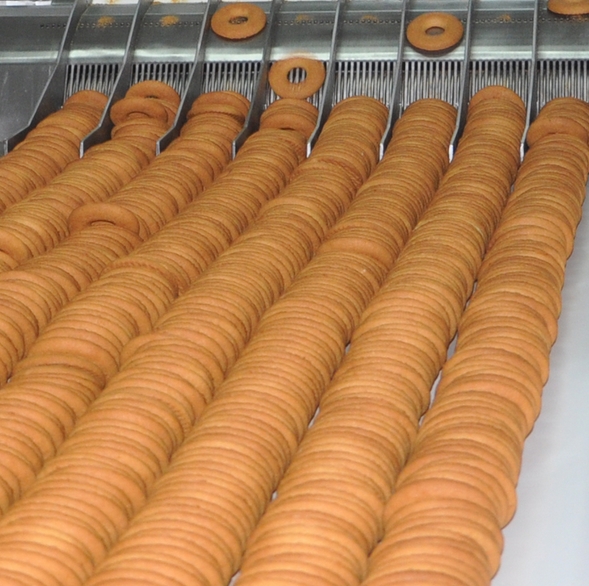
Interchangeable mold inserts are removable cavities or forming blocks mounted into a standard roller or mold base, allowing you to switch patterns or biscuit shapes without replacing the whole forming unit. In an automated biscuit production line, they are typically used in rotary molding or embossing stations to support frequent SKU changes and short runs. [imar-machine]
Dedicated rollers are full-size, one-piece (or permanently assembled) forming rollers engraved or machined for a specific biscuit design. They are optimized for long production runs where the pattern rarely changes, and where stability, speed, and consistency are the top priorities. [dtfoodmachine]
> From Wenva Machine's perspective: With 40 years of experience in automated biscuit production lines, we see both technologies succeeding when they are matched to the right product mix, batch size, and factory strategy. [wenva]
The main trade-off is flexibility versus long-term unit cost. Interchangeable mold inserts reduce upfront tooling and changeover costs but may increase per-piece costs if volumes become very high. Dedicated rollers demand higher initial investment and longer setup but can offer the lowest cost per kilo for stable, high-volume SKUs. [precisionmoldedplastics]
| Dimension | Interchangeable Mold Inserts | Dedicated Rollers |
|---|---|---|
| Upfront tooling cost | Lower; only insert sets needed, base reused. (kenmold) | Higher; each SKU needs a full roller. (imar-machine) |
| Changeover time | Shorter; swap inserts, single operator possible. (precisionmoldedplastics) | Longer; crane/forklift and full roller change. (precisionmoldedplastics) |
| Ideal batch size | Small to medium batches, frequent changeovers. (kenmold) | Large, stable batches with rare design changes. (imar-machine) |
| Design flexibility | High; easy to test new shapes and patterns. (kenmold) | Limited; each roller fixed to one design. (imar-machine) |
| Long-run unit cost | Higher if volumes become very large. (precisionmoldedplastics) | Lowest for steady high-volume SKUs. (imar-machine) |
Small-batch specialized biscuits often include seasonal products, co-branded shapes, functional formulations, or pilot SKUs for new markets. These products typically require frequent design tweaks, limited-volume campaigns, and rapid customer feedback loops. [dongguanmold]
- Interchangeable inserts shine when you:
- Launch many SKUs each year (limited editions, regional flavors). [kenmold]
- Need to customize shapes for private-label or co-packing clients. [wenvamachine]
- Run short campaigns tied to festivals or promotions. [imar-machine]
- Dedicated rollers make sense when:
- A test SKU becomes a high-volume "hero" product. [dtfoodmachine]
- Retailers demand consistent, long-term supply at the lowest cost. [wenvamachine]
- You lock in a multi-year contract with stable demand. [imar-machine]
From an operator's UX standpoint, interchangeable inserts reduce the psychological barrier to experimentation: teams are more willing to try new shapes when tooling changes are quick, safe, and inexpensive. [precisionmoldedplastics]
Imagine a mid-sized factory planning five specialized biscuit SKUs, each with small-batch runs of 2–5 tons per campaign. From projects we see at Wenva Machine, the typical decision is whether to invest in one modular base with multiple insert sets or five separate dedicated rollers. [wenva]
- Scenario A – Interchangeable inserts
- One standard roller base, five insert sets. [dongguanmold]
- Lower total tooling cost and shorter lead time. [kenmold]
- Easier future expansion: add a sixth insert instead of another roller. [dongguanmold]
- Scenario B – Dedicated rollers
- Five full rollers, each matched to one SKU. [dtfoodmachine]
- Higher initial spend, but optimal for long, continuous runs. [imar-machine]
- Strongest choice if all five SKUs already have proven, long-term demand. [wenvamachine]
In practice, many factories adopt a staged strategy: start with interchangeable inserts to validate designs and volumes, then convert the best-performing SKUs to dedicated rollers once demand stabilizes. [kenmold]
In automated biscuit lines, every minute of downtime matters. The time needed to swap forming tools directly impacts daily output, on-time deliveries, and overall equipment effectiveness (OEE). [dtfoodmachine]
Interchangeable inserts:
- Changeovers are faster: operators replace inserts instead of removing the whole roller, often under Single-Minute Exchange of Die (SMED) principles. [precisionmoldedplastics]
- Less reliance on cranes or forklifts for each pattern change. [precisionmoldedplastics]
- Best suited to production plans where you switch SKUs several times per week. [imar-machine]
Dedicated rollers:
- Changeovers are slower and more labor-intensive, but once installed, the line can run longer without intervention. [precisionmoldedplastics]
- Excellent for 24/7 runs of a single hero product. [dtfoodmachine]
- Reduced risk of misalignment or incorrect insert assembly over time. [imar-machine]
From a UX point of view, operators appreciate how interchangeable inserts remove heavy lifting and simplify routine tasks, while maintenance teams value the mechanical robustness of dedicated rollers for long missions. [dongguanmold]
Product quality depends on precise dimensions, consistent texture, and stable weight over long runs. Tooling choice affects both biscuit aesthetics and repeatability. [dtfoodmachine]
- Interchangeable inserts
- Allow worn areas to be replaced without scrapping the full roller, extending overall tooling life. [kenmold]
- Make it easier to correct localized defects (e.g., a section that chips or wears faster). [dongguanmold]
- Require disciplined insert cleaning and correct reassembly to avoid tiny misalignments. [precisionmoldedplastics]
- Dedicated rollers
- Offer maximum rigidity and stable geometry, ideal for tight tolerances. [imar-machine]
- Typically deliver more consistent embossing depth and edge definition over very long runs. [dtfoodmachine]
- Must be reworked or fully replaced when wear exceeds acceptable limits. [imar-machine]
A hybrid approach improves quality assurance: start with inserts for rapid development, then lock critical SKUs into dedicated rollers once optimal parameters are validated on the line. [wenvamachine]
The market for biscuits and cookies is highly dynamic, driven by new flavors, shapes, and co-branded designs. Time-to-market often determines whether a seasonal product succeeds. [wenvamachine]
Interchangeable inserts:
- Enable faster prototyping because engineers focus on the insert geometry rather than a full roller base. [kenmold]
- Support iterative A/B testing of shapes, textures, and logo placements on the same line. [dongguanmold]
- Fit well with just-in-time manufacturing strategies for retail campaigns. [dongguanmold]
Dedicated rollers:
- Still important when a shape becomes part of the brand identity and needs long-term stability. [dtfoodmachine]
- Often chosen for flagship SKUs whose designs will not change for several years. [wenvamachine]
For small-batch specialized biscuits, interchangeable inserts give your R&D and marketing teams the freedom to experiment without locking the factory into heavy tooling too early. [kenmold]
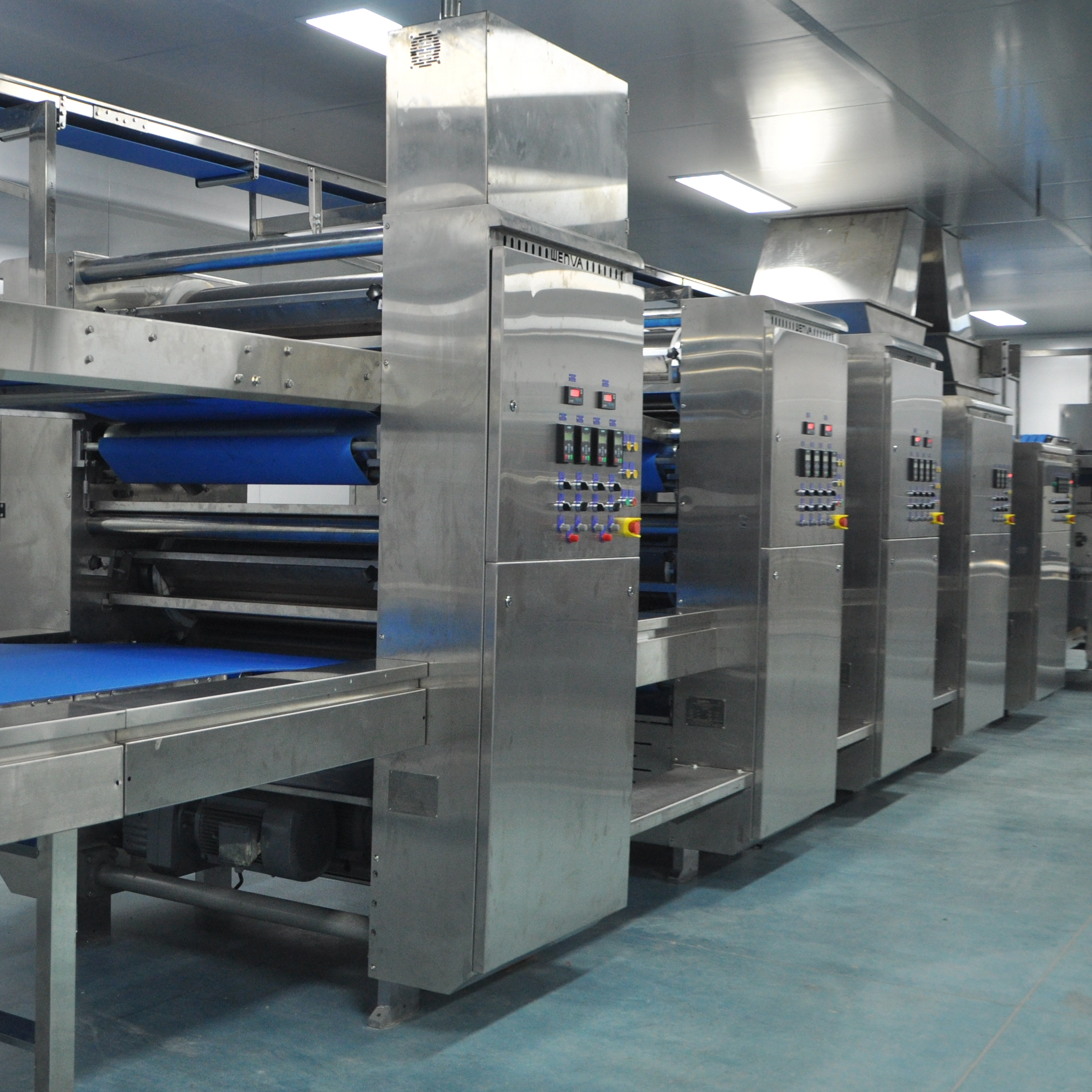
Modern factories are under pressure to reduce waste, energy usage, and unplanned downtime. Tooling design affects not only cost but also sustainability and maintainability. [wenvamachine]
- Interchangeable inserts
- Reduce material waste by allowing only specific insert elements to be replaced. [kenmold]
- Simplify maintenance: inserts can be removed, cleaned, or repaired offline while the base frame is reused. [dongguanmold]
- Support more sustainable tooling strategies by extending the life of the base system. [kenmold]
- Dedicated rollers
- Require full roller replacement when wear reaches critical levels, which can be more resource-intensive. [imar-machine]
- Provide strong mechanical stability, which may reduce scrap due to misalignment or vibration. [dtfoodmachine]
- Work very well in plants where maintenance routines and budgets are optimized for fewer but larger assets. [imar-machine]
When Wenva designs lines, we often incorporate maintenance-friendly features—for both interchangeable inserts and dedicated rollers—such as safe lifting points, quick-release mountings, and clear alignment references. [wenva]
Based on hundreds of biscuit production line projects across Asia, South America, and Africa, a clear pattern emerges. [youtube]
1. Use interchangeable mold inserts to explore and validate new specialized biscuits.
This includes limited editions, nutrition-focused products, and high-mix, low-volume SKUs. [dongguanmold]
2. Promote proven winners to dedicated rollers once demand stabilizes.
When a SKU's volume, forecast, and retailer contracts justify long runs, switch it to a dedicated roller to lower unit cost and maximize efficiency. [wenvamachine]
3. Standardize line layouts for both options.
Wenva's modular automated biscuit lines are engineered so that operators can handle either inserts or dedicated rollers without major retraining or hardware changes. [wenvamachine]
This hybrid approach offers the best of both worlds: agility for your marketing team and cost-efficiency for your production and finance teams. [kenmold]
As a specialized manufacturer focused on automated biscuit production lines for more than 40 years, Wenva Machine integrates interchangeability and robustness into our line designs. [imexbb]
- We provide customized forming stations that can be configured with either modular insert systems or dedicated rollers. [wenvamachine]
- Our engineering teams support plant layout planning, matching tooling choices to oven capacity, cooling conveyors, and packaging speed. [wenva]
- We maintain test lines and demonstration facilities where customers can trial specialized biscuit concepts before committing to full tooling investment. [youtube]
For small-batch specialized biscuits, this means you can move from concept to industrial-scale trial with minimal risk, guided by experienced automation engineers. [youtube]
To choose between interchangeable mold inserts and dedicated rollers for your next biscuit project, follow a structured evaluation:
1. Clarify your product roadmap.
- How many SKUs per year?
- Are they seasonal, permanent, or test launches?
2. Estimate batch sizes and forecast stability.
- Small, uncertain volumes favor interchangeable inserts.
- Stable, high-volume SKUs justify dedicated rollers.
3. Assess line utilization and changeover frequency.
- High changeover frequency → minimize downtime with inserts.
- Long continuous runs → maximize uptime with dedicated rollers.
4. Evaluate internal capabilities.
- Do you have teams trained for complex changeovers?
- Are maintenance and tooling workshops set up for rapid insert handling?
5. Model the full lifecycle cost.
- Compare total tooling, maintenance, and downtime costs over 3–5 years, not just purchase price.
Wenva's engineering team can facilitate this analysis using real performance data from similar projects to provide more accurate cost-benefit models. [wenva]
If you are planning a small-batch specialized biscuit project, the most effective strategy is rarely "inserts or rollers only"—it is a tailored combination based on your product roadmap, budget, and plant layout. Wenva Machine can help you design and implement an automated biscuit production line that balances flexibility, cost-efficiency, and operator UX, using both interchangeable mold inserts and dedicated rollers where they deliver the most value. [imexbb]
Contact our engineering team to discuss your current SKUs, capacity targets, and future roadmap so we can propose a customized, data-backed tooling strategy for your plant. [youtube]
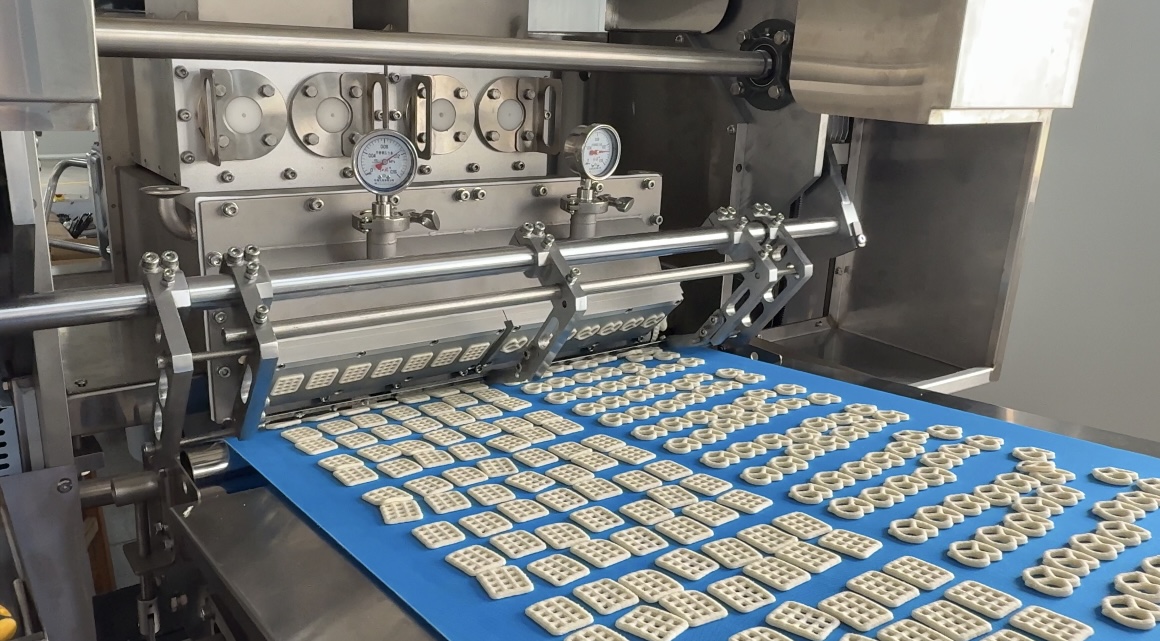
1. Which option is better for a startup biscuit brand?
For startups with uncertain volumes and frequent new-product launches, interchangeable mold inserts usually offer better risk control and faster learning cycles. [precisionmoldedplastics]
2. Can I upgrade from interchangeable inserts to dedicated rollers later?
Yes. Many factories start with insert-based tooling to validate products, then invest in dedicated rollers once demand stabilizes and long runs are justified. [kenmold]
3. How do interchangeable inserts affect cleaning and food safety?
Properly designed insert systems allow components to be removed and cleaned offline, which can improve hygiene, provided SOPs and training are in place. [dongguanmold]
4. Will dedicated rollers limit my ability to innovate?
Not if you maintain at least one line or forming station with interchangeable inserts for R&D and seasonal SKUs; dedicated rollers then support your high-volume core range. [wenvamachine]
5. How does Wenva support after-sales optimization of tooling strategy?
Wenva offers technical support, spare parts, and consulting to help customers fine-tune their mix of interchangeable inserts and dedicated rollers as their product portfolio evolves. [youtube]
1. Kenmold. "Benefits of Interchangeable Mold Inserts for Plastic Injection Molds."
<https://www.kenmold.com/blog/benefits-of-interchangeable-mold-inserts-for-plastic-injection-molds_b46> [kenmold]
2. IMAR Machine. "Multifunctional Biscuit Production Line."
<https://imar-machine.com/solution/biscuit-production-line/> [imar-machine]
3. Wenva Machine (Yangjiang Ronghua Yuandong Industrial Co., Ltd.). "About Us."
<http://www.wenva.net/about/> [wenva]
4. IMEXBB. "Biscuit Production Lines – Wenva Machine."
<https://www.imexbb.com/biscuit-production-lines-10906180.htm> [imexbb]
5. Precision Molded Plastics. "Interchangeable Inserts."
<https://www.precisionmoldedplastics.com/blog/interchangeable-inserts/> [precisionmoldedplastics]
6. DT Food Machine. "Fully Automatic Biscuit Production Line Manufacturers."
<https://www.dtfoodmachine.com/ro/biscuit-production-line/> [dtfoodmachine]
7. Wenva Machine. "Company Profile & Product Overview."
<https://wenva.goldsupplier.com/about.html> [wenva.goldsupplier]
8. YouTube. "WENVA Fully Automatic Biscuit Production Line/Biscuit Machine."
<https://www.youtube.com/watch?v=n_GLmf_LCrw> [youtube]
9. Dongguan Mold. "MUD Mold – Interchangeable Modular Mold Base System."
<https://www.dongguanmold.com/mud-mold/> [dongguanmold]
10. Wenva Machine Official Site. "Customized Biscuit Production Line, Dough Mixer, Tunnel Oven."
<https://www.wenvamachine.com> [wenvamachine]


