
Views: 222 Author: Wenva Machine Publish Time: 2026-06-16 Origin: Site
Content Menu
● What Is an Automated Biscuit Production Line with Continuous Mixing?
● Why Continuous Mixers Are Reshaping Biscuit Manufacturing
>> 1. Consistent Dough, Consistent Biscuits
>> 2. Higher Throughput with Smaller Footprint
>> 3. Reduced Labor and Lower Operating Costs
>> 4. Tighter Process Control and Traceability
● Market Trends: Why Automation Matters Now
● Wenva Machine: 40 Years Focused on Automated Biscuit Lines
● End‑to‑End Biscuit Production Solutions
>> From Concept to Factory‑Ready Line
>> Customization for Different Biscuit Types
● Practical Steps to Transition from Batch to Continuous Mixing
● Real‑World Example – Scaling Capacity with Continuous Mixing
● How Continuous Mixers Support Sustainability Targets
● Key Technical Advantages of Continuous Mixers in Biscuit Lines
● User‑Centric Design: What Plant Teams Care About
● How Wenva Machine Supports Global Biscuit Producers
● Clear Call to Action: Plan Your Next High‑Yield Biscuit Line
● Frequently Asked Questions (FAQ)
Automated biscuit production lines that use continuous mixers can radically improve consistency, efficiency, and product quality in modern biscuit plants, especially when paired with a partner that has deep process experience like Wenva Machine. This guide explains how continuous mixing works in biscuit production, what tangible advantages it brings versus traditional batch systems, and how a 40‑year specialist manufacturer can help you design, install, and optimize a future‑proof line. [naegele-inc]
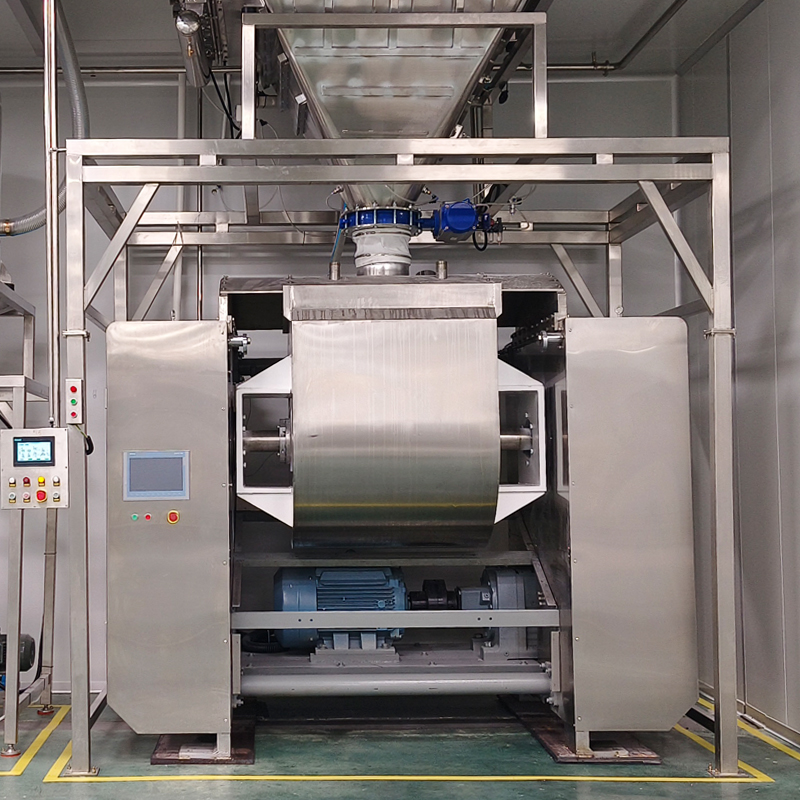
An automated biscuit production line is a fully integrated system that takes ingredients from feeding and mixing through forming, baking, cooling, and packaging with minimal manual intervention. In a continuous mixing line, dry and liquid ingredients are dosed and mixed in a steady flow, producing a constant stream of dough instead of intermittent batches. [exactmixing]
For biscuit manufacturers, this means the dough entering the sheeter, molder, or rotary cutter has more uniform moisture, texture, and temperature profile, which in turn stabilizes oven performance and finished product quality. When this mixing technology is engineered into a complete line—such as those Wenva Machine has supplied to more than 300 biscuit plants—it becomes the backbone of predictable, high‑volume production. [wenvamachine]
Continuous mixers are designed to deliver a steady stream of uniform dough with very tight tolerances on weight, texture, and temperature. Because ingredients are metered and mixed in real time, every portion of dough experiences the same mixing conditions from entry to discharge. [fptindia]
For biscuits, this level of control reduces variation in piece weight, spread, color, and bite across long production runs. Manufacturers report fewer rejects and less rework because the line no longer has to compensate for "good" and "bad" batches produced at different times during a shift. [naegele-inc]
By eliminating batch cycles and idle time between loads, continuous mixers enable higher throughput from the same floor space. Material flows continuously, and dough is always available at the downstream forming equipment, avoiding stop‑and‑start conditions that reduce line efficiency. [exactmixing]
Continuous systems also tend to be more compact than equivalent batch setups, which is attractive for plants where space is limited or where you want to add new SKUs without expanding the building. For manufacturers upgrading older lines, this can be the difference between incremental and transformational capacity gains. [fptindia]
Automated continuous mixers use ingredient feeders and recipe control systems that significantly reduce manual handling and supervision. Operators no longer need to charge multiple mixers, wait for mixing cycles to finish, and manually transfer dough to hoppers. [naegele-inc]
This automation lowers labor demand per ton produced and reduces ergonomic risks around lifting and dough handling. Coupled with more consistent dough and fewer quality deviations, plants often see improved yield and lower overall cost per kilo of finished biscuits when they move from batch to continuous mixing. [exactmixing]
Modern continuous mixers can integrate with PLC and SCADA systems, providing real‑time monitoring of ingredient ratios, mixing energy, dough temperature, and line speed. Recipe changes can be executed through the control system, and production data can be archived for audits and continuous improvement projects. [readingbakery]
This data‑driven environment supports better traceability and faster root‑cause analysis when upsets occur. For global biscuit brands operating under strict food safety and quality regimes, these capabilities are now a baseline expectation rather than a luxury. [readingbakery]
The global bakery processing equipment market is projected to grow from about USD 16.47 billion in 2025 to USD 31.57 billion by 2034, reflecting a compound annual growth rate of 7.60%. Within this growth, automated solutions and high‑efficiency ovens and mixers are highlighted as core drivers, especially for large‑scale producers facing cost and labor pressures. [fortunebusinessinsights]
As demand for biscuits and other baked products rises in emerging markets, manufacturers are under pressure to scale capacity and standardize quality while managing energy use and raw material costs. Automated biscuit production lines with continuous mixing are well aligned with these trends because they directly support higher throughput, efficiency, and product consistency. [fortunebusinessinsights]
Wenva Machine specializes in the research, development, and manufacturing of automated biscuit production lines, with more than 40 years of experience in the sector. The company has delivered over 300 biscuit production lines into operation, supporting both domestic and overseas customers with customized solutions. [wenva]
From compact lines for emerging brands to large‑scale systems for established industrial players, Wenva Machine provides design, fabrication, installation, and commissioning services tailored to each plant layout and product mix. This long manufacturing and engineering track record is critical for de‑risking projects that involve new continuous mixing technology or multi‑line factory expansions. [wenvamachine]
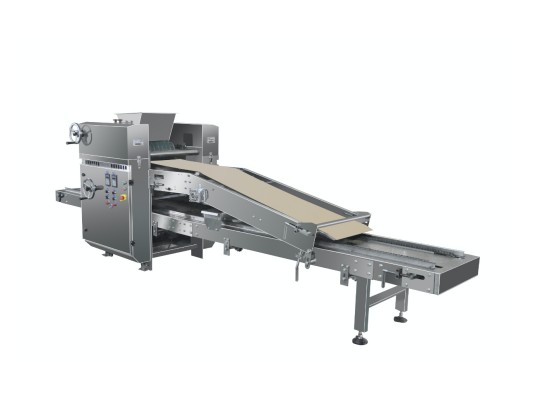
When a manufacturer approaches Wenva Machine, the engagement typically begins with a detailed assessment of product range, capacity targets, raw materials, and available space. Engineering teams then propose a line configuration that integrates dough mixing, forming, baking, cooling, and packaging to achieve the desired throughput while respecting local energy and utility constraints. [wenva]
For projects involving continuous mixers, special attention is given to ingredient storage and dosing, dough transfer methods, and synchronization with downstream forming equipment so the line runs at stable speeds with minimal stoppages. [wenva]
Different biscuit types—such as hard biscuits, crackers, and soft or sandwich biscuits—require different dough rheology and baking profiles. Wenva Machine configures mixer designs, barrel geometries, and control recipes to match the mechanical work and hydration needed for each product category. [wenvamachine]
For example, doughs that are more sensitive to over‑mixing may use shorter residence times and specific mixing zones, while high‑fat or high‑sugar formulations can benefit from carefully controlled energy input to avoid smearing or temperature spikes. By engineering the continuous mixer around the product, the line delivers stable dough quality shift after shift. [naegele-inc]
For manufacturers still running batch mixers, transitioning to continuous technology is a structured project rather than a simple equipment swap. Below is a practical, step‑by‑step roadmap informed by projects seen across the bakery sector. [fptindia]
1. Define goals and constraints
- Clarify capacity targets, OEE improvement goals, and maximum investment envelope.
- Map space limitations, utility availability, and existing upstream/downstream equipment.
2. Audit current process and losses
- Quantify downtime linked to batch changeovers, cleaning, and dough changeovers.
- Document variation in dough parameters and its impact on product rejects.
3. Run formulation and process trials
- Use pilot or test mixers to validate how your recipes behave under continuous conditions. [exactmixing]
- Adjust hydration, mixing energy, and ingredient sequence where needed.
4. Engineer the integrated line
- Work with a specialist such as Wenva Machine to align mixer capacity, forming speed, oven throughput, and cooling time. [wenvamachine]
- Ensure control systems are designed for recipe management and data logging.
5. Plan phased installation and commissioning
- Schedule installation around production windows to minimize disruption.
- Train operators and maintenance teams on the new control philosophy and cleaning routines.
6. Optimize post‑startup
- Track KPIs such as yield, waste, line speed, and unplanned downtime over the first 6–12 months.
- Use production data to refine recipes, speeds, and cleaning intervals.
A mid‑size biscuit factory aiming to double capacity without building extension space typically faces constraints in footprint, labor, and energy. In such scenarios, continuous mixing can be the enabling technology that unlocks higher throughput on an existing site. [fortunebusinessinsights]
By replacing multiple batch mixers with a single continuous system and re‑balancing oven and cooling capacities, plants often achieve higher kilograms per hour with more stable product characteristics. When paired with automation across the full Wenva Machine production line—from dough feeding to final packaging—manufacturers can operate longer, more stable runs with fewer manual interventions and better traceability for audits and export market compliance. [readingbakery]
Energy efficiency and waste reduction are increasingly important in bakery equipment investment decisions. The growth forecast for bakery processing equipment highlights a shift toward high‑efficiency solutions, reflecting both cost and sustainability drivers. [fortunebusinessinsights]
Continuous mixing supports these goals in several ways: first, by reducing unplanned stoppages and rejected product, which directly cuts raw material waste. Second, by enabling smoother, more predictable oven loading, it can help stabilize oven temperatures and reduce energy spikes associated with frequent restarts. For manufacturers communicating sustainability performance to retailers and end consumers, these operational improvements can translate into credible reductions in energy and waste per ton of finished biscuits. [readingbakery]
The table below summarizes how continuous mixers compare with traditional batch mixers for biscuit production.
| Aspect | Continuous mixers (biscuit lines) | Batch mixers (traditional) |
|---|---|---|
| Dough consistency | Highly uniform, steady dough stream for stable forming and baking. (naegele-inc) | Greater batch‑to‑batch variation; may require operator compensation. (naegele-inc) |
| Throughput | Higher throughput; no idle time between batches. (naegele-inc) | Limited by cycle time and changeovers. (naegele-inc) |
| Labor requirement | Lower, due to automated ingredient feeding and continuous discharge. (naegele-inc) | Higher, with manual loading, monitoring, and dough transfer. (naegele-inc) |
| Footprint | Compact relative to output, suitable for space‑constrained plants. (fptindia) | Larger overall footprint for equivalent capacity. (fptindia) |
| Process control | Advanced control and data logging integrated with line automation. (naegele-inc) | Less continuous data; control often depends on operator skill. (readingbakery) |
| Product changeovers | Managed via recipe and controlled transitions; good for longer runs. (naegele-inc) | Flexible for frequent small batches but with more downtime. (naegele-inc) |
When evaluating a new biscuit production line, users across operations, quality, maintenance, and management have different—but overlapping—priorities. An effective solution addresses them all.
- Operations managers look for stable line speeds, predictable changeovers, and easy‑to‑understand controls. Continuous mixers support this by giving them a constant dough supply and fewer stops related to mixing bottlenecks. [fptindia]
- Quality teams focus on repeatable dough characteristics, bake color, and moisture, all of which benefit from precise dosing and mixing control. [naegele-inc]
- Maintenance teams need accessible components, clean‑in‑place options where possible, and standardized spare parts across the line. [readingbakery]
- Plant management is concerned with ROI, payback period, and alignment with long‑term capacity and sustainability targets, which ties directly to the market trends and efficiency benefits discussed earlier. [fortunebusinessinsights]
A supplier with extensive field experience in biscuit lines, like Wenva Machine, is better positioned to balance these requirements in a single, integrated proposal. [wenva]
With decades dedicated to biscuit production technology, Wenva Machine has accumulated project experience across different plant sizes, markets, and regulatory environments. The company's offering goes beyond equipment sales to include line design, installation supervision, commissioning, operator training, and after‑sales support. [wenvamachine]
For customers aiming to upgrade to continuous mixing, Wenva can help with feasibility assessment, pilot testing, and stepwise modernization of existing lines rather than forcing an all‑or‑nothing replacement. Having a single partner responsible for both mixer design and downstream biscuit equipment simplifies project management and reduces the risk of mismatched capacities or control philosophies. [wenva]
If you are currently running batch mixers or operating older biscuit lines, now is a practical time to evaluate how continuous mixing and end‑to‑end automation could support your growth and cost‑reduction goals. Market data indicates strong long‑term demand for bakery products, and investments in high‑efficiency equipment are becoming a competitive necessity rather than a differentiator. [exactmixing]
To explore a customized automated biscuit production line that fits your plant layout and product portfolio, you can contact Wenva Machine through its official website, where the team shares details on installed lines and technical capabilities. A short consultation can help you understand potential capacity gains, payback timelines, and the best path to integrate continuous mixers into your next‑generation biscuit factory. [wenvamachine]
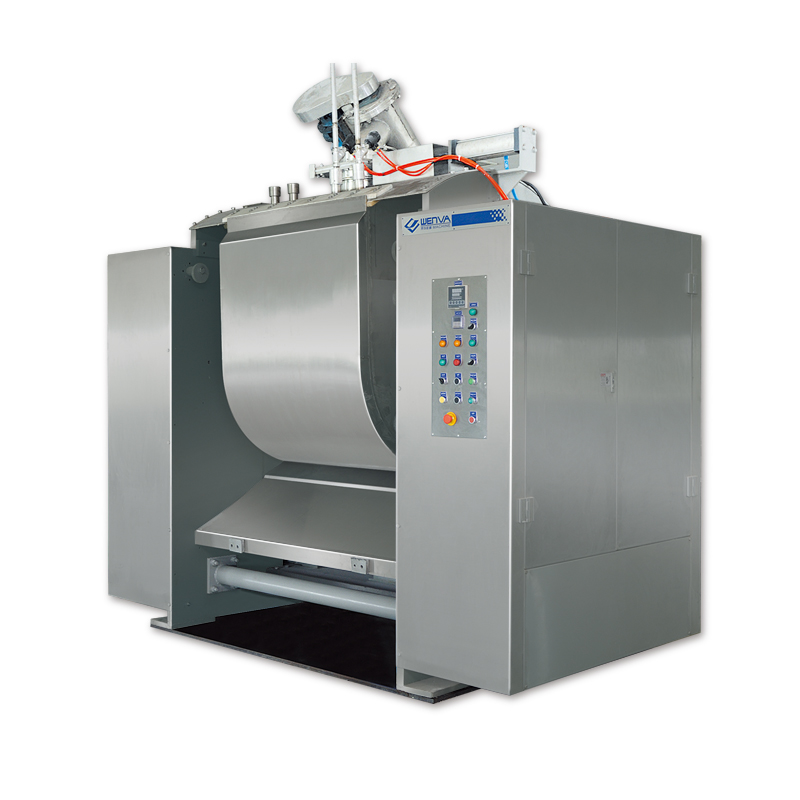
1. What is the main advantage of a continuous mixer in biscuit production?
The primary advantage is the ability to deliver a constant stream of uniform dough, which stabilizes forming, baking, and finished product quality while increasing throughput. [fptindia]
2. Does a continuous mixer work for all biscuit types?
Continuous mixers can be engineered and controlled for a wide range of biscuit and cracker formulations, with adjustments in residence time, mixing energy, and ingredient dosing to match specific products. [naegele-inc]
3. Will switching from batch to continuous mixing require a full line replacement?
Not necessarily; many plants transition in phases, integrating a continuous mixer with existing forming and baking equipment and then upgrading other sections over time. [exactmixing]
4. How does automation affect labor requirements?
Automation in continuous mixing and line control reduces manual ingredient handling and dough transfer, which typically lowers labor hours per ton and improves ergonomics. [fptindia]
5. How can I estimate the ROI of a continuous mixer upgrade?
ROI calculations usually combine expected gains in throughput, reductions in waste and labor, and savings in energy and maintenance, compared with the current batch‑based process. A specialized supplier can help model these numbers based on your specific plant data. [fortunebusinessinsights]
1. Naegele Inc. "5 Benefits of Continuous Mixing for Bakery Manufacturers." [Link] [naegele-inc]
2. Exact Mixing. "Biscuit Production Line Equipment – Advantages of Continuous Mixing." [Link] [exactmixing]
3. Fortune Business Insights. "Bakery Processing Equipment Market Size & Share Report, 2034." [Link] [fortunebusinessinsights]
4. FPT India. "Continuous Mixer | Advantages & its Work." [Link] [fptindia]
5. Reading Bakery Systems. "Bakery Equipment & Technology Trends." [Link] [readingbakery]
6. Wenva Machine – Official Website. "Customized Biscuit Production Line, Dough Mixer Manufacturing." [Link] [wenvamachine]
7. WENVA MACHINE – Corporate Site. "WENVA MACHINE." [Link] [wenva]


