
Views: 222 Author: Wenva Machine Publish Time: 2026-05-30 Origin: Site
Content Menu
● Understanding Automated Weight Control Systems
>> Key Components of Modern Automated Systems
● Manual Sampling: Traditional Approach and Limitations
● ROI Comparison: Financial Impact Analysis
>> Giveaway Reduction: The Primary Driver
● Precision and Accuracy Comparison
● Operational Efficiency and Throughput
● Initial Investment vs. Long-Term Returns
>> Capital Expenditure Considerations
● Scalability and Future-Proofing
>> Production Growth Adaptation
● Implementation Considerations
>> System Integration Requirements
>> Operator Training and Change Management
● Industry Best Practices and Expert Recommendations
>> Strategic Implementation Approach
● Real-World Application: Cookie Production Specifics
>> Dough Consistency Challenges
● Comparative Summary: Key Decision Factors
● Environmental and Sustainability Impact
● Expert Perspective: Strategic Recommendations
● Take the Next Step in Production Optimization
Based on my 40 years in the automated biscuit production industry at Wenva Machine, I've witnessed a fundamental shift in how manufacturers approach weight control—and the financial implications are striking. Automated weight control systems deliver demonstrably superior ROI compared to manual sampling methods when integrated into precision feeders for commercial cookie lines. The difference between these approaches extends far beyond operational efficiency to directly impact profitability, compliance, and long-term competitiveness. [bakerperkins]
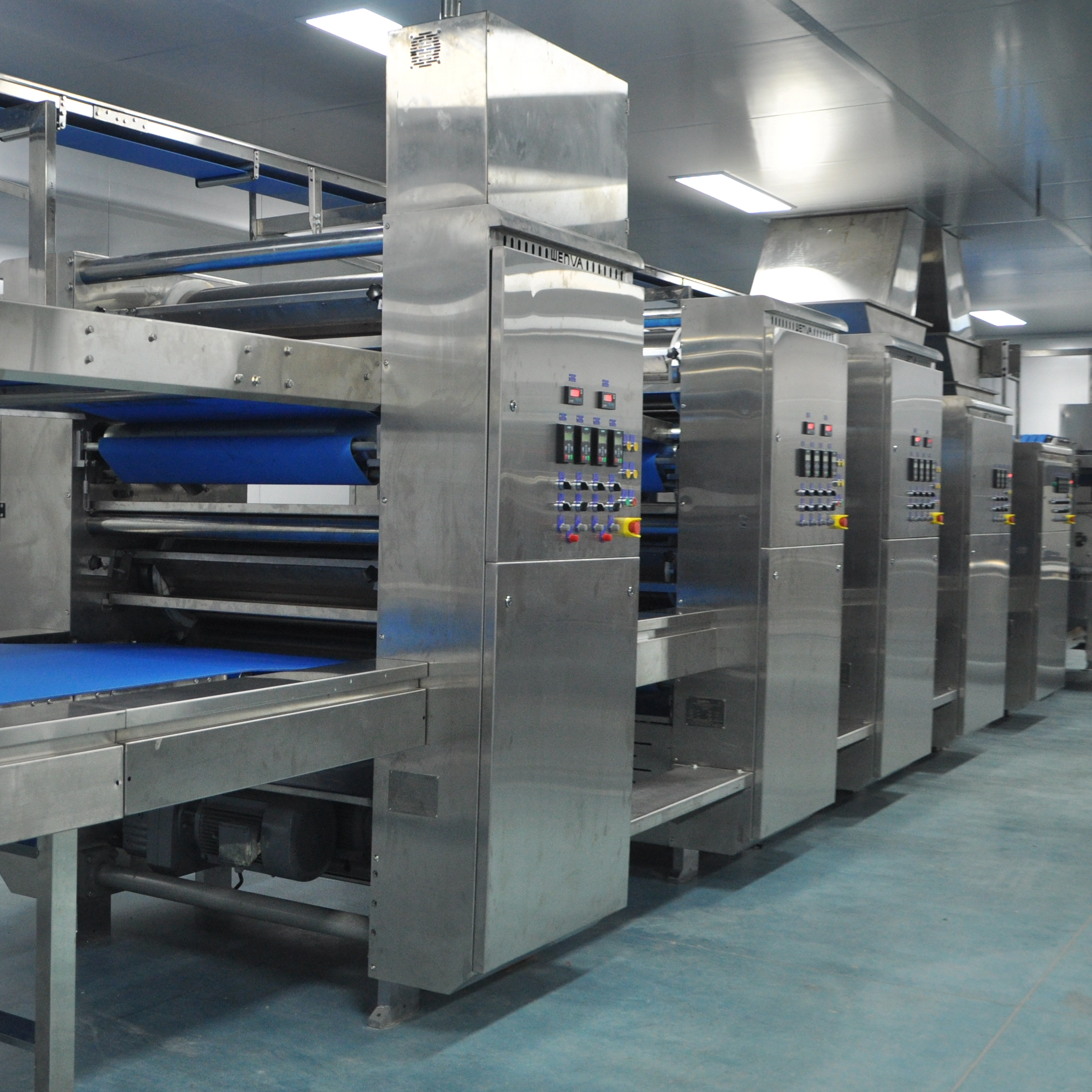
Automated weight control systems represent the evolution of precision feeding technology in modern cookie production. These systems utilize real-time data collection through load cells and sensors that continuously monitor dough piece weights across every lane of production. Unlike traditional methods, automated systems like Baker Perkins' TruWeight™ technology can individually adjust output from each die cup, reducing weight variations and minimizing the offset between average and target weight. [bakerperkins]
The technological backbone consists of integrated PLC-controlled feedback loops that communicate directly with precision feeders. When weight deviations occur, the system automatically compensates without operator intervention, maintaining consistent portion weights throughout production runs. This continuous monitoring approach ensures that 100% of products are weighed rather than relying on periodic sampling. [inspiron-gb]
Modern automated weight control integrates several sophisticated elements:
- High-precision load cells with accuracy tolerances of ±0.1% [wenvamachine]
- Real-time statistical process control that tracks giveaway percentages and trending data [youtube]
- Automated reject mechanisms that remove non-conforming products without line stoppage [inspiron-gb]
- Network-ready data systems supporting Industry 4.0 integration and remote monitoring [interpack]
Manual sampling relies on operators periodically removing product samples from the production line for weighing and verification. While this method keeps manufacturers compliant with basic regulatory requirements, it introduces significant inefficiencies and hidden costs. Operators typically check samples at predetermined intervals—often hourly or per batch—which means the vast majority of products pass through unchecked. [inspiron-gb]
The fundamental limitation is sample-based inference. When operators weigh 10-20 pieces per hour from a line producing thousands, they're making assumptions about the entire production run based on minimal data. This approach cannot detect lane-specific variations or real-time process drift that occurs between sampling intervals. [bakerperkins]
Manual sampling demands dedicated labor hours and introduces human variability into quality control processes. Workers must stop production tasks, collect samples, record weights manually, calculate averages, and make adjustment decisions. Each step introduces potential for transcription errors, calculation mistakes, or delayed responses to weight deviations. [summerssweetshoppe]
During my tenure implementing production lines across global markets, I've observed that manual methods also create documentation gaps. Without automated record-keeping, manufacturers struggle to provide comprehensive weight verification data required for customer audits or regulatory compliance. [inspiron-gb]
The most significant ROI advantage of automated systems comes from giveaway reduction—the costly practice of overfilling packages to ensure compliance with minimum weight regulations. Manual sampling forces manufacturers to build in safety margins, typically 3-5% overfill, to avoid underweight products slipping through. [diverseco.com]
Consider the mathematics: 5% overfill equals 1 in 20 packages given away free. For a commercial cookie line producing 50,000 packages daily at $2 average product cost, that represents $5,000 in daily giveaway—or $1.825 million annually. Automated checkweighers enable manufacturers to run closer to target weight, reducing giveaway to 0.5-1%. [vbssys]
A documented case study showed a manufacturer reduced average package weight from 1.025 lbs to 1.014 lbs after installing automated checkweighing, achieving a 28% decrease in giveaway. This translated to $169,539 in annual savings on a single production line. [vbssys]
Automated systems dramatically reduce labor requirements for quality control functions. While manual sampling requires dedicated operators for weight checking, data recording, and adjustment calculations, automated systems handle these tasks continuously without human intervention. [reiser]
Based on industry benchmarks, manufacturers typically eliminate 1-2 full-time quality control positions per production line when implementing automated weight control. At an average fully-loaded labor cost of $45,000 annually per worker, this represents $45,000-$90,000 in annual savings per line. [oydeweighing]
Automated systems detect weight deviations immediately and adjust feeder settings in real-time, preventing the production of out-of-specification products. Manual sampling, by contrast, may allow hundreds or thousands of incorrect-weight products to be produced between sampling intervals. [reiser]
One case study documented a 95% reduction in reworks after implementing automated checkweighing. Since rework involves reprocessing materials, additional labor, and potential waste disposal costs, this reduction significantly impacts operational efficiency and profitability. [tnasolutions]
Automated precision feeders achieve repeatability tolerances of ±0.1%, far exceeding manual measurement capabilities. High-performance checkweighers maintain this precision at production speeds exceeding 1,500 packages per minute. Manual sampling, dependent on operator technique and environmental factors, typically exhibits variability of ±2-3%. [sterlingcontrols]
This precision difference directly impacts product consistency and customer satisfaction. In commercial cookie production where brand reputation depends on uniform appearance and weight, automated systems deliver the consistency that manual methods cannot match. [bakery-productionline]
Automated systems weigh 100% of products, providing complete statistical datasets for process control and quality verification. This enables manufacturers to calculate true process capability indices and confidently optimize formulations. [oydeweighing]
Manual sampling provides limited statistical confidence. Even with rigorous sampling protocols, operators typically measure less than 0.1% of production output. This sample size is insufficient for detecting subtle process variations or making data-driven optimization decisions. [sgsystemsglobal]
Modern automated weight control systems operate at line speeds without creating bottlenecks. Checkweighers process products at rates matching upstream production equipment—often 200-400 pieces per minute for cookie lines. Manual sampling, conversely, requires production slowdowns or sample collection from moving lines, disrupting workflow. [vintecc]
The throughput advantage compounds over production shifts. Automated systems maintain consistent speed regardless of product changeovers, while manual methods require recalibration and sampling protocol adjustments that extend transition times. [interpack]
Automated systems generate comprehensive production data including weight distributions, trending analysis, and giveaway percentages. This data visibility enables continuous improvement initiatives impossible with manual methods. [youtube]
In our Wenva Machine installations, clients utilize this data to optimize recipe formulations, identify equipment maintenance needs before failures occur, and benchmark performance across multiple production lines. The ability to correlate input parameters with quality outcomes drives substantial efficiency gains. [wenvamachine]
Food manufacturing regulations increasingly demand documented evidence of weight compliance for every production lot. Automated checkweighers automatically generate compliance reports with timestamps, individual weights, and statistical summaries. This documentation withstands regulatory audits and customer verification requirements. [kenweigh]
Manual sampling creates compliance vulnerabilities. Handwritten logs are prone to errors, gaps, and questions about data integrity. When auditors request proof of weight compliance for specific production batches, manual systems often cannot provide the granular documentation required. [sterlingcontrols]
Automated systems integrate with production management software to provide complete lot traceability. Each product can be traced to specific raw material batches, production times, and quality parameters. This capability is critical for recall management and supply chain transparency. [diverseco.com]
From an E-E-A-T perspective, this traceability demonstrates manufacturer accountability and builds customer trust—factors increasingly important in B2B relationships and export markets. [wenvamachine]
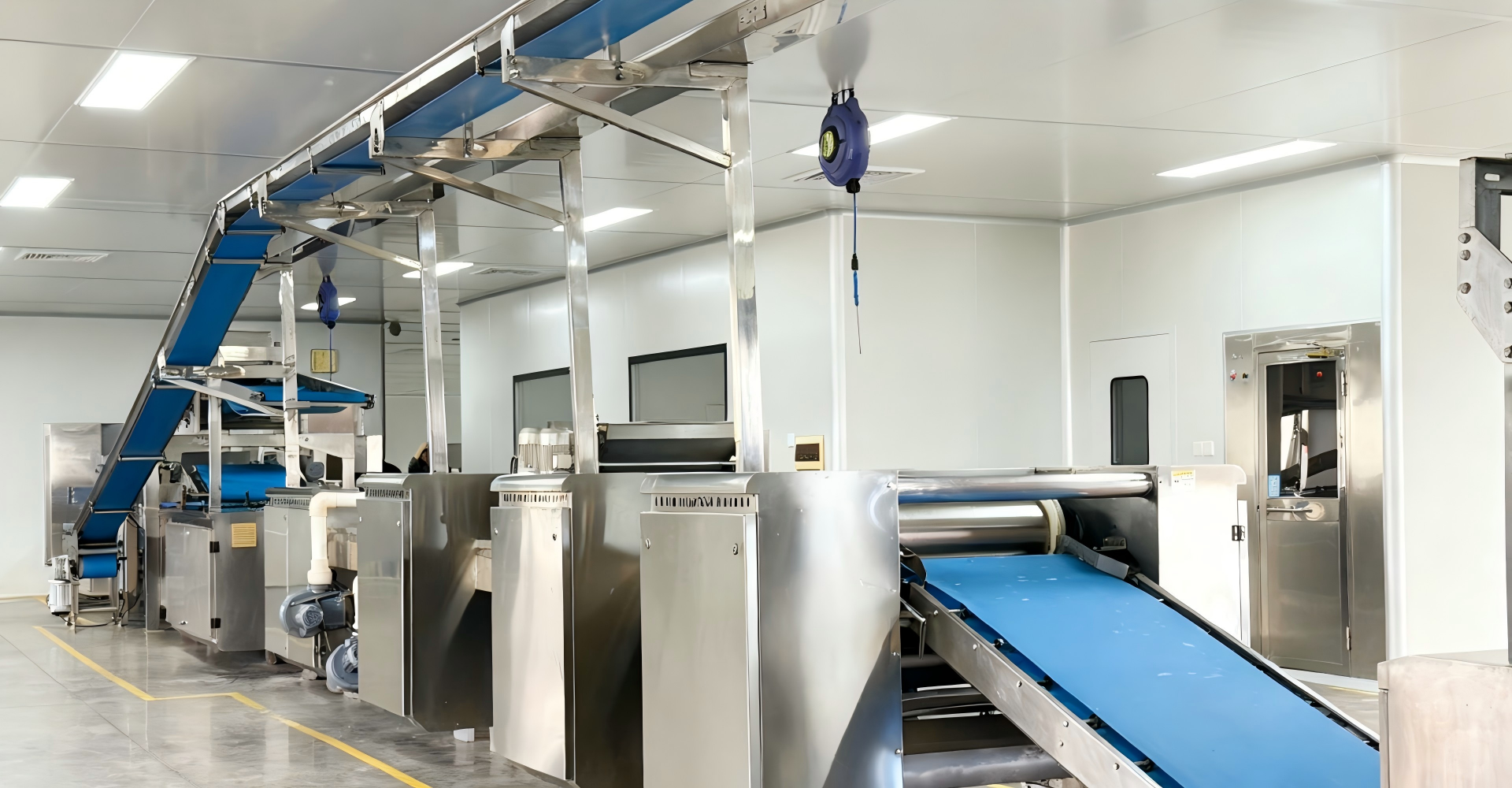
Automated precision feeder systems with integrated weight control require significant upfront investment. A complete installation for a commercial cookie line typically ranges from $150,000-$300,000 depending on line complexity and integration requirements. [tnasolutions]
Manual sampling appears less expensive initially—requiring only calibrated scales ($2,000-$5,000) and dedicated labor. However, this comparison ignores the substantial ongoing operational costs and lost optimization opportunities. [sterlingcontrols]
Based on industry data and our project implementations at Wenva Machine, automated weight control systems typically achieve payback periods of 12-18 months on commercial cookie lines. This calculation considers: [tnasolutions]
- Giveaway reduction savings: $150,000-$200,000 annually for mid-size operations [vbssys]
- Labor cost reduction: $45,000-$90,000 annually [oydeweighing]
- Rework and waste elimination: $20,000-$40,000 annually [vbssys]
- Increased throughput capacity: 5-10% productivity improvement [kenweigh]
Manual sampling generates no positive ROI—it represents a fixed operational cost with no improvement potential. The opportunity cost of not implementing automation grows as production volumes increase and ingredient costs rise. [tnasolutions]
Automated systems scale efficiently with production expansion. When manufacturers add production lines or increase capacity, automated weight control integrates seamlessly with minimal additional labor requirements. The same supervision team can monitor multiple automated lines through centralized dashboards. [sterlingcontrols]
Manual sampling scales linearly with production volume—doubling production requires doubling quality control staff. This labor scaling creates bottlenecks and proportionally increasing costs that limit growth potential. [oydeweighing]
Modern automated weight control systems support Industry 4.0 connectivity including Ethernet/IP, OPC UA/DA protocols, and cloud-based analytics platforms. This integration enables remote monitoring, predictive maintenance, and AI-driven process optimization. [vintecc]
Manual methods cannot participate in digital transformation initiatives. As smart manufacturing becomes standard practice, companies relying on manual quality control find themselves increasingly disadvantaged in competitive markets. [interpack]
Successful automated weight control implementation requires careful integration planning. The system must communicate with upstream precision feeders, mixing equipment, and downstream packaging systems. At Wenva Machine, we design these integrations during the initial layout phase to ensure seamless data flow and control loops. [wenvamachine]
Physical installation involves positioning checkweighers at optimal line locations, typically immediately after forming equipment and before ovens. Belt speed synchronization, product spacing, and environmental factors (vibration, temperature) all impact measurement accuracy and must be engineered appropriately. [mt]
While automated systems reduce operator workload, successful implementation requires comprehensive training on system operation, calibration procedures, and data interpretation. In our experience, manufacturers should plan for 40-80 hours of initial training and ongoing skill development. [inspiron-gb]
Change management is critical. Production teams accustomed to manual methods may resist automation initially. Demonstrating the reduced physical workload, improved data visibility, and elimination of tedious recording tasks helps build operator buy-in. [kenweigh]
Based on four decades of industry experience, I recommend automated weight control for operations meeting these criteria:
- Production volumes exceeding 10,000 units daily where giveaway costs justify capital investment [diverseco.com]
- High-value products where ingredient costs make precision critical to profitability [bakerperkins]
- Multi-lane production lines where manual sampling cannot adequately monitor all lanes [reiser]
- Export-focused manufacturers requiring comprehensive compliance documentation [wenvamachine]
- Operations pursuing lean manufacturing or Industry 4.0 initiatives [interpack]
For manufacturers transitioning from manual to automated systems, I recommend a phased approach:
1. Start with highest-volume production lines to maximize ROI impact [tnasolutions]
2. Implement pilot installations to demonstrate value and build internal expertise [sterlingcontrols]
3. Establish clear KPIs including giveaway percentage, labor hours, and rework rates for before/after comparison [sgsystemsglobal]
4. Leverage supplier expertise for integration planning and optimization—reputable manufacturers like Wenva Machine provide comprehensive installation and commissioning support [wenvamachine]
Cookie dough presents unique weight control challenges due to rheological variability and temperature sensitivity. Automated systems excel in these conditions by continuously monitoring and compensating for dough consistency changes that occur during production shifts. [bakery-productionline]
Manual sampling cannot detect gradual dough temperature increases or hydration changes that affect piece weights. By the time operators identify the issue through periodic sampling, hundreds of out-of-specification products may have been produced. [sterlingcontrols]
Commercial cookie operations frequently run multiple SKUs with different target weights, requiring rapid changeover capabilities. Automated systems store recipe-specific parameters and switch between products in seconds through PLC recipe management. [interpack]
Manual methods require physical scale recalibration, new sampling protocols, and operator familiarization with each product specification—a process consuming 15-30 minutes per changeover and introducing error potential. [interpack]
| Factor | Automated Weight Control | Manual Sampling |
|---|---|---|
| Measurement Coverage | 100% of products weighed continuously (inspiron-gb) | 0.1-1% sample-based inference (inspiron-gb) |
| Precision | ±0.1% repeatability (wenvamachine) | ±2-3% operator-dependent variability (sterlingcontrols) |
| Giveaway Reduction | 0.5-1% achievable (vbssys) | 3-5% safety margin required (diverseco.com) |
| Labor Requirements | Minimal supervision, automated operation (reiser) | Dedicated QC staff per line (summerssweetshoppe) |
| Data Documentation | Automatic comprehensive records (inspiron-gb) | Manual logs with gap risk (sterlingcontrols) |
| Real-Time Adjustment | Immediate feedback to feeders (reiser) | Delayed response between samples (inspiron-gb) |
| Initial Investment | 150,000−150,000−300,000 per line (tnasolutions) | 2,000−2,000−5,000 equipment only (inspiron-gb) |
| ROI Timeline | 12-18 month payback (tnasolutions) | No positive ROI, ongoing cost (inspiron-gb) |
| Scalability | Efficient multi-line management (sterlingcontrols) | Linear labor scaling required (oydeweighing) |
| Industry 4.0 Ready | Full connectivity and analytics (youtube) | No digital integration capability (interpack) |
Reducing giveaway through automated precision directly decreases raw material consumption per unit produced. For large-scale cookie manufacturers using millions of pounds of flour, sugar, and fats annually, even 1-2% reduction represents substantial resource conservation. [diverseco.com]
This efficiency aligns with corporate sustainability commitments and responds to increasing consumer and regulatory pressure for responsible manufacturing. Automated systems also generate data supporting environmental reporting and carbon footprint calculations. [bakery-productionline]
Automated quality control reduces waste streams by preventing production of out-of-specification products. The 95% rework reduction documented in case studies translates directly to decreased waste disposal costs and environmental impact. [vbssys]
In our Wenva Machine installations, clients report that comprehensive weight data enables formula optimization that minimizes ingredient waste during mixing and reduces cleanup losses during product changeovers. [wenvamachine]
After implementing automated biscuit production solutions across diverse markets for four decades, I've observed that successful manufacturers view automated weight control not as a quality control expense, but as a profit center and competitive advantage. [jaredspencer]
The ROI comparison overwhelmingly favors automation for commercial-scale operations. Manual sampling may suffice for small artisan producers with limited volumes, but commercial cookie lines operating at industrial scale cannot remain competitive with outdated quality control methods. [interpack]
The strategic question is not whether to automate, but when and how to implement automation most effectively. Manufacturers should conduct detailed financial analysis specific to their operations, considering product values, production volumes, labor costs, and competitive positioning. [tnasolutions]
The trajectory of cookie manufacturing clearly points toward comprehensive automation and digital integration. Manufacturers investing in automated weight control today position themselves for emerging requirements including: [interpack]
- Real-time supply chain transparency demanded by major retailers [vintecc]
- Predictive maintenance and AI optimization reducing unplanned downtime [vintecc]
- Sustainable manufacturing documentation for environmental compliance [bakery-productionline]
- Remote monitoring and control enabling distributed production management [youtube]
Companies continuing to rely on manual methods face increasing disadvantages as competitors leverage data-driven optimization and automated precision to reduce costs and improve quality. [kenweigh]
At Wenva Machine, we've dedicated 40 years to developing automated biscuit production solutions that maximize efficiency, quality, and profitability for our global clients. Our comprehensive approach integrates precision feeding, automated weight control, and complete production line optimization from design through commissioning. [wenvamachine]
Ready to evaluate automated weight control ROI for your specific operation? Contact our engineering team for a detailed feasibility analysis and discover how precision automation can transform your cookie production profitability. Visit our Experience Center to see these systems in operation and discuss customized solutions for your production requirements. [wenvamachine]
Q1: What is the typical payback period for automated weight control systems on commercial cookie lines?
Based on industry data and our implementation experience, automated weight control systems typically achieve payback periods of 12-18 months for mid-to-large scale commercial cookie operations. The actual timeline depends on production volume, product value, and current giveaway percentages. High-volume lines producing premium products often see payback in under 12 months due to substantial giveaway reduction savings. [diverseco.com]
Q2: Can automated weight control systems handle multiple product types and frequent changeovers?
Yes, modern automated systems excel at multi-product operations through recipe management functionality. The PLC stores specific parameters for each product including target weights, tolerance limits, and feeder settings. Changeover between products occurs in seconds through simple recipe selection, compared to 15-30 minutes required for manual method recalibration. This capability is essential for commercial operations running diverse product portfolios. [wenvamachine]
Q3: How much giveaway reduction can realistically be achieved with automated systems?
Automated weight control typically reduces giveaway from 3-5% (required with manual sampling) to 0.5-1%. Documented case studies show giveaway reductions of 28% or more when transitioning from manual to automated methods. The exact reduction depends on baseline performance, product characteristics, and system precision. For a production line with $2 million annual ingredient costs at 4% giveaway, reduction to 1% saves approximately $60,000 annually. [vbssys]
Q4: What are the labor savings from implementing automated weight control versus manual sampling?
Automated systems typically eliminate 1-2 full-time quality control positions per production line by handling continuous weighing, data recording, statistical analysis, and reporting automatically. At average fully-loaded labor costs of $45,000 per worker annually, this represents $45,000-$90,000 in direct labor savings per line. Additional indirect savings come from reduced supervision requirements and elimination of data entry errors that create rework. [summerssweetshoppe]
Q5: Are automated weight control systems compatible with existing production equipment?
Yes, modern automated checkweighers and precision feeders are designed for integration with existing production lines through standard industrial communication protocols including Ethernet/IP and OPC UA/DA. Reputable manufacturers like Wenva Machine conduct thorough integration assessments during the planning phase to ensure compatibility with upstream mixers, feeders, and downstream packaging equipment. Retrofitting existing lines is common and typically more cost-effective than complete line replacement while still delivering substantial ROI. [youtube]
1. Baker Perkins. (2022). "New cookie weight control technology provides significant potential for improved profitability." https://www.bakerperkins.com/news/new-cookie-weight-control-technology-provides-significant-potential-for-improved-profitability
2. SAIMAI NEW INDUSTRIAL EQUIPMENT. (2025). "Precision from Dough to Package: The Technological Backbone of Consistent Quality." https://www.bakery-productionline.com/news/precision-from-dough-to-package-the-technological-backbone-of-consistent-quality-2712
3. Wenva Machine. (2025). "Customized Biscuit Production Line, Dough Mixer." https://www.wenvamachine.com
4. Interpack Magazine. (2018). "Modern Machines for Cookies and Crackers." https://www.interpack.com/en/Media_News/interpack_Magazin/BAKERY_PACKAGING/Bakery_Industry_News/Modern_Machines_for_Cookies_and_Crackers
5. TNA Solutions. (2025). "How to maximise ROI in snack production with effective weighing equipment." https://www.tnasolutions.com/blogs/worth-the-weight-how-to-maximise-roi-in-snack-production-with-effective-weighing-equipment/
6. Inspiron GB. (2022). "Reducing giveaway and underfilling whilst improving efficiency." https://www.inspiron-gb.com/2022/03/09/reducing-giveaway-and-underfilling-whilst-improving-efficiency/
7. Wenva Machine. (2025). "Application And Advantages of Automatic Flour Feeding And Weighing System in Fully Automatic Biscuit Production Line." https://www.wenvamachine.com/application-and-advantages-of-automatic-flour-feeding-and-weighing-system-in-fully-automatic-biscui
8. Reiser. "Bakery | Dough Dividing - Vemag Process Check Checkweigher." https://www.reiser.com/bakery/bakery-vemag-checkweigher.php
9. Anritsu. (2021). "Checkweigher Percent Giveaway Feature." https://www.youtube.com/watch?v=NSXzn_VQ3NM
10. SG Systems Global. (2025). "Bakery Average Weight – Reduce Giveaway, Improve Profitability." https://sgsystemsglobal.com/guides/bakery-average-weight/
11. VBS Systems. (2015). "Checkweigher Case Study - See how we saved a customer $169,539 annually!" https://vbssys.com/wp-content/uploads/2015/03/checkweigher-case-study_031715.pdf
12. Sterling Controls. (2025). "Improve Efficiency with Automated Food Batch Weighing." https://sterlingcontrols.com/blog/precision-in-food-processing-how-automated-weighing-and-ingredient-batching-improve-quality-an
13. Vintecc. (2024). "Case study: Automatic cookie quality control - High-precision 3D imaging and inspection of every cookie." https://www.vintecc.com/en/cases/high-precision-3d-imaging-and-inspection-of-every-cookie
14. Diverseco. (2024). "Using Checkweighers to Reduce Product Giveaway." https://diverseco.com.au/news/using-checkweighers-to-reduce-product-giveaway/
15. Oyde Weighing. (2026). "Automatic Checkweigher for Food Production Line - High Speed & Accurate." https://www.oydeweighing.com/news/automatic-checkweigher-for-food-production-line-high-speed-accurate
16. Kenweigh. (2024). "What Are the Effects of Automatic Weighing Scales on the Food Industry." https://www.kenweigh.com/what-are-the-effects-of-automatic-weighing-scales-on-the-food-industry.html
17. Mettler Toledo. (2025). "Automated Checkweighers for Snacks and Confectionery." https://www.mt.com/gb/en/home/products/Product-Inspection_1/checkweighing/snack-confectionery-checkweigher.html


