
Views: 222 Author: Wenva Machine Publish Time: 2026-06-07 Origin: Site
Content Menu
● What "Precision Moisture Removal" Really Means
● How Tunnel Ovens Work in Modern Biscuit Lines
● Single-Zone Tunnel Ovens: Concept and Characteristics
● Multi-Zone Tunnel Ovens: Concept and Characteristics
● Side-by-Side Comparison: Multi-Zone vs. Single-Zone
>> Core differences for long-shelf-life crackers
● Moisture, Water Activity, and Shelf Life: Why Oven Design Matters
● Practical Engineering: How Multi-Zone Control Improves Moisture Removal
● When a Single-Zone Tunnel Oven Still Makes Sense
● Case-Inspired Scenario: Scaling From Domestic to Export Markets
● How Oven Choice Impacts Total Cost of Ownership (TCO)
● Design Considerations for New Automated Biscuit Lines
● Step-by-Step: How to Evaluate Your Next Tunnel Oven
● How Wenva Machine Supports Precision Moisture Removal
● Clear Recommendations: Which Oven Type Should You Choose?
● Call to Action: Design Your Next Tunnel Oven Around Moisture, Not Just Temperature
● Frequently Asked Questions (FAQ)
As a biscuit and cracker line manufacturer with 40+ years of experience, I have seen one technical choice repeatedly determine whether a cracker holds its crispiness for months or goes soft halfway through its shelf life: multi‑zone vs. single‑zone tunnel ovens and how precisely they remove moisture across the baking curve. In this article, I'll compare these two oven concepts from a practical, plant-level perspective and explain how to engineer precision moisture removal for long‑shelf‑life crackers. [wenvamachine]

In long-shelf-life cracker production, precision moisture removal is the tight control of moisture evaporation from surface to core along the full length of the tunnel oven. This directly influences water activity, texture, shelf life, and breakage rates. [sciencedirect]
For export-focused plants shipping crackers across hot, humid climates, even a 0.5–1.0% deviation in final moisture can mean the difference between stable crispness and mold or staling before the best-before date. That is why oven zoning strategy is not only a thermal design decision, but a business risk management decision. [bakerpedia]
Industrial biscuit tunnel ovens are continuous ovens where products travel on a steel band or mesh belt through a heated tunnel with controlled temperature and airflow. They are the thermal heart of any automated biscuit production line, linking dough make-up to cooling and packaging. [alibaba]
From a process viewpoint, a typical cracker baking curve can be split into:
- Rapid expansion zone: Gas cell expansion, initial crust setting
- Moisture removal zone: Strong evaporation, structure development
- Color and texture zone: Final drying, Maillard reactions, crisping
The question is whether you control these phases with a single overall zone, or by splitting the oven into multiple independently controlled zones.
A single-zone tunnel oven runs with one main temperature setpoint and relatively uniform airflow profile along its entire length. Heat can still vary slightly due to burner placement and insulation, but control is effectively "one recipe for the whole tunnel." [alibaba]
- One dominant temperature control loop
- Simpler control panel and fewer sensors
- Lower initial investment and easier maintenance
- Limited flexibility to shape different baking curves on the same line
For basic biscuits or short domestic supply chains, a single-zone design can be sufficient, especially when products share similar moisture and color targets.
A multi-zone tunnel oven divides the baking chamber into multiple sections (for example 3–5 zones), each with independently controlled temperature, air velocity, and sometimes top/bottom heat balance. This allows the oven to follow a precisely engineered baking curve matched to product type. [eversmartbiscuitmachine]
- Multiple temperature and airflow control loops
- Programmable profiles for different products
- Better ability to fine-tune crust formation, internal drying, and color
- Higher complexity and investment, but greater process control
In long-shelf-life crackers, this zoning is what enables consistent moisture targets even under fluctuating dough characteristics, ambient conditions, or line speeds.
| Dimension | Multi‑Zone Tunnel Oven | Single‑Zone Tunnel Oven |
|---|---|---|
| Moisture control | High precision; each zone fine‑tunes evaporation for core and surface | Basic; relies on one uniform profile, less responsive to variations |
| Baking curve shaping | Customizable profiles for expansion, drying, and coloring | One general curve; hard to optimize all phases simultaneously |
| Product range | Supports broad portfolio (snack crackers, soda, cream crackers, etc.) | Best for narrow, stable product ranges |
| Response to seasonal variation | Can adjust individual zones for humidity and dough changes | Global adjustments risk over‑ or under‑baking |
| Capex | Higher upfront investment | Lower initial cost |
| Long‑term TCO | Better yield, less waste, fewer returns from quality issues | More risk of downgrades, rework, and shelf‑life complaints |
For manufacturers targeting premium, export-grade, long-shelf-life crackers, the added control of multi‑zone ovens usually pays off through reduced variability and fewer quality claims over time. [bakerpedia]
Cracker shelf life is mainly limited by:
- Moisture uptake: loss of crispness and increased mold risk
- Lipid oxidation: rancid off-flavors due to fat breakdown
- Texture changes: loss of snap, increased breakage during transport [sciencedirect]
Industry research shows that storage at higher temperatures accelerates texture loss, lipid oxidation, and color changes in crackers, increasing the importance of starting with optimally dried product. Shelf-life extension strategies emphasize baking and cooling optimization to achieve target moisture and water activity without damaging texture. [sciencedirect]
A multi‑zone tunnel oven helps you:
- Drive intense moisture removal early, when internal water is abundant
- Avoid over-drying the surface while the core is still too wet
- Finish with a "polishing" zone that stabilizes water activity and color
Single‑zone ovens can still reach the same average moisture, but they lack the granular control to balance surface and core evaporation, which is critical when aiming for 6–12 month shelf lives across diverse climates. [eversmartbiscuitmachine]
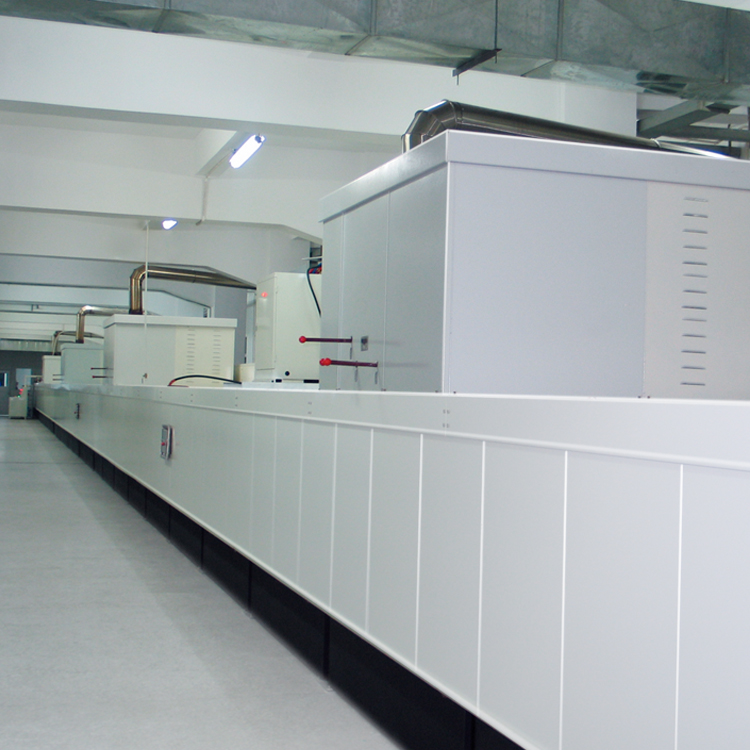
From my experience commissioning automated biscuit production lines, several technical levers in multi‑zone ovens directly impact precision moisture removal:
- Zone temperature gradients: Higher temperatures in the first zones promote rapid oven spring and initial crust; cooler, longer middle zones encourage controlled internal drying.
- Top vs. bottom heat balance: Adjusting radiant vs. convective heat and top/bottom ratio reduces risk of blistering or hard bottoms while still achieving low moisture.
- Air velocity and exhaust control: Precise control of air speed and exhaust in each zone maintains a strong moisture gradient without overdrying the surface.
These levers exist in some form in single‑zone ovens, but multi‑zone design allows you to decouple them along the length of the tunnel, giving process engineers a much finer tuning capability.
Despite their limitations, single‑zone ovens are not obsolete. They can be the right choice in several scenarios:
- Entry-level capacity: New plants with limited capital, focusing on one or two stable SKUs.
- Short distribution chains: Local/regional markets with short lead times and limited temperature variation in storage and transport.
- Simple product range: Basic biscuits or crackers with moderate shelf‑life requirements where small moisture variations are acceptable.
For these plants, single‑zone ovens offer lower complexity, faster operator training, and simpler maintenance. Combined with good packaging (e.g., basic oxygen barriers), they can meet local market needs without over‑engineering the process. [snackandbakery]
However, once the product portfolio or export scope grows, many factories find themselves constrained and eventually retrofit or replace with multi‑zone systems.
Consider a mid-sized bakery initially supplying crackers to domestic retailers. With a single‑zone tunnel oven, they achieve acceptable moisture consistency for a 3–4 month shelf life within a mild climate. As they expand into export markets:
- Products face longer logistics chains and more extreme storage temperatures.
- Complaints emerge about soft texture and occasional mold before end of shelf life.
- To reduce these returns, they need tighter control of final moisture and water activity.
By upgrading to a multi‑zone tunnel oven and optimizing baking curves by product family, they can:
- Push moisture slightly lower while maintaining texture and yield.
- Reduce batch-to-batch variability across seasons.
- Maintain product quality at the point of consumption, even after long shipping times.
In practice, we have seen that this kind of upgrade often goes hand in hand with improved cooling tunnels and packaging systems (e.g., better barrier films or modified atmosphere packaging for more sensitive baked goods). [snackandbakery]
From a plant-level perspective, the true cost of a tunnel oven is not only its purchase price, but the long-term impact on TCO:
- Waste and rework: Over‑ or under‑baked batches, downgraded lots, and reprocessing.
- Energy efficiency: Ability to operate at optimal conditions for different SKUs without constant manual tweaking.
- Shelf-life claims: Returns, brand damage, and compensation for out‑of‑spec texture or mold.
Multi‑zone ovens typically offer better control and repeatability, which can reduce waste and quality claims, especially in high-volume plants serving international markets. For manufacturers with high throughput and demanding customers, the TCO often favors multi‑zone designs despite their higher initial cost. [bakerpedia]
When we design a new automated biscuit production line, we look at oven zoning in the context of the entire system. For long‑shelf‑life crackers, key considerations include: [alibaba]
- Production volume: Required hourly output and future capacity expansion.
- Product portfolio: Range from light snack crackers to laminated cream crackers or soda crackers.
- Target markets: Domestic vs. export, expected storage conditions and shipping times.
- Available floor space: Oven length and width constraints in the factory layout.
- Integration: Upstream dough handling and downstream cooling and packaging.
Multi‑zone ovens provide the flexibility to serve multiple products and markets on one line, while single‑zone ovens suit more focused production strategies. The right answer depends on your long‑term business plan, not just this year's capex budget.
If you are planning a new cracker line or upgrading an existing one, you can follow a structured evaluation:
1. Define shelf-life targets.
- Align with your commercial team on required shelf life by market and channel.
2. Map your product range.
- List all current and planned SKUs with their moisture and texture specifications.
3. Assess current issues.
- Record any customer complaints, high scrap rates, or seasonal quality problems.
4. Quantify variability.
- Track moisture and color variation across the belt and along the oven length.
5. Simulate baking curves.
- Work with your oven supplier to model single‑zone vs. multi‑zone profiles for your key SKUs.
6. Model TCO scenarios.
- Include energy, scrap, rework, labor, and returns when comparing options.
7. Plan for future markets.
- Factor in potential expansion into hotter climates or longer logistics chains.
This structured approach makes it easier to justify a multi‑zone investment when it clearly reduces long-term quality risk and supports premium positioning.
With four decades in automated biscuit production lines, Wenva Machine integrates tunnel ovens, dough handling, cooling and packaging into unified solutions designed around your products, not generic specs. For long‑shelf‑life crackers, we typically: [wenvamachine]
- Design multi‑zone tunnel ovens with tailored temperature and airflow control for your product mix.
- Validate moisture and texture performance using pilot trials and data-driven baking curve optimization.
- Integrate ovens with cooling and packaging systems to protect the dried structure all the way to the shelf. [bakerpedia]
If a customer's current product range and market do not yet justify a multi‑zone oven, we can also supply efficient single‑zone designs with upgrade paths to zoning or extended length, ensuring that your investment can grow with your business.
If your core business is:
- Long-shelf-life crackers for export, private label, or premium retail, and
- You operate or plan to operate multi‑SKU, high‑volume lines
then a multi‑zone tunnel oven is usually the right strategic choice to achieve precise moisture control, stable texture, and reduced shelf‑life risk.
If you are:
- A regional producer with limited SKUs
- Serving mainly local markets with moderate shelf‑life requirements
a single‑zone tunnel oven may be sufficient in the short to medium term, especially when combined with appropriate packaging and storage controls.
The most effective solution comes from aligning oven zoning with your product roadmap and market strategy, not just with immediate budget constraints.
If you are planning a new cracker line or considering an oven upgrade, this is the right moment to rethink your zoning strategy around precision moisture removal, not just nameplate capacity. A structured discussion about multi‑zone vs. single‑zone design can significantly reduce your long‑term quality and shelf‑life risk.
Wenva Machine can help you:
- Audit your current baking performance
- Simulate baking curves for different oven configurations
- Engineer a tunnel oven and full production line layout that matches your long‑shelf‑life cracker strategy
To explore a tailored multi‑zone or single‑zone tunnel oven concept for your next project, contact our technical team and request a moisture-focused line design proposal.
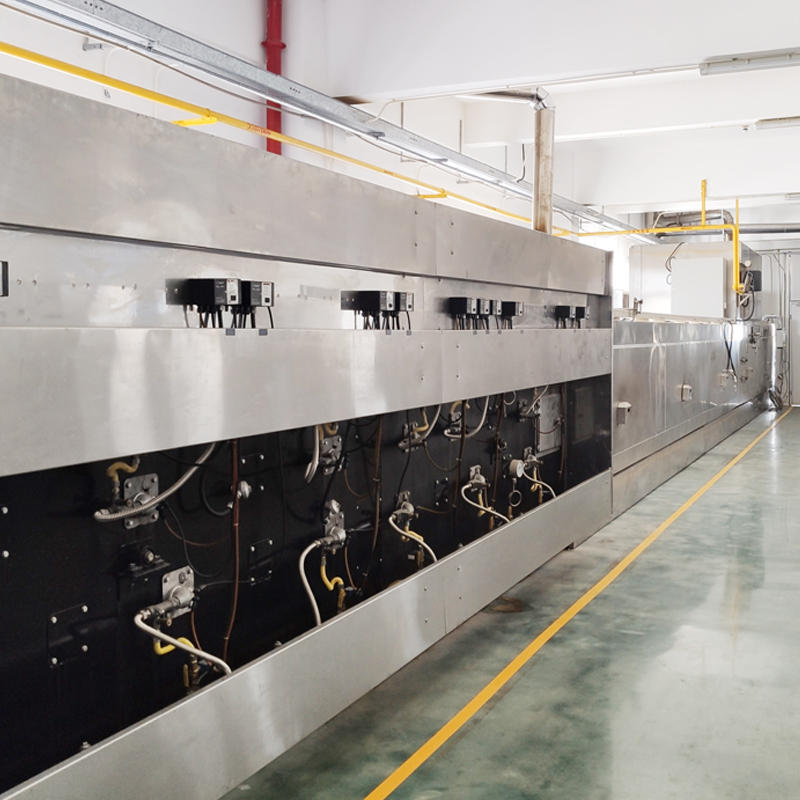
1. Do I always need a multi‑zone tunnel oven for long-shelf-life crackers?
Not always. Multi‑zone ovens provide superior control and flexibility, especially for export and multi‑SKU production. However, some local producers with stable recipes and shorter shelf-life targets can meet their needs with well‑designed single‑zone ovens and robust packaging.
2. How many zones are typical for a cracker tunnel oven?
Cracker ovens commonly use 3–5 zones, allowing separate control of expansion, drying, and color development. The optimal number depends on oven length, product variety, and desired flexibility. [eversmartbiscuitmachine]
3. Can I upgrade a single‑zone oven to multi‑zone later?
In some cases, yes, through retrofits such as adding partitions, additional burners, or independent control loops. However, not every single‑zone oven is designed for this, so it is important to discuss upgrade paths with your supplier at the design stage.
4. What else, besides the oven, affects cracker shelf life?
Cooling systems, packaging materials, headspace atmosphere, and storage conditions all influence shelf life. Technologies such as optimized cooling tunnels and improved barrier packaging are commonly used alongside precise baking to extend shelf life. [snackandbakery]
5. How does line speed interact with moisture control?
Higher belt speeds shorten bake time, which may require higher zone temperatures or modified airflow to reach the same final moisture. Multi‑zone ovens make it easier to maintain target moisture when you adjust line speeds for different SKUs or seasonal demand.
1. Wenva Machine – Direct-Fired vs. Convection Tunnel Ovens: Solving the "Uneven Bake" Problem in Extra-Wide Biscuit Production Lines. [Link] [wenvamachine]
2. Alibaba.com – Tunnel Oven Biscuit Machine: Structure, Specifications, and Buying Guide. [Link] [alibaba]
3. BAKERpedia – Producing Shelf-Stable Goods in a Competitive Market. [Link] [bakerpedia]
4. ScienceDirect – Influences of storage time and temperature on sensory quality of crackers. [Link] [sciencedirect]
5. Eversmart Biscuit Machine – Temperature Control & Baking Curves for Industrial Tunnel Ovens. [Link] [eversmartbiscuitmachine]
6. Snack Food & Wholesale Bakery – Packaging trends keep snacks and baked goods fresh and safe through shelf life. [Link] [snackandbakery]


