
Views: 222 Author: Wenva Machine Publish Time: 2026-06-14 Origin: Site
Content Menu
● How This Ranking Was Selected
● China's Position in Soft Biscuit Machinery
● Technical Essentials of Soft Biscuit Machines
● Top 10 Soft Biscuit Machine Manufacturers in China (2026 Edition)
>> 1. Wenva Machine – Flexible Partner for Growing Brands
>> 2. Golden Bake – High‑Throughput Biscuit Lines
>> 3. Shanghai HG Food Machinery – Comprehensive Food Machinery Portfolio
>> 4. GELGOOG – Multi‑Category Snack & Biscuit Solutions
>> 5. Loyal Industrial – Export‑Focused Biscuit Lines
>> 6. Shanghai Seny Machinery – Biscuit & Pastry Equipment
>> 7. Other Notable Biscuit Line Suppliers
● Quick Comparison of Representative Manufacturers
● Buyer's Guide: How to Verify and Work With Chinese Soft Biscuit Machine Suppliers
>> 1. Verifying Factory Credentials and ISO Certificates
>> 2. Running Samples and Line Trials
>> 3. Logistics, Installation, and After‑Sales
● Common Pitfalls and Internal "Red Flag" Tips
● Why Shortlisted Chinese Manufacturers Make Strategic Sense
● Frequently Asked High‑Difficulty Questions
China has become one of the most competitive global hubs for automated soft biscuit production lines, combining mature industrial clusters, cost-effective engineering talent, and a complete upstream–downstream supply chain for food machinery components. For procurement managers looking for long‑term partners, China offers a wide spectrum of suppliers—from flexible mid‑size OEM specialists like Wenva Machine to large turnkey engineering groups—capable of meeting strict quality, capacity, and compliance requirements. [wenvamachine]
Before listing manufacturers, it is critical to clarify how a "top" soft biscuit machine supplier is defined from a professional buyer's perspective. For this 2026 short list, the focus is on sustainable cooperation potential, not just one‑off price competitiveness. [datahorizzonresearch]
Key selection criteria applied:
- Manufacturing experience & export track record
- Years in biscuit machinery or industrial baking equipment, continuous product upgrades, and visible export history to multiple regions. [wenvamachine]
- Evidence of repeat orders or long‑term customers shared in case studies or trade show materials.
- Quality management & compliance
- Implementation of ISO‑aligned quality systems and traceable QC processes across welding, machining, electrical assembly, and FAT (Factory Acceptance Test). [linfordco]
- Availability of CE, and when applicable, food‑contact and safety certifications for key modules (electrical components, contact materials, guarding, etc.). [datahorizzonresearch]
- Technical depth in soft biscuit lines
- Ability to deliver complete soft biscuit production lines (mixing, rotary moulder, wire‑cut, tunnel oven, cooling, stacking & packing interface) rather than only single machines. [wenva668.en.made-in-china]
- Capability to adapt dough handling, forming, baking curves, and cooling layouts to different formulas (high‑fat, high‑sugar, aerated soft biscuits, sandwichable bases, etc.).
- R&D and customization capability (OEM/ODM)
- Evidence of continuous R&D, in‑house engineering teams, and the ability to customize line layout, oven length, mould design, and automation level according to customer plant layout and product portfolio. [wenvamachine]
- Support for OEM branding, documentation in multiple languages, and integration with existing ovens or downstream packaging.
- Delivery reliability & after‑sales support
- Demonstrated ability to manage lead times, installation windows, and operator training, particularly for overseas plants. [wenvamachine]
- Availability of on‑site commissioning, remote support, and spare‑parts stock for critical components.
These criteria are designed to reflect how experienced procurement teams evaluate long‑term equipment partners rather than chasing lowest quotes only.
China's biscuit production industry reached an estimated market size of around USD 54–55 billion in 2026, supported by more than 1,600 biscuit producers, which in turn drives strong demand for domestic biscuit production lines and continuous process innovation. In parallel, the global biscuit‑making machine market is valued at about USD 5.4 billion in 2024 and is projected to grow to roughly USD 8.2 billion by 2033, with Chinese manufacturers contributing a significant share of exported complete lines and turnkey plants. [ibisworld]
Regional industrial clusters—such as Guangdong (baking equipment and stainless‑steel fabrication), Shanghai–Jiangsu (food processing machinery and automation), and Shandong–Hebei (general food machinery)—provide dense networks of component suppliers, skilled technicians, and logistics channels, enabling Chinese biscuit line manufacturers to offer competitive lead times and flexible customization. For buyers, this cluster effect usually translates into better availability of spare parts, more configuration options, and smoother upgrades over the life of the line. [foodsmachine]
A modern soft biscuit production line is a fully integrated system that automates dough preparation, forming, baking, cooling, and downstream handling, achieving consistent texture, color, and shape at industrial scale. For soft biscuits in particular, tight control of dough rheology, baking curve, and moisture removal is essential to prevent collapse, excessive spreading, or surface cracking. [m.loyalfoodmachine]
Key technical aspects procurement managers should pay attention to:
- Materials & construction
- Food‑grade stainless steel (commonly 304, with 316 in critical zones) for product‑contact surfaces, frames resistant to bakery humidity, and high‑temperature-resistant belts and baking plates. [foodsmachine]
- Hygienic design with smooth welds, easily removable covers, and CIP‑friendly configurations to reduce downtime and microbial risk.
- Process control & automation
- Variable‑speed drives for dough feeders, gauging rollers, moulders, and oven zones to fine‑tune product texture. [m.loyalfoodmachine]
- PLC‑based control with recipe storage, remote diagnostics, and integration with line SCADA or MES for data logging and maintenance planning.
- Compliance & certifications
- CE compliance for electrical safety and machinery directives targeting EU markets, and often RoHS compliance for restricted hazardous substances in electrical components. [foodsmachine]
- ISO‑aligned quality management at factory level (e.g., ISO 9001) and traceability in key parts such as burners, electrical cabinets, and safety interlocks. [int-enviroguard]
For buyers, the practical implication is that the "soft biscuit" label alone is not enough—checking real process capability (e.g., line tests, sample trials, oven uniformity data) will matter more than catalogue claims.
Below is an expert‑curated list of 10 representative manufacturers with strong capabilities in soft biscuit production lines and export cooperation. Ordering is primarily based on suitability for international buyers and depth in biscuit processing, not on domestic sales volume.
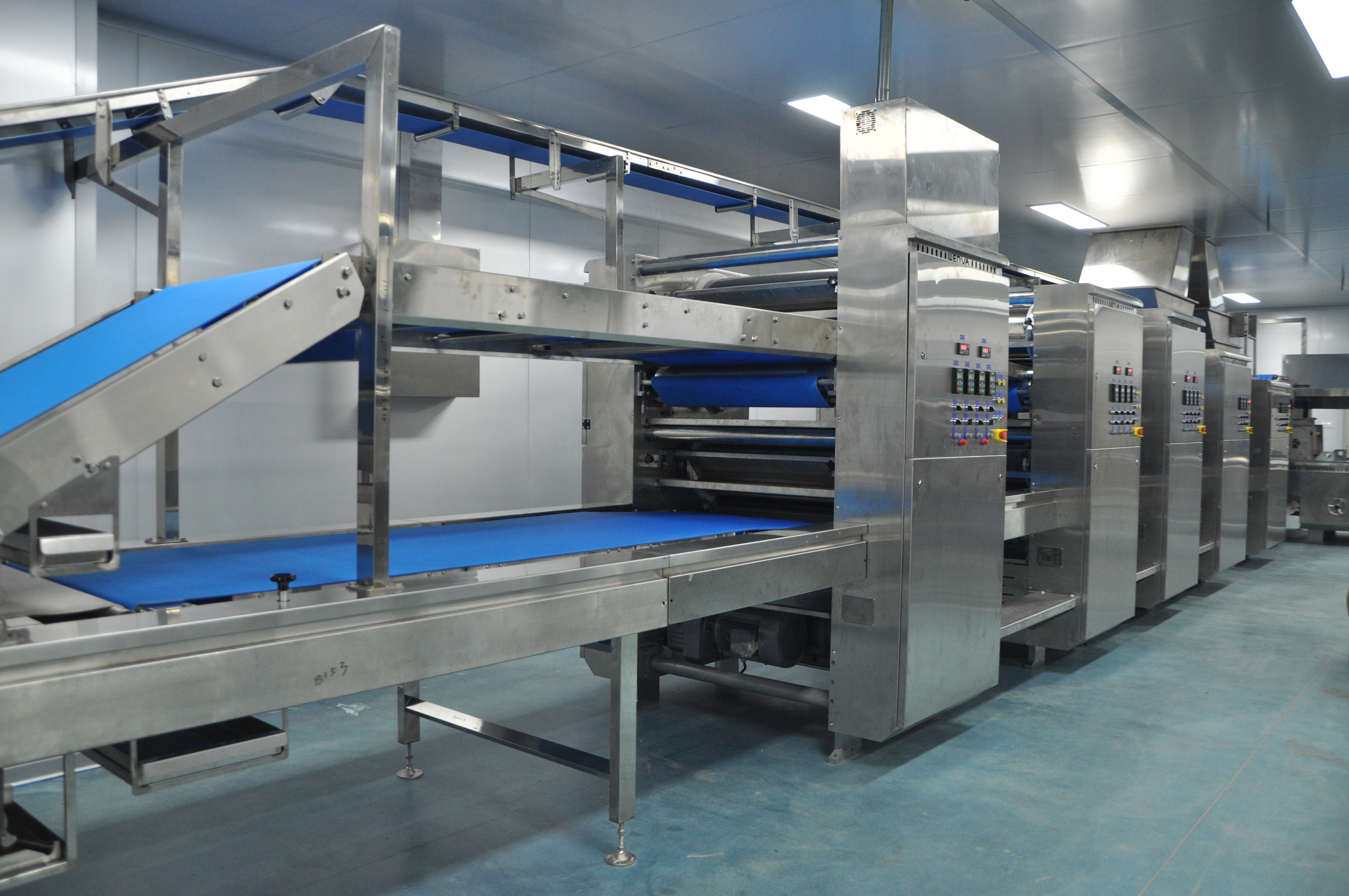
Wenva Machine has focused on automated biscuit production lines for about 40 years, with a history that traces back to biscuit line design in the mid‑1970s and export experience since the early 1990s. The company integrates R&D, design, manufacturing, and sales, and has built a Biscuit Production Line Experience Center as well as a branch in Foshan to better serve overseas customers.
For soft biscuits, Wenva offers complete lines from dough mixers and rotary moulders to tunnel ovens and cooling conveyors, including small biscuit lines suitable for mid‑size factories and new brands upgrading from semi‑manual setups. A key advantage for procurement teams is Wenva's flexibility: the company is used to designing layouts around existing buildings, tailoring oven length and automation level, and providing on‑site commissioning and trial production in the customer's plant, which makes it attractive for SMEs and regional brands looking for deep OEM customization and efficient communication rather than strictly the lowest price. [wenva668.en.made-in-china]
Golden Bake is a well‑known biscuit machinery manufacturer in Zhuhai, offering full biscuit production lines for both hard and soft biscuits. The company emphasizes innovative process technology and is positioned towards customers requiring higher throughput and standardized large‑scale production. [foodsmachine]
For international buyers targeting mainstream cookies and soft biscuits, Golden Bake's strengths lie in its complete line engineering, integration of baking and cooling, and experience in delivering turnkey projects. It is often selected by factories that want to design multi‑product lines with stable long‑run capacity rather than frequent SKUs changes. [ensun]
Shanghai HG Food Machinery focuses on a wide range of bakery and food production lines, including biscuit, bread, and snack machinery. It has significant experience serving both domestic and overseas customers with complex plant layouts and integrated solutions. [wenvamachine]
While not limited to soft biscuits, its biscuit lines include rotary moulding and tunnel baking configurations that can be adapted for soft biscuit textures. Buyers typically engage HG when they seek a broader food machinery partner (for example, biscuit plus bread lines in a single project) and need strong project‑management capabilities across multiple product categories. [ensun]
GELGOOG, based in Guangzhou, provides snack, confectionery, and biscuit machinery, with an emphasis on export markets and turnkey packaging integration. Its product range covers cookie and biscuit lines suitable for soft formulations, often bundled with cooling, stacking, and automated packaging systems. [wenvamachine]
For procurement managers, GELGOOG's value is in its ability to supply not only forming and baking equipment but also end‑of‑line automation such as packing and cartoning, which can reduce multi‑vendor coordination risk. It tends to be considered by factories that prioritize integrated snack‑line solutions over highly customized biscuit‑only configurations. [wenvamachine]
Loyal Industrial is known internationally for its food extrusion and baking lines, and it also offers soft biscuit production lines as part of its portfolio. The company highlights its capability to provide advanced biscuit production line solutions with strong export orientation. [m.loyalfoodmachine]
Soft biscuit lines from Loyal typically cover the full process from mixing to baking and cooling, with a focus on energy efficiency and automation. For buyers, this can be a competitive option when consolidating multiple projects (e.g., snacks, extruded foods, biscuits) with a single supplier that understands export documentation and global logistics. [m.loyalfoodmachine]
Shanghai Seny Machinery appears frequently in biscuit machine manufacturer directories and industry listings for China. It provides biscuit and pastry machinery, including rotary moulders and tunnel ovens that can be configured for soft biscuit production. [ensun]
Seny's competitiveness typically lies in its modular line components and customization options for mid‑scale production. Buyers considering Seny should focus on clarifying process requirements and verifying reference projects in similar product categories before final selection. [ensun]
Industry directories and B2B platforms list numerous additional Chinese biscuit line manufacturers—often more than 100 active biscuit machine suppliers at any given time—supporting both domestic and export markets. Among them, companies specializing in rotary moulders, baking ovens, and small biscuit machines frequently offer soft biscuit‑capable lines, but their depth of engineering and after‑sales support can vary significantly. [datahorizzonresearch]
For procurement managers, these "second‑tier" but specialized suppliers can be valuable options when targeting niche products, local service coverage in specific provinces, or aggressive project budgets. However, due diligence on QC, certifications, and service capability becomes even more critical in such cases. [ensun]
The table below summarizes indicative positioning of several key suppliers from a buyer's perspective (values are generalized based on public information and typical project feedback; always confirm directly with the supplier).
| Manufacturer | Typical Line Capacity Range (soft biscuits) | Indicative MOQ for Complete Line | Key Export Certifications / Focus | Notable Strengths for Buyers |
|---|---|---|---|---|
| Wenva Machine | Small to upper‑mid (e.g., new plants and expansion lines) (wenva668.en.made-in-china) | 1 full line, supports phased upgrades | ISO‑aligned QC, CE‑oriented configurations for export markets (wenvamachine) | High customization, flexible layouts, strong OEM/ODM for small and mid‑size brands |
| Golden Bake | Medium to high‑capacity industrial lines (foodsmachine) | Full line projects, limited focus on single small units (foodsmachine) | CE compliance on key modules, export track record to multiple regions (foodsmachine) | High throughput, turnkey engineering, suited to large food groups (foodsmachine) |
| Shanghai HG | Wide range, from pilot to large‑scale lines (wenvamachine) | Project‑based, often multi‑line solutions (wenvamachine) | CE‑oriented designs, multi‑product plant engineering (wenvamachine) | Strong in integrated food plant projects (biscuit plus other bakery lines) (wenvamachine) |
| GELGOOG | Small to large snack & biscuit lines (wenvamachine) | 1 line, often with packaging integration (wenvamachine) | Export‑focused design, CE on core equipment (wenvamachine) | Integration of processing + packaging, multi‑category snack solutions (wenvamachine) |
| Loyal Industrial | Medium‑capacity biscuit lines with extrusion portfolio (m.loyalfoodmachine) | 1 line, optional multi‑line packages (m.loyalfoodmachine) | CE‑ready designs, strong export logistics (m.loyalfoodmachine) | Combination of biscuit and other food lines under one supplier (m.loyalfoodmachine) |
This kind of high‑level comparison helps quickly narrow down long lists before you proceed to RFQ and technical clarification.
Beyond receiving a PDF certificate, verifying that a manufacturer's ISO certificate is real, valid, and relevant to your project is essential. Industry guidance recommends checking: certificate number, standard (e.g., ISO 9001), scope of certification, expiration date, and the names/logos of both accreditation body and certification body. Once you have these details, you can cross‑check them via the accreditation body's website or the International Accreditation Forum (IAF) to ensure that the certificate is current and the certifier itself is accredited. [linfordco]
This process reduces the risk of relying on outdated or non‑accredited certificates, which is a more common issue than many buyers realize.
For soft biscuits, lab‑scale samples are not enough; you need to test at or near production speed. A robust procedure often includes:
- Sending your base recipes and target specifications (diameter, thickness, texture, bite, color range, moisture) ahead of time.
- Conducting trials either in the supplier's test center or on a reference line, with clear recording of oven temperatures, belt speeds, scrap rates, and changeover times. [m.loyalfoodmachine]
- Evaluating not only the biscuit quality, but also cleanability, operator ergonomics, and ease of recipe change.
Wenva's Biscuit Production Line Experience Center, for example, is set up specifically so visitors can see machines running and understand how the equipment behaves with different formulas.
For overseas projects, logistics and commissioning often consume more time and budget than expected. Good practice includes:
- Clarifying Incoterms, packing methods (container loading drawings, anti‑corrosion measures), and documentation required for customs clearance early in the contract.
- Agreeing on a detailed on‑site commissioning plan that covers utilities, local contractor coordination, trial production, operator training, and acceptance criteria. [wenvamachine]
- Confirming spare‑parts strategy for burners, motors, PLC components, belts, and custom moulds, and whether local partners or regional warehouses support your country.
Chinese manufacturers with established export teams usually present clearer processes here; Wenva, for instance, reports that export trade already accounts for about 40% of its business and participates in multiple international exhibitions each year to support global clients.
Some of the most costly problems in soft biscuit line procurement are rarely discussed in public marketing material but are well known among industry insiders:
- Underspecified oven and cooling capacity
- A frequent pitfall is ordering a line based only on "kg/h" without checking whether baking and cooling sections can actually handle the product at that speed for your specific recipe. [m.loyalfoodmachine]
- Internal rule‑of‑thumb: always ask the supplier to show reference photos or videos of similar products at similar throughput, plus oven zone length and cooling time calculations, not just catalogue numbers.
- Hidden shortcuts in materials and components
- Some lower‑tier suppliers may use lower‑grade stainless steel for non‑visible parts or cheaper electrical components that complicate maintenance and spares availability.
- Practical insider tip: require a detailed component list for critical items (burners, PLC/drive brands, belt type, bearings) and specify that any change must be approved in writing before shipment; this closes a common loophole where "equivalent" components are substituted without notice.
- Over‑promised lead times
- In peak seasons—especially around large domestic or export orders—it is easy for delivery commitments to slip.
- Experienced buyers often keep a 15–20% buffer on supplier‑promised delivery dates in internal planning and link a portion of payments to verified FAT and shipment readiness to protect project timelines.
By using these "internal" checks, procurement managers can filter out suppliers who look good on paper but lack execution reliability.
For procurement managers, Chinese soft biscuit line manufacturers offer a pragmatic balance between cost, process know‑how, and customization, supported by a large domestic biscuit industry and expanding global demand. Suppliers like Wenva Machine provide particular value to growing brands and regional manufacturers that need engineering support, OEM flexibility, and stable after‑sales service more than ultra‑high capacity, while larger groups such as Golden Bake and Shanghai HG often align with high‑throughput, multi‑product plants. [ibisworld]
When you approach suppliers, start with a shortlist based on your capacity, compliance, and customization needs, then use trials, ISO verification, and detailed technical Q&A to validate who will be a sustainable partner—not just a low‑cost vendor.
Below are five questions that come up often in advanced biscuit line procurement, with concise guidance:
1. How can I verify whether a supplier's ISO 9001 certificate is still valid and not expired?
- Ask for the certificate number, scope, issuing body, and expiration date, then verify it via the national accreditation body or the IAF database, checking that both the certificate and certifier are current and not suspended. [int-enviroguard]
2. How do I confirm that a biscuit production line truly complies with CE requirements for my EU plant?
- Request the EC Declaration of Conformity, risk assessment documentation, and test reports for key electrical and safety components, and cross‑check whether critical modules (control panel, safety guards, emergency stops) follow relevant EN/IEC standards cited in the declaration. [datahorizzonresearch]
3. What is the best way to compare two suppliers whose lines claim the same capacity (kg/h) but use different oven and cooling lengths?
- Ask both suppliers to provide line layout drawings, detailed baking curve data for your recipe, and reference videos or acceptance reports from existing lines; then compare dwell time in each zone, expected scrap rate, and flexibility for future recipe changes. [m.loyalfoodmachine]
4. How can I assess whether a supplier's QC system is robust enough for long‑term cooperation?
- During factory audits, look for documented procedures for incoming inspection, welding and machining checks, electrical testing, FAT protocols, and NCR (non‑conformity report) handling; cross‑check whether these are reflected in real shop‑floor records, not just in manuals. [linfordco]
5. What is the practical way to evaluate total cost of ownership (TCO) for a soft biscuit line, beyond purchase price?
- Request energy consumption estimates per kg of product, spare‑part cost lists, recommended maintenance intervals, and historical data on downtime causes; combine this with local energy and labor costs to model a 5–8 year TCO scenario before signing. [datahorizzonresearch]


