
Views: 222 Author: Wenva Machine Publish Time: 2026-06-15 Origin: Site
Content Menu
● How We Evaluate "Good" Cookie Maker Machine Suppliers
● Why Source Cookie Maker Machines from China?
● Selection Criteria for Our Top 10 List
● Top 10 Cookie Maker Machine Manufacturers in China (2026)
>> 1. Wenva Machine (Wenva Biscuit & Cookie Production Lines)
>> 2. Shanghai HG Food Machinery Co., Ltd.
>> 3. Guangzhou GELGOOG Intelligent Technology Co., Ltd.
>> 5. Zhuhai Biscuit Line & Cookie Machine Suppliers (Cluster around Golden Bake)
>> 6. Foshan / Guangdong Baking Equipment Cluster (Including Wenva and Peers)
>> 7. Multi-Product Food Machinery Integrators (Shanghai / Jiangsu Region)
>> 8. Specialized Cookie Depositor and Wire-Cut Machine Makers
>> 9. Hybrid Tunnel Oven and Baking System Specialists
>> 10. OEM-Focused Contract Manufacturers for Private-Label Cookie Brands
● Technical Considerations for Cookie Maker Machines
● Comparative Snapshot: Typical Supplier Profiles
● Industry Pain Points and How to Avoid Them
>> 1. Sub‑standard materials and components
>> 2. Over‑stated capacity and under‑designed ovens
>> 3. Incomplete documentation and non‑verifiable certifications
>> 4. Hidden costs in installation and commissioning
● Internal "Avoid-the-Pitfalls" Tip from Industry Insiders
● Practical Buyer's Guide for Cookie Maker Machines from China
>> Step 1: Pre‑screening and shortlisting
>> Step 2: Technical alignment
>> Step 3: Factory audit and sample tests
>> Step 4: Contracting and certification verification
>> Step 5: Shipment, installation and training
>> Logistics and after-sales considerations
● FAQ: Advanced Questions Real Buyers Ask
China has become one of the most important hubs for industrial cookie and biscuit-making equipment, offering mature supply chains, competitive pricing, and increasingly advanced automation solutions for global buyers. This guide ranks 10 representative cookie maker machine and cookie production line manufacturers in China (with Wenva Machine as a key high-value option) and explains exactly how procurement managers can evaluate, shortlist, and verify suppliers in 2026. [foodsmachine]
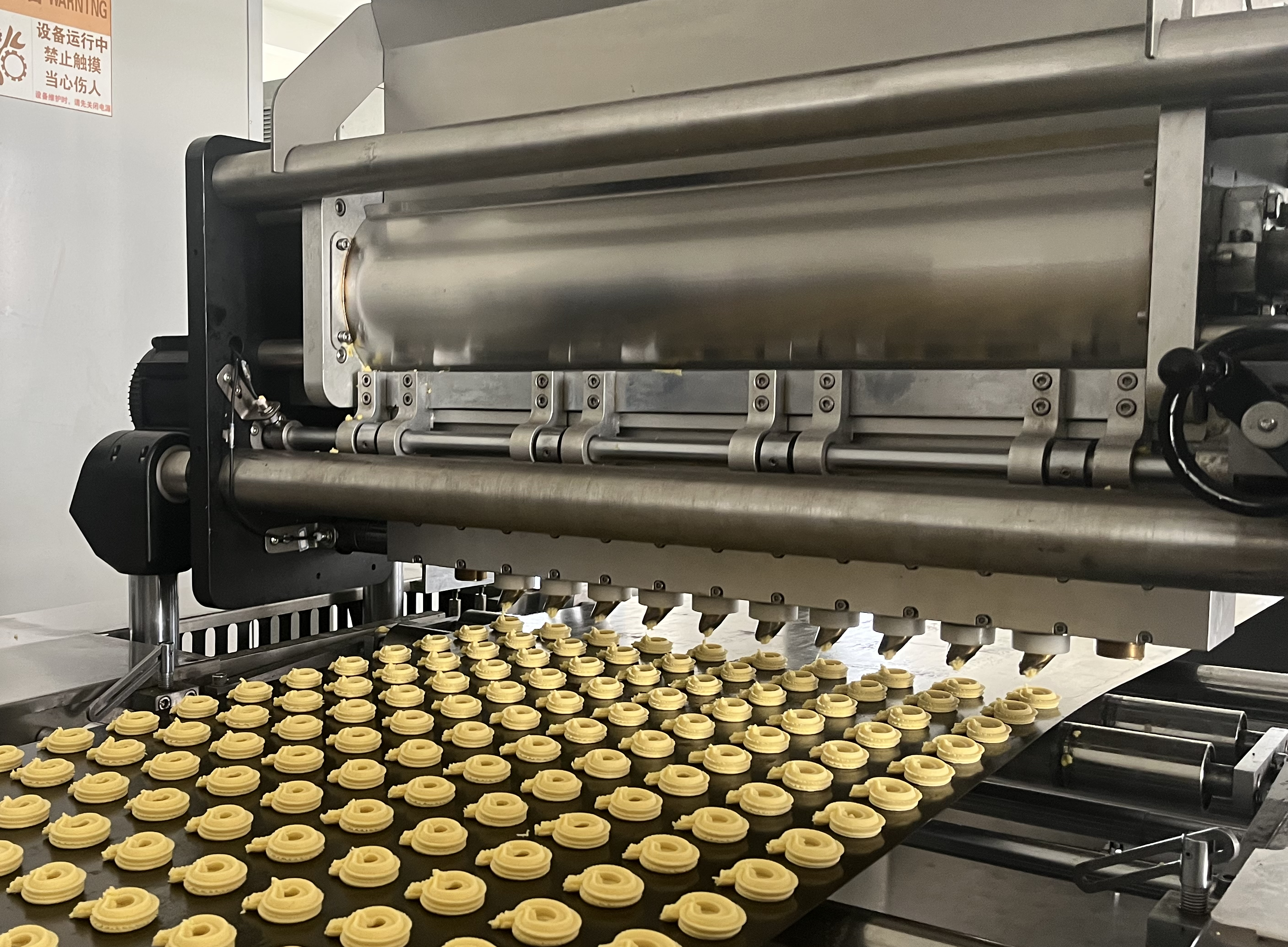
For professional buyers, the real risk is not the machine price, but inconsistent quality, downtime, and non‑compliance in export markets. Before listing any manufacturer, we apply several hard criteria: [foodsmachine]
- Factory certifications and QMS
- Valid ISO 9001 quality management and CE-compliant machinery design are baseline requirements for export-grade cookie lines. [researchandmarkets]
- For food-contact parts, suppliers should work to hygiene-related standards and traceable component sourcing (e.g., SS304/SS316 from known mills). [researchandmarkets]
- R&D capability and technical depth
- We prioritize manufacturers that have continuously upgraded their lines (e.g., modular layouts, PLC control, energy-saving oven designs, flexible forming technologies) rather than just reselling older models. [researchandmarkets]
- A visible R&D history over decades, with new line types (soda cracker, thin cracker, hybrid tunnel ovens), is a strong proxy for engineering capability. [foodsmachine]
- QC process and production stability
- Mature producers typically offer full FAT (Factory Acceptance Test), documented inspection routines, and traceable lot records before shipment. [researchandmarkets]
- Export-oriented firms often configure higher-grade components and run stricter QC for overseas orders, which you should explicitly request in the contract. [foodsmachine]
- Delivery reliability and global service network
- We look for predictable lead times, in-house installation teams, and either overseas branches or stable agent networks to support commissioning and after-sales. [foodsmachine]
- The ability to provide on-site commissioning and operator training in English is especially important for first-time automated line buyers. [researchandmarkets]
- Export track record and reference markets
- Preference is given to manufacturers with decades of export history and presence in multiple regions (Southeast Asia, Middle East, Africa, Latin America). [foodsmachine]
- Regular participation in trade fairs such as Bakery China, Canton Fair or regional bakery shows is also a sign of a stable export business. [foodsmachine]
China's biscuit and cookie production industry has grown into a large, technically mature ecosystem that directly supports equipment manufacturers. By 2026, China's biscuit production industry reached an estimated market size of around USD 54.8 billion with 1,600+ registered biscuit-related producers, creating dense supply clusters for baking equipment, stainless steel fabrication, controls and OEM parts. [ibisworld]
In parallel, the domestic cookie market continues to expand; one report expects China's cookie market to grow by roughly USD 0.75 billion between 2021 and 2027, driving continuous upgrades in industrial cookie lines and tunnel oven technology. These dynamics mean that Chinese manufacturers are not just building for export, but also stress-testing equipment in a highly competitive home market, from mass-market sandwich biscuits to premium butter cookies. [ibisworld]
For global procurement managers, this combination—large domestic demand, mature supply chains, and intense local competition—creates a supplier landscape where you can find:
- Full turnkey cookie production lines from 100–2000 kg/h capacity. [researchandmarkets]
- Specialized forming, cutting, and hybrid tunnel oven solutions targeted at specific product types and energy profiles. [researchandmarkets]
To keep this list actionable for serious buyers (OEM brands, contract manufacturers, and mid‑sized biscuit plants), we applied a transparent scoring framework:
1. Manufacturing experience and technical specialization
- Minimum 10 years in biscuit/cookie machinery; priority to companies specializing in biscuit/cookie lines, not generic food machines. [foodsmachine]
2. Product scope and scalability
- Complete solution capability from dough mixing, forming, baking (tunnel ovens), cooling to basic packaging. [researchandmarkets]
- Configurable capacities suitable for both mid-scale plants and large industrial bakeries (e.g., 100–2000 kg/h for cookies). [researchandmarkets]
3. Compliance and documentation
- Availability of CE, ISO, and other customer-required compliance documents, plus willingness to share sample certificates for verification. [linfordco]
4. Export performance and reference markets
- Evidence of stable exports over multiple years and multiple continents; trade show presence. [foodsmachine]
5. OEM/ODM ability and engineering support
- Ability to customize layouts, nozzles, molds, and control logic for brand-specific products or limited factory floor space. [researchandmarkets]
6. Service & communication
- English-speaking engineering and sales staff, remote support capabilities, on-site commissioning, and training. [researchandmarkets]
Within this framework, Wenva Machine is positioned as a cost-effective, R&D‑driven manufacturer with strong relevance for buyers seeking flexible OEM/ODM support rather than just off-the-shelf lines. [foodsmachine]
Below is a curated list of 10 representative manufacturers. Capacities and certifications can vary by model; always confirm against latest datasheets and contracts.
Wenva Machine has focused on automated biscuit production lines for approximately 40 years, combining design, R&D, manufacturing, and global service. The company traces its history in biscuit line design back to the mid‑1970s and has exported biscuit lines since the early 1990s, now serving customers in more than 25 countries. [foodsmachine]
From a cookie perspective, Wenva positions itself as a flexible cookie production line manufacturer with modular systems spanning dough preparation, forming (wire‑cut, rotary moulder and custom molds), tunnel baking and cooling. The company emphasizes: [researchandmarkets]
- Materials & process
- Food‑contact parts in SS304/SS316, PLC control with touchscreen HMI, and energy‑efficient tunnel ovens (electric, gas and hybrid). [researchandmarkets]
- Configurable capacity from roughly 100 to 2000 kg/h depending on line width and automation level, which suits both regional brands and larger plants. [researchandmarkets]
- OEM/ODM and layout flexibility
- Wenva offers full customization of line layout (620–1500 mm widths, different forming modules) to match existing factories and recipes. [researchandmarkets]
- They provide an on‑site Biscuit Production Line Experience Center where customers can run tests with their own dough formulas before finalizing an order. [foodsmachine]
- Service model
- In‑house technicians are dispatched for installation, trial runs and commissioning; training and detailed operation/maintenance manuals are standard. [foodsmachine]
- With a Foshan branch and a growing international service network, Wenva aims to solve communication and after‑sales response issues often seen with smaller factories. [foodsmachine]
For procurement managers, Wenva is especially relevant when: you need a high value‑for‑money line, want deep OEM customization (e.g., product dimensions, surface texture, oven zoning), and expect close technical communication through the project lifecycle. [foodsmachine]
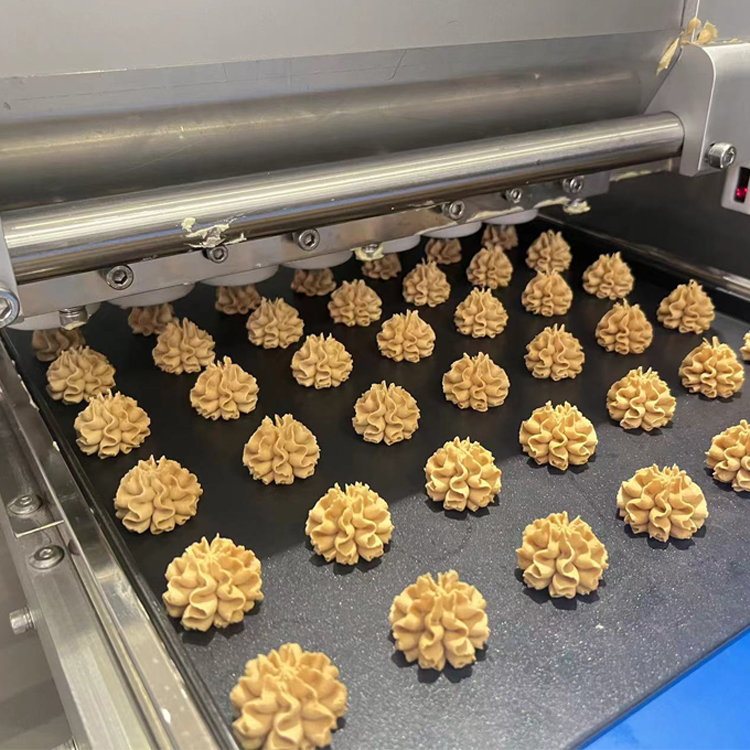
Shanghai HG is a well-known baking and biscuit machinery manufacturer, often cited among leading biscuit factory machine suppliers in China. The company typically offers full automatic biscuit production lines, cookie depositor machines, rotary molders, and tunnel ovens for various bakery products. [wenvamachine]
Its strengths include:
- Broad product range covering biscuits, cookies and crackers with different forming technologies and production capacities.
- Experience serving both domestic Chinese brands and overseas customers with CE-compliant machinery.
GELGOOG is a large food machinery group with solutions for nuts, confectionery and bakery equipment, including biscuit and cookie lines. While not exclusively focused on cookies, its integrated engineering team and global service channels have made it visible among export buyers. [wenvamachine]
Key points for buyers:
- Strong experience with turnkey food processing lines and multi-product plants.
- Emphasis on intelligent controls and data monitoring across lines, which can benefit larger industrial operations.
Golden Bake is frequently referenced online for commercial biscuit and cookie production lines, and also publishes detailed buying guides for cookie machines. The company provides full lines with tunnel ovens, mixers, and customized forming sections for different biscuit and cookie categories. [foodsmachine]
For procurement managers, Golden Bake stands out through:
- Considerable focus on educating buyers about capacity planning, machine configuration, and common selection mistakes in cookie equipment. [productionbiscuit]
- Turnkey project experience for medium to large cookie factories in Asia and beyond.
The Zhuhai region has developed into a cluster for biscuit production lines and cookie baking equipment, with Golden Bake and several related manufacturers basing their operations there. This regional concentration creates a dense ecosystem of metal fabrication, conveyor specialists, and control system integrators. [foodsmachine]
Advantages for buyers:
- Easier sourcing of compatible auxiliary machines and spare parts in one region.
- Multiple suppliers using similar standards, enabling competitive benchmarking during factory visits.
Foshan and surrounding areas in Guangdong have become core manufacturing bases for various types of industrial baking and food machinery, including cookie and biscuit lines. Companies in this cluster typically leverage Guangdong's metalworking, automation, and export trade infrastructure, similar to how Foshan is known for its furniture and building materials clusters. [ibisworld]
For cookie machinery buyers, Foshan/Guangdong suppliers generally offer:
- Strong experience in export documentation, CE/ISO implementation and multi-language communication.
- Flexible capacity from small semi-automatic biscuit machines to full industrial cookie lines.
Around Shanghai and Jiangsu, several integrators specialize in designing multi-product snack lines, including cookie maker machines as part of broader snack manufacturing solutions. They may not brand themselves purely as "cookie machine manufacturers", but they offer competent engineering for plants that require integration with other snack or bakery processes. [productionbiscuit]
Consider them when:
- Your project combines cookies, crackers and other snacks on shared infrastructure.
- You need strong plant-level automation integration rather than just single lines.
A number of smaller Chinese manufacturers focus specifically on cookie depositors, wire‑cut machines and rotary molders that can be integrated into existing tunnel ovens. These are typically found in Zhejiang, Jiangsu, and parts of Guangdong. [productionbiscuit]
They are suitable for:
- Upgrading forming sections of existing biscuit lines to expand cookie SKUs.
- Pilot lines and smaller capacity projects that do not yet require full turnkey systems.
Some Chinese equipment makers specialize in electric, gas, and hybrid tunnel ovens that are critical for consistent cookie quality at industrial scale. These ovens are often sold as part of cookie or biscuit lines but can also be retrofitted into existing plants. [researchandmarkets]
Why they matter:
- Baking uniformity and energy efficiency are major cost and quality drivers in cookie production. [researchandmarkets]
- Hybrid ovens (electric + gas + infrared) support diverse recipes, coloration profiles, and energy price scenarios. [researchandmarkets]
There is a growing group of OEM/ODM-oriented machinery makers that work closely with private-label cookie brands and contract manufacturers looking to scale volumes without building entirely new plants. These suppliers usually offer highly customized forming tools, flexible line widths and modular add-ons for packaging. [foodsmachine]
They are ideal for:
- Brands seeking distinctive cookie shapes, textures, or filling structures that require custom molds and process tuning. [researchandmarkets]
- Buyers wanting scalable lines that can start at lower capacity and be upgraded later.
To meet export and retailer audit requirements, procurement managers should pay attention to several technical details:
- Materials & hygiene
- Food-contact surfaces should use SS304 or SS316 stainless steel with polished, easy‑to‑clean designs. [researchandmarkets]
- Machines should support sanitation procedures in line with international food safety norms, including proper drainage and minimal dead zones.
- Process control & automation
- PLC-based controls with recipe management, data logging, and alarm systems are standard in modern cookie lines. [researchandmarkets]
- Energy-efficient oven control, including multi‑zone temperature regulation and heat recovery where possible, can significantly reduce operating costs. [researchandmarkets]
- Compliance & certifications
- CE conformity and ISO 9001 QMS are typical for exporters; additional requirements may include RoHS compliance for electrical components and specific hygienic design guidelines depending on market. [linfordco]
- Request sample certificates and verify them using international or national accreditation databases where possible. [linfordco]
Below is a simplified snapshot (indicative, not contractual) to help you position different supplier types. Always verify exact specs with each manufacturer.
| Supplier type | Typical capacity range (cookies) | Typical MOQ for full line | Common certifications | Ideal buyer profile |
|---|---|---|---|---|
| Wenva Machine | ~100–2000 kg/h configurable cookie lines (researchandmarkets) | 1 full line; modular units available (researchandmarkets) | CE, ISO, food‑grade SS304/316, export documentation (researchandmarkets) | Mid‑size to large plants, OEM brands needing customization (foodsmachine) |
| Major brand (e.g., Golden Bake) | Mid to large-scale lines for biscuit & cookies (foodsmachine) | 1 full line | CE, ISO; strong documentation | High output factories, multi-country brands |
| Shanghai/Foshan cluster manufacturers | Small to large lines, including semi-auto (wenvamachine) | Flexible; single machines to full lines | CE/ISO varies by company | Regional brands, contract manufacturers |
| Specialized forming machine makers | Forming sections up to medium capacity (productionbiscuit) | 1 machine | Basic CE/ISO; check per model | Plants upgrading specific process steps |
Some buyers discover after installation that key contact parts are not truly SS304/SS316, or that critical components (bearings, drives, electronics) are low‑grade local brands.
How to avoid:
- Specify SS304/SS316 and branded components (e.g., Siemens, Schneider, SEW) in the contract and technical annex. [researchandmarkets]
- Inspect material certificates and component brand lists during FAT; consider third-party inspection before shipment. [aqmbd]
Nameplate capacity (kg/h) may be calculated on ideal test recipes, not your actual formulation or desired moisture levels.
How to avoid:
- Ask the manufacturer to test with your recipe at their experience center or demo line where possible (Wenva offers this for biscuit and cookie lines). [foodsmachine]
- Require test reports that show line speed, oven settings, and moisture for your SKUs.
Certificates shared as low-resolution images or without verifiable numbers are a red flag. [aqmbd]
How to avoid:
- Request original PDF certificates with visible certificate numbers, issuing body, and scope. [aqmbd]
- Cross‑check the issuing certification body on the IAF or national accreditation body website and validate certificate numbers where tools exist. [linfordco]
Some offers exclude on-site commissioning, operator training, or critical spares, leading to unexpected costs and delays.
How to avoid:
- Confirm that the quotation includes on‑site installation, commissioning, basic training, and an initial spare parts package. [researchandmarkets]
- Clarify daily rates and travel costs for technicians in advance.
A widely known but rarely written rule among experienced buyers: never finalize a cookie line order based only on generic demo dough shown at the factory.
Many suppliers will demonstrate lines with a highly optimized dough that is easy to form and bake, giving the impression of high capacity and perfect uniformity. In practice, your recipes—especially with high fat, inclusions (chips, nuts), or specific moisture targets—may behave very differently.
Insider approach:
- Send your actual recipes (or a close proxy) and request real test runs at the supplier's demo center, with clear photo/video documentation and test output sent to you. [researchandmarkets]
- Where feasible, visit and observe a full production test; lock key process parameters (line speed, oven profile, forming setup) into the technical annex of the contract.
- Use industry directories, trade fairs (e.g., Bakery China, Canton Fair), and professional networks to identify potential suppliers, including Wenva and other Foshan/Guangdong and Shanghai-based manufacturers. [wenvamachine]
- Filter for those with at least 10 years in biscuit/cookie machinery and visible export experience, plus CE/ISO evidence. [foodsmachine]
- Define target capacity (kg/h), product range (wire‑cut, rotary, sandwich, filled cookies) and available plant area (m²) before approaching suppliers. [researchandmarkets]
- Request preliminary layout drawings and P&ID from 3–5 shortlisted suppliers; compare how they manage dough handling, oven zoning and cooling.
- Conduct remote video audits or in‑person factory visits focusing on fabrication, assembly, and testing facilities.
- Arrange recipe‑specific tests where possible; Wenva's Biscuit Production Line Experience Center is particularly useful for this stage. [foodsmachine]
- Attach the agreed layout, component list, and performance parameters as a technical annex to the contract.
- Verify ISO and CE certificates via the issuing bodies or national accreditation databases (using certificate number and scope as search keys). [aqmbd]
- Clarify Incoterms, estimated lead time, and split of responsibilities for customs clearance and local installation support.
- Ensure the supplier's technicians will be present for trial production and train your operators on routine maintenance, troubleshooting, and safety. [researchandmarkets]
- For large cookie lines, pay attention to packing design, container loading plans, and spare parts strategy to minimize damage and downtime.
- Consider long-term service: availability of remote diagnostics, response time guarantees, and recommended annual maintenance visits.
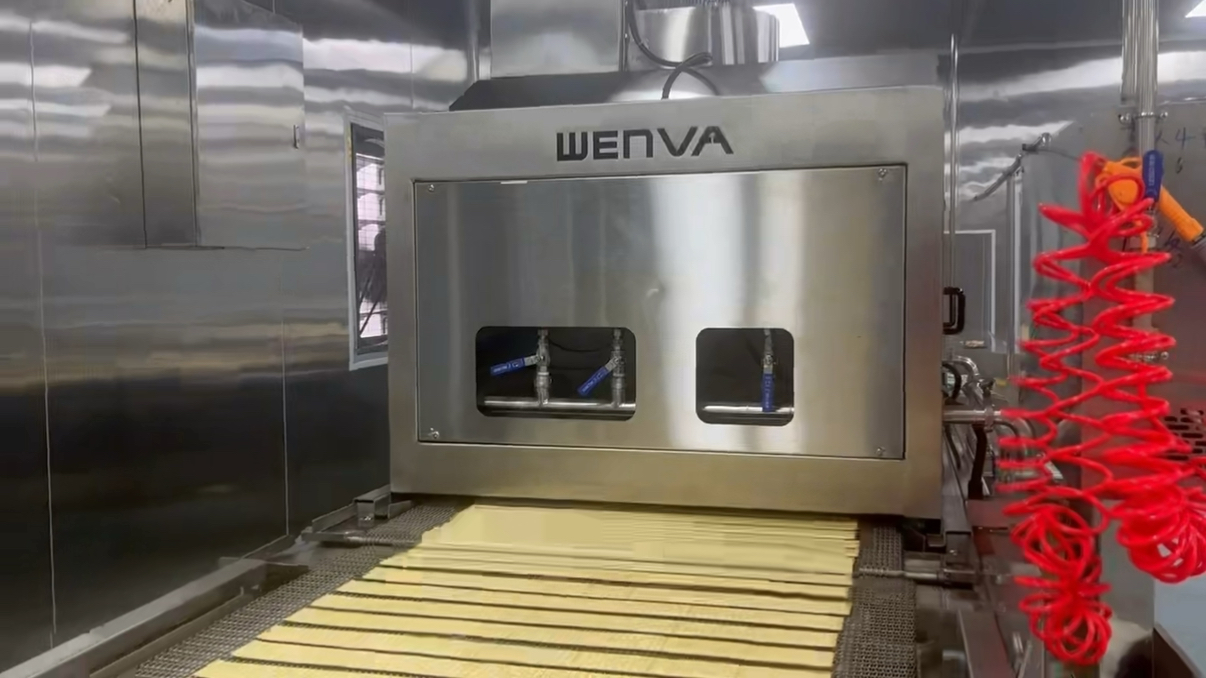
1. How can I verify if a manufacturer's ISO 9001 certificate is still valid and not expired?
First, request the full ISO certificate PDF with certificate number, issuance and expiry dates, and scope. Then, search the certification body via the International Accreditation Forum (IAF) or the national accreditation body website and use the certificate number to confirm its status and validity period. [linfordco]
2. What is a realistic safety margin when calculating cookie line capacity for my recipe?
If a supplier states 1000 kg/h based on an easy, low-fat test dough, many buyers derate by 20–30% for more complex recipes with inclusions or stricter moisture targets. Running tests with your actual formulation at the demo center is the most reliable way to set realistic capacity expectations. [productionbiscuit]
3. For export to the EU or UK, what technical documentation should I request beyond CE?
You should ask for CE Declaration of Conformity, electrical drawings, risk assessment, and manuals in English. For certain markets, you may also need evidence that key electrical components comply with RoHS and that food-contact materials meet relevant EU regulations. [researchandmarkets]
4. How can I judge whether a factory's QC process is robust enough for continuous production?
Look for documented incoming inspection of materials, in‑process checks, final FAT reports, and traceable serial numbers on major assemblies. A strong supplier can show standard inspection checklists, sample FAT records, and clear procedures for handling non‑conforming parts. [foodsmachine]
5. How do I minimize the risk of long downtime once the line is installed overseas?
Negotiate a spares strategy covering critical components (bearings, sensors, belts, drives) for at least 1–2 years. Confirm remote support channels (online diagnostics, video calls) and clarify the response time and cost structure for emergency on‑site service visits. [researchandmarkets]
- IBISWorld – "Biscuit Production in China" industry analysis for macro trends and competitive landscape in China's biscuit sector. [ibisworld]
- Research and Markets – "China Cookies Market Overview, 2027" for cookie consumption and growth forecasts. [researchandmarkets]
- International Accreditation Forum (IAF) – Online tools to verify ISO certification bodies and issued certificates. [linfordco]
- Guidance on certificate verification and inspection report authentication (e.g., professional articles on business document verification). [aqmbd]


