
Views: 222 Author: Wenva Machine Publish Time: 2026-06-02 Origin: Site
Content Menu
● Thermal conductivity and heat dissipation
>> Bronze: the high‑conductivity benchmark
>> Plastic: intentional thermal insulation
● Release behavior and surface interactions
>> Bronze: dry, friction‑controlled release
>> Plastic: sticky but forgiving
● Wear, durability, and maintenance
>> Bronze: long‑term investment material
>> Plastic: modular, replaceable components
● Impact on automated biscuit line performance
>> Scrap rates and quality consistency
● Practical decision‑making framework
>> When to choose engraved bronze molds
>> When plastic molds may be preferable
● Enhancing visual content and user experience
● Conclusion and call to action
● Frequently Asked Questions (FAQ)
>> 1. What is the main advantage of bronze molds over plastic molds in biscuit production?
>> 2. Are plastic molds safe for continuous, high‑volume biscuit lines?
>> 3. How do release agents affect performance in bronze vs. plastic molds?
>> 4. What maintenance is required for bronze biscuit molds?
>> 5. Can bronze molds be customized for specific biscuit patterns?
In the world of automated biscuit production, the choice between engraved bronze molds and plastic molds is one of the most consequential decisions a manufacturer will make. As a leading provider of automated biscuit production lines for over 40 years, Wenva Machine has evaluated both materials extensively in continuous, high‑throughput environments. This analysis compares the fundamental thermodynamic and mechanical properties of engraved bronze and plastic molds, focusing on heat dissipation and release efficiency—two metrics that directly determine line speed, product quality, and operational cost.
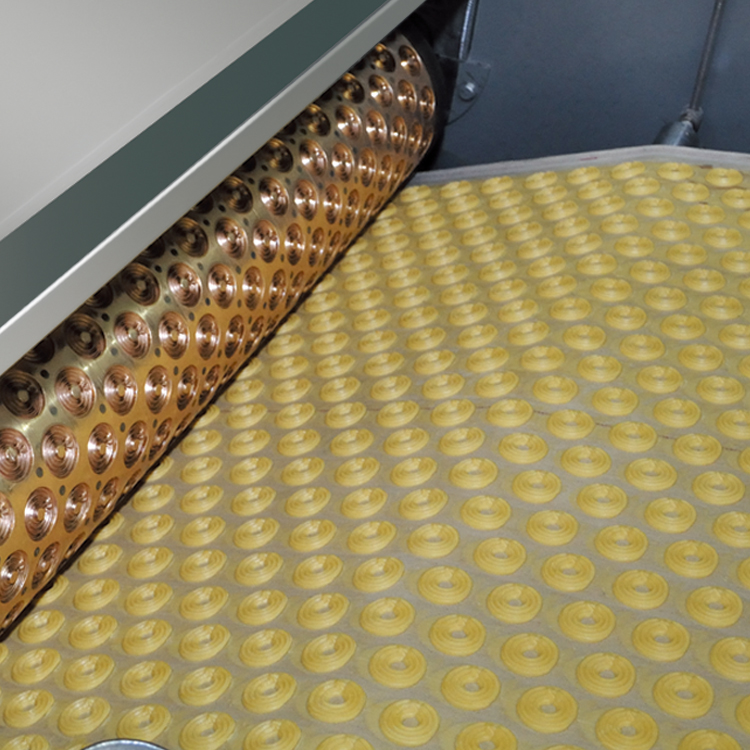
Bronze alloys used in industrial molds typically exhibit thermal conductivities in the range of 60–120 W/m·K, far exceeding common tool steels (12–20 W/m·K) and many plastics (0.1–0.5 W/m·K). In biscuit rotary molders, this means heat from the dough is drawn away from the formed biscuit rapidly, significantly shortening the effective cooling time in the mold cavity. [copper]
Key advantages:
- Uniform surface temperatures across the engraved pattern, reducing local hot spots and warpage in the biscuit.
- Lower steady‑state mold temperatures, which reduces thermal stress and extends mold life.
- Faster stabilization of the mold thermal profile after startup or format change. [copper]
Plastic‑based molds (often reinforced engineering thermoplastics or food‑grade composites) are intentionally chosen for their low thermal conductivity. This insulation effect can be beneficial in niche applications where dough must retain internal moisture or when the line is deliberately slowed to prioritize texture over throughput.
Trade‑offs include:
- Longer heat‑retention in the dough, which can lead to over‑cooking at the surface before the core is ready.
- Higher risk of temperature gradients across the mold face, especially in wide‑format lines, which increases reject rates.
- Greater sensitivity to ambient temperature swings and cooling‑water fluctuations. [scribd]
Bronze molds are typically machined with highly polished, engraved patterns and often finished with a hard‑chrome or PVD‑type coating. Release from these surfaces is primarily governed by mechanical friction, slightly modified by any applied food‑grade release agents.
Typical characteristics:
- Low adhesion to most doughs, especially when the mold is kept at a stable, slightly elevated temperature.
- Minimal penetration of dough into microscopic pores, which reduces cleaning time and residue buildup.
- High scratch resistance, so the engraved pattern retains sharpness over hundreds of thousands of cycles. [eversmartbiscuitmachine]
Plastic molds, especially those made from PTFE‑enhanced or silicone‑infused polymers, rely on internal release additives and low‑surface‑energy coatings to prevent sticking. This can enable "self‑release" in some geometries, but at the cost of higher variability. [cargill]
Common issues:
- Cohesive failure: dough may tear at the surface because the inter‑surface bond is weaker than the dough's internal strength.
- Sensitivity to surface wear; once the low‑friction layer erodes, adhesion increases sharply.
- Higher risk of dust and residue buildup in the engraved pattern, which affects both appearance and release. [slideproducts]
Bronze molds, when properly plated and maintained, are designed for multi‑generation equipment cycles. Their high hardness and wear resistance mean they can outlast the biscuit line itself in many continuous‑line configurations.
Maintenance best practices:
- Regular cleaning with mild alkaline detergents, avoiding strong acids that can attack the base metal.
- Periodic inspection of the engraved pattern for micro‑cracking or edge rounding.
- Use of food‑approved release agents only when necessary, to avoid build‑up that can insulate the mold surface. [copper]
Plastic molds are often deployed as modular inserts or segmented plates, allowing quick replacement of worn sections without halting the entire line. This modularity is attractive in multi‑format bakeries.
However:
- Limited thermal cycling tolerance: repeated heating and cooling can cause micro‑cracking and dimensional drift.
- UV and chemical degradation over time, especially in harsh cleaning environments.
- Higher total cost of ownership if multiple sets are required for different formats. [dow]
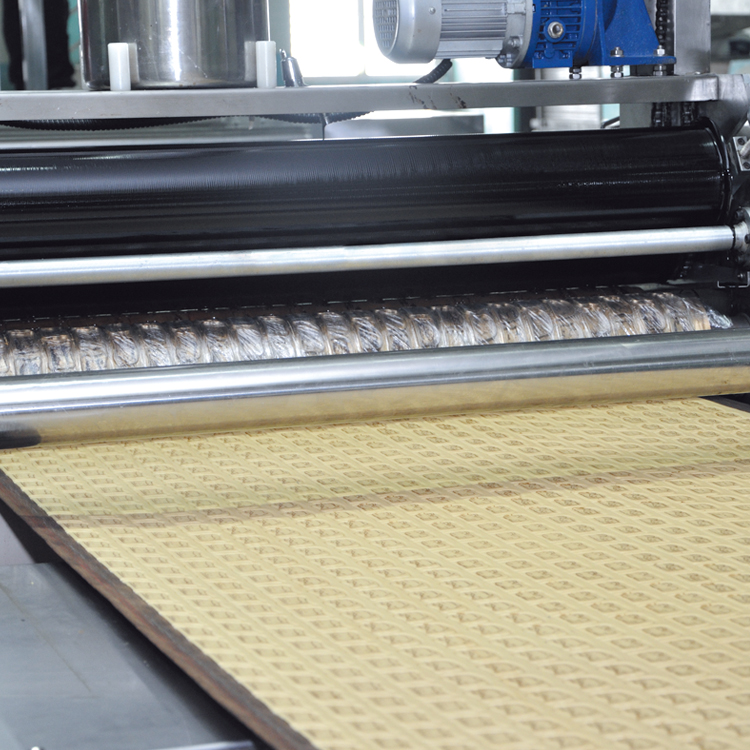
In a continuous rotary molder, cycle time is the sum of:
- Dough contact time in the mold
- Transfer time to the oven
- Mechanical indexing time
Bronze molds typically reduce contact time by 15–25% compared with plastic molds of similar geometry, because:
- Heat is extracted faster, allowing earlier demolding.
- Stable thermal profile reduces the need for "buffer" cycles during format changes. [copper]
Plastic molds often require:
- Longer dwell times to achieve similar core‑set.
- Additional release agents or spray cycles, which add complexity and potential contamination points. [cargill]
Bronze‑molded biscuits tend to exhibit:
- Lower stick‑to‑mold scrap rates (typically <1% in optimized lines).
- More consistent surface detail and edge definition, especially in intricate patterns.
- Reduced surface blistering because excess moisture is removed more uniformly.
Plastic‑molded biscuits may show:
- Higher variability in edge finish if the low‑friction layer is uneven.
- Increased risk of micro‑tearing or "mushy" edges, particularly in high‑hydration doughs.
- Greater need for manual inspection and rework, which can undermine automation benefits. [eversmartbiscuitmachine]
Consider bronze where:
- Throughput is paramount (lines > 1,000 kg/h).
- Product quality and consistency are non‑negotiable.
- Multi‑shift, continuous operation is the norm.
- Capital investment is acceptable in exchange for long‑term savings.
Plastic can be suitable when:
- Formatting flexibility is required (many small runs, frequent changeovers).
- Low‑investment entry into automation is needed.
- Lighter handling and modular replacement are operationally advantageous.
For this article, consider including the following visuals:
- Diagram of heat flow in bronze vs. plastic molds, highlighting thermal gradients.
- High‑resolution render of an engraved bronze biscuit mold with sharp detail.
- Comparison chart of key metrics (thermal conductivity, cycle time, scrap rate).
Selecting between engraved bronze and plastic molds is not merely a materials choice; it is a strategic decision affecting the entire biscuit automation strategy. Bronze molds excel in high‑throughput, continuous environments where heat dissipation and release efficiency are critical. Plastic molds offer flexibility and lower upfront cost but often at the expense of consistency and longevity.
For manufacturers seeking to optimize their automated biscuit production lines, Wenva Machine provides expert consultation and custom mold solutions tailored to specific production requirements. Contact us to schedule a technical evaluation and discover how the right mold material can transform your biscuit line performance.

Bronze molds offer superior thermal conductivity, enabling faster heat dissipation and more consistent cooking, which reduces scrap and increases line speed. [copper]
Plastic molds can be used in continuous lines, but they are generally less durable and more prone to wear and temperature‑related degradation than bronze molds. [scribd]
Bronze molds typically require minimal release agents due to their low‑friction surfaces, while plastic molds often depend on internal or external release additives to prevent sticking. [slideproducts]
Bronze molds should be cleaned regularly with mild detergents, inspected for wear, and lightly lubricated with food‑approved agents only when necessary to maintain performance. [copper]
Yes, bronze molds are highly customizable and can be engraved with intricate patterns to match specific product designs, making them ideal for brand differentiation. [eversmartbiscuitmachine]
- Copper Development Association, *Copper Alloy Molds: The Plastic Industry's Best Kept Secret*, https://copper.org/applications/industrial/CuMolds/ [copper]
- Copper Development Association, *Injection Mold Design - Guidelines*, https://www.copper.org/applications/industrial/PDF_files/9906.pdf [copper]
- Eversmart Biscuit Machine, *Mastering Industrial Biscuit Molds: Precision for Mass Production*, https://www.eversmartbiscuitmachine.com/news/industrial-biscuit-mold/ [eversmartbiscuitmachine]
- Cargill Bioindustrial, *Mold Release - Polymer Additives*, https://www.cargill.com/bioindustrial/polymer-additives/mold-release [cargill]
- Dow, *Food Grade Molds and Release Agents*, https://www.dow.com/en-us/market/mkt-food-beverage/sub-food-food-grade-molds.html [dow]
- Slide Products, *The Importance of Mold Release in Injection Molding*, https://www.slideproducts.com/news/the-importance-of-mold-release-in-injection-molding [slideproducts]


