
Views: 222 Author: Wenva Machine Publish Time: 2026-05-25 Origin: Site
Selecting the right cookie maker machine for your factory is one of the most critical investment decisions you'll make in your baking operation. With automated biscuit production lines evolving rapidly in 2026, manufacturers face an increasingly complex landscape of technologies, from AI-driven precision controls to modular systems that adapt to changing product demands. This comprehensive guide draws on four decades of industry experience to help you navigate machine selection, understand ROI expectations, and future-proof your production capabilities. [aocno]
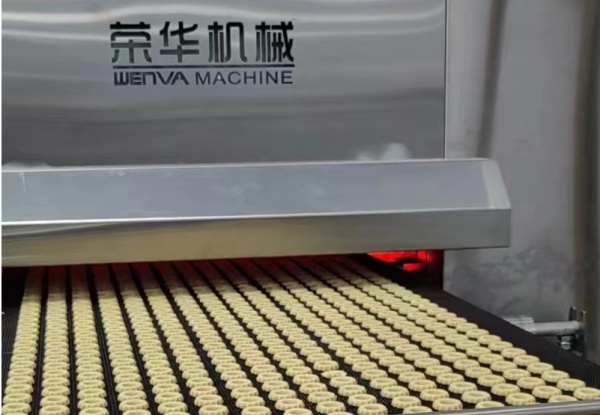
Before evaluating specific cookie maker machines, conducting a thorough production needs assessment is essential. Modern factories must balance multiple variables simultaneously to make informed equipment decisions. [dir.indiamart]
Production volume determines your baseline equipment capacity. Small-scale operations producing 50-200 kg/hour require different machinery than industrial facilities targeting 500-1,000 kg/hour output. Product diversity significantly impacts machine selection—factories producing 5-10 cookie varieties need different flexibility than single-product manufacturers. Automation level varies from semi-automatic lines requiring manual feeding to fully integrated systems handling dough preparation through packaging. [insights.made-in-china]
Factory layout constraints dictate equipment footprint and configuration. Linear production lines suit narrow spaces, while U-shaped or circular layouts maximize efficiency in square facilities. Budget allocation extends beyond initial purchase price to include installation, training, maintenance contracts, and energy consumption costs over 10-15 year operational lifespans. [wenvamachine]
Labor availability increasingly drives automation decisions in 2026, as global labor shortages make manual operations unsustainable. Energy efficiency targets now represent 10-15% of operational expenses, making high-efficiency equipment critical for profitability. [foodsmachine]
Drop cookie machines remain the workhorse of large-scale cookie production, depositing precise dough portions onto baking sheets through programmable nozzles. These systems excel at producing uniform cookies in high volumes with minimal operational complexity. [dir.indiamart]
Modern drop machines feature weight accuracy within ±2 grams, ensuring consistent product quality and reducing waste. Adjustable deposit heads accommodate 20-100 gram portions, covering everything from mini cookies to large premium varieties. Production speeds reach 60-120 deposits per minute depending on dough consistency and portion size. [biscuitsmachinery]
The primary advantage lies in operational simplicity—operators require minimal training, and maintenance focuses on cleaning nozzles and calibrating portion controls. Changeover time between products averages 15-30 minutes, making drop machines ideal for factories running extended batches. [biscuitsmachinery]
However, design limitations constrain drop machines to round or simple shapes. Intricate patterns, embossing, or complex geometries require alternative technologies. Dough consistency requirements are strict; formulations must maintain specific viscosity ranges for proper depositing. [dir.indiamart]
Wire-cut cookie machines utilize adjustable wire cutters to slice extruded dough into customized shapes, offering superior design versatility over drop systems. These machines serve factories prioritizing product differentiation through unique cookie shapes. [dir.indiamart]
Programmable wire configurations enable rapid switching between round, square, rectangular, oval, and specialty shapes without hardware changes. Dimensional precision maintains tolerances within ±1mm for consistent baking performance. Pattern variety extends to creating cookies with textured surfaces, scored lines, or decorative wire impressions. [dir.indiamart]
Wire-cut technology supports multiple dough types, from soft butter cookies to firmer shortbread formulations, by adjusting extrusion pressure and wire tension. Production capacity typically ranges 40-80 cuts per minute, slower than drop machines but faster than rotary moulders. [dir.indiamart]
The primary trade-off involves speed versus design complexity. While wire-cut machines handle intricate shapes, their production rates make them better suited for medium-volume operations or premium product lines commanding higher margins. Dough waste remains minimal compared to stamping methods, as scrap can be re-extruded. [biscuitsmachinery]
Rotary moulder machines represent the premium tier of cookie forming technology, using rotating drums engraved with intricate patterns to create visually stunning, embossed cookies. These systems dominate production of sandwich cookies, biscuits, and artisanal products where appearance drives purchasing decisions. [dir.indiamart]
Engraving precision allows reproduction of detailed designs including company logos, decorative patterns, text, and complex imagery that differentiate premium brands. Dough capacity handles stiff formulations that hold embossed details through baking, unsuitable for softer drop or wire-cut applications. [dir.indiamart]
Dual-sided moulding capabilities enable simultaneous top and bottom pattern application, critical for sandwich cookie production. Weight control systems maintain ±1.5 gram accuracy despite the forming complexity. [biscuitsmachinery]
The investment proposition centers on product positioning. Rotary moulders command 40-60% price premiums over drop machines but enable 20-30% higher retail pricing for visually distinctive products. Operator skill requirements exceed other machine types, as mould adjustment, dough consistency management, and pattern maintenance demand experienced technicians. [imarcgroup]
Changeover complexity represents the primary limitation. Swapping engraved drums requires 1-2 hours plus thorough cleaning, making rotary moulders optimal for factories running week-long or month-long production campaigns of specific designs. [dir.indiamart]
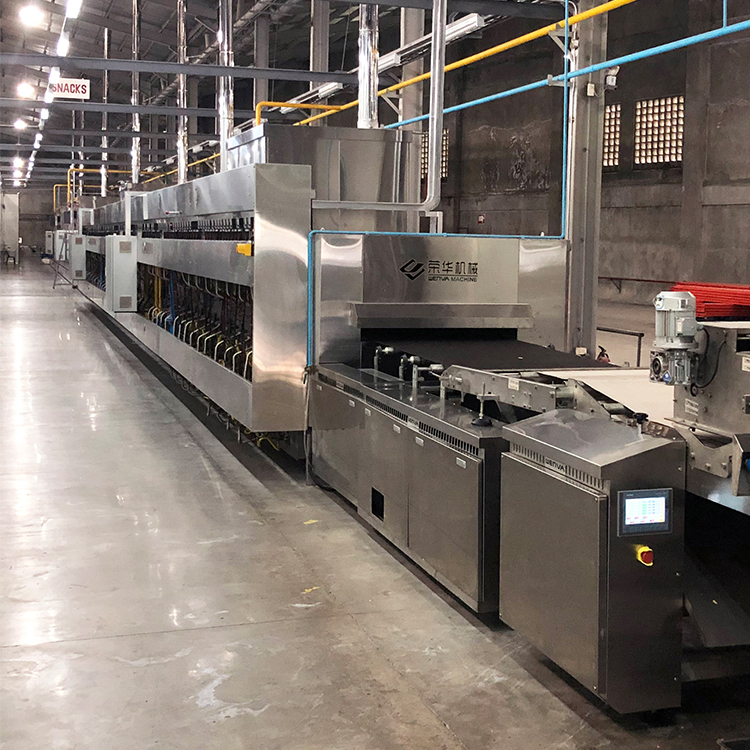
Encrusting cookie machines enable a product category unavailable to other forming technologies: cookies with precisely centered, uniform fillings. These dual-extrusion systems co-extrude outer cookie dough shells simultaneously with inner filling materials, creating jam-filled, cream-filled, and nut-filled varieties. [dir.indiamart]
Filling distribution accuracy ensures consistent fill-to-dough ratios across production runs, critical for cost control and consumer expectations. Multi-filling capabilities allow some advanced models to inject two or three different fillings in segmented or layered configurations. [dir.indiamart]
Production versatility extends beyond cookies to include filled mochi, stuffed pastries, and confectionery applications, maximizing equipment utilization. Portion weight ranges typically span 15-80 grams with independent adjustment of shell and filling quantities. [biscuitsmachinery]
The operational challenge involves cleaning complexity. Filling materials require thorough removal between production runs to prevent contamination and maintain food safety standards. Dough formulation constraints demand specific rheological properties in both shell and filling for consistent co-extrusion. [dir.indiamart]
Market positioning favors encrusting machines for manufacturers targeting premium price points. Filled cookies command 35-50% higher wholesale prices than plain varieties while ingredient cost increases remain 15-25%, delivering superior profit margins. [imarcgroup]
Combination cookie machines integrate multiple forming technologies into unified platforms, providing unmatched versatility for factories serving diverse market segments. These systems represent the cutting edge of 2026 cookie manufacturing equipment. [aocno]
Modular design architecture enables switching between drop, wire-cut, and encrusting modes within 30-45 minutes through interchangeable forming heads. Programmable recipe storage maintains hundreds of product specifications including dough parameters, forming settings, and production speeds for one-touch changeovers. [aocno]
AI-driven optimization in premium combination systems automatically adjusts forming parameters based on real-time dough consistency monitoring, maintaining quality across batch variations. Production data integration connects to factory management systems, providing yield tracking, efficiency metrics, and predictive maintenance alerts. [aocno]
The investment justification rests on product portfolio diversity. Factories producing 8-15 different cookie varieties achieve 25-35% better equipment utilization with combination machines versus dedicating separate lines to each product type. Market responsiveness improves dramatically, as new product development and limited-edition runs require no capital investment in dedicated equipment. [insights.made-in-china]
Initial capital requirements exceed single-function machines by 30-50%, but total cost of ownership over 10-year horizons often proves lower due to consolidated maintenance, smaller footprints, and elimination of redundant equipment. [imarcgroup]
Energy consumption now represents 10-15% of total biscuit production operating expenses, making efficiency optimization a critical ROI factor. Modern cookie maker machines incorporate multiple energy-saving technologies that deliver measurable cost reductions. [foodsmachine]
High-efficiency tunnel ovens with AI-driven temperature controls reduce energy usage 15-25% compared to conventional systems by optimizing heat distribution and eliminating wasteful overcooking. Variable frequency drive motors on mixers and conveyors adjust power consumption to actual load requirements rather than running continuously at maximum draw. [foodsmachine]
Heat recovery systems capture waste heat from ovens and redirect it to dough preparation areas, reducing overall facility heating costs. Intelligent production scheduling consolidates baking operations into continuous runs, minimizing energy-intensive oven startup and shutdown cycles. [bura.brunel.ac]
Insulation improvements on oven chambers and piping systems reduce heat loss by 20-30%, with payback periods under 18 months in high-volume facilities. LED lighting upgrades throughout production areas cut electrical consumption 40-60% while improving visibility for quality control. [ntrl.ntis]
European manufacturers report energy cost reductions of 23% through comprehensive efficiency programs requiring minimal capital investment, primarily focused on better production line management and reduced idle equipment operation. Larger efficiency gains require equipment upgrades but deliver 2-4 year ROI timelines. [bura.brunel.ac]
Intelligent production lines with seamless integration from raw material handling through packaging represent the dominant 2026 industry trend. Modern cookie maker machines must function as components within broader automated ecosystems rather than standalone equipment. [aocno]
IoT sensor integration enables real-time monitoring of dough temperature, humidity, forming pressure, baking temperatures, and cooling rates. Cloud connectivity allows remote production oversight, troubleshooting, and performance optimization by equipment manufacturers' technical support teams. [insights.made-in-china]
Predictive maintenance algorithms analyze vibration patterns, energy consumption, and production metrics to forecast component failures before they occur, reducing unplanned downtime by 40-60%. Digital twin technology simulates production scenarios, allowing optimization of recipes and settings without consuming actual ingredients or production time. [insights.made-in-china]
Vertical integration systems eliminate manual transfer points between mixing, forming, baking, cooling, and packaging, reducing contamination risks and labor requirements. Automated recipe management adjusts all downstream equipment parameters when cookie formulations change, ensuring consistency across the entire production process. [insights.made-in-china]
The implementation challenge involves data infrastructure requirements. Factories must invest in industrial networks, data storage systems, and analytical software alongside physical equipment. Staff training programs must evolve from equipment operation to data interpretation and system management. [deloitte]
Consumer preferences in 2026 increasingly favor personalized nutrition, specialty diets, and limited-edition products, requiring unprecedented production flexibility. Cookie maker machines must accommodate rapid formulation changes and small-batch runs economically. [insights.made-in-china]
Gluten-free production demands dedicated equipment or extremely thorough cleaning protocols to prevent cross-contamination, driving demand for machines with tool-free disassembly and sanitization features. Sugar-free and low-carb formulations often require forming parameter adjustments due to altered dough rheology. [insights.made-in-china]
Rapid changeover design with color-coded quick-release components and guided setup procedures reduces product transitions from 2+ hours to 20-30 minutes in advanced systems. Small batch efficiency requires machines that maintain quality and consistency at 30-40% capacity operation without excessive waste or adjustment complexity. [biscuitsmachinery]
Co-manufacturing capabilities allow contract manufacturers to serve multiple brands from single production lines, maximizing asset utilization. Seasonal production flexibility enables bakeries to shift between everyday products and holiday specialties without capital equipment additions. [biscuitsmachinery]
Biscuit production plant ROI typically ranges 15-25% annually for well-planned operations with appropriate equipment selection and market positioning. Understanding the financial drivers behind these returns informs smarter equipment purchasing decisions. [imarcgroup]
Gross profit margins in cookie manufacturing average 30-40%, with raw materials representing 65-75% of operating expenses. Net profit margins settle around 15-25% after accounting for labor, energy, maintenance, and overhead costs. [imarcgroup]
Automated production lines reduce labor requirements 40-60% compared to manual operations, delivering labor cost savings that often justify equipment investment within 3-5 years. Yield improvement through precise portioning and reduced waste adds 3-7% to effective production capacity without increasing ingredient purchases. [biscuitsmachinery]
Energy efficiency upgrades deliver 15-25% consumption reductions, translating to $40,000-80,000 annual savings in medium-sized facilities. Reduced downtime from predictive maintenance improves effective capacity utilization 5-10%, equivalent to production expansion without capital investment. [bura.brunel.ac]
Quality consistency improvements reduce rejection rates from 3-5% to under 1%, effectively increasing saleable output. Premium product capabilities from advanced forming technologies enable 20-35% higher wholesale pricing for visually distinctive or filled varieties. [imarcgroup]
Scalability provisions should factor into initial equipment selection. Production lines easily scaled up or down maintain efficiency across 40-150% of nominal capacity, protecting investment value as markets fluctuate. [biscuitsmachinery]
Manufacturer selection proves as critical as choosing specific machinery, as partnership quality determines long-term production success. Evaluating suppliers across multiple dimensions ensures sustainable relationships. [wenvamachine]
Industry experience matters significantly. Manufacturers with 25-40+ years in biscuit equipment development understand production challenges and have refined designs through multiple generations. Reference installations provide valuable insights; visiting operating production lines reveals real-world performance beyond specifications. [wenvamachine]
Technical support infrastructure determines how quickly production issues get resolved. Suppliers with regional service offices, 24/7 support hotlines, and remote diagnostic capabilities minimize costly downtime. Spare parts availability and stocking programs ensure critical components ship within hours rather than days or weeks. [wenvamachine]
Customization capabilities distinguish manufacturers offering turnkey solutions adapted to specific factory layouts, products, and production requirements from those selling standardized equipment. Training programs covering operation, maintenance, troubleshooting, and recipe optimization transfer critical knowledge to factory teams. [wenvamachine]
Installation and commissioning services from design through startup ensure systems integrate properly with existing infrastructure and achieve specified performance. Continuous improvement partnerships provide ongoing optimization support as production demands evolve. [wenvamachine]
Financial stability of equipment suppliers protects long-term parts availability and service support. Manufacturers with strong balance sheets weather industry cycles better than undercapitalized competitors. [wenvamachine]
What is the typical lifespan of a commercial cookie maker machine?
Commercial cookie maker machines typically operate 15-20 years with proper maintenance, though forming heads and high-wear components require replacement every 5-7 years. Energy efficiency improvements often justify earlier replacement at 10-12 years even when machines remain functional. [foodsmachine]
How much space does an automated cookie production line require?
Complete automated biscuit production lines typically require 1,500-3,500 square feet depending on capacity and configuration. Modular designs allow customization to L-shaped, U-shaped, or linear layouts fitting available factory space. Vertical mixers and compact oven designs minimize footprint requirements. [foodsmachine]
Can one cookie maker machine produce multiple cookie types?
Yes, combination machines switch between drop, wire-cut, and encrusting modes within 30-45 minutes, enabling diverse product portfolios from single equipment investments. Even single-function machines accommodate multiple recipes through programming and die/nozzle changes, though changeover complexity varies significantly. [dir.indiamart]
What maintenance requirements do cookie maker machines have?
Daily maintenance includes cleaning forming components, inspecting conveyors, and verifying calibration. Weekly tasks involve lubricating moving parts and deep cleaning contact surfaces. Monthly inspections cover belt tension, motor alignment, and sensor functionality. Annual servicing includes replacing wear parts and comprehensive system diagnostics. [aocno]
How does machine selection impact product quality?
Machine precision directly affects cookie weight consistency (±1-3 grams), shape uniformity, and dimensional accuracy—all critical for consumer perception and packaging efficiency. Advanced systems with closed-loop controls maintain quality across ingredient batch variations that would cause defects in basic equipment. Forming method determines achievable designs; embossed patterns require rotary moulders unavailable through drop systems. [aocno]
1. India Mart. (2023). "Cookies Making Machine Latest Price, Manufacturers & Suppliers." https://dir.indiamart.com/impcat/cookies-machine.html
2. Cookie Machines. (2024). "Bakery Equipment | The Best Bakery Equipment." https://cookie-machines.com
3. Hui De Food Machine. (2025). "Top 5 Small Cookie Making Machines for Perfect Homemade Treats." https://www.huidefoodmachine.com/blog/top-small-cookie-making-machines-homemade-treats/
4. AOCNO. (2026). "Industrial Bakery Automation: Top 5 Trends Scaling Production in 2026." https://www.aocno.com/Industrial-Bakery-Automation-Top-5-Trends-Scaling-Production-in-2026-id47561365.html
5. Wenva Machine. (2025). "Automated Biscuit Production Line Manufacturer - 40 Years Experience." https://www.wenvamachine.com
6. Made in China. (2025). "Truths and Misconceptions about Automated Biscuit Production Lines." https://insights.made-in-china.com/Truths-and-Misconceptions-about-Automated-Biscuit-Production-Lines-Meeting-Future-Trends
7. IMARC Group. (2026). "Biscuit and Cookie Manufacturing Plant Cost, DPR 2026." https://www.imarcgroup.com/biscuit-cookie-manufacturing-plant-project-report
8. Golden Bake. (2026). "The Green Revolution: Enhancing Energy Efficiency in Modern Biscuit Production Lines." https://www.foodsmachine.net/the-green-revolution-enhancing-energy-efficiency-in-modern-biscuit-production-lines.html
9. Biscuits Machinery. "Automatic Cookie Production Line with 500 Kilos/h." https://www.biscuitsmachinery.com/former/cookie-production-line.html
10. Bura Brunel. (2021). "Reducing GHG emissions and improving cost effectiveness via energy efficiency enhancements: A case study in a biscuit industry." https://bura.brunel.ac.uk/handle/2438/23771
11. NTIS. (2024). "Energy Use in the Biscuit-Baking Industry." https://ntrl.ntis.gov/NTRL/dashboard/searchResults/titleDetail/DE82905129.xhtml
12. Deloitte Insights. (2025). "2026 Manufacturing Industry Outlook." https://www.deloitte.com/us/en/insights/industry/manufacturing-industrial-products/manufacturing-industry-outlook.html


