
Views: 222 Author: Wenva Machine Publish Time: 2026-05-28 Origin: Site
An automated biscuit production line is the "engine room" of modern cookie manufacturing, turning simple dough into consistent, profitable products at industrial scale while reducing labor, waste, and energy use. Drawing on Wenva Machine's 40 years of practical manufacturing experience, this enhanced guide explains the cookie production line process step-by-step and shows how real factories plan, run, and optimize their lines in 2026. [senymachinery]
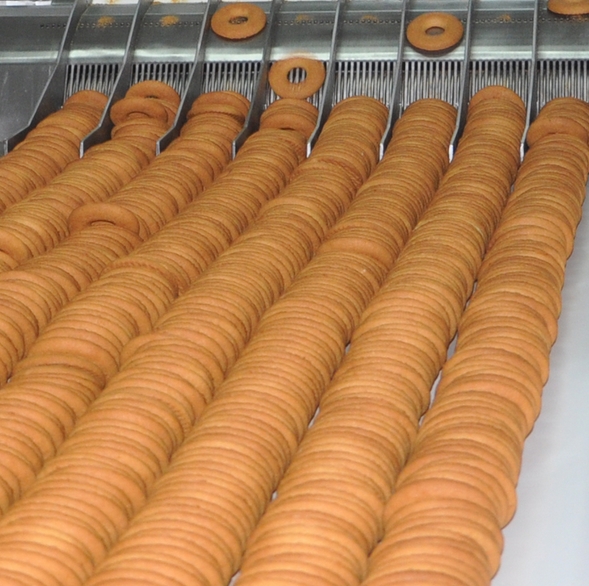
An automated biscuit (cookie) production line is a fully integrated system that combines dough mixing, forming, baking, cooling, and packaging into one continuous, controlled process. Compared with semi‑manual baking, a modern line can boost capacity from a few dozen trays per hour to 50–3,000 kg of biscuits per hour, depending on configuration. [ejournal.iocscience]
For food manufacturers, the business value is clear: automation improves yield, product consistency, food safety, and energy efficiency while making it easier to launch new product types on the same line. This is why the global automated biscuit production equipment market is projected to grow from USD 1.2 billion in 2024 to about USD 2.5 billion by 2033, at a 9.2% CAGR. [youtube]
At its core, every cookie or biscuit line follows the same sequence: [doughgirl.co]
1. Ingredient dosing and dough mixing – Flour, fat, sugar, water, and minor ingredients are precisely weighed and mixed for a consistent dough.
2. Dough resting and feeding – Dough is rested, tempered, and transferred to forming equipment.
3. Forming and shaping – Rotary molder, wire‑cut, depositor or sheeter produces the required shape and thickness.
4. Baking in tunnel oven – Cookies travel through temperature‑zoned ovens for controlled color, texture, and moisture.
5. Cooling on conveyors – Product cools gradually to avoid breakage and moisture problems.
6. Inspection, sorting, and packaging – Defects are removed; conforming products are packed for different channels. [senymachinery]
While the classic article focuses on ingredient selection, mixing, baking, and packaging, it leaves out key automation, energy, and ROI aspects that matter to modern factories. This guide fills those gaps with real‑world process, engineering, and investment insight. [doughgirl.co]
The original article correctly emphasizes high‑quality flour, sugar, fats, and flavorings as the base of good cookies. In industrial lines, the sourcing and control of these ingredients become even more critical because small variations can become large defects at high throughput. [doughgirl.co]
In a modern setup:
- Flour choice (all‑purpose, pastry, whole wheat, gluten‑free blends) is matched to product type and forming method; rotary‑molded biscuits need a different dough rheology from wire‑cut cookies. [senymachinery]
- Fat systems (butter, shortening, blends) are specified for melting profile, aeration, and shelf life.
- Minor ingredients (emulsifiers, leavening agents, enzymes) are optimized to improve spread, color, and bite across long production runs. [senymachinery]
Automated flour feeding and weighing systems reduce human error, improving batch‑to‑batch consistency while cutting raw material waste. For manufacturers, this is often the first "hidden" source of ROI in a new line. [senymachinery]
In the original piece, mixing is described mainly in culinary terms (creaming, muffin method, rubbing‑in). On an automated line, the same principles apply, but are implemented through high‑capacity, sensor‑equipped mixers. [doughgirl.co]
Typical industrial configuration:
- Horizontal or planetary mixers with capacities from 200–1000 kg per batch.
- Temperature‑controlled jackets to manage dough temperature, critical for fat behavior and gluten development. [senymachinery]
- Automated dosing for water, oil, and liquid sugar through flow meters.
Advanced lines now integrate IoT sensors to monitor dough viscosity, temperature, and mixing time in real time. This allows operators to: [senymachinery]
- Maintain uniform dough quality across thousands of batches.
- Detect anomalies early (for example, flour moisture variation) and adjust recipes or process parameters.
After mixing, dough may be rested (tempered) to stabilize hydration and fat crystallization before feeding to the sheeter or rotary molder. This stage is often overlooked, yet it has a strong impact on weight control, shape stability, and surface smoothness. [doughgirl.co]
The original article mentions rolling, cutting, and drop cookies by hand or with simple tools. In automated biscuit production, the forming section is where product variety and capacity are decided. [doughgirl.co]
| Forming method | Typical products | Key advantages |
|---|---|---|
| Rotary molder | Plain biscuits, crackers | High speed, fine embossing, thin products senymachinery |
| Wire‑cut depositor | Chunky cookies, inclusions | Handles high‑fat, high‑inclusion doughs without over‑working senymachinery |
| Piston/servo depositor | Soft cookies, swirl patterns | Precise weight control, decorative shapes |
| Sheeter & gauge rolls | Sandwiches, crackers | Excellent thickness control for uniform baking |
| Co‑extruder | Filled cookies, "Hello Panda" style | Produces center‑filled products in one pass senymachinery |
Well‑designed modern lines allow rapid product changeover, typically under 30 minutes, compared to several hours on older equipment. This flexibility is essential in 2026, where factories must respond quickly to trends like high‑protein, low‑sugar, or filled cookies without buying a separate line for every SKU. [doughgirl.co]
The original article describes baking in general terms but does not reflect the complexity of multi‑zone tunnel ovens used in industrial production. In practice, the oven is the most energy‑intensive and technically critical part of the line. [doughgirl.co]
Modern tunnel ovens typically feature:
- Multiple heating zones (e.g., 3–5) with independent control of top/bottom heat and air flow.
- A combination of convection, infrared, and sometimes hybrid gas/electric heating. [senymachinery]
- Conveyor widths from 620 mm to 1,200 mm or more, matched to the desired capacity. [senymachinery]
Key process controls include:
- Temperature profile to set spread, volume, and color.
- Belt speed (baking time) to achieve the target final moisture.
- Humidity and exhaust control to avoid blistering or under‑baked cores.
Energy‑efficient ovens with heat recovery systems can reduce fuel use by roughly 15–23%, cutting both operating cost and CO₂ emissions. Case studies in biscuit plants report annual savings of tens of thousands of euros and around 190 tons of CO₂ reductions for medium‑scale operations when ovens and line management are optimized. [senymachinery]
The original article rightly notes that cooling and packaging complete the process but treats them briefly. At scale, the way you cool and handle product can determine your breakage rate, shelf life, and food safety performance. [doughgirl.co]
On a modern line:
- Multi‑tier cooling conveyors provide gradual temperature reduction with controlled airflow, preventing cracks and warping. [senymachinery]
- Vision inspection systems equipped with cameras and AI algorithms detect under‑baked, broken, or off‑color pieces at over 1,000 pieces per minute. [senymachinery]
- Defective products are automatically rejected to maintain brand consistency and reduce customer complaints.
Packaging is typically integrated directly after inspection and may include:
- Flow‑wrap machines for pillow packs.
- On‑edge or slug packers for stacked biscuits.
- Multi‑head weighers feeding pouches or tins.
Direct integration between cooling, inspection, and packaging minimizes manual handling, reducing contamination risk and improving throughput by up to 30%. [senymachinery]
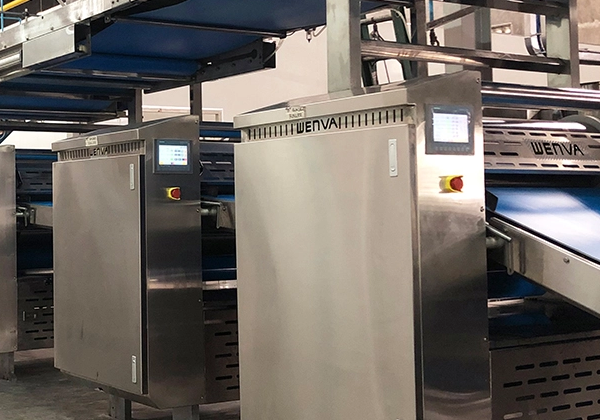
The original article does not address energy and sustainability, yet by 2026 they are central to equipment selection and plant design. [slalom]
Key levers for a greener biscuit line include:
- High‑performance insulation and heat recovery on tunnel ovens, which cut energy use and CO₂ emissions while stabilizing oven temperature. [senymachinery]
- High‑efficiency motors and variable frequency drives (VFDs) on conveyors, fans, and pumps, reducing power consumption by up to 20% compared with constant‑speed systems. [senymachinery]
- Automated ingredient and scrap handling, which reduces raw material waste and enables re‑work where allowed.
- CIP (clean‑in‑place) and water recycling systems, which can lower water usage by 30–40% in plants adhering to FDA/EFSA standards. [senymachinery]
For many buyers, these elements are now part of the ROI calculation, not just "nice‑to‑have" features. [slalom]
Over the last two decades, biscuit production has shifted from standalone machines to Industry 4.0‑ready, data‑driven lines. Wenva Machine's own journey—from early cracker lines to today's smart, integrated systems—mirrors this global trend. [senymachinery]
Key developments include:
- Predictive maintenance using vibration, temperature, and current sensors to cut unplanned downtime by around 20%. [senymachinery]
- Line‑wide data acquisition, enabling live monitoring of OEE, waste, and energy per kg.
- Recipe‑driven controls, where operators select products from an HMI and the line automatically sets oven zones, speeds, and depositor parameters.
Manufacturers implementing these smart systems often see throughput increases of around 20% and operational cost reductions of roughly 15%, based on published deployment data from 2025–2026. [slalom]
The original "cookie production line" article closes with a generic vendor plug; modern buyers need a clear decision framework. From Wenva's 40‑year perspective, the following criteria matter most: [doughgirl.co]
- Proven manufacturing experience in biscuit‑specific lines, not generic food machinery. [senymachinery]
- Engineering and customization capability to adapt to your factory layout, utilities, and product portfolio. [wenva]
- End‑to‑end project support (from layout, installation, and commissioning to operator training).
- After‑sales service and availability of spare parts, ideally with local or regional support. [senymachinery]
- Total cost of ownership and ROI, including energy, maintenance, and labor—most fully automated lines achieve payback in 1–3 years, depending on local labor and energy costs. [senymachinery]
For buyers new to automation, working with a supplier that can provide layout drawings, case studies, and real energy/yield data is critical to de‑risk the project. [senymachinery]
A new production line is not just equipment; it is a project. The classic article does not cover site preparation, commissioning, or ramp‑up, yet these are where many projects lose time and money. [doughgirl.co]
Successful implementations typically follow these steps:
1. Site survey and layout design – Check power capacity, gas supply, compressed air, water, floor loading, and hygiene zoning. [senymachinery]
2. Factory layout and utility planning – Ensure smooth material flow from raw materials to finished goods and allocate space for maintenance access.
3. Installation and dry commissioning – Mechanical and electrical installation, then testing conveyors, motors, and controls without product.
4. Wet commissioning and trial runs – Run real dough and recipes, validate capacity, product quality, and safety systems. [senymachinery]
5. Operator training and documentation – Train line operators and maintenance teams on SOPs, cleaning, and troubleshooting. [senymachinery]
6. Ramp‑up to full capacity – Use a phased production schedule; most factories reach design capacity in 30–60 days if ramp‑up is structured. [senymachinery]
Manufacturers who prepare the site early and involve the line supplier in layout decisions often achieve much shorter installation windows (for example, 4–8 weeks instead of 10–12). [senymachinery]
Buying the line is only the starting point. Plants that consistently outperform competitors share common operational best practices: [senymachinery]
- Planned preventive maintenance following manufacturer intervals, plus condition monitoring to catch issues early. [senymachinery]
- Standardized operating procedures for start‑up, changeover, and shutdown to minimize waste and risk.
- Continuous improvement programs, using production and quality data to identify bottlenecks and reduce losses by 5–10% annually. [senymachinery]
Effective operator training is especially important: skilled operators can adjust parameters proactively when ingredient or ambient conditions change, maintaining yield and quality without constant engineering intervention. [slalom]
If you are planning a new biscuit factory or upgrading an existing plant, choosing the right partner will determine your long‑term profitability, not just your installation date. With 40 years of specialization in biscuit production automation, Wenva Machine provides end‑to‑end solutions—from layout design and equipment selection to installation, training, and lifetime after‑sales support. [wenvamachine]
Tell us your target capacity, product types, and factory layout, and our engineering team will design a customized automated biscuit production line that matches your budget, energy constraints, and growth plans. You can contact Wenva Machine through the official website to request a tailored proposal, process flow, and ROI estimate. [wenva]
1. What is the typical capacity of an automated biscuit production line?
Depending on line width, oven length, and product type, capacities generally range from 50 kg/hour for compact lines to more than 3,000 kg/hour for high‑speed industrial systems. Wenva Machine offers multiple width categories (such as 620 mm, 800 mm, 1,000 mm, and 1,200 mm) to match different plant sizes and markets. [senymachinery]
2. How long does it take to install and commission a complete line?
For a fully automatic biscuit line, typical installation and commissioning times range from 4 to 12 weeks, depending on layout complexity, site readiness, and the level of customization. Projects with early utility preparation and experienced installation teams tend to be at the shorter end of this range. [senymachinery]
3. How quickly can I get a return on investment (ROI)?
Published data for 2025–2026 shows that manufacturers implementing comprehensive automation often achieve full payback in 1–3 years, driven by labor savings, higher yield, and lower energy costs. High‑labor‑cost regions and high‑volume plants typically see the fastest returns. [senymachinery]
4. Can one line produce different types of biscuits and cookies?
Yes. Modern automated lines are designed for fast product changeover, allowing production of plain biscuits, wire‑cut cookies, filled products, and even bars on the same line by switching forming tools and recipes. With optimized design, changeovers can often be completed in less than 30 minutes, reducing downtime and inventory risk. [senymachinery]
5. What about hygiene and food safety standards?
Industrial biscuit equipment can be specified to comply with FDA, EFSA, and other major food safety standards, using stainless steel contact surfaces, hygienic design, and CIP‑friendly layouts. Automated traceability and inspection systems help document compliance and quickly isolate any quality issues. [senymachinery]
6. How does an automated line handle energy costs and sustainability goals?
Energy‑efficient tunnel ovens with heat recovery, high‑efficiency drives, and smart controls can cut energy use by 15–23% compared to conventional setups, while reducing CO₂ emissions. Additional savings come from water‑efficient cleaning systems and reduced raw material waste, supporting both sustainability and profitability targets. [senymachinery]
7. What level of support can I expect after installation?
Reliable manufacturers offer lifetime technical support, spare parts supply, and periodic training or optimization audits. Wenva Machine, for example, emphasizes long‑term partnerships, providing remote guidance and on‑site service to keep lines running at peak performance. [wenvamachine]
1. Wenva Machine – Automated Biscuit Production Line: Expert Guide from 40 Years of Manufacturing Excellence.
https://www.wenvamachine.com/automated-biscuit-production-line-expert-guide-from-40-years-of-manufacturing-excellence.html [senymachinery]
2. From Dough to Delicious Treats: Understanding the Cookie Production Line Process.
https://www.foodsmachine.net/a-news-from-dough-to-delicious-treats-understanding-the-cookie-production-line-process.html [doughgirl.co]
3. Wenva Machine – Production Line Series and Company Contact.
http://www.wenva.net/pro/Production_line_series/ [wenva]
4. Fully Automatic Biscuit Production Equipment Market Analysis (2024–2033).
https://www.linkedin.com/pulse/fully-automatic-biscuit-production-equipment-market-key-y589f [senymachinery]
5. Reducing GHG Emissions in Biscuit Industry.
https://bura.brunel.ac.uk/handle/2438/23771 [senymachinery]
6. Future Factory Report – Food and Drink Manufacturers (November 2025).
https://www.fdf.org.uk/globalassets/resources/publications/reports/future-factory-report---november-2025-update.pdf [senymachinery]
7. Industrial Biscuit Production Faces Automation Push (IBA 2025).
https://www.bakingeurope.com/news/industrial-biscuit-production-faces-automation-push [senymachinery]
8. Truths and Misconceptions about Automated Biscuit Production Lines – Meeting Future Trends.
https://insights.made-in-china.com/Truths-and-Misconceptions-about-Automated-Biscuit-Production-Lines-Meeting-Future-Trends [senymachinery]
9. Manufacturing Automation ROI: Financial Justification Guide (2026).
https://wiss.com/manufacturing-automation-roi-financial-justification/ [senymachinery]
10. Google E‑E‑A‑T: Creating Content That Puts People First.
https://www.iodigital.com/en/insights/blogs/google-e-e-a-t-creating-content-that-puts-people-first [iodigital]


