
Views: 222 Author: Wenva Machine Publish Time: 2026-05-29 Origin: Site
When I first walked a customer through a fully automated Oreo‑style sandwich biscuit production line, what impressed them most was not the ovens or mixers—it was how every detail, from flour quality to cooling conveyor length, directly shaped the crunch and cream texture their brand depended on. As a biscuit production line manufacturer with nearly 40 years of engineering experience, Wenva Machine has seen how a well‑designed line turns a simple cocoa dough into a globally consistent product, batch after batch. [linkedin]
In this guide, I will break down how Oreo biscuits are made step by step, explain the key machines at each stage, and share practical insights from modern automated biscuit factories that are upgrading from semi‑manual to fully automated systems. [linkedin]

Before any automation, a reliable Oreo‑style biscuit starts with ingredient control. [eslvideo]
- Wheat flour – provides structure and bulk to the biscuit shell.
- Sugar – defines sweetness and influences browning in the oven.
- Cocoa powder – delivers the dark color and signature chocolate flavor. [eslvideo]
- Vegetable oils/fats – impact dough plasticity, bite, and crispness. [linkedin]
- Leavening agents (e.g., baking soda) – control spread and internal texture. [eslvideo]
- Minor ingredients – salt, emulsifiers, flavors such as vanilla. [linkedin]
On a modern line, these ingredients are handled through silo systems, dosing units, and industrial mixers rather than manual weighing, which improves consistency and traceability. This also supports recipe variation, such as low‑sugar or high‑fiber biscuits, that many brands are pushing to meet new consumer demands. [insights.made-in-china]
In most Oreo‑style biscuit factories, the production line begins in the dough mixing area, where dry and wet ingredients are blended in large, jacketed mixers. [linkedin]
Typical steps:
1. Automated ingredient dosing
Flour, sugar, cocoa, and minor ingredients are transferred from silos or bags into the mixer via screw conveyors and weighing systems to reduce human error. [foodsmachine]
2. High‑precision mixing
The mixer runs at controlled speed and temperature for a set time (often around 20–30 minutes) to achieve a uniform, plastic dough suitable for rotary molding or cutting. [linkedin]
3. Dough rest or conditioning
After mixing, the dough may be rested or cooled to stabilize gluten structure and make it easier to form consistent biscuit shapes. [linkedin]
From an engineering perspective, stable mixing and temperature control are the foundation of a stable line; if the dough is inconsistent, every downstream station (forming, baking, sandwiching) will be forced into constant adjustment. [insights.made-in-china]
The iconic Oreo biscuit surface with its embossed design is created in the forming section. [lumsx-bbb.lums.edu]
For sandwich biscuits like Oreo, the most common technology is rotary molding:
- Stiff chocolate dough is fed into a rotary molder, where engraved rollers form and emboss each biscuit piece. [lumsx-bbb.lums.edu]
- Precise thickness and diameter are critical for both baking and later sandwiching with cream. [linkedin]
- Excess dough is recycled back into the feed, reducing waste and stabilizing the process.
Some lines may use cutting rollers for other biscuit styles on the same line, which is why modular design is becoming a preferred choice for manufacturers who want flexible SKUs. [aocno]
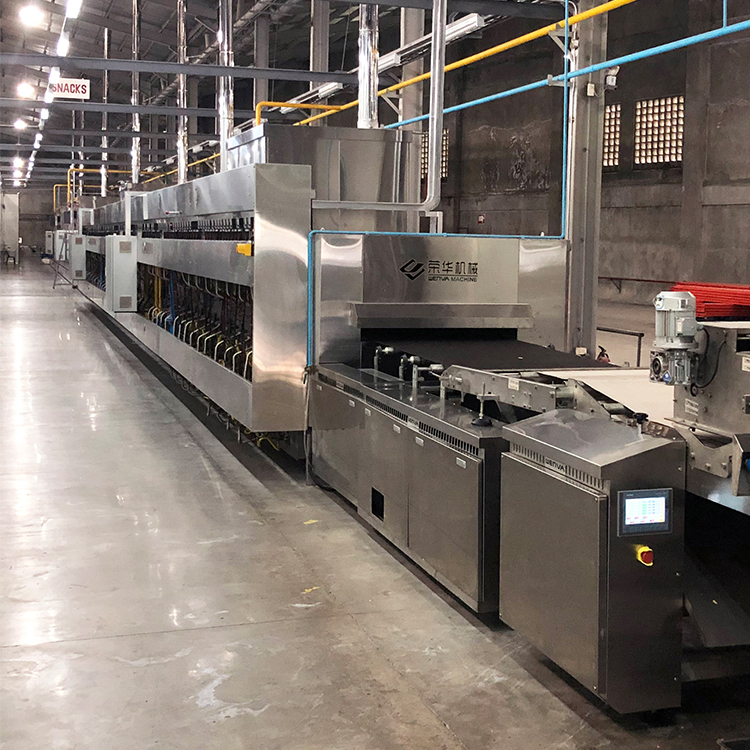
Once shaped, the dough pieces travel on a wire mesh or steel band conveyor through a long tunnel oven. [insights.made-in-china]
Key engineering points:
- Multi‑zone temperature control: Different zones are set to specific temperatures to drive oven spring, moisture removal, and final color. [aocno]
- Typical bake time is in the range of several minutes to achieve a crisp, low‑moisture wafer while avoiding burning or blistering. [linkedin]
- Gas‑fired or electric tunnel ovens with high energy efficiency are now standard, and many are equipped with sensors and AI‑based controls to cut energy consumption by roughly 15–25%. [aocno]
As a biscuit line supplier, we often see that upgrading from older, manually controlled ovens to AI‑assisted tunnel ovens is where customers gain the largest performance improvement: more uniform color, higher throughput, and lower fuel cost per kilogram of product. [aocno]
Freshly baked biscuits exit the oven hot and fragile; they must cool and equilibrate before sandwiching or packaging. [foodsmachine]
Modern lines use:
- Cooling conveyors extending dozens of meters to reduce biscuit temperature and stabilize texture. [foodsmachine]
- Buffer systems to decouple the oven from downstream equipment, improving uptime and balancing short stoppages.
- Hygienic, easy‑to‑clean designs to prevent contamination and breakage.
From an operator's perspective, this section is critical to prevent cream melting in the next step. If cooling is inadequate, sandwich biscuits may develop smearing or deformed cream layers during assembly and packaging. [linkedin]
For Oreo‑style products, the cream filling is as brand‑defining as the biscuit itself. [linkedin]
Typical formulation and process:
- Blend sugar, vegetable fat/oil, flavors (such as vanilla or cocoa), and emulsifiers to achieve a smooth, stable cream. [linkedin]
- Process the cream in dedicated mixers and holding tanks at controlled temperature to ensure consistent viscosity when deposited. [linkedin]
- Pump the cream to depositors or sandwiching machines, which apply a precise quantity to each biscuit half.
From a production line expert's point of view, the key KPI here is weight accuracy per biscuit. Under‑depositing hurts consumer experience; over‑depositing quietly eats into margins. Modern sandwiching systems therefore integrate servo‑controlled cream pumps and in‑line checkweighers to keep variation within tight limits. [insights.made-in-china]
The sandwiching section is where single wafers become the familiar Oreo sandwich biscuit. [linkedin]
On a typical Oreo‑style line:
- Biscuits are aligned and spaced by vibratory or mechanical feeders.
- The first row of wafers receives a measured cream deposit.
- A second row of wafers is automatically placed on top, forming sandwiches at very high speeds. [linkedin]
The machinery must maintain:
- Precise alignment to avoid offset sandwiches.
- Clean sealing between shell and cream to prevent crumbs from sticking to the filling.
- Hygienic design to allow frequent cleaning when changing cream flavors or colors.
From our own project experience, manufacturers moving from semi‑manual filling to fully automated sandwiching often see a noticeable reduction in rework and consumer complaints about non‑uniform filling. [fulaimachinery]
After sandwiching, biscuits go through secondary cooling, then into automated packaging lines. [linkedin]
Typical packaging flow:
- Biscuits are counted and collated into stacks or rows.
- High‑speed flow wrappers or tray loaders place biscuits into branded packs.
- Packaging materials are chosen to maintain freshness and barrier properties for long‑distance distribution.
- Finished packs are box‑packed, palletized, and prepared for distribution to global markets.
Today, many factories are also integrating vision inspection systems to detect broken or missing‑cream sandwiches before packaging, reducing customer complaints and protecting brand reputation. [insights.made-in-china]
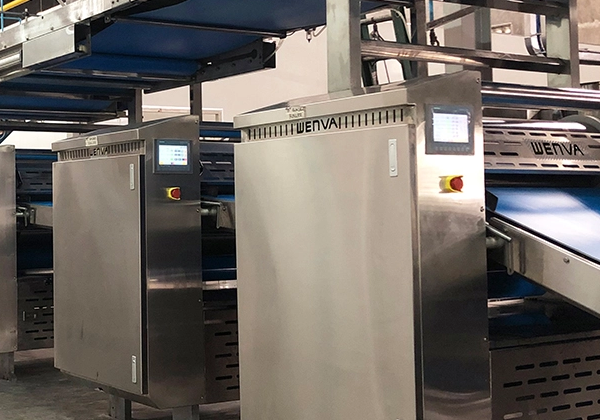
Premium biscuit brands rely heavily on systematic quality control. [insights.made-in-china]
Across the line, typical checks include:
- Ingredient quality and supplier certification (flour, cocoa, fats). [eslvideo]
- Dough texture and temperature consistency at the mixer. [linkedin]
- Biscuit weight, diameter, and color after baking.
- Cream weight per sandwich, layer thickness, and adhesion.
- Metal detection, checkweighing, and pack integrity testing at the end of the line. [insights.made-in-china]
Leading factories combine operator expertise with digital monitoring, using IoT sensors and data dashboards to detect issues early and minimize downtime. From my perspective, this combination of human experience and real‑time data is what defines a truly modern Oreo‑style biscuit plant. [insights.made-in-china]
In recent years, several trends have reshaped automated biscuit production, and any long‑term investment in an Oreo‑style line should take them into account. [aocno]
- Intelligent, fully connected lines
Integrating mixing, forming, baking, cooling, sandwiching, and packaging into a single data‑driven system improves traceability and shortens changeover times. [aocno]
- Energy‑efficient tunnel ovens and smart temperature control
With volatile energy prices, AI‑assisted ovens that optimize combustion based on product load can reduce energy costs by around 15–25% while stabilizing product quality. [aocno]
- Flexible, modular design
Many bakeries want to produce not only Oreo‑style biscuits but also simple cookies, cream sandwiches with different flavors, wafers, or seasonal products on the same line. Modular forming and cooling systems make this realistically achievable. [fulaimachinery]
- Health‑oriented and customized recipes
Automation allows quick changeovers between standard, low‑sugar, high‑fiber, or gluten‑free recipes, helping brands keep up with evolving consumer expectations. [insights.made-in-china]
For equipment suppliers like Wenva Machine, these trends guide how we design new lines: more modularity, digitalization, and energy management built in from day one. [insights.made-in-china]
The table below shows a simplified view of how a typical Oreo‑style production line is structured from an engineering standpoint.
| Production Stage | Core Equipment | Key Control Focus |
|---|---|---|
| Ingredient handling | Silos, feeders, weighing systems | Dosing accuracy, hygiene |
| Dough mixing | Horizontal or planetary mixers | Time, temperature, consistency |
| Forming | Rotary molder, cutters | Thickness, embossing, scrap control |
| Baking | Multi‑zone tunnel oven | Temperature profile, energy use |
| Primary cooling | Cooling conveyors, buffers | Biscuit moisture and temperature |
| Cream preparation | Cream mixers, holding tanks, pumps | Viscosity, flavor, food safety |
| Sandwiching | Cream depositors, sandwich machines | Alignment, cream weight, speed |
| Secondary cooling | Short cooling conveyors | Cream set and stability |
| Packaging | Flow wrappers, cartoners, palletizers | Seal integrity, pack weight |
Designing and installing an Oreo‑style biscuit production line is not just about buying machines—it is about integrating a complete solution around your product, factory layout, and growth roadmap. [insights.made-in-china]
As a manufacturer focused on automated biscuit production lines for nearly 40 years, Wenva Machine typically helps clients with:
- Custom line design to fit available space, product mix, and capacity targets. [linkedin]
- Process optimization across mixing, baking, cooling, and sandwiching to hit specific texture and taste profiles. [linkedin]
- On‑site installation, training, and commissioning, ensuring operators can run the line efficiently from day one. [linkedin]
- Long‑term support, including spare parts, upgrades, and consulting on new product development. [linkedin]
From small regional brands to large industrial plants, we've seen that the most successful Oreo‑style biscuit factories treat the line as a long‑term strategic asset, not just a collection of machines.
Based on field work with automated biscuit lines, there are a few practical lessons worth keeping in mind when planning or upgrading an Oreo‑style line:
- Start with clear product specifications: biscuit weight, diameter, cream ratio, target moisture, and desired crunch profile.
- Invest early in ingredient handling and mixing, as this is where many chronic quality issues originate.
- Specify energy‑efficient tunnel ovens with multi‑zone control and good insulation to reduce operating cost. [aocno]
- Ensure adequate cooling length for your climate and target line speed—humid or hot environments often require longer cooling conveyors.
- Plan for future flexibility: consider how easily the line can handle new flavors, shapes, or pack formats. [insights.made-in-china]
These choices directly influence your long‑term ROI and the reliability of your Oreo‑style products in the market.
If you are planning to launch or upgrade a cream sandwich biscuit product similar to Oreo, a generic line is rarely enough to deliver the consistency and efficiency your brand requires.
Based on decades of experience in automated biscuit production line design, manufacturing, and commissioning, Wenva Machine can help you translate your product idea and factory constraints into a fully engineered line—from dough mixing to final packaging. [linkedin]
You can contact our team to discuss your capacity targets, preferred recipes, and factory layout, and we will propose a tailor‑made Oreo‑style biscuit production solution built for long‑term performance and future expansion. [linkedin]
1. What is the main difference between a standard biscuit line and an Oreo‑style sandwich biscuit line?
A standard biscuit line typically stops at baking, cooling, and primary packaging, while an Oreo‑style line adds dedicated cream preparation, sandwiching, and secondary cooling sections to assemble and stabilize cream‑filled biscuits. [linkedin]
2. How important is rotary molding for Oreo‑type biscuits?
Rotary molding is crucial because it shapes the distinct embossed chocolate wafers with controlled thickness and diameter, which directly affects both baking performance and final sandwich quality. [lumsx-bbb.lums.edu]
3. Can one line produce different flavors or shapes of sandwich biscuits?
Yes. With a modular, flexible design, you can change embossing rollers, adjust recipes, and configure cream depositors to run multiple SKUs on the same line, as long as the layout and controls are designed with flexibility in mind. [aocno]
4. How do modern biscuit factories reduce energy consumption in tunnel ovens?
Factories are increasingly using AI‑assisted, multi‑zone tunnel ovens with smart sensors that adjust burner output to product load, cutting energy use by roughly 15–25% while maintaining stable color and texture. [aocno]
5. What kind of support does an equipment supplier provide after installation?
Leading suppliers typically offer commissioning, operator training, preventive maintenance plans, spare parts, and upgrade options (for example, adding new sandwiching heads or packaging formats) to extend the life of the line and adapt to market changes. [insights.made-in-china]
1. Golden Bake. "How Oreo Biscuits Are Made: A Step‑by‑Step Look at the Production Line." *Golden Bake Info Center* (2024). [Link]
2. AOCNO. "Industrial Bakery Automation: Top 5 Trends Scaling Production in 2026." (2026). [Link] [aocno]
3. Jayesh Tarsariya. "Manufacturing Process for Oreo Biscuits." *LinkedIn* (2025). [Link] [linkedin]
4. ESLvideo. "How Oreos Are Made." *ESLvideo Worksheet*. [PDF] [eslvideo]
5. "Truths and Misconceptions about Automated Biscuit Production Lines: Meeting Future Trends and Market Demands." *Made‑in‑China Insights* (2025). [Link] [insights.made-in-china]
6. Golden Bake. "Automatic Biscuit Production Line." (2024). [Link] [foodsmachine]
7. Wenva Machine. "Customized Biscuit Production Line, Dough Mixer Manufacturing…" Official Website. [Link] [linkedin]
8. Foodlines. "Fully Automatic Biscuit Production Line Helps Indonesian Bakery Companies Upgrade." Case Study (2024). [Link] [fulaimachinery]
9. Lumsx‑bbb. "Oreo Biscuit Manufacturing Process Explained." (Article). [Link] [lumsx-bbb.lums.edu]


