
Views: 222 Author: Wenva Machine Publish Time: 2026-05-26 Origin: Site
As a biscuit production line manufacturer with 40 years of hands‑on experience, I've seen how the right dough mixer can make or break product quality, line efficiency, and long‑term operating costs in a biscuit factory. This guide walks you through how to choose a dough mixer that actually fits your automated biscuit production line—rather than just looking good in a catalog. [ejournal.iocscience]
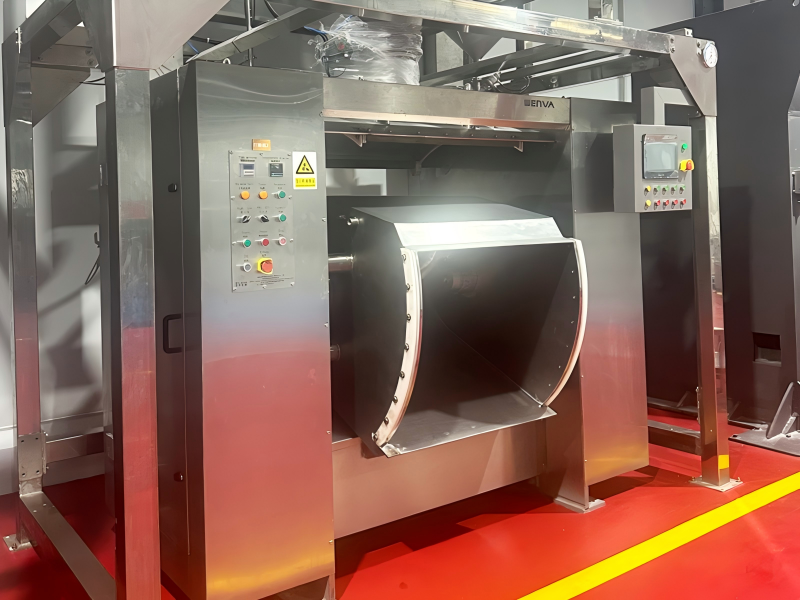
In an automated biscuit production line, the dough mixer is the starting point of your quality chain: everything from dough sheet stability to baking consistency depends on the mix. If dough is under‑mixed, over‑mixed, or improperly temperature‑controlled, downstream processes like forming, baking, and cooling all suffer. [loyal-foodmachine]
A properly sized and configured mixer helps you:
- Maintain consistent dough texture, water absorption, and plasticity for stable forming. [foodsmachine]
- Reduce batch‑to‑batch variability, improving yield and reducing waste. [knoxnews]
- Support higher automation levels with fewer manual interventions on the line. [ejournal.iocscience]
For manufacturers like Wenva Machine, ensuring dough stability is central to designing automated biscuit lines that integrate mixers, forming machines, tunnel ovens, cooling conveyors, and packaging systems into one continuous solution. [wenvamachine]
Before looking at models or brands, clarify your actual production scenario. Many buyers jump directly to price or capacity and end up with equipment that doesn't match their process. [vanrooy.com]
Ask these questions internally before you talk to suppliers:
1. What products are you making?
- Plain biscuits, sandwich biscuits, cookies, crackers, or high‑fat dough products each behave differently in the mixer and on the line. [ko.decaomachine]
2. What is your required hourly capacity?
- Think in kg of dough per hour and link it to your target baked output (kg/h or tons/day) for the entire production line. [jymachinetech]
3. How many product varieties per shift?
- Frequent changeovers require mixers that are easier to clean and flexible in batch size. [linkedin]
4. How automated is your factory?
- Fully automated lines need mixers that integrate with dough feeding, dough feeding belts, and line PLCs for recipe control and data tracking. [loyal-foodmachine]
5. What are your site constraints?
- Available floor area, ceiling height, power supply, and access for maintenance all influence mixer selection and layout. [ko.decaomachine]
For many industrial biscuit factories, a dedicated dough mixer configured for continuous or semi‑continuous feeding into an automated biscuit line is the most reliable long‑term strategy. [jymachinetech]
The original article highlights spiral, planetary, and fork mixers. From a biscuit line manufacturer's perspective, we focus on how each type behaves in high‑volume biscuit environments. [foodsmachine]
Spiral mixers are widely used for bread and pizza, but they also play a role in certain higher‑hydration or softer dough biscuit recipes. [empiresuppliesonline.co]
- Strengths: Strong kneading action, good gluten development, efficient for large batches. [empiresuppliesonline.co]
- Limitations: May be too aggressive for some crumbly or low‑gluten biscuit doughs; batch times and heat buildup need careful monitoring. [vanrooy.com]
Planetary mixers are very versatile and are common in bakeries that produce a wide variety of products. [vanrooy.com]
- Strengths: Able to handle creams, fillings, and some types of dough in the same machine (with tool changes). [foodsmachine]
- Limitations: Heavy biscuit doughs can load the transmission; not optimized for continuous high‑volume biscuit dough production. [vanrooy.com]
Fork mixers and specially designed low‑stress biscuit dough mixers gently combine ingredients without over‑developing gluten. [foodsmachine]
- Strengths: Very gentle mixing, ideal for short‑dough biscuits where you need a tender bite and defined shape after baking. [loyal-foodmachine]
- Limitations: Usually less versatile for non‑biscuit products and need to be properly sized to remain efficient at industrial scale. [loyal-foodmachine]
For most automated biscuit lines, a low‑stress industrial dough mixer with recipe control, jacketed bowl, and robust discharge system provides the best balance between dough quality, throughput, and integration with forming equipment. [ejournal.iocscience]
The original guide rightly stresses capacity, power, speed, and durability. On top of that, integrated line experience shows a few features that become critical once your line is fully automated. [foodsmachine]
Capacity determines how much dough you can produce per batch, but it must be matched to oven capacity and line speed. [loyal-foodmachine]
- Calculate target dough output per hour and convert it into batch size and batch frequency.
- Ensure the bowl volume is 20–30% larger than your average batch to prevent overfilling and poor mixing. [vanrooy.com]
- Check if the mixer supports half batches without compromising mixing quality for more flexible production. [vanrooy.com]
A powerful motor with appropriate torque is essential for consistent mixing, especially with stiff or low‑hydration biscuit doughs. [empiresuppliesonline.co]
Look for:
- Variable speed control or multi‑speed settings for different recipes. [empiresuppliesonline.co]
- Overload protection, soft start, and stable torque output. [empiresuppliesonline.co]
- Control panels that are clearly labeled, easy to operate, and integrated with safety interlocks. [whisperchat]
Dough temperature affects texture, machinability, and baking behavior. In high‑volume production, friction heat can quickly push dough above the ideal range. [loyal-foodmachine]
Consider mixers with:
- Jacketed bowls for chilled water or glycol circulation. [loyal-foodmachine]
- Built‑in temperature probes and alarms linked to your PLC. [knoxnews]
- Recipe settings that limit mixing time and speed to keep dough within target temperature. [knoxnews]
Industrial biscuit lines run long hours; mixers must be robust and easy to clean. [linkedin]
- Food‑grade stainless steel for all product‑contact parts. [loyal-foodmachine]
- Smooth welds and rounded corners to prevent dough build‑up. [whisperchat]
- Access doors or tilting bowls that allow safe cleaning of the entire mixing zone. [linkedin]
- Optional CIP (clean‑in‑place) or foam cleaning support for plants with stringent hygiene standards. [loyal-foodmachine]
Modern biscuit factories increasingly rely on data and automation. [techwyse]
- PLC‑based control with recipe storage and parameter logging. [knoxnews]
- Integration with the line's central control system, including interlocks with dough feeding and forming. [wenvamachine]
- Safety systems: emergency stops, guards, and compliant safety circuits to protect operators. [whisperchat]
Manufacturers like Wenva Machine design mixers and full lines with these integration points from day one, ensuring that dough mixing, forming, baking, and packaging operate as a coordinated system rather than standalone machines. [wenvamachine]
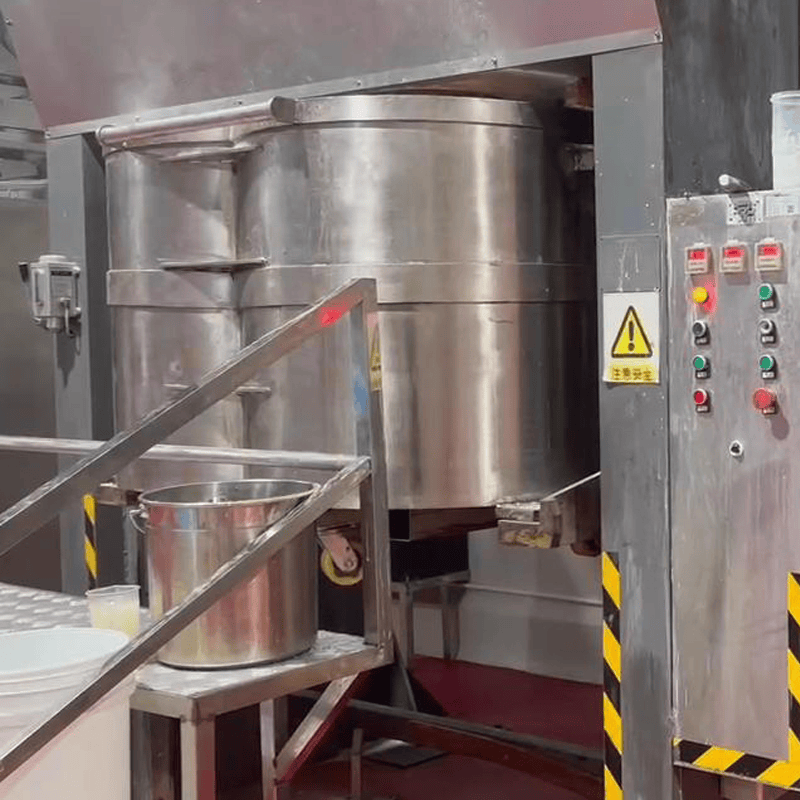
If you are planning or upgrading a full biscuit line, think beyond the mixer as a single machine. It must match the capacity and process flow of your entire plant. [ko.decaomachine]
A standard automated biscuit production line looks like this: [jymachinetech]
1. Ingredient dosing and weighing
2. Dough mixing (batch or semi‑continuous)
3. Dough feeding and sheeting or rotary molding
4. Baking in tunnel oven
5. Cooling conveyor
6. Biscuit stacking and packaging
If your mixer cannot deliver the right amount of dough at the right time, your oven will either starve or overload, which increases waste and energy consumption. That is why manufacturers with long‑term biscuit line experience place so much emphasis on matching mixer design to tunnel oven width, forming method, and desired line capacity. [wenvamachine]
With nearly four decades of biscuit line projects, we often start with the customer's target production (kg/h), product type, and factory layout, then reverse‑engineer the ideal mixer configuration. [wenvamachine]
Typical adjustments include:
- Custom bowl volume and discharge height to align with sheeter or dough feeding conveyor. [wenvamachine]
- Integration of mixer controls into the line HMI with recipe presets per product. [wenvamachine]
- Designing layouts that minimize dough travel distance between mixer and forming machine to maintain dough condition. [ko.decaomachine]
This systems‑level approach helps avoid hidden costs, such as extra labor for manual transfer or quality losses from dough standing too long before forming. [jymachinetech]
To make this actionable, here is a step‑by‑step decision checklist you can use when comparing dough mixers for your biscuit line.
1. Define your target line capacity and product mix.
2. Choose mixer type based on dough structure (short‑dough, high‑fat, low‑hydration, etc.).
3. Match bowl volume and batch time to oven width, baking time, and line speed.
4. Confirm motor power and speed control for your hardest dough.
5. Check dough temperature management (jacket, probes, recipe logic).
6. Evaluate sanitation features and realistic cleaning time between shifts or recipes.
7. Assess integration readiness (PLC, communication, safety interlocks).
8. Review spare parts, after‑sales service, and training support from the manufacturer.
When we walk clients through this checklist during factory planning, they usually avoid common mistakes like oversizing the mixer, neglecting cleaning time, or ignoring automation compatibility until too late in the project. [wenvamachine]
User feedback and plant audits reveal several recurring issues when dough mixers are selected in isolation from the rest of the line. [jymachinetech]
- Focusing only on price per machine instead of total cost of ownership (TCO), including energy use, downtime, and labor. [loyal-foodmachine]
- Underestimating cleaning and changeover time, leading to lower real‑world capacity than calculated. [linkedin]
- Ignoring factory layout constraints, which later require extra conveyors or manual handling. [ko.decaomachine]
- Choosing a bakery‑style mixer that isn't designed for continuous industrial duty, causing premature wear. [foodsmachine]
Working with an equipment partner who delivers the entire automated biscuit production solution—from design to installation and commissioning—helps avoid these pitfalls. [wenvamachine]
If you are planning a new biscuit factory, upgrading capacity, or adding new SKUs, involve a biscuit line manufacturer early in the process. [wenvamachine]
You should reach out when:
- You know your target production (kg/h or tons/day), but not the exact equipment combination yet.
- You want to validate whether your existing mixer can support a new line.
- You are moving from manual or semi‑automatic production to a fully automated biscuit line.
With decades of experience and a dedicated Biscuit Production Line Experience Center, Wenva Machine can help you test recipes, evaluate dough behavior, and design a complete solution—from dough mixer selection to layout, installation, and commissioning. [wenvamachine]
If you are currently evaluating dough mixers or planning an automated biscuit production line, don't choose equipment in isolation. Align your mixer decision with your full process, product roadmap, and factory layout.
Contact Wenva Machine's engineering team to get a customized dough mixing and biscuit line proposal based on your products, capacity targets, and plant layout.
By sharing your product list, target output, and site drawings, you can receive a tailored solution that includes dough mixer sizing, line balancing, and budget guidance—backed by nearly 40 years of biscuit production experience. [wenvamachine]
Q1: What size dough mixer does my biscuit factory need?
The ideal size depends on your hourly dough requirement, tunnel oven width, and baking time; bowl volume should allow batches that keep the line consistently fed without long idle times. [jymachinetech]
Q2: Can I use a bakery spiral mixer for industrial biscuit production?
While spiral mixers can handle some doughs, industrial biscuit plants usually require low‑stress mixers designed for continuous duty and better integration with forming and conveying systems. [foodsmachine]
Q3: How important is dough temperature control in biscuit mixing?
Dough temperature affects machinability, shrinkage, and final texture, so temperature control through bowl jackets, recipe control, and monitoring is essential for consistent quality. [knoxnews]
Q4: How often should I clean an industrial dough mixer in a biscuit line?
Cleaning frequency depends on your HACCP plan and product range, but most factories clean at least once per shift or between recipes, so easy‑clean design and access significantly reduce downtime. [whisperchat]
Q5: Why work with a biscuit line manufacturer instead of buying a stand‑alone mixer?
A line manufacturer can match mixer capacity, automation, and layout to your entire process—mixing, forming, baking, and packaging—avoiding common bottlenecks and ensuring better long‑term performance. [ejournal.iocscience]
1. Golden Bake – "Choosing the Right Dough Mixer: the Ultimate Guide."
[https://www.foodsmachine.net/a-news-choosing-the-right-dough-mixer-the-ultimate-guide.html] [ejournal.iocscience]
2. Wenva Machine – Company website and biscuit production line content.
[https://www.wenvamachine.com] [wenvamachine]
3. Wenva Machine – "Automated Biscuit Production Line: Expert Guide from 40 Years of Manufacturing Excellence."
[https://www.wenvamachine.com/automated-biscuit-production-line-expert-guide-from-40-years-of-manufacturing-excellence.html] [wenvamachine]
4. Vanrooy – "The Ultimate Guide to Dough Mixers: What You Need to Know."
[https://vanrooy.com.au/the-ultimate-guide-to-dough-mixers/] [vanrooy.com]
5. Empire Supplies – "A Buyer's Guide for Commercial Spiral Dough Mixers."
[https://www.empiresuppliesonline.co.uk/blogs/buying-guides-tips/a-buyers-guide-for-commercial-spiral-dough-mixers] [empiresuppliesonline.co]
6. TechWyse – "E‑E‑A‑T and User Experience: How to Create Content That Builds Trust and Keeps Visitors Engaged."
[https://www.techwyse.com/blog/digital-marketing-101/eeat-and-user-experience-how-to-create-content-that-builds-trust-and-keeps-visitors-engaged] [techwyse]
7. Whisperchat – "10 Website UX Best Practices for 2025 That Convert."
[https://www.whisperchat.ai/blog/website-ux-best-practices] [whisperchat]
8. YouTube – "Wenva Machinery is a professional manufacturer of biscuit production lines."


