
Views: 222 Author: Wenva Machine Publish Time: 2026-05-16 Origin: Site
In 2026, energy strategy has become as important as product quality when planning a new automated biscuit production line. Global tunnel oven demand continues to grow, driven by higher levels of automation, energy-efficiency requirements, and expanding biscuit consumption in emerging markets. At the same time, biscuit producers face volatile electricity and gas prices, as well as pressure to cut emissions and improve overall equipment effectiveness (OEE). [insights.made-in-china]
From Wenva Machine's perspective as a dedicated automated biscuit production line manufacturer, the oven decision is no longer simply "electric or gas", but "which configuration delivers the lowest total cost per baked kilogram over 10–15 years of operation". In this article, we will compare electric vs. gas tunnel ovens across operating cost, energy efficiency, product quality, sustainability, and integration into modern biscuit lines, using real industry data and practical field insights. [hg-machine]

A tunnel oven is the thermal backbone of a high-output biscuit line, linking dough forming to cooling and packaging. In a typical Wenva line, dough mixing, forming, baking, cooling, and packaging are designed as a continuous, synchronized system to maximize throughput and minimize waste. [gelgoog.en.made-in-china]
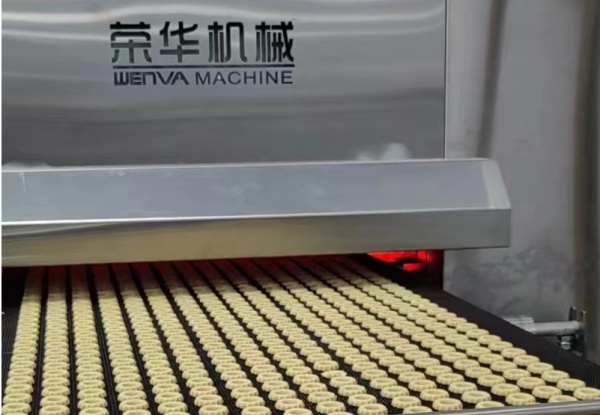
Modern tunnel ovens for biscuits usually feature multiple heating zones, independent temperature and airflow control, and precise conveyor speed regulation. These capabilities allow manufacturers to bake different biscuit types on the same line with tight control of color, moisture, and texture. [wenvamachine]
Recommended image near here – AI prompt: "Cross-sectional schematic of a tunnel oven in a biscuit production line, showing zones, burners or heating elements, airflow arrows, and biscuit belt path, technical infographic style, vector illustration."
| Aspect | Electric Tunnel Ovens | Gas Tunnel Ovens |
|---|---|---|
| Primary energy | Electricity from grid or renewables aocno | Natural gas or LPG combustion aocno |
| Heat delivery | Electric heating elements, radiant and convective aocno | Direct or indirect-fired burners, high radiant heat aocno |
| Temperature precision | Very tight control, often within ±1 °C aocno | Good control, typically slightly wider band aocno |
| Typical use cases | Plants with strong decarbonization goals or high electricity reliability aocno | Large-scale, 24/7 production where gas is cheaper than power aocno |
| Installation complexity | No flue gas handling, simpler exhaust aocno | Requires combustion systems, burners, chimneys, gas trains aocno |
Industry suppliers report that advanced electric ovens now offer temperature variation as low as ±1 °C across the baking chamber, supporting extremely consistent biscuit color and moisture. Gas ovens, while slightly less precise, deliver very strong heat load and fast recovery, which benefits very high-speed tunnel lines. [aocno]
From a cost perspective, energy price per unit of heat remains the dominant factor when comparing electric and gas tunnel ovens. In many countries, gas still offers a lower cost per kilowatt-hour of thermal energy than electricity, but this gap is narrowing where renewable power and industrial electricity contracts are incentivized. [cognitivemarketresearch]
When Wenva engineers help clients evaluate oven type, we usually start with three questions that align with broader industry practice: [knoxnews]
1. What is the ratio of electricity price (per kWh) to natural gas price (per cubic meter or kWh-equivalent) in your region?
2. Are there tax credits, subsidies, or carbon pricing schemes that favor all-electric or low-emission equipment?
3. What is the planned utilization: single shift, two shifts, or 24/7 continuous production?
Market analyses indicate that industrial tunnel oven buyers now focus on energy consumption benchmarks, often targeting below 0.8 kWh of energy per kilogram of baked product for competitive lines. Highly optimized gas tunnel ovens can meet or beat this benchmark, especially on large, continuous runs. Electric ovens can reach similar or better specific energy consumption when combined with efficient insulation, heat recovery, and smart controls, particularly where electricity comes from low-cost or on-site renewable sources. [insights.made-in-china]
While exact cost depends on local tariffs, a common pattern in 2026 is: [linkedin]
- In regions with cheap pipeline gas and standard grid electricity, gas tunnel ovens usually deliver lower energy cost per kilogram of biscuits.
- In markets with high gas prices, strong renewable generation, or green tariffs, electric ovens can be cost-competitive or even cheaper over the equipment lifetime.
Modern tunnel ovens for biscuits use advanced insulation, zoned heating, and optimized airflow to reduce energy losses and improve baking uniformity. Some lines also integrate infrared or hybrid technologies to shorten bake time and reduce overall energy consumption. [hg-machine]
Electric ovens typically convert electrical energy to heat with very high efficiency at the point of use, and they avoid stack losses associated with flue gas. Gas ovens can reach high combustion efficiency through modern proportional burners, with some suppliers reporting energy utilization above 95% in optimized systems. [aocno]
For sandwich biscuits, cream-filled products, and products where color differences must be minimized, tight temperature and humidity control becomes a critical differentiator. Electric ovens excel here due to fine-grained power modulation and fast response of heating elements. [insights.made-in-china]
However, some bakers still prefer gas-fired ovens for specific breads or cookies where combustion moisture and radiant heat contribute to a desirable crust or bite. For high-output biscuit lines, Wenva typically balances these preferences with the customer's target SKUs and quality specifications during line design. [wenvamachine]
Sustainability has become a strategic driver for oven selection as governments and retailers tighten carbon requirements. Electric tunnel ovens offer a clear pathway to decarbonization, especially when plants can source renewable electricity or deploy solar and storage systems. [cognitivemarketresearch]
In regions with strong carbon pricing or mandatory emissions reporting, shifting to all-electric process heat can simplify compliance and improve ESG scores, which increasingly influence long-term customer contracts. At the same time, engineers and environmental experts are collaborating to introduce greener energy solutions across biscuit lines, reducing reliance on fossil fuels while keeping costs under control. [linkedin]
Gas ovens still play a major role, particularly where infrastructure favors gas and where full electrification of process heat would require major grid upgrades. For such plants, the realistic compromise may be highly efficient gas tunnel ovens combined with heat recovery, better insulation, and digital monitoring to cut waste. [hg-machine]
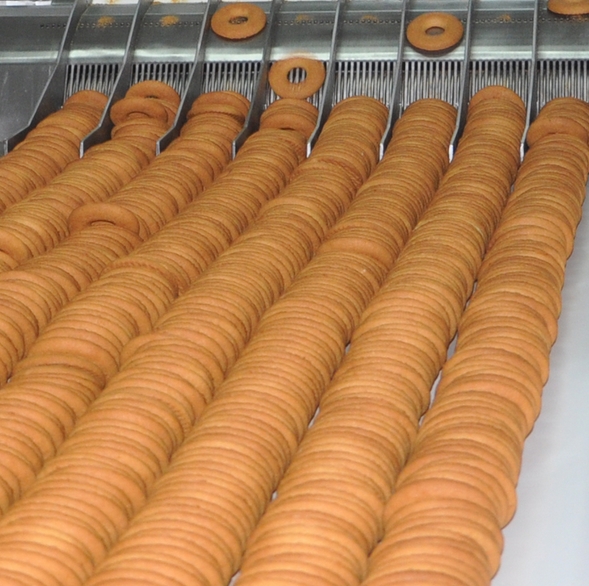
Fully automatic biscuit production lines combine dough preparation, forming, baking, cooling, and packing into a synchronized flow. Oven type directly impacts plant utilities planning, including electrical substation sizing for electric ovens and gas supply/piping design for gas ovens. [gelgoog.en.made-in-china]
Modern biscuit lines increasingly adopt IoT-based sensors and real-time monitoring to track oven zone temperatures, belt speeds, and product characteristics. These systems allow operators to optimize recipes, reduce energy usage, and minimize rejects by fine-tuning baking curves in response to data. [insights.made-in-china]
Industry cases show that integrating smart sensors for temperature and humidity along the line can significantly reduce waste and downtime. Electric ovens pair naturally with advanced PLCs and digital control algorithms, while gas ovens rely on coordinated burner management systems and safety interlocks to maintain stable conditions. [wenvamachine]
For Wenva Machine, the most successful projects are those where oven control logic, upstream forming, and downstream cooling/packing are designed together, enabling recipe-based changeovers and precise control of baking profiles for different biscuit types. [gelgoog.en.made-in-china]
Market reports project steady growth in the global tunnel oven sector through the mid‑2020s, driven by rising demand for packaged baked goods and continued investment in industrial baking infrastructure. At the same time, buyers are putting increased emphasis on energy consumption metrics, changeover efficiency, and compatibility with automation and digitalization strategies. [knoxnews]
In the biscuit segment, automated lines have evolved rapidly, incorporating higher levels of control, better sustainability features, and greater flexibility to support SKU proliferation and health-oriented products. Leading exporters are investing in lines that can meet international retailer requirements on food safety, traceability, and environmental performance, making oven technology a strategic choice rather than a purely technical one. [knoxnews]
When Wenva's engineering team advises a high-output biscuit plant on oven selection, we typically walk through a structured framework aligned with global best practice: [aocno]
1. Analyze local energy economics
- Compare long-term contracted electricity and gas prices.
- Consider volatility and hedging options.
2. Clarify ESG and regulatory requirements
- Map current and upcoming carbon regulations.
- Assess customer expectations and retailer scorecards.
3. Define product and quality targets
- List main biscuit types, color tolerances, and moisture targets.
- Decide whether maximum uniformity or specific "baked character" is the priority.
4. Model throughput and utilization
- Estimate annual tonnage and planned operating hours.
- Validate that oven capacity matches future expansion plans.
5. Evaluate total cost of ownership (TCO)
- Combine capex, energy, maintenance, and expected downtime over 10–15 years.
- Assign a value to CO2 emissions and compliance risks.
Electric tunnel ovens are often the better choice when: [linkedin]
- Electricity is competitively priced or backed by renewables.
- Corporate ESG targets prioritize rapid decarbonization.
- The product mix demands extremely tight baking tolerances.
- The plant wants simpler flue gas handling and combustion-free operation.
Gas tunnel ovens tend to be preferred when: [gelgoog.en.made-in-china]
- Natural gas infrastructure is strong and gas is cheap relative to power.
- The line is designed for very high tonnage with 24/7 operation.
- Quick heat-up and strong thermal recovery are key performance metrics.
- Operators are experienced with gas systems and maintenance routines.
As a specialist in automated biscuit production lines, Wenva Machine has seen both electric and gas tunnel ovens succeed when aligned with the right strategy. Many of our large biscuit customers operate multiple lines, mixing gas-fired tunnels for high-volume SKUs with electric or hybrid solutions for premium products and markets with stringent environmental rules. [facebook]
Our project teams combine mechanical, thermal, and process expertise to design oven configurations, energy recovery options, and control strategies that minimize cost per kilogram of finished biscuits while meeting food safety and quality benchmarks. For investors and production managers, partnering early in the plant design phase yields the best energy, layout, and productivity outcomes over the full lifetime of the line. [hg-machine]
Choosing between electric and gas tunnel ovens can reshape your bakery's cost structure, carbon profile, and product quality for the next decade. If you are planning a new high-output biscuit production line or upgrading existing ovens, connect with Wenva Machine's engineering team to run a tailored cost and energy analysis based on your local tariffs, product portfolio, and ESG targets. [cognitivemarketresearch]
Our specialists can simulate different oven configurations, estimate annual energy use, and propose a line layout that aligns with your long-term growth strategy and regulatory landscape. This approach helps you move beyond generic rules of thumb and select an oven solution that is technically sound, financially robust, and future-ready. [wenvamachine]
1. Which oven type is cheaper to run for biscuits in 2026?
In regions with low natural gas prices, gas tunnel ovens usually deliver lower direct energy costs, especially for 24/7 high-output lines. Where electricity is competitively priced or backed by renewables, electric ovens can be cost-competitive or cheaper over the equipment lifetime. [cognitivemarketresearch]
2. Do electric ovens always offer better biscuit quality?
Electric tunnel ovens generally provide finer temperature control and excellent uniformity, which benefits products with strict color and moisture tolerances. However, gas ovens can still be preferred for certain baked characteristics where combustion and radiant heat play a positive role. [aocno]
3. How does oven choice affect sustainability reporting?
Electric ovens, when paired with renewable energy sourcing, can significantly reduce scope 1 emissions and simplify sustainability reporting. Highly efficient gas ovens remain relevant but may face tighter scrutiny in markets with aggressive decarbonization policies. [linkedin]
4. What trends are shaping tunnel oven design for biscuit lines?
Key trends include higher energy efficiency, integration with IoT and smart sensors, improved changeover speed, and better alignment with ESG and retailer requirements. These trends influence both electric and gas oven designs across global markets. [knoxnews]
5. When should we involve an equipment supplier in our oven decision?
It is best to involve your line supplier early in the concept stage so they can align oven choice with plant utilities, layout, product mix, and long-term energy strategy. This collaboration helps avoid under‑ or over‑sizing the oven and prevents costly redesigns later in the project. [insights.made-in-china]
1. AOCNO. "Industrial Bakery Ovens: Electric, Gas, or Diesel? A 2026 Comparison." [Link] [aocno]
2. Made‑in‑China Insights. "Truths and Misconceptions about Automated Biscuit Production Lines: Meeting Future Trends and Demands." [Link] [insights.made-in-china]
3. WENVA Machine. "Gas Tunnel Oven – Product Overview and Applications." [Link] [wenvamachine]
4. Gelgoog. "Gas Tunnel Oven and Soft Cookie Production Line – Product Description." [Link] [gelgoog.en.made-in-china]
5. Cognitive Market Research. "Tunnel Ovens Market Analysis 2026." [Link] [cognitivemarketresearch]
6. HG Machine. "The Importance of Improving Efficiency and Quality in Modern Biscuit Production Lines." [Link] [hg-machine]
7. Press release. "Top Biscuit Production Line Manufacturer Expands Global Footprint with Advanced Energy-Efficient Lines." [Link] [knoxnews]
8. LinkedIn Article. "Europe Food Tunnel Oven Market Outlook and Forecast 2026–2033." [Link] [linkedin]
9. WENVA Machine – Customer Case Study (Guangdong Xinmeng Food). [Link] [facebook]
10. Bakery China Session Featuring WENVA Machine. [Link] [instagram]


