
Views: 222 Author: Wenva Machine Publish Time: 2026-06-08 Origin: Site
Content Menu
● Understanding Heat Loads in Biscuit Ovens
● What Is Standard Venting in Biscuit Production?
● How Exhaust Heat Recovery Works on Biscuit Lines
● Key Technical Differences: Exhaust Heat Recovery vs. Standard Venting
>> System Design and Complexity
>> Energy and Emissions Performance
● ROI Fundamentals for Biscuit Factory Heat Recovery
● Example ROI Scenario for a Biscuit Oven
● Practical Challenges: Contaminated Exhaust in Biscuit Lines
● The Strategic Sustainability Case in Food Manufacturing
● Where Standard Venting Still Makes Sense
● Design and Integration Best Practices (Expert View)
>> Start With a Data‑Driven Energy Audit
>> Design for Cleaning and Maintenance
>> Integrate With Smart Factory Controls
● Quantifying ROI: A Step‑By‑Step Approach for Biscuit Producers
● Why Exhaust Heat Recovery Fits Automated Biscuit Lines
● Action Checklist for Plant Managers
● Conclusion: Choosing the Right Path for Sustainable Biscuit Production
● FAQs
Exhaust heat recovery can deliver significantly better long‑term ROI than standard venting for biscuit factories, especially when energy prices and sustainability targets are rising. For an automated biscuit line manufacturer like Wenva Machine, integrating heat recovery into new and retrofit lines is one of the fastest levers to cut operating costs and emissions while protecting product quality. [inspiredplc.co]
Modern biscuit plants are under pressure to reduce energy costs, decarbonize operations, and still keep throughput and product consistency at very high levels. As a manufacturer with over 40 years of experience in automated biscuit production lines, Wenva Machine sees this tension every day in projects from design to installation. [genedge]
Traditional standard venting sends hot, often contaminated oven exhaust directly outside, while exhaust heat recovery captures part of that waste heat and reuses it to preheat air, water, or process media. In this article, I will walk you through how these two strategies compare in the real world of biscuit production, and how plant managers can calculate a realistic ROI for sustainable upgrades. [heatmatrix]
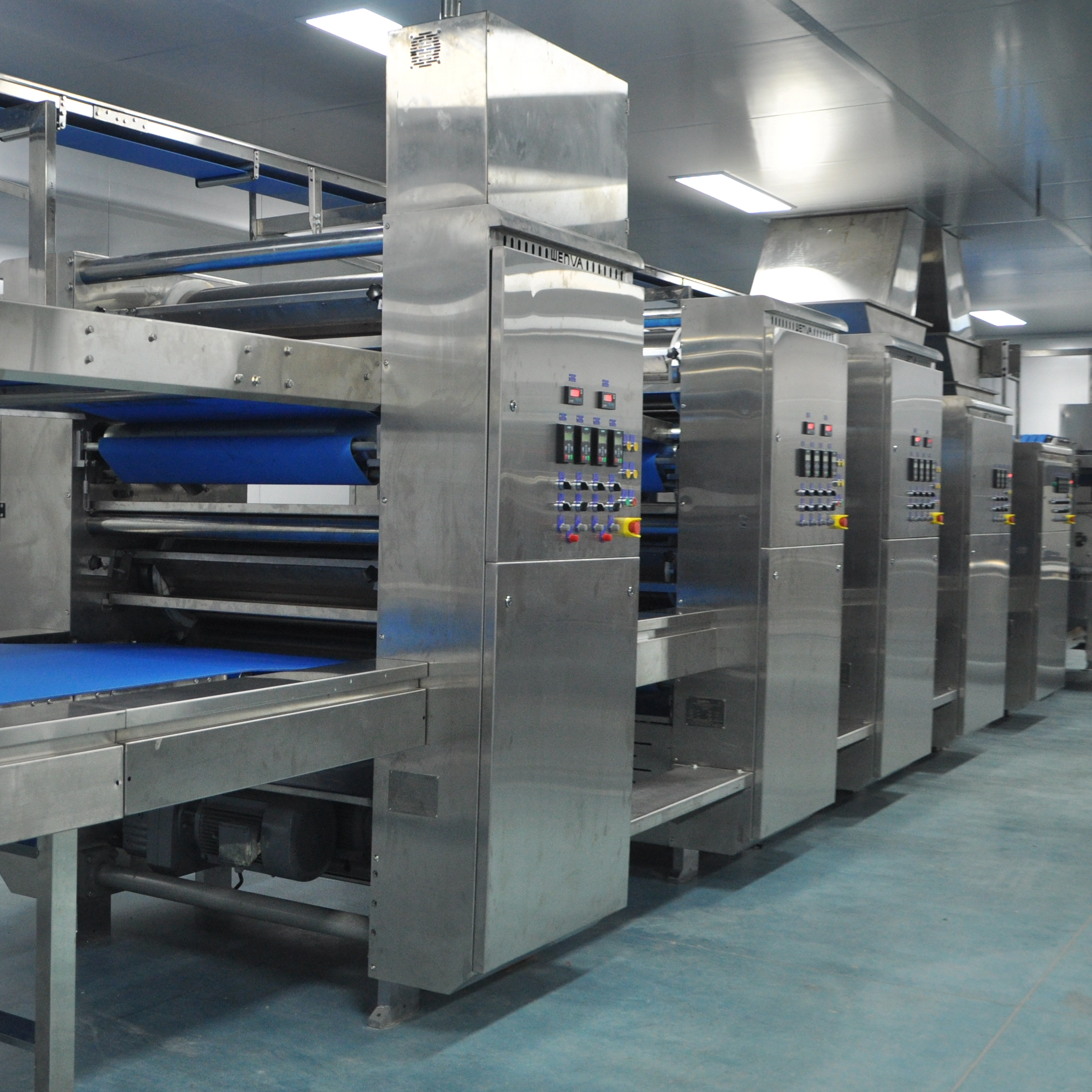
High‑capacity biscuit baking ovens typically process hundreds to thousands of kilograms of biscuits per hour, which means large thermal loads and continuous gas or electric consumption. A significant fraction of this input energy leaves the oven as hot exhaust air that, without recovery, provides no value to the plant. [scribd]
Studies and vendor data from food manufacturing show that heat recovery systems can often recover 15–20% or more of process heat, depending on the oven design and exhaust conditions. For a biscuit oven, this can translate into preheating incoming combustion air or recirculation air from ambient temperature to over 100 °C using otherwise wasted heat. [heatmatrix]
Standard venting in biscuit factories typically means:
- Exhaust fans pulling hot, humid, and often greasy air from the baking tunnel
- Ductwork sending that air outdoors, sometimes with only basic filtration
- No energy recovery; the goal is purely safety and air quality, not efficiency
This approach is simple and familiar, but it has several drawbacks:
- Continuous high energy losses through hot exhaust streams [inspiredplc.co]
- Higher capacity requirements for boilers or burners to meet heat demand [heatex]
- No contribution to decarbonization or ESG targets, which many food manufacturers now prioritize [genedge]
From a CAPEX perspective, standard venting is cheaper at installation, but from an OPEX and sustainability standpoint, it is increasingly difficult to justify over the life of a production line.
Exhaust heat recovery systems for biscuit ovens capture energy from hot flue gases or process air and transfer it to another medium—typically fresh air or water—through a heat exchanger. [enervex]
On a biscuit line, this can be implemented as:
- Air‑to‑air heat recovery: Preheating combustion or recirculation air for the oven
- Air‑to‑water heat recovery: Generating hot water for cleaning‑in‑place (CIP), facility heating, or other processes [enervex]
- Fluid‑coupled coils: Specially designed for contaminated air streams with flour dust, sugar, and grease, as commonly found in baking processes [enjaysystems]
One documented biscuit factory case achieved recovery of around 140 kW of heat, preheating recirculation air from 15 °C to 103 °C and cutting fuel use by roughly 20% on that oven system. That kind of performance is precisely what can turn a modest capital project into a highly attractive multi‑year ROI. [foodsmachine]
- Standard Venting
- Simple fans and ducts
- Lower design and commissioning complexity
- Minimal controls beyond on/off and basic airflow monitoring
- Exhaust Heat Recovery
- Heat exchangers, coils, or integrated recovery modules in the exhaust path [enjaysystems]
- Additional pumps, valves, and controls for fluid circuits
- More sophisticated monitoring to manage temperatures, pressures, and fouling risk [heatex]
For Wenva Machine, the design challenge is integrating these components into fully automated biscuit lines without compromising hygiene, accessibility for cleaning, or oven performance.
Independent case studies in industrial and food environments show that heat recovery can deliver 15–20% energy savings compared with exhaust‑only systems, even when CAPEX is higher. Over a typical line lifetime, this translates into substantial fuel cost reductions and avoided emissions. [daikinmea]
Standard venting, by contrast, offers no direct energy savings, so all reductions must come from unrelated measures like fuel switching, burner upgrades, or production scheduling.
When evaluating ROI, biscuit manufacturers should look beyond headline savings and build a clear, simple model. Experienced plant managers typically consider:
1. Baseline energy consumption of ovens and associated systems
2. Recoverable heat fraction given exhaust temperature, volume, and contamination [heatmatrix]
3. Energy cost (gas, steam, or electricity) over the projected lifetime
4. Capital cost of the heat recovery system and integration
5. Maintenance and cleaning costs, especially in flour and sugar environments [enjaysystems]
Analyses of heat recovery in industrial and HVAC contexts frequently show payback periods in the range of a few years up to around 9 years, depending on scale and energy prices. In many food plants, the addition of sustainability and compliance benefits effectively shortens this perceived payback from a strategic viewpoint. [daikinmea]
Below is a simplified, illustrative scenario to frame ROI thinking for biscuit manufacturers.
| Factor | Standard Venting (Baseline) | Exhaust Heat Recovery Scenario |
|---|---|---|
| Oven capacity | 1,000 kg biscuits/hour (scribd) | 1,000 kg biscuits/hour (scribd) |
| Energy savings | 0% (no recovery) | 15–20% of oven fuel input (heatmatrix) |
| CAPEX | Low | Moderate to high (heat exchangers, controls) (inspiredplc.co) |
| Typical payback | Not applicable | Often within several years; in some industrial cases under 9 years (inspiredplc.co) |
| Emissions impact | No direct reduction | Lower fuel‑related CO₂ and NOₓ emissions (inspiredplc.co) |
| Alignment with ESG | Weak | Strong support for sustainability KPIs (genedge) |
This is not a quotation of any single project; it synthesizes values and ranges reported across food and industrial heat recovery case studies. [scribd]
Food manufacturers sometimes hesitate to invest in exhaust heat recovery because of concerns about fouling:
- Flour dust and crumbs
- Sugar particles and sticky residues
- Grease, oils, and moisture from fillings or coatings
Recent systems developed specifically for contaminated industrial exhaust air use fluid‑coupled coils and design features that tolerate these harsh conditions over long operating periods. For biscuit factories, this means heat recovery is now more robust and requires manageable cleaning intervals, instead of frequent shutdowns or severe performance losses. [enjaysystems]
To maximize uptime and ROI, engineering teams should:
- Position recovery units where temperatures and contamination levels are appropriate
- Provide access for inspection and cleaning based on preventive maintenance schedules
- Monitor pressure drop and temperature efficiency to detect fouling early [heatex]
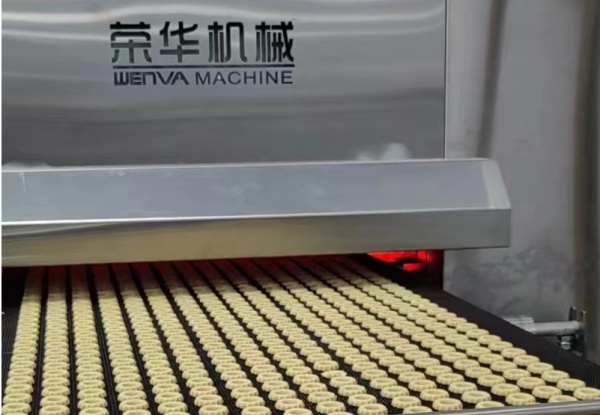
The food manufacturing sector is rapidly adopting smart factory technologies, with high percentages of manufacturers reporting investments in automation and sustainability. Automation, AI, and energy‑optimized equipment have moved from "nice‑to‑have" to core competitiveness factors. [sciencedirect]
For biscuit producers, exhaust heat recovery dovetails naturally with this trend:
- It supports sustainability reporting and ESG commitments by reducing energy per tonne of product [genedge]
- It aligns with automation strategies, since recovered energy can be managed via intelligent controls and integrated with line‑wide data systems [sciencedirect]
- It helps moderate exposure to volatile energy prices, which is particularly important for continuous‑operation ovens
From my perspective as a content strategist working with manufacturing brands, projects that combine automation, efficiency, and environmental performance often gain more traction in trade media and industry marketing, further amplifying their business value.
Despite its limitations, standard venting can still be appropriate in certain cases:
- Small or seasonal production lines where exhaust energy is modest and ROI would be very long
- Older facilities near end‑of‑life, where major retrofits are not strategic
- Low‑energy ovens or processes where temperature and volume do not justify additional equipment
In these situations, the best move may be to optimize airflow, fan controls, and basic insulation while planning for heat recovery in the next generation of ovens or lines. For companies like Wenva Machine, that often means designing new fully automatic lines with heat‑recovery‑ready provisions even when a client initially chooses standard venting.
From an engineering and UX standpoint on the factory floor, the best heat recovery projects share a few practical principles:
- Measure oven exhaust temperatures, flows, and operating hours over representative periods
- Quantify current fuel use and cost at line and plant levels
- Identify where recovered heat can best be used (air preheat, water heating, space heating, or process needs)
This mirrors the general recommendation in industrial energy recovery literature: measure first, then size and select technology. [inspiredplc.co]
- Use recovery systems proven for contaminated air, such as fluid‑coupled coils in baking environments [enjaysystems]
- Ensure physical access to heat exchangers and filters
- Integrate maintenance alerts into existing SCADA or MES platforms where possible
As smart factories in food manufacturing lean heavily on real‑time data and automation, connecting exhaust heat recovery into the same digital ecosystem enhances both performance and transparency. For example: [sciencedirect]
- Live monitoring of recovered energy
- Automatic adjustments based on production speed, batch changes, or shutdowns
- Dashboards showing energy per kg of biscuits produced
Here is a practical, expert‑oriented framework biscuit manufacturers can use when evaluating exhaust heat recovery vs. standard venting:
1. Define the baseline
- Annual oven energy consumption (kWh or fuel volume)
- Energy cost per unit
- Current CO₂ emissions factor used in corporate reporting
2. Estimate recoverable heat
- Use vendor or engineering estimates based on temperature and flow data
- Apply conservative efficiency (for example 15–20% of fuel input) to avoid over‑promising [heatmatrix]
3. Calculate annual savings
- Energy savings = baseline consumption × recovery rate
- Cost savings = energy savings × unit energy cost
- Emission reduction = energy savings × emission factor
4. Determine investment and payback
- CAPEX: equipment, engineering, installation, and commissioning
- OPEX: additional maintenance and any cleaning downtime
- Simple payback = CAPEX ÷ annual cost savings, with sensitivity scenarios for energy price changes
5. Evaluate strategic benefits
- Contribution to ESG and sustainability goals [genedge]
- Marketing and brand value in offering "low‑carbon biscuits"
- Alignment with planned automation and smart factory upgrades [sciencedirect]
This structured approach mirrors how many industrial case studies present their ROI, making it easier for internal stakeholders to compare options. [daikinmea]
For a company like Wenva Machine, which designs and manufactures fully automated biscuit production lines, exhaust heat recovery is not just an energy project; it is a design philosophy. Automated lines benefit from stable thermal conditions, predictable operating costs, and built‑in sustainability.
Pairing heat recovery with high‑level automation and robotics in food manufacturing helps:
- Support consistent baking profiles while reducing fuel demand [scribd]
- Enable fine‑tuned control of oven zones and airflows
- Provide better data for continuous improvement and predictive maintenance [sciencedirect]
From the buyer's perspective, choosing an oven and line supplier that can integrate turnkey heat recovery gives them a clear pathway to sustainable production from day one, instead of treating it as a bolt‑on afterthought.
To move from concept to action, biscuit factory leaders can use this short checklist when deciding between standard venting and exhaust heat recovery:
- Clarify production horizon for each line (years of expected operation)
- Conduct a focused energy and exhaust assessment
- Engage with machine suppliers on heat‑recovery‑ready oven and line designs
- Model ROI under at least three energy price scenarios
- Include maintenance and cleaning strategies in the initial design
- Align the project with corporate sustainability and digitalization roadmaps
When these elements are considered together, exhaust heat recovery often emerges as one of the highest‑impact sustainability investments in a biscuit plant.
When comparing exhaust heat recovery vs. standard venting, the technical and financial evidence in food and industrial environments shows that heat recovery can significantly cut energy use and deliver attractive ROI over the life of a biscuit line. Standard venting retains a role in smaller or short‑term applications, but it leaves a large amount of energy and sustainability potential unused. [inspiredplc.co]
For automated biscuit line projects, especially when working with an experienced provider like Wenva Machine, integrating exhaust heat recovery at the design stage is one of the most effective ways to build future‑proof, sustainable, and cost‑efficient production capacity.
If you are planning a new biscuit line or considering a retrofit, now is the ideal time to review your exhaust strategy and explore how heat recovery could transform your energy profile and ROI.
Q1: Will exhaust heat recovery affect biscuit quality or baking profiles?
A well‑designed system recovers energy from exhaust gases without destabilizing oven temperatures or humidity, so baking profiles and product quality can remain consistent when engineering is properly executed. [heatmatrix]
Q2: How long does it typically take to see payback in a biscuit plant?
Depending on line size, operating hours, and energy prices, many industrial heat recovery projects see payback in a range of a few years up to about nine years, with higher energy prices shortening this period. [daikinmea]
Q3: Is exhaust heat recovery suitable for older biscuit ovens?
Retrofitting is often possible if exhaust access, temperatures, and space allow, but older lines with limited remaining life may justify only modest investments; in those cases, preparing for heat recovery in the next line can be more strategic. [inspiredplc.co]
Q4: How do we deal with flour dust and grease fouling the heat exchangers?
Solutions specifically developed for contaminated industrial exhaust use coil configurations and materials that tolerate fouling and allow practical cleaning intervals, which is crucial in baking applications. [enjaysystems]
Q5: Can recovered heat be used outside the oven process itself?
Yes, air‑to‑water systems can supply hot water for CIP, facility heating, or other processes, further improving overall plant energy efficiency and ROI beyond the oven alone. [foodsmachine]
1. HeatMatrix. "Heat recovery from baking fumes: 140 kW at biscuit factory." 2025. [Link] [heatmatrix]
2. Inspired PLC. "Heat Recovery: How It Can Save Manufacturers Thousands." 2023. [Link] [inspiredplc.co]
3. Enervex. "Ceramic tile manufacturing cuts costs and emissions with waste heat recovery." [Link] [enervex]
4. Enjay. "Energy recovery in contaminated process ventilation." 2026. [Link] [enjaysystems]
5. Foodsmachine. "Enhancing Biscuit Baking Efficiency with Oven Heat Recovery Systems." 2025. [Link] [foodsmachine]
6. Loyal Food Machine. "Biscuit Production Line: A Comprehensive Guide to Biscuit Manufacturing." 2025. [Link] [loyal-foodmachine]
7. Genedge. "The Future of Smart Factories in Food Manufacturing." 2025. [Link] [genedge]
8. ScienceDirect. "Advancing food manufacturing: Leveraging robotic technologies." 2024. [Link] [sciencedirect]
9. Daikin. "The benefits of using heat recovery mechanical ventilation." 2022. [Link] [daikinmea]
10. Heatex. "Ventilation Guideline." [PDF]. [Link] [heatex]
11. WENVA MACHINE customer case post. 2025. [Link] [facebook]


