
Views: 222 Author: Wenva Machine Publish Time: 2026-06-12 Origin: Site
Content Menu
● Understanding Cooling Belts in Automated Biscuit Lines
● What Is a Single-Level Cooling Belt?
● What Is a Multi-Tier Cooling System?
● Why Vertical Space Matters in Urban Bakery Plants
● Core Comparison: Multi-Tier Cooling vs. Single-Level Belts
● Product Quality: Cooling Time, Texture and Breakage
● Line Layout and Workflow Efficiency
● Energy Use and Sustainability Considerations
● Maintenance, Hygiene and Food Safety
● Cost, ROI and Expansion Strategy
● Expert Design Approach from Wenva Machine
● Practical Selection Framework: Which Cooling Concept Should You Choose?
● Step-by-Step: How to Plan a Multi-Tier Cooling Upgrade
● When Single-Level Belts Still Make Sense
● How Wenva Machine Supports Global Urban Plants
● Call to Action: Design Your Next Vertical Cooling Layout with Wenva
● FAQs
Multi-tier cooling conveyors almost always outperform single-level cooling belts in urban biscuit and bakery plants where floor space is expensive and line capacity needs to grow without relocating. In this article, I will look at both systems from the perspective of a plant engineer, a production manager and a biscuit line OEM (Wenva Machine), so you can decide which solution fits your factory's next layout upgrade. [psg-dallas]

In a modern automated biscuit production line, cooling is a critical step between baking and packaging. It directly affects biscuit texture, breakage rates and food safety. For urban factories under pressure to maximize each square meter, the way you cool biscuits is no longer just a technical choice but a strategic layout decision. [foodsmachine]
A typical line includes oven discharge, primary transfer conveyors, cooling section, accumulation/inspection and then packaging. If the cooling zone is too short or poorly designed, operators see issues like soft centers, warping and higher scrap during packing. That is exactly where the "Multi-Tier Cooling vs. Single-Level Belts" debate begins. [ko.decaomachine]
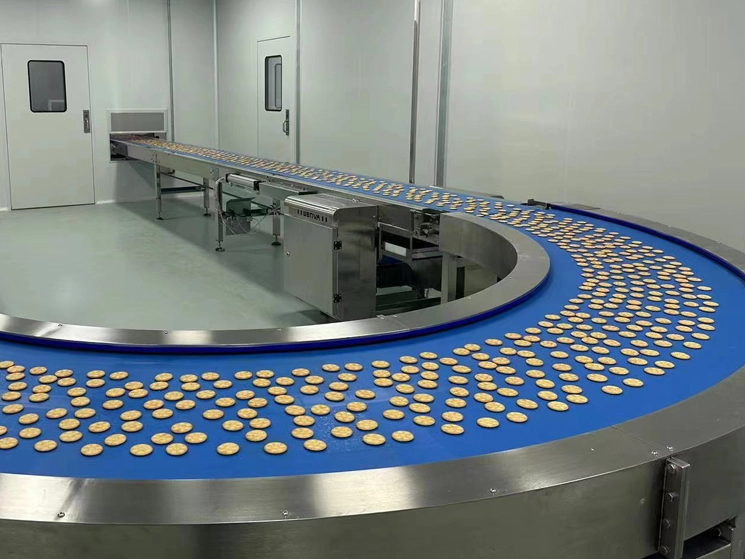
A single-level cooling belt is a straight, horizontal conveyor that carries biscuits in one layer from the oven outlet to the packaging area while they cool naturally or with assisted airflow. It is simple, familiar and widely used in traditional plants. [foodsmachine]
Key characteristics of single-level belts:
- Linear layout: One continuous, level conveyor, usually several meters long. [ko.decaomachine]
- Natural or forced convection: Cooling mainly by ambient air, sometimes with fans or ducts above the belt. [psg-dallas]
- Moderate footprint: Easy to understand but quickly consumes floor space as production capacity rises. [wenvamachine]
From a line builder's point of view, single-level belts are easy to install and maintain, and they work well in low- to medium-capacity lines where space is not the main constraint. [foodsmachine]
A multi-tier cooling system stacks several conveyor decks vertically, often in 3–6 layers, to multiply effective cooling length without increasing the line's footprint. In biscuit and bakery applications, you will see straight multi-tier tunnels or spiral/multi-tier hybrids. [eversmartbiscuitmachine]
Key characteristics of multi-tier cooling:
- Vertical stacking: Multiple tiers above the same floor area, turning unused headroom into productive cooling length. [eversmartbiscuitmachine]
- Controlled airflow: Integrated plenums, fans and ducting to ensure uniform temperature and air velocity across tiers. [psg-dallas]
- Flexible layout: Can be installed above walkways or equipment, allowing compact, multi-line bakeries to grow capacity. [wenvamachine]
Wenva Machine and other specialist biscuit line OEMs design multi-tier systems as part of complete, automated cooling and handling sections, so the cooling performance matches oven throughput and packaging speed. [wenva]
In dense urban industrial parks, floor space is often more limiting than power or gas. Rent, building height restrictions and shared utilities force production managers to "build up, not out." [ko.decaomachine]
From a layout consulting perspective, three constraints show up again and again:
- High cost per square meter for additional floor area or expansion. [wenvamachine]
- Fixed building envelope, especially in multi-tenant industrial properties. [ko.decaomachine]
- Demand growth from modern trade and e-commerce channels without the option to move to a larger site. [eversmartbiscuitmachine]
This is why "maximizing vertical space" has turned into a core design principle for biscuit and bakery plants in large cities: multi-tier cooling, mezzanine packing decks, overhead cable trays and vertical elevators all contribute to higher throughput per square meter. [wenvamachine]
The table below summarizes the key differences that matter for biscuit manufacturers upgrading or building an urban plant.
| Aspect | Multi-Tier Cooling | Single-Level Cooling Belts |
|---|---|---|
| Floor space use | Uses vertical space, 2–4× cooling length in same footprint. (psg-dallas) | Linear layout; cooling length grows directly with floor space. (foodsmachine) |
| Capacity scaling | Easy to add tiers or length within existing area. (ko.decaomachine) | Requires longer conveyors; often hits wall constraints. (ko.decaomachine) |
| Cooling control | Better airflow and temperature uniformity with designed tunnels. (psg-dallas) | More exposed to ambient variation, harder to control precisely. (foodsmachine) |
| Complexity | Higher mechanical and control complexity, more components. (psg-dallas) | Simple drive and belt system, easy to understand. (foodsmachine) |
| Maintenance access | Requires engineered access (platforms, doors, CIP options). (psg-dallas) | Straightforward walk-along access. (foodsmachine) |
| Investment level | Higher upfront cost, better long-term space ROI. (ko.decaomachine) | Lower capex, but may force costly relocation later. (ko.decaomachine) |
For many urban plants, the space efficiency and capacity headroom of multi-tier systems outweigh the added complexity and investment, especially when integrated in a new Wenva automated biscuit line project. [wenva]
From an operator's standpoint, consistent product quality is where multi-tier systems often win. Biscuit structure continues to set during cooling, and any variation in time or airflow shows up as:
- Uneven color between center and edge
- Warping or bending
- Higher breakage at transfers and in packaging
Single-level belts rely heavily on room conditions. When ambient temperature or humidity swings, so does the cooling curve, which can lead to day–night differences in texture and breakage rates. [foodsmachine]
Multi-tier cooling, designed as a tunnel with controlled airflow, allows:
- More predictable residence time, because line speed and belt length per tier are precisely calculated. [psg-dallas]
- Stable air temperature and velocity, minimizing quality drift across shifts and seasons. [eversmartbiscuitmachine]
- Gentler handling, as carefully engineered transfers between tiers reduce micro-cracks and chipping. [eversmartbiscuitmachine]
A case study from a multi-tier conveyor supplier reported a 95% reduction in product damage after replacing an older layout with a more continuous, controlled system. This type of payoff is especially attractive for brittle biscuits, sandwich creams and decorative cookies. [eversmartbiscuitmachine]
From a layout engineer's viewpoint, the cooling choice reshapes the entire biscuit line.
Single-level belts:
- Force a long straight run between oven and packaging. [foodsmachine]
- Can conflict with structural columns or existing equipment. [ko.decaomachine]
- Reduce options for cross-aisles, operator walkways and inspection stations. [ko.decaomachine]
Multi-tier systems:
- Concentrate cooling in a compact zone, freeing floor area for mixing, forming or packing. [wenvamachine]
- Make it easier to design "U-shaped" or "L-shaped" lines, which improve supervision and shorten walking distances. [ko.decaomachine]
- Integrate with overhead conveyors, elevators and accumulation systems for better flow. [wenvamachine]
For Wenva Machine, which delivers end-to-end automated biscuit production solutions, this flexibility is crucial when designing lines for retrofits inside existing urban factories with complex column grids and limited expansion options. [wenva]

Cooling is not usually the largest energy consumer in a biscuit plant, but it still affects the total footprint.
- Single-level belts are often open to ambient air, depending on general HVAC. If the room is over-cooled just to stabilize product temperature, the energy cost shows up at facility level rather than on the equipment itself. [foodsmachine]
- Multi-tier cooling tunnels can use focused fans and ducting, delivering airflow only where biscuits are present. This targeted approach can be more efficient than conditioning the whole hall, especially in large urban plants with high ceilings. [psg-dallas]
Additionally, shorter inter-machine distances and fewer re-looping conveyors help reduce drive power and mechanical losses. For manufacturers targeting sustainability certifications, engineering a compact, multi-tier cooling and packing zone becomes part of a broader energy optimization strategy. [wenvamachine]
As an equipment buyer, you must evaluate how cooling design impacts hygiene and maintenance downtime.
Single-level belts:
- Simple to clean, easy to visually inspect, and straightforward to belt-wash or wipe down. [foodsmachine]
- Fewer parts and transfer points mean fewer potential contamination spots. [foodsmachine]
Multi-tier systems:
- Require carefully designed access doors, walkways and cleaning-in-place (CIP) features for internal surfaces and belt undersides. [psg-dallas]
- Need well-defined sanitation SOPs to handle enclosed structures and multiple tiers. [psg-dallas]
Modern multi-tier solutions increasingly include tool-less belt removal, segmented modules and hygienic supports, which make deep cleaning realistic within regular shutdown windows. When you work with a specialist OEM, maintenance and sanitation are engineered into the system from the start rather than added as an afterthought. [wenva]
From a financial perspective, the key question is not just "How much does it cost?" but "What does it enable?"
- A single-level cooling belt often wins in initial capex, making it attractive for small plants or pilot lines. [ko.decaomachine]
- A multi-tier system usually carries a higher price tag but unlocks additional oven capacity and packaging throughput within the same building, reducing or delaying the need for a new facility. [eversmartbiscuitmachine]
When you calculate ROI, you should factor in:
1. Additional tons per year that the existing site can support with multi-tier cooling. [eversmartbiscuitmachine]
2. Avoided relocation or extension costs, including permits and downtime. [wenvamachine]
3. Reduced scrap and rework from more consistent cooling and fewer product breakages. [eversmartbiscuitmachine]
For urban biscuit factories with high rent and strong demand, multi-tier cooling often pays back faster than expected, especially when combined with new ovens and high-speed packaging in a complete Wenva line upgrade. [wenva]
With more than 40 years of focus on automated biscuit production line design, Wenva Machine approaches the cooling debate as part of a full-system engineering exercise rather than a single equipment choice. [wenva]
A typical Wenva project will:
- Analyze your current and future capacity needs, SKUs and packaging formats. [wenva]
- Map your building layout, floor loading, column positions and available vertical space. [ko.decaomachine]
- Simulate oven throughput, cooling time and packing speed to define the optimal belt length and number of tiers. [wenvamachine]
By integrating multi-tier or single-level cooling into a complete line—from dough mixing to palletizing—Wenva ensures that cooling does not become a bottleneck or an afterthought. This reduces integration risk and shortens installation and commissioning time for global customers. [wenva]
When advising bakery clients, I usually recommend a simple decision framework based on six practical questions:
1. What is your floor space constraint?
- Tight urban site with no extension option → lean towards multi-tier. [ko.decaomachine]
2. What is your ceiling height and building structure?
- Sufficient height and strong floor → multi-tier becomes technically easier. [ko.decaomachine]
3. What are your key SKUs and their cooling sensitivity?
- Cream-filled, chocolate-coated or fragile biscuits benefit more from controlled multi-tier cooling. [eversmartbiscuitmachine]
4. What is your capex vs. opex outlook?
- If you plan to stay on the site for 10+ years, space-efficient systems usually win on lifecycle cost. [wenvamachine]
5. How mature is your maintenance and sanitation team?
- If your team is still developing, starting with a simpler single-level system may be sensible, with provisions for future vertical upgrades. [foodsmachine]
Using this framework, Wenva Machine can co-design a phased roadmap, beginning with optimized single-level belts and evolving to multi-tier cooling as volumes and team capabilities grow. [wenva]
For plant managers considering a vertical upgrade, here is a practical, actionable checklist:
1. Audit your current line
- Measure oven output, current cooling time and scrap rates at packaging.
- Map the exact footprint and headroom above the existing cooling section. [wenvamachine]
2. Define performance targets
- Required throughput increase (e.g., +30%).
- Target scrap reduction and quality KPIs. [eversmartbiscuitmachine]
3. Engage an OEM early
- Share complete building drawings, product specs and growth plans with Wenva Machine or another experienced supplier. [wenva]
- Ask for both multi-tier and single-level scenarios, with clear pros and cons. [ko.decaomachine]
4. Evaluate installation and downtime
- Check if a multi-tier system can be installed above or beside existing equipment to minimize shutdown. [wenvamachine]
5. Plan training and SOPs
- Develop new cleaning, inspection and maintenance procedures specific to the chosen system. [psg-dallas]
This structured approach aligns engineering, finance and operations, making the investment decision easier to justify internally.
Despite the strong advantages of multi-tier cooling in urban plants, single-level belts remain relevant in several scenarios:
- Small or regional bakeries with modest throughput and lower land costs. [foodsmachine]
- R&D and pilot lines, where flexibility and quick product changeover are more important than extreme space efficiency. [foodsmachine]
- Facilities with strict height limits or structural constraints that prevent multi-tier installations. [ko.decaomachine]
In these cases, Wenva Machine can still add value by optimizing belt length, airflow, line speed and layout to deliver stable cooling and good product quality on a single level. [wenva]
Wenva Machine serves biscuit producers worldwide with design–manufacture–installation–commissioning services for complete automated lines, including cooling systems tailored to local realities. For clients operating in high-density cities, Wenva's engineers frequently combine: [wenva]
- Multi-tier cooling tunnels to maximize vertical space. [wenvamachine]
- Compact forming and baking layouts matched to building geometry. [ko.decaomachine]
- Integrated conveyors and packaging systems that keep operators and maintenance access in mind. [wenvamachine]
With more than 300 biscuit production lines installed and running, Wenva brings real-world experience from plants facing similar space and capacity challenges to your next project. [wenva]
If your urban biscuit or bakery plant is running out of floor space but still needs to grow, now is the time to evaluate multi-tier cooling vs. single-level belts with a specialist partner. A structured design study with Wenva Machine can reveal how much extra capacity your existing building can support and what ROI a vertical cooling upgrade would deliver. [wenva]
Contact Wenva's engineering team to discuss your plant layout, growth plan and product portfolio, and explore a tailored cooling solution that converts unused headroom into sustainable, profitable throughput. [wenva]
1. Is multi-tier cooling suitable for all biscuit types?
Multi-tier cooling works for most dry biscuits and cookies, and it is especially beneficial for fragile, coated or filled products that need controlled cooling and gentle handling. [eversmartbiscuitmachine]
2. How much space can multi-tier cooling save compared with single-level belts?
Depending on the number of tiers, multi-tier systems typically deliver 2–4 times the effective cooling length in the same footprint versus single-level belts. [psg-dallas]
3. Does a multi-tier system require more maintenance?
Yes, multi-tier cooling adds mechanical and control complexity, but modern designs include good access and hygienic features that keep maintenance manageable with proper training and SOPs. [psg-dallas]
4. Can I upgrade from single-level to multi-tier cooling in an existing urban plant?
In many buildings, yes. An OEM like Wenva can study your layout and, if ceiling height and structure allow, retrofit a multi-tier system above or beside your current line during a planned shutdown. [ko.decaomachine]
5. How does cooling choice affect downstream packaging performance?
More consistent cooling improves biscuit hardness and dimensional stability, reducing breakage and misfeeds in high-speed packaging equipment and improving overall OEE. [foodsmachine]
1. PSG – Multi-tier cooling conveyor case study. Available at: <http://www.psg-dallas.com/engineering-project-mgmt/case-studies/multi-tier-cooling-conveyor-for-cooling-or-drying> [psg-dallas]
2. Foodsmachine – "How to Set Up a Small Biscuit Production Line?" (2025). Available at: <https://www.foodsmachine.net/a-news-how-to-set-up-a-small-biscuit-production-line.html> [foodsmachine]
3. Decao Machine – "The Ultimate Guide to Biscuit Production Line Layout and Design." Available at: <https://ko.decaomachine.com/resources/ldquo-the-ultimate-guide-to-biscuit-production-line-layout-and-design-rdquo.html> [ko.decaomachine]
4. EverSmart Biscuit Machine – "Spiral vs. Multi-Tier Cooling Conveyors." (2025). Available at: <https://www.eversmartbiscuitmachine.com/automated-packaging-machine-news/spiral-multi-tier-cooling-systems/> [eversmartbiscuitmachine]
5. Wenva Machine – Company site and project profiles. Available at: <http://www.wenva.net> [wenva]
6. Wenva Machine – Biscuit production line layouts best practices. Available at: <https://www.wenvamachine.com/biscuit-production-line-layouts-best-practices.html> [wenvamachine]
7. SEOzzr – "Independent Website SEO Optimization Guide." Available at: <https://www.seozzr.com/blog/independent-website-seo/> [seozzr]


