Views: 225 Author: WENVA machine Publish Time: 2025-10-22 Origin: Site
Content Menu
● Understanding Biscuit Production
>> The Biscuit Production Process
>> Importance of Layout Design
● Best Practices for Biscuit Production Line Layouts
>>> Streamlining Production Flow
>> 2. Equipment Selection and Placement
>>> Choosing the Right Machinery
>> 4. Flexibility and Scalability
>>> Planning for Future Growth
● Visualizing the Production Line
>> Maintaining Product Quality
● Innovations in Biscuit Production
>> Automation in Biscuit Manufacturing
● Environmental Considerations
>> Sustainable Production Practices
The biscuit industry is a significant segment of the food manufacturing sector, characterized by its diverse product range and high demand. Efficient production line layouts are crucial for optimizing workflow, ensuring product quality, and maximizing output. This article explores best practices for designing biscuit production line layouts, incorporating visual aids and practical insights to enhance understanding.
Biscuit production involves several key stages, each requiring specific equipment and careful planning. The primary stages include:
1. Ingredient Preparation: This involves measuring and mixing raw materials such as flour, sugar, and fats. The quality of these ingredients directly impacts the final product, making it essential to source high-quality materials.
2. Dough Processing: The mixed ingredients are processed into dough, which may involve sheeting, cutting, and molding. This stage is critical as it determines the texture and shape of the biscuits.
3. Baking: The shaped dough is baked in ovens, where precise temperature control is essential for quality. Different types of biscuits require different baking times and temperatures, making this stage highly specialized.
4. Cooling: After baking, biscuits must cool to prevent moisture buildup and maintain texture. This stage is often overlooked but is vital for ensuring the biscuits do not become soggy.
5. Packaging: Finally, cooled biscuits are packaged for distribution. Effective packaging not only preserves freshness but also enhances the product's market appeal.
The layout of a biscuit production line significantly impacts efficiency, safety, and product quality. A well-designed layout minimizes the distance materials must travel between stages, reduces bottlenecks, and enhances worker safety.

To optimize workflow, consider the following:
Linear Layouts: A straight-line layout is often the most efficient, allowing for a smooth flow from one stage to the next. This design minimizes the time and effort required to move materials between stages.
Zoning: Group similar processes together to minimize movement and handling. For example, keep mixing and dough processing close to baking. This not only saves time but also reduces the risk of contamination.
Selecting appropriate machinery is critical. Consider the following:
Type of Biscuits: Different biscuits require different equipment. For instance, soft dough biscuits need specific mixers and ovens, while hard biscuits may require different processing techniques.
Space Requirements: Ensure that equipment is placed to allow for easy access and maintenance. This includes considering the height and width of machinery, as well as the space needed for operators to work safely.
Integration of Technology: Incorporating advanced technology, such as automated mixers and ovens with precise controls, can enhance efficiency and consistency. These technologies can also help in monitoring production parameters in real-time.
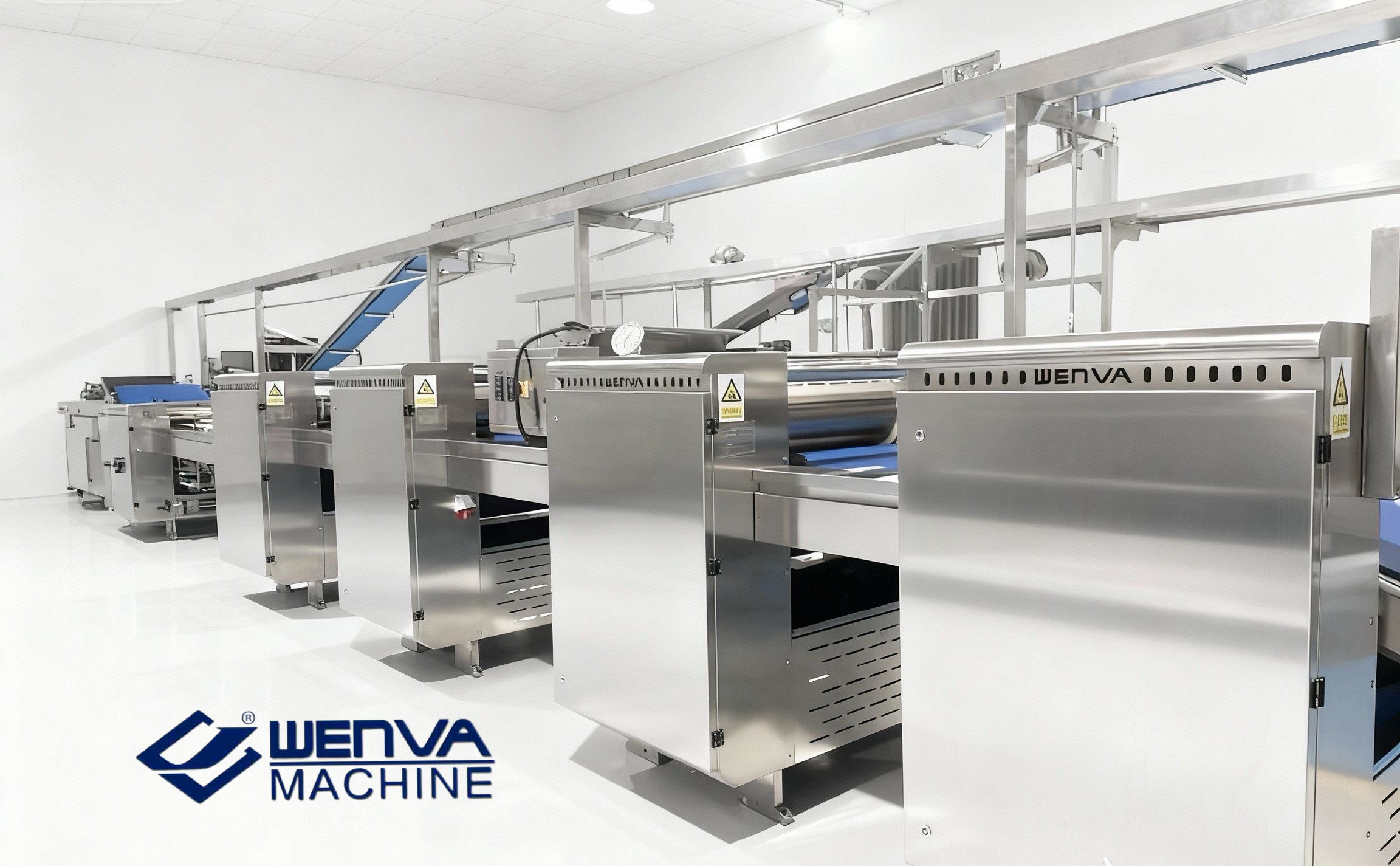
Safety should be a top priority in any production facility. Implement the following measures:
Clear Pathways: Design the layout to allow for safe movement of personnel and materials. This includes ensuring that there are no obstructions in walkways and that emergency exits are clearly marked.
Safety Features: Incorporate guards, barriers, and emergency stop buttons in the design. Regular safety drills and training sessions can also help ensure that all employees are aware of safety protocols.
Hygiene Standards: Maintaining high hygiene standards is crucial in food production. The layout should facilitate easy cleaning and sanitization, with materials that are resistant to corrosion and easy to clean.
Anticipate future needs by designing a flexible layout that can accommodate changes in production volume and product variety. This may involve:
Modular Equipment: Use equipment that can be easily reconfigured or expanded. This allows for quick adjustments to the production line as new products are introduced or demand fluctuates.
Space for Expansion: Leave room for additional machinery or processes as demand grows. This foresight can save significant costs and time in the future.
Here are some examples of effective biscuit production line layouts:
1. H-Shaped Layout: Ideal for larger facilities, allowing for distinct zones for each production stage. This layout can help in managing different product lines simultaneously.
2. I-Shaped Layout: Suitable for smaller spaces, providing a streamlined flow from start to finish. This design is efficient for operations with limited space but still requires careful planning to avoid bottlenecks.
For a practical understanding, watch this video demonstrating a biscuit production line in action:
Implementing strict quality control measures is essential for ensuring consistent product quality. This includes:
Regular Inspections: Conduct routine checks on raw materials and finished products. This can involve sensory evaluations, as well as laboratory testing for specific quality parameters.
Automated Quality Control: Use technology to monitor production parameters and detect anomalies. Automated systems can provide real-time feedback, allowing for immediate adjustments to maintain quality.
Standard Operating Procedures (SOPs): Develop and implement SOPs for each stage of production. This ensures that all employees follow the same processes, reducing variability and enhancing product consistency.
The biscuit production industry is continually evolving, with new technologies emerging to enhance efficiency and product quality. Some of the latest innovations include:
AI and Machine Learning: These technologies are being used to optimize baking processes by analyzing data from previous batches to predict the best conditions for baking different types of biscuits.
Energy-Efficient Equipment: New ovens and mixers are designed to use less energy while maintaining high output levels. This not only reduces costs but also minimizes the environmental impact of production.
Sustainable Practices: Many manufacturers are adopting sustainable practices, such as using renewable energy sources and reducing waste through better resource management.
Automation plays a crucial role in modern biscuit manufacturing. By automating various stages of production, companies can achieve:
Increased Speed: Automated systems can operate continuously, significantly increasing production rates compared to manual processes.
Consistency: Automation ensures that each batch of biscuits is produced under the same conditions, leading to uniform quality.
Reduced Labor Costs: While initial investments in automation can be high, the long-term savings in labor costs and increased efficiency often justify the expense.
As consumer awareness of environmental issues grows, biscuit manufacturers are increasingly focusing on sustainability. Key considerations include:
Waste Management: Implementing systems to reduce waste during production, such as reusing by-products or optimizing ingredient usage.
Energy Consumption: Investing in energy-efficient machinery and practices to lower the carbon footprint of production.
Sourcing Ingredients: Choosing suppliers who prioritize sustainable farming practices can enhance the overall sustainability of the production process.
Designing an efficient biscuit production line layout is a complex but rewarding task. By focusing on workflow optimization, equipment selection, safety, and flexibility, manufacturers can enhance productivity and product quality. The integration of modern technologies and sustainable practices further supports the industry's growth and adaptability in a competitive market.
1. What is the best layout for a biscuit production line?
The best layout depends on the facility size and production needs, but linear layouts are often most efficient.
2. How can I ensure worker safety in a production line?
Implement clear pathways, safety features, and regular training for staff.
3. What equipment is essential for biscuit production?
Key equipment includes mixers, ovens, cooling conveyors, and packaging machines.
4. How can I optimize workflow in my production line?
Streamline processes by grouping similar tasks and minimizing the distance materials travel.
5. What are the key factors in maintaining product quality?
Regular inspections, automated quality control, and adherence to hygiene standards are crucial.
Hard biscuit production depends on the formation of a strong, extensible gluten network that provides the desired crispness and layered structure.This article reviewed the entire process — from dough mixing and sheeting to forming and baking — and discussed the role of key ingredients such as flour proteins, sugars, fats, and functional additives.Modern hard biscuit production lines feature automated control systems for precise ingredient dosing, sheeting adjustment, and temperature regulation, ensuring consistent quality and high production efficiency.As the global biscuit market evolves toward healthier, functional products, manufacturers are adopting new raw materials and cleaner formulations.Through continuous optimization of process design and equipment technology, biscuit production lines help manufacturers achieve stable quality, lower costs, and meet diverse consumer demands in the competitive baked goods industry.
This article explores the expanding applications of tunnel ovens in the food processing industry, highlighting their versatility in producing bakery products, pet food, and snacks. It discusses the benefits of tunnel ovens, innovations in technology, and future trends, providing insights into how these ovens are revolutionizing food production. The integration of smart technology and automation is paving the way for a more efficient and sustainable manufacturing process.
This article explores the top 10 gas tunnel oven manufacturers in China, highlighting their unique offerings and technological advancements. Gas tunnel ovens are essential for efficient food processing, providing energy savings and versatility. The article also covers maintenance tips and answers common questions about gas tunnel ovens.
This article explores the top biscuit production line manufacturers and suppliers in Vietnam, highlighting their offerings and contributions to the industry. It discusses the importance of efficient production lines, key features, and technological innovations that enhance biscuit manufacturing. The article also addresses common questions related to biscuit production.
This article explores the top suppliers of biscuit dough mixers for industrial production in 2025, highlighting key features, types of mixers, and the importance of selecting the right equipment. It provides insights into leading suppliers like Reading Bakery Systems, Skywin Foodstuff Machinery, and ProBAKE, along with maintenance tips and FAQs to assist bakers in making informed decisions.
Double fermentation is an essential process in modern soda biscuit production lines. Compared with single fermentation, it creates a superior texture, deeper flavor, and the signature crispy layers found in high-quality soda biscuits. In industrial biscuit manufacturing, fermentation defines the dough’s internal structure, flavor complexity, and product consistency. The first fermentation allows yeast to activate gradually, forming gluten and producing organic acids that develop the biscuit’s foundational flavor. The second fermentation, conducted after adding baking soda or flour, refines dough texture, balances acidity, and redistributes gases for even layering. This results in enhanced crispness, uniform bubbles, and a light “soda” aroma.
Explore how modern pretzel biscuit making machine manufacturers are transforming traditional snack production. This guide covers production processes, factory planning, cost analysis, and market insights for launching a successful pretzel biscuit factory.
This article explores the top 10 manufacturers of automatic biscuit production lines in China, highlighting their unique offerings and contributions to the industry. It discusses the benefits of automatic production lines, key features, maintenance considerations, and provides answers to frequently asked questions. Investing in these advanced systems can significantly enhance production efficiency and product quality in the biscuit manufacturing sector.
This article explores the top 10 tunnel oven manufacturers in China, highlighting their unique offerings and contributions to the food processing industry. Tunnel ovens are essential for efficient and consistent baking, and the featured manufacturers are known for their innovative designs and commitment to quality. The article also discusses the benefits, maintenance requirements, and technological advancements in tunnel oven design.
From November 4–6, 2025, WENVA Machine will participate in Gulfood Manufacturing 2025 at the Dubai World Trade Centre, the Middle East’s leading exhibition for food processing and packaging technologies. As a specialized manufacturer of biscuit and cookie production lines, WENVA will showcase its latest innovations—including fully automated production lines, energy-efficient tunnel ovens, and integrated packaging systems—at Booth Z4-G79. Recognized as one of the most professional and influential industry events, Gulfood Manufacturing gathers global experts, manufacturers, and partners from over 160 countries. WENVA Machine warmly invites visitors to explore how our technology drives greater efficiency, intelligence, and sustainability in biscuit production. With nearly 40 years of industry expertise and a strong global service network, WENVA is committed to being a trusted partner to the global food industry, delivering reliable, efficient, and customized biscuit production solutions.
This article provides a comprehensive guide on starting a pretzel biscuit factory, covering essential equipment, the manufacturing process, investment considerations, and marketing strategies. It aims to equip aspiring entrepreneurs with the knowledge needed to succeed in the pretzel biscuit industry.
This article discusses best practices for designing biscuit production line layouts, emphasizing workflow optimization, equipment selection, safety, and flexibility. It provides visual aids and practical insights to enhance understanding, along with a FAQ section addressing common queries related to biscuit production. The integration of modern technologies and sustainable practices is also highlighted as essential for future growth in the industry.
This article explains how a **Double Layer Biscuit Production Line** operates, from dough preparation to packaging. It highlights the key differences between double and single-layer biscuits, detailed production steps, adhesion techniques, and how the line supports innovation in taste and texture.
This article explores the top ten biscuit production line manufacturers in China, highlighting their unique offerings and contributions to the industry. It covers key features, innovations, and advantages of each manufacturer, providing valuable insights for those interested in biscuit production. The article also addresses common questions related to biscuit production lines, making it a comprehensive resource for industry professionals.
This comprehensive guide explores the machines used in cookie production, detailing their functions and the importance of automation. It covers the history of cookies, the science behind baking, and future trends in the industry. Additionally, it provides practical tips for starting a cookie business and answers common questions, making it a valuable resource for aspiring bakers and industry professionals alike.
This article explores the science behind soda biscuit forming, focusing on the critical factors of temperature, moisture, and sheeting control. It discusses the roles of various ingredients, the importance of precise temperature and moisture management, and the sheeting process in producing high-quality soda biscuits. Additionally, it highlights innovations in manufacturing technology and quality control measures to ensure consistent product quality.
This article outlines the complete service process of a biscuit production line manufacturer, detailing each step from initial consultation to installation. It emphasizes the importance of understanding client needs, designing efficient layouts, and providing ongoing support. The article also addresses common questions about biscuit production lines, ensuring a comprehensive understanding of the process.
This article explores the critical decision between electric and gas-tunnel ovens for biscuit production. It discusses the advantages and disadvantages of each type, considering factors like production volume, product type, and energy costs. The article also highlights hybrid ovens as a flexible solution, providing insights for manufacturers to optimize their operations.
The butter cookie production process demands exceptional temperature uniformity, stable conveying, and high hygiene standards. Compared with traditional mesh belts, stainless steel belts provide superior thermal conductivity, corrosion resistance, and surface precision, making them ideal for high-fat, delicate doughs. Their smooth surface prevents sticking, enhances heat distribution, and maintains color consistency across batches. From an operational standpoint, steel belts enable precise speed and tension control, reducing thickness deviation and improving product qualification rates to over 98%.Economically, steel belts offer 3–5 years of lifespan, lower cleaning frequency, and up to 25% energy savings—all contributing to reduced downtime and greater output. Looking ahead, innovations such as sensor-based monitoring, lightweight alloys, and energy recovery systems will continue to elevate the efficiency and sustainability of steel belt tunnel ovens. In conclusion, for butter coo
This article explores how cookie dough mixer suppliers ensure consistency in dough preparation through technology, best practices, and collaboration. It highlights the importance of ingredient quality, mixing techniques, and the role of suppliers in maintaining uniformity in cookie production. The future of mixing technology, including automation and sustainability, is also discussed.