
Views: 222 Author: Wenva Machine Publish Time: 2026-06-17 Origin: Site
Content Menu
● What Is an Automated Biscuit Production Line?
● Why Bakeries Are Accelerating Biscuit Line Automation
● Wenva Machine at a Glance: 40 Years in Biscuit Lines
● Key Components of an Automated Biscuit Line
>> 1. Dough Mixing and Feeding
>> 2. Forming: Sheeting, Cutting, and Moulding
>> 4. Cooling, Handling, and Packaging
● Industry Trends Shaping Biscuit Line Investments
● How Wenva Machine Designs Biscuit Lines Around Your Factory Reality
● Practical Steps to Implement Biscuit Line Automation
● Selecting the Right Automated Biscuit Production Line for Your Plant
● Example: How Automation Transforms a Growing Biscuit Factory
● Why Partner With Wenva Machine for Your Biscuit Line
● Call to Action: Discuss Your Biscuit Line Project With Wenva
● Frequently Asked Questions (FAQ)
For bakeries that need to move from manual or semi‑automatic processes to fully automated biscuit production, the right partner can make the difference between a smooth scale‑up and years of costly trial‑and‑error. Drawing on 40 years of biscuit line engineering and hands‑on commissioning experience, Wenva Machine helps plants design, install, and optimize complete automated biscuit production lines that are tailored to real‑world factory constraints—not just textbook layouts. [wenvamachine]
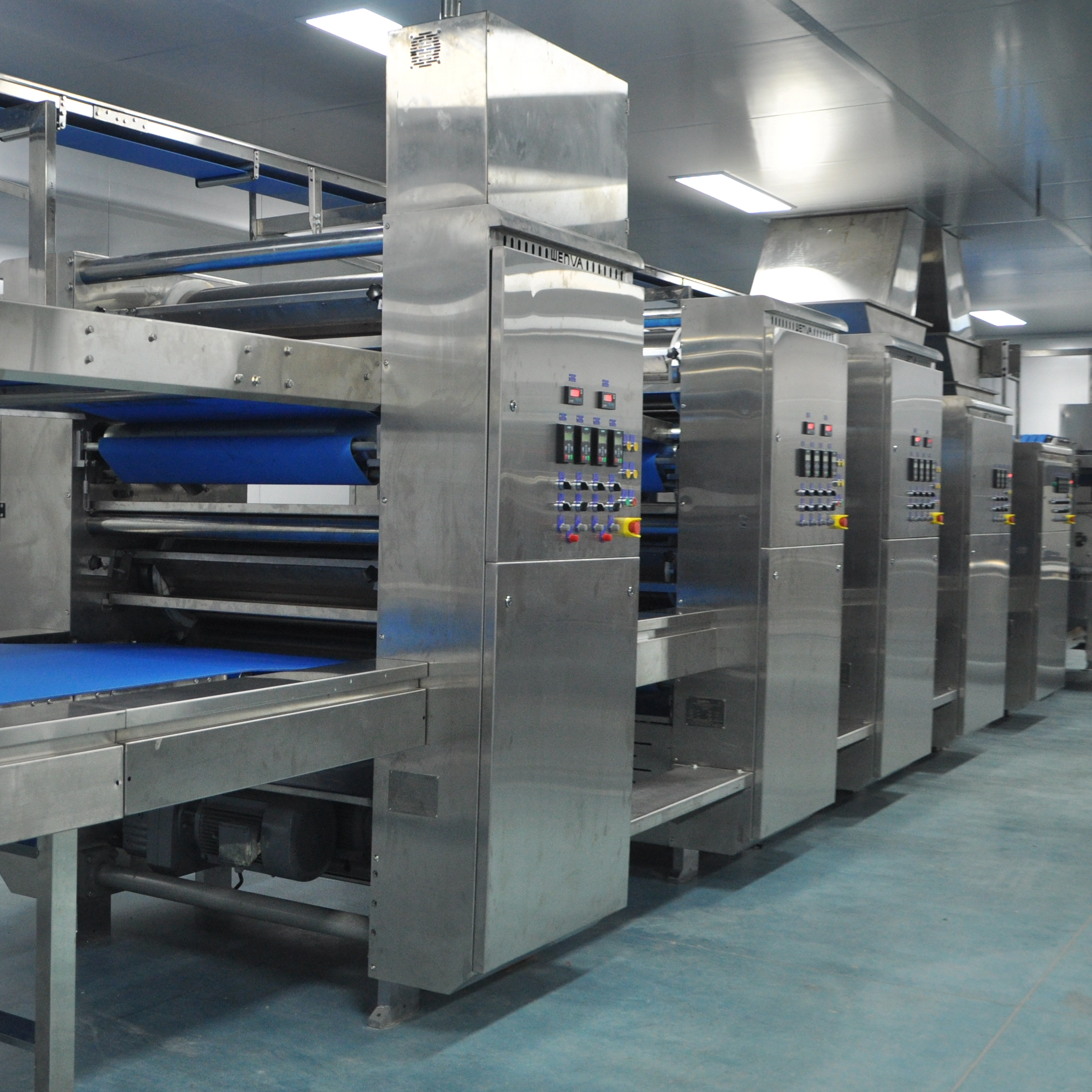
An automated biscuit production line is an integrated system that connects mixing, forming, baking, cooling, and packaging into a continuous, programmable workflow. Instead of managing isolated machines, bakeries control a unified line that can run high volumes with consistent product quality and minimal manual handling. [alibaba]
A modern automated biscuit line typically includes:
- Dough mixing and feeding units with precise ratio control. [py-foodmachine]
- Forming technologies such as rotary moulding, sheeting, cutting, or wire‑cutting. [wenvamachine]
- Tunnel ovens with configurable heat zones and digital temperature profiles. [cfabglobal]
- Cooling conveyors and accumulation systems to stabilize texture and structure. [alibaba]
- Automated packaging integration for flow‑wrap, tray‑pack, or bulk formats. [py-foodmachine]
The goal is repeatable quality at scale—being able to produce hundreds of kilograms of biscuits per hour with predictable yield, bake color, and texture across every batch. [linkedin]
Global demand for biscuits and baked snacks is rising, and automation is now a strategic investment rather than a "nice‑to‑have". Recent market analyses project that automatic wafer and biscuit production lines will grow at a CAGR of about 10.6% from 2026 to 2033, driven by higher volumes, labor constraints, and export opportunities. [linkedin]
From an operator's perspective, the most compelling benefits of automated biscuit production lines include:
- Higher throughput: Typical industrial lines can reach 100–900 kg/hour depending on layout, oven length, and product type. [wenvamachine]
- Stable quality: Automated mixing, forming, and oven controls significantly reduce batch‑to‑batch variation. [cfabglobal]
- Lower unit cost: Optimized energy use, reduced rework, and less giveaway all contribute to lower overall cost per kilogram. [cfabglobal]
- Safer working conditions: Less manual handling of hot trays and heavy dough improves workplace safety. [cfabglobal]
- Scalability for export: Consistent quality and traceability make it easier to serve demanding retail chains and global buyers. [linkedin]
As an equipment manufacturer focused specifically on biscuits, Wenva Machine has seen small regional bakeries evolve into fully automated plants capable of serving supermarket chains and cross‑border e‑commerce channels when their lines are planned correctly from the start. [wenvamachine]
Based in Yangjiang, Guangdong, Wenva Machine is a specialized manufacturer of biscuit production lines and related industrial baking equipment with roughly four decades of engineering and manufacturing experience. The company integrates R&D, line design, fabrication, and on‑site commissioning, with projects delivered to customers worldwide. [wenvamachine]
Core capabilities include:
- Complete automated biscuit production lines: From dough mixing to packaging integration, tailored to plant layouts and output needs. [wenvamachine]
- Dedicated biscuit machinery: Rotary moulding, sheeting and cutting, sandwiching, injection, and auxiliary handling systems. [wenva668.en.made-in-china]
- Global project delivery: Support for design, installation, testing, and operator training for overseas customers. [wenvamachine]
For many factory managers, the practical value lies in working with a vendor that understands both mechanical engineering and biscuit process realities—for example, how small changes in dough hydration or oven zoning affect product color, texture, and scrap rate. [wenvamachine]
Consistent dough is the foundation of any automated biscuit process. Continuous or high‑capacity mixers control flour, water, fat, sugar, and minor ingredients with precise ratios and temperature management to ensure repeatable dough characteristics. [py-foodmachine]
What matters most at this stage:
- Stable dough hydration and temperature to prevent dimensional variation after baking. [cfabglobal]
- Automated feeding to forming sections to avoid manual loading bottlenecks. [alibaba]
- Sanitary design for quick cleaning between product runs. [cfabglobal]
Wenva Machine lines typically integrate continuous dough feeding to maintain a steady flow to sheeters or moulders, matching the designed oven capacity. [wenvamachine]
The forming section shapes the dough into its final biscuit formats. Industrial lines commonly use rotary moulders for embossed biscuits and sheeter‑cutter combinations for flat or laminated products. [py-foodmachine]
Key forming technologies include:
- Rotary moulding for high‑definition 3D shapes and branding details. [wenvamachine]
- Sheeting and gauging to create uniform dough sheets before cutting. [py-foodmachine]
- Rotary cutting for precise geometric shapes with minimal scrap. [wenvamachine]
Well‑engineered forming sections reduce trimming waste and ensure that every cavity or cutter station is filled evenly, which directly influences throughput and oven loading efficiency. [alibaba]
Industrial tunnel ovens provide the controlled heat profiles needed to achieve target color, texture, and moisture. Modern systems use multiple zones—direct gas fired, radiant/convection, or full convection—to match different biscuit recipes on the same line. [wenvamachine]
Important baking considerations include:
- Zone‑by‑zone control of temperature and air flow to fine‑tune expansion and browning. [wenvamachine]
- Moisture and throughput balancing to avoid under‑baked centers or over‑browned edges. [cfabglobal]
- Optional multi‑pass dryers for products that need extended moisture reduction without over‑coloring. [wenvamachine]
In practice, many successful bakeries implement data‑driven oven tuning, using product measurements and SCADA data to refine settings over time. [cfabglobal]
After baking, biscuits must cool and stabilize before packaging to avoid condensation and texture loss. Automated conveyors, stackers, and buffer systems manage product flow from oven exit to packaging machines. [alibaba]
A well‑designed discharge and cooling section:
- Maintains gentle handling to protect delicate shapes.
- Provides enough cooling time for internal moisture equilibration. [py-foodmachine]
- Balances multiple packaging lines to minimize stoppages at either end. [alibaba]
Because Wenva Machine also supplies auxiliary biscuit equipment, their lines are typically engineered as end‑to‑end systems rather than a collection of mismatched machines. [wenvamachine]
Over the past few years, Wenva Machine and other industry observers have seen several trends reshaping biscuit line specifications and investment priorities. [linkedin]
- Higher flexibility on a single line: Bakeries want to produce multiple SKUs—plain, cream‑filled, sandwich, and coated variants—without adding separate lines. [alibaba]
- Health‑oriented recipes: Demand is increasing for low‑sugar, high‑fiber, and whole‑grain biscuits, requiring more precise process control. [wenvamachine]
- Sustainability and energy efficiency: Ovens and dryers are being optimized for lower energy consumption per kilogram produced. [cfabglobal]
- Digitalization and data: Plants are layering in sensors, OEE dashboards, and remote support to improve uptime and decision‑making. [linkedin]
According to Wenva Machine's published insights, competitive biscuit manufacturers increasingly treat their production lines as strategic assets—platforms that must support new recipes, packaging formats, and market demands for at least a decade. [wenvamachine]
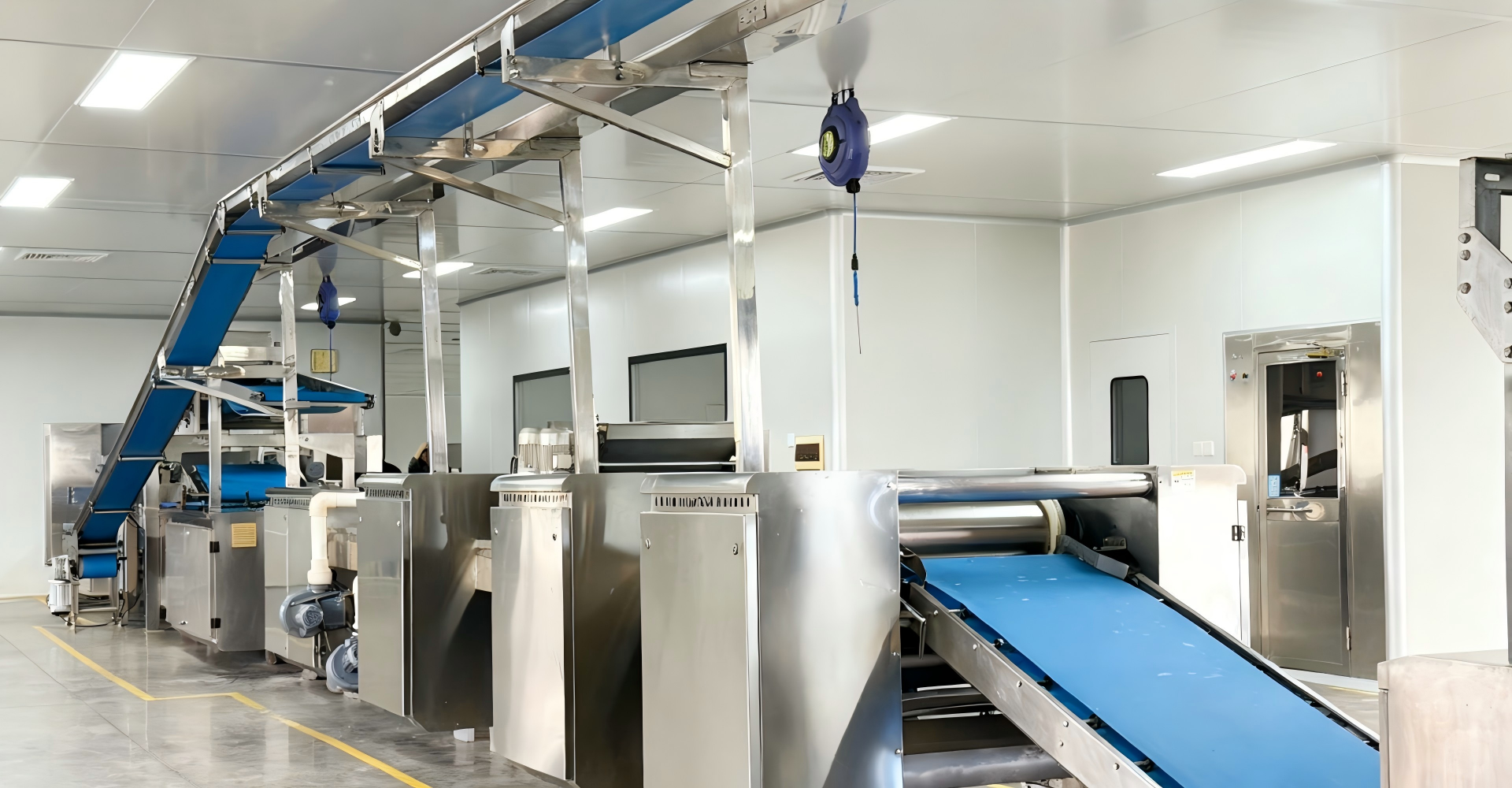
Unlike generic equipment lists, Wenva's projects typically start with an on‑site or detailed layout assessment to understand real‑world constraints such as existing buildings, utilities, and labor structure. This approach is especially important for growing bakeries upgrading from semi‑automatic to fully automatic lines. [wenvamachine]
Typical design and delivery steps include:
1. Plant layout and capacity analysis
Engineers map material flows, potential bottlenecks, and realistic hourly output targets to determine line width, oven length, and forming capacity. [py-foodmachine]
2. Customized line configuration
Based on product portfolio—plain, cream, sandwich, or assorted biscuits—Wenva proposes the combination of mixers, forming modules, ovens, and post‑bake handling required to meet those goals. [wenvamachine]
3. Manufacturing and FAT
Major components are fabricated and assembled, followed by factory acceptance testing (FAT) using agreed recipes before shipment. [wenvamachine]
4. Installation, commissioning, and training
Wenva technicians supervise installation, run test batches, and train operators on changeovers, sanitation, and routine maintenance. [wenvamachine]
For many customers, the most valuable part of the engagement is the post‑start‑up optimization phase, where minor adjustments to mixing, forming, and oven settings can deliver significant gains in yield and consistency. [linkedin]
Bakeries that have successfully automated their biscuit production usually follow a staged, methodical implementation strategy rather than trying to automate everything in one step. [linkedin]
From an operator's perspective, an effective roadmap looks like this:
1. Audit existing processes and bottlenecks
Map the current workflow from ingredient receipt to finished goods, and quantify where delays, rework, or quality complaints occur. [cfabglobal]
2. Prioritize critical automation zones
Start with steps that most affect throughput and quality—often forming and baking—while ensuring the chosen equipment can later integrate mixing or packaging upgrades. [linkedin]
3. Align line capacity with market demand
Avoid overspecifying. Work with vendors to match mixing, forming, and baking capacity to realistic sales forecasts and peak demand scenarios. [py-foodmachine]
4. Invest in operator training and SOPs
Standard operating procedures and structured training around dough preparation, changeovers, cleaning, and basic troubleshooting are essential for sustainable performance. [cfabglobal]
5. Measure, optimize, and expand
Implement KPIs such as OEE, yield, scrap rate, and energy per kilogram, then refine settings and plan phased expansions based on real data. [linkedin]
Wenva Machine typically supports customers through this journey, especially when transitioning from local market production to export‑ready manufacturing standards. [wenvamachine]
When choosing a new biscuit line, factory managers and owners should look beyond brochure capacities and focus on fit, reliability, and lifecycle economics. [alibaba]
Key decision factors include:
- Product portfolio and formats
Confirm that forming and baking technologies can handle your target SKUs today and in the next 3–5 years. [py-foodmachine]
- Required hourly capacity
Compare quoted capacities (e.g., 200–900 kg/hour) to your sales projections, seasonal peaks, and available shifts. [linkedin]
- Available floor space and utilities
Work with your vendor to optimize line layout, oven length, and conveyor paths for your actual building. [py-foodmachine]
- Local service and spare parts
Ensure that core components, consumables, and critical spares are readily available, with responsive technical support. [alibaba]
- Total cost of ownership
Evaluate energy efficiency, maintenance intervals, and potential labor savings across the full lifecycle—not just initial purchase price. [py-foodmachine]
Because Wenva Machine both designs and manufactures complete biscuit lines, they can typically adjust line configurations and equipment specs more flexibly than resellers. [wenva668.en.made-in-china]
Consider a mid‑sized bakery producing about 150 kg/hour of assorted biscuits using several semi‑automatic machines and manual rack ovens. As demand grows, the plant struggles with inconsistent color, high labor costs, and missed delivery windows.
By installing a continuous automated biscuit production line sized for 400–500 kg/hour, the bakery can:
- Consolidate multiple manual processes into one integrated line.
- Reduce labor per kilogram while reassigning staff to quality checks and preventive maintenance. [cfabglobal]
- Improve consistency by stabilizing dough mixing, forming, and baking parameters. [wenvamachine]
- Prepare for export by implementing traceable, documented processes. [linkedin]
This kind of step‑change upgrade is typical of the projects Wenva Machine delivers across Asia and other regions. [wenvamachine]
For bakeries and food manufacturers that want to upgrade or expand biscuit production, Wenva Machine offers a combination of experience, specialization, and end‑to‑end project support. [wenvamachine]
Working with Wenva, you gain:
- A partner focused on automated biscuit production lines rather than generic food machinery. [wenva668.en.made-in-china]
- Engineering teams that can adapt equipment configurations to complex plant layouts. [wenvamachine]
- Guidance on phased automation, capacity planning, and future expansion paths. [linkedin]
- Ongoing service, training, and optimization support to keep lines running at their designed performance. [wenvamachine]
If you are planning a new biscuit plant or upgrading an existing facility, involving an experienced line manufacturer early in the process can dramatically reduce project risk and payback time. [linkedin]
If you are evaluating an automated biscuit production line or planning a phased automation roadmap, Wenva Machine can help you define realistic capacity targets, optimize your layout, and configure a line that supports your product strategy and budget. [wenvamachine]
You can learn more about Wenva's biscuit production lines and discuss your project requirements directly through their official website contact channels or international trade platforms where their lines are listed. [wenva668.en.made-in-china]
1. What is the typical capacity of an automated biscuit production line?
Industrial automated biscuit lines usually produce from around 100 kg/hour up to 900 kg/hour or more, depending on oven length, line width, and product type. [linkedin]
2. How long does it take to install and commission a new biscuit line?
Timelines vary by project, but a complete line typically requires several weeks for installation and commissioning after equipment arrives on site, including mechanical setup, trial runs, and operator training. [wenvamachine]
3. Can one line produce different types of biscuits?
Yes. With the right combination of forming modules and oven controls, a single line can run various formats such as plain, sandwich, and cream‑filled biscuits, although changeover time and tooling may be required. [alibaba]
4. What kind of staff training is needed for an automated biscuit line?
Operators usually need structured training on dough preparation, line start‑up and shutdown, changeovers, basic troubleshooting, and sanitation, alongside training for maintenance teams on preventive care. [wenvamachine]
5. How does automation impact product quality?
Automation stabilizes critical variables such as mixing ratios, dough thickness, baking time, and temperature, which reduces variability and helps maintain uniform color, texture, and moisture across every batch. [alibaba]
- Reading Bakery Systems. "Automated Bakery Equipment." [https://www.readingbakery.com/resources/automated-bakery-equipment.html]
- Wenva Machine – Official Website. Company overview, product range, and contact information.[https://www.wenvamachine.com] [wenvamachine]
- Wenva Machine. "The Future of Biscuit Production Lines: Trends To Watch." Industry trends and insights on biscuit line automation.[https://www.wenvamachine.com/the-future-of-biscuit-production-lines-trends-to-watch.html] [wenvamachine]
- Made‑in‑China. "Wenva Full Automatic Biscuit Bakery Equipment." Product listing and company details.[https://wenva668.en.made-in-china.com/product/vBRESLsVlIky/China-Wenva-Full-Automatic-Biscuit-Bakery-Equipment.html] [wenva668.en.made-in-china]
- Alibaba. "Wenva biscuit production line." Overview of Wenva biscuit line features and functions.[https://www.alibaba.com/showroom/wenva-biscuit-production-line.html] [alibaba]
- LinkedIn. "Essential Bakery Automation Equipment: Making it Scalable." Discussion of bakery automation best practices.[https://www.linkedin.com/pulse/essential-bakery-automation-equipment-making-scalable-lztsc] [linkedin]
- CFAB Global. "Baking Better: Strategies to Improve Bakery Production." Guidance on process optimization, automation, and quality systems.[https://cfabglobal.com/how-to-improve-bakery-production/] [cfabglobal]
- PY Food Machine. "2026 How to Choose the Best Biscuit Making Production Line?" Capacity considerations and layout guidance.[https://www.py-foodmachine.com/blog/2026-best-biscuit-making-production-line/] [py-foodmachine]
- LinkedIn. "Automatic Wafer Biscuit Production Line market forecast." Market growth projections.[https://www.linkedin.com/pulse/automatic-wafer-biscuit-production-line-market-forecast-strategic-asbbc] [linkedin]


