
Views: 222 Author: Wenva Machine Publish Time: 2026-06-20 Origin: Site
Content Menu
● Why Your Biscuit Production Line Choice Matters
● Core Qualities of a Good Biscuit Production Line
● Precision Moisture and Color Control
>> Why moisture and color are non‑negotiable
>> Practical checklist for buyers
● HMI Panel and Smart Line Control
>> The HMI as the "nerve center" of your line
>> From control to energy efficiency
● Feeding, Mixing, and Forming: Getting the Dough Right
>> Mixing systems: where quality really starts
>> Hard vs soft dough: different forming needs
● Post‑Baking Systems: Cooling, Handling, and Packing
>> Why post‑bake is as critical as baking
● Special Applicators and Value‑Added Features
>> From plain biscuit to premium product
>> Flexibility drives marketing innovation
● Layout, Automation, and Scalability (Expert View)
>> Designing the right layout for your factory
>> Automation trend: AI and data in biscuit lines
● Hygiene, Safety, and Compliance
>> Food safety by design, not by afterthought
>> Operator safety and ergonomics
● Total Cost of Ownership and Vendor Reliability
>> Looking beyond purchase price
>> Why vendor experience matters
● Sample Feature Matrix for Automated Biscuit Lines
● Practical Steps to Choosing the Right Biscuit Production Line
● Why Partnering with an Experienced Manufacturer Matters (Wenva Perspective)
● Frequently Asked Questions (FAQ)
A high‑performance automated biscuit production line should combine precise process control, flexible configurations, hygienic design, and expert after‑sales support—backed by a manufacturer with decades of real production experience. Drawing on over 40 years of biscuit line engineering at Wenva Machine, this guide explains exactly what to look for when you invest in a new biscuit production line or upgrade an existing plant. [sana-commerce]

In modern biscuit manufacturing, your production line is the real "product engine" behind taste, consistency, and profit margins. A well‑designed automated line does more than bake dough: it stabilizes quality, reduces wastage, optimizes energy use, and supports rapid product innovation for changing consumer demand. [wenvamachine]
From my experience working with biscuit manufacturers across Asia, Europe, and the Middle East, the gap between a "good enough" line and a truly optimized automated biscuit production line can be the difference between tight margins and scalable, export‑ready business. [blog.saleslayer]
When assessing any biscuit production line—whether for hard biscuits, soft cookies, or crackers—focus on these foundational qualities. [skywinbake]
- Consistent moisture and color control from oven infeed to cooling discharge
- Centralized HMI control for process visibility and quick adjustments
- Robust mixing, feeding, and forming systems tuned to your recipes
- Integrated post‑baking systems for cooling, handling, and packaging
- Optional applicators and decorating systems for value‑added products
Each of these elements directly impacts your quality, yield, and operational cost per kilogram of finished product. [py-foodmachine]
In biscuits, a "perfect" bake lives in a narrow window: too much moisture leads to softness and microbial risk; too little causes brittleness, breakage, and weight loss. Color is your first visual quality attribute and one of the fastest parameters end‑consumers notice if something is wrong. [wenvamachine]
A high‑quality automated biscuit production line must provide:
- Uniform heat distribution across the baking chamber
- Multi‑zone temperature control with independent setpoints
- Real‑time monitoring of product color and surface conditions
This combination allows you to maintain tight tolerances for different products—from cream crackers to sandwich biscuits—on the same line. [skywinbake]
When evaluating oven technology, ask vendors:
1. Can you show data on temperature uniformity across the belt width for different products?
2. How is exhaust and moisture removal controlled and monitored?
3. Is there provision for recipe‑based temperature and time profiles for different SKUs?
Vendors who can answer these with data, not just sales claims, are more likely to deliver stable results over years of operation. [workshopdigital]
A modern HMI (Human–Machine Interface) panel is where your operators control oven zones, conveyor speeds, dough consistency, safety systems, and alarms in one place. Properly deployed, it reduces operator dependence, speeds up changeovers, and minimizes human error. [wenvamachine]
A good HMI on an automated biscuit production line should offer:
- Unified dashboard for zones, combustion blowers, and safety status
- Recipe management for different biscuit types (time, temperature, speed, toppings)
- Alarm history and diagnostics for faster troubleshooting
- User access levels to protect critical setpoints
In our experience, factories moving from analog controls to well‑designed HMIs typically cut changeover downtime by 15–25% and reduce start‑up scrap simply because the process becomes more repeatable. [blog.saleslayer]
Intelligent HMIs also contribute directly to energy savings:
- Automatic optimization of burner firing sequences
- Real‑time feedback on gas and power consumption
- Faster stabilization after line stops
Given rising energy costs globally, this is no longer a "nice to have"—it is central to long‑term ROI. [foodindustryexecutive]
Your mixers and feeding systems determine dough development, gas retention, and final bite texture. Advanced mixing systems on biscuit lines now include: [wenvamachine]
- Direct drive mechanisms for stable torque and lower maintenance
- High‑capacity bowls for continuous or batch feeding
- Recipe‑driven water and fat dosing for consistency across shifts
For hard dough biscuits, mis‑controlled mixing shows up as uneven spread, blistering, or inconsistent stacking performance downstream. [py-foodmachine]
The biggest mechanical difference between hard and soft biscuits lies in forming technology. [wenvamachine]
- Hard dough biscuits/crackers: typically pass through sheeters, gauge rolls, and rotary cutters.
- Soft biscuits/cookies: often use rotary moulders or depositors, where pressure, knife settings, and gap control define final shape and surface texture.
Look for:
- Fast, tool‑less changeovers of moulds and cutters
- Fine adjustment of pressure and clear digital feedback on settings
- Hygienic design for easy cleaning between product types
These features keep your line flexible enough to support both core SKUs and limited‑time "trend" products without long downtime. [skywinbake]
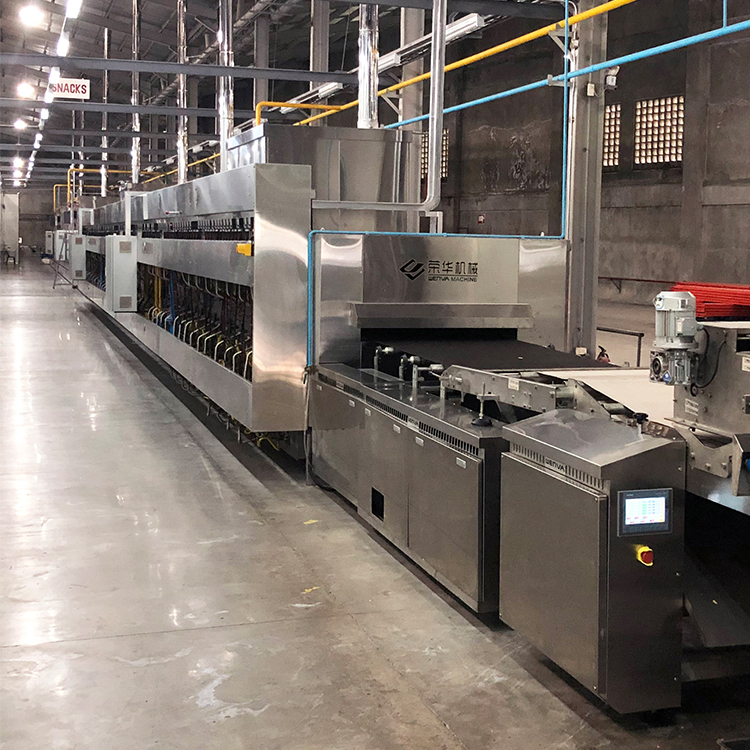
Many new investors underestimate the importance of cooling, stacking, and packaging in biscuit quality. Yet, most real‑world complaints—breakage, checking, moisture regain—are rooted in poorly controlled post‑baking systems. [wenvamachine]
A strong post‑baking setup should include:
- Engineered cooling conveyors with controlled airflow and residence time
- Automated stackers that align biscuits and maintain count accuracy
- Integrated packing infeed with options for auto tray denesting and automated feeding to primary packers
Effective cooling stabilizes internal moisture and structure, preventing "checking" and microcracks, especially in hard biscuits. Well‑designed stacking and packing also improve labor efficiency and downstream OEE. [wenvamachine]
- How do you calculate required cooling time for different biscuit sizes and weights?
- Can your conveyor layout maintain product stability at higher speeds?
- What are the maximum packing speeds your line can reliably support per lane?
Answers to these questions reveal whether the vendor understands the entire process, not just the oven. [workshopdigital]
To "premiumize" your range, special applicators allow you to add toppings before or after baking. Common options include: [wenvamachine]
- Oil and fat sprayers for gloss and mouthfeel
- Sugar, salt, herb, or spice sprinklers for flavored crackers
- Chocolate, cream, or slurry applicators for indulgent segments
The best systems can be integrated both pre‑ and post‑baking depending on recipe requirements. For example, salt or herb sprinkling often occurs pre‑bake, while oil spraying or chocolate application is post‑bake to maintain texture and appearance. [wenvamachine]
Marketing teams now expect production to support:
- Seasonal flavors
- Limited‑edition SKUs
- Co‑branding with ingredient suppliers
Flexible applicators help you respond quickly to these demands without investing in separate lines. [foodindustryexecutive]
Beyond the machine itself, a good biscuit production line must fit your plant space and future expansion plans. Based on Wenva Machine's project experience in different factory sizes, three layout principles consistently work well: [wenvamachine]
1. Linear (I‑shaped) layouts for compact facilities needing straightforward flow from mixing to packing. [wenvamachine]
2. H‑shaped or U‑shaped layouts for larger plants running multiple SKUs or product families in parallel. [wenvamachine]
3. Zoned layouts separating raw, processing, and packaging areas to support high hygiene requirements and audits. [wenvamachine]
When planned early, these layouts reduce internal logistics cost and support future oven extensions, extra cooling conveyors, or redundant packing lanes.
By 2026, food factories increasingly use AI and machine learning to optimize baking curves, predict maintenance, and adjust parameters in real time. On biscuit lines, that means: [profoodworld]
- Analysing historical batch data to recommend best temperature profiles
- Detecting drift in color or moisture and prompting corrections
- Predicting conveyor or burner maintenance before unplanned downtime
Choosing an automated biscuit production line that is ready for data integration (open protocols, data logging, remote diagnostics) ensures you can adopt these innovations without replacing heavy equipment. [profoodworld]
With stricter global standards (HACCP, BRCGS, FSSC 22000), your line must support hygienic design and safe operation from day one. Key aspects to look for include: [profoodworld]
- Smooth, cleanable surfaces and minimal food‑contact dead zones
- Easy access to belts, guides, and forming tools for cleaning
- Materials compatible with approved cleaning chemicals (no corrosion hotspots)
A well‑designed layout also ensures clear pathways, segregated flows of raw and finished goods, and proper zoning of high‑risk areas. This not only protects consumers but also reduces audit stress and recall risk. [wenvamachine]
Top‑tier lines include:
- Guards and interlocks on hazardous zones
- Emergency stop circuits reachable from critical points
- Ergonomic access to HMI, inspection windows, and changeover points
These features reduce incidents, support better staff retention, and maintain uptime. [workshopdigital]
A common mistake is choosing a biscuit line on price alone, ignoring lifetime costs. A professional evaluation includes: [wenvamachine]
- Energy consumption per kilogram of finished biscuits
- Planned maintenance intervals and spare parts availability
- Expected lifetime of belts, bearings, and combustion systems
- Changeover time and waste for each new SKU
Manufacturers with decades of experience and global installs usually provide more realistic TCO models and stable parts support. [wenvamachine]
Companies like Wenva Machine, with over 40 years focused on automated biscuit production lines, bring accumulated know‑how on different flours, climates, and packaging norms across markets. This expertise helps you avoid costly trial‑and‑error during commissioning and scale‑up. [wenvamachine]
| Selection factor | What "basic" lines offer | What advanced lines like Wenva offer |
|---|---|---|
| Moisture & color control | Single‑zone control, limited sensors (wenvamachine) | Multi‑zone, recipe‑based, real‑time monitoring (wenvamachine) |
| HMI & control | Simple buttons and local panels (wenvamachine) | Central HMI with recipes, alarms, diagnostics (wenvamachine) |
| Mixing & forming | Limited adjustability, slower changeovers (wenvamachine) | High‑capacity mixers, fine‑tuned sheeters/moulders (wenvamachine) |
| Post‑baking | Basic cooling and manual handling (wenvamachine) | Engineered cooling, automated stacking & packing (wenvamachine) |
| Applicators | Fixed or no topping options (wenvamachine) | Flexible pre/post‑bake applicators for multiple SKUs (wenvamachine) |
| Layout & scalability | Static layout, difficult to expand (wenvamachine) | Modular design, clear paths for future growth (wenvamachine) |
This kind of comparison can guide your internal CAPEX discussions and supplier shortlisting.
To simplify decision‑making, you can follow a structured approach when selecting or upgrading an automated biscuit production line:
1. Define product scope
- List current and future biscuit, cookie, and cracker types (sizes, shapes, fillings).
- Clarify target markets and packaging formats (pillow packs, trays, tins).
2. Quantify capacity and flexibility needs
- Set hourly throughput and annual tonnage targets.
- Decide how many SKUs must run on the same line and how frequently you will change products.
3. Assess factory constraints
- Measure available floor space, clear height, and utilities (power, gas, compressed air).
- Review existing upstream (flour silos, mixing) and downstream (cartoning, palletizing) systems.
4. Evaluate technical capabilities of vendors
- Request detailed P&IDs, layout drawings, and energy consumption estimates.
- Ask for reference installations similar to your products and climate.
5. Calculate total cost of ownership
- Combine equipment price, installation costs, energy, labor, and maintenance over at least 7–10 years.
- Compare not just payback time, but also risk of downtime and support quality.
This approach aligns with best practice in industrial SEO and content strategy: you answer the searcher's real intent—"how do I choose a good biscuit production line?"—with concrete steps, not vague marketing claims. [sana-commerce]
As a manufacturer with over four decades dedicated to automated biscuit production line design, build, and commissioning, Wenva Machine specializes in delivering end‑to‑end solutions—from early layout planning to on‑site installation and operator training. [wenva668.en.made-in-china]
Key strengths buyers often highlight include:
- Ability to customize line layouts for complex factory shapes while keeping flow efficient. [wenvamachine]
- Experience handling different dough types, recipes, and market standards for global customers. [wenva668.en.made-in-china]
- Ongoing technical support, spare parts, and process optimization after commissioning, which is essential for long‑term ROI. [wenvamachine]
For manufacturers planning to enter new export markets or upgrade from semi‑automatic to fully automated lines, partnering with such a specialist minimizes risk and shortens the learning curve.
If you are planning a new biscuit plant or upgrading an existing line, now is the time to evaluate your automated biscuit production line against the criteria in this guide. [wenvamachine]
- Review your current challenges in moisture control, throughput, changeover time, or product variety.
- Shortlist vendors that can provide complete solutions—from layout design to on‑site commissioning and training—backed by long manufacturing experience.
To explore a tailored solution for your factory layout, capacity goals, and product roadmap, get in touch with Wenva Machine's engineering team and request a customized biscuit production line proposal based on your specific requirements. [wenvamachine]
1. What is the most important feature in a good biscuit production line?
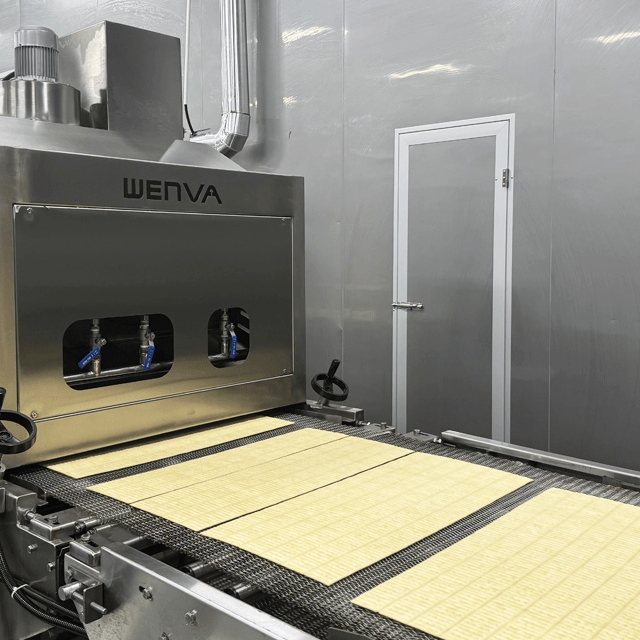
The most important feature is consistent process control—especially moisture and color control—supported by multi‑zone ovens, stable mixing, and fine‑tuned forming systems. Without this, you will struggle with repeatable quality, regardless of brand or price. [py-foodmachine]
2. How much automation do I really need in my biscuit line?
The ideal level of automation depends on labor cost, product mix, and volume, but most modern plants benefit from automated mixing, baking, cooling, stacking, and packing integrated through a central HMI. This reduces human error, improves efficiency, and simplifies training. [foodindustryexecutive]
3. Can one biscuit line handle both hard biscuits and soft cookies?
Yes, many advanced lines are designed to run both, provided they include appropriate forming systems (such as rotary cutters and rotary moulders), flexible oven profiles, and configurable post‑baking equipment. Careful recipe management and changeover planning are critical. [skywinbake]
4. How do I plan my factory layout for future expansion?
Work with your equipment supplier to choose a layout (I‑shaped, U‑shaped, or H‑shaped) that leaves space for future oven extension, additional cooling conveyors, or extra packing lanes. Modular, scalable design helps you increase capacity later without major civil changes. [wenvamachine]
5. How long does it typically take to install and commission a new biscuit production line?
Lead time depends on line size and customization, but a typical automated biscuit production line project—from order to stable production—often ranges from several months for compact lines to longer for large multi‑line installations. Early planning, clear specifications, and experienced project management can significantly shorten this timeline. [wenva668.en.made-in-china]
1. New Era Machines – “5 Qualities To Look For In A Good Biscuit Production Line.” https://www.neweramachines.com/5-qualities-to-look-for-in-a-good-biscuit-production-line/
2. Wenva Machine – “Biscuit Production Line Layouts: Best Practices.” https://www.wenvamachine.com/biscuit-production-line-layouts-best-practices.html
3. Wenva Machine – “Biscuit Machinery Manufacturer.” https://www.wenvamachine.com
4. Made‑in‑China – “Wenva Multi‑Purpose Full Automatic Biscuit Production Line.” https://wenva668.en.made-in-china.com/product/xKRmWeEYvHVb/China-Wenva-Multi-Purpose-Full-Automatic-Biscuit-Production-Line.html
5. Sales Layer – “SEO for Manufacturing Companies: The 2026 Strategy Guide.” https://blog.saleslayer.com/seo-for-manufacturing-companies
6. Py Food Machine – “How to Set Up a Biscuit Production Line for Maximum Efficiency.” https://www.py-foodmachine.com/blog/set-up-biscuit-production-line-maximum-efficiency/
7. Food Industry Executive – “Five Trends to Watch in Food Manufacturing Strategy for 2026.” https://foodindustryexecutive.com/2025/12/five-trends-to-watch-in-food-manufacturing-strategy-for-2026/
8. Sana Commerce – “The Complete Guide to SEO for Manufacturers.” https://www.sana-commerce.com/blog/seo-for-manufacturers/
9. Workshop Digital – “How SEO Can Drive Success for Manufacturers.” https://www.workshopdigital.com/blog/how-seo-can-drive-success-for-manufacturers/
10. Skywin Bake – “Top 8 Features To Look for in an Automatic Biscuit Production Line.” https://www.skywinbake.net/Top-8-Features-To-Look-for-in-An-Automatic-Biscuit-Production-Line-id46918796.html


