
Views: 222 Author: Wenva Machine Publish Time: 2026-06-18 Origin: Site
Content Menu
● What Is an Automated Biscuit Production Line?
● Why Bakeries Are Accelerating Automation
● From Manual to Turnkey: What a Complete Line Includes
>> Forming: Sheeting, Gauging, and Moulding
● Wenva Machine: 40 Years Focused on Biscuit Lines
● Key Advantages of Automated Biscuit Lines
>> Higher Capacity with Stable Quality
>> Better Food Safety and Compliance
● How to Choose the Right Biscuit Production Line
>> 1. Define Capacity and Product Range
>> 2. Evaluate Technology and Automation Level
>> 3. Plan Space, Layout, and Zoning
>> 4. Assess Supplier Support and Training
● Implementation Roadmap: How to Automate Step by Step
● Emerging Trends in Biscuit Production Lines
>> Customization and Shorter Runs
>> Sustainability and Energy Efficiency
● Practical Checklist Before You Invest
● Example Configuration: A Versatile Biscuit Line
● Working With Wenva Machine on Your Next Line
Automated biscuit production lines are no longer "nice-to-have" equipment; they are the backbone of profitable, scalable biscuit and cookie manufacturing in 2026. Drawing on 40 years of engineering experience at Wenva Machine and the latest bakery automation practices worldwide, this guide explains how modern biscuit lines work, what to look for when upgrading, and how to implement automation with confidence. [wenvamachine]

An automated biscuit production line is an integrated system that covers every stage from dough mixing to baking, cooling, and packaging with minimal manual intervention. Instead of buying stand‑alone machines, modern bakeries invest in turnkey lines that include mixing, dough forming, baking, cooling, and sometimes downstream packaging integration. [py-foodmachine]
These systems are designed to keep product quality consistent while increasing throughput and reducing labor, waste, and changeover time. For manufacturers competing in export markets, an automated line is also a practical way to meet strict food safety and documentation requirements. [cfabglobal]
From small regional brands to global biscuit producers, investment in automation is driven by three converging pressures: labor, cost, and quality. [wenvamachine]
- Labor shortages and rising wages make manual operations increasingly unsustainable. [cfabglobal]
- Energy and raw material costs push manufacturers to pursue higher oven efficiency and lower scrap rates. [py-foodmachine]
- Retailers and private‑label customers expect stable quality, traceability, and on‑time delivery on every order. [wenvamachine]
Industry reports suggest that a typical biscuit production line can deliver 100–500 kg of finished product per hour, depending on configuration, which helps manufacturers respond to volume spikes without adding shifts. At the same time, modern ovens and continuous mixers improve consistency in color, texture, and moisture across large batches. [py-foodmachine]
In a high‑performance biscuit plant, mixing is usually the first stage to be fully automated. Continuous mixing technology helps eliminate the batch‑to‑batch variation that often leads to texture differences and higher waste. [cfabglobal]
A typical automated biscuit line will include: [py-foodmachine]
- Continuous or batch mixers sized for your required capacity
- Automated flour, sugar, and liquid dosing systems
- Dough feeding and transfer to downstream forming machines
By stabilizing variables such as dough temperature, hydration, and mixing time, bakeries can maintain product uniformity even as production scales up. [cfabglobal]
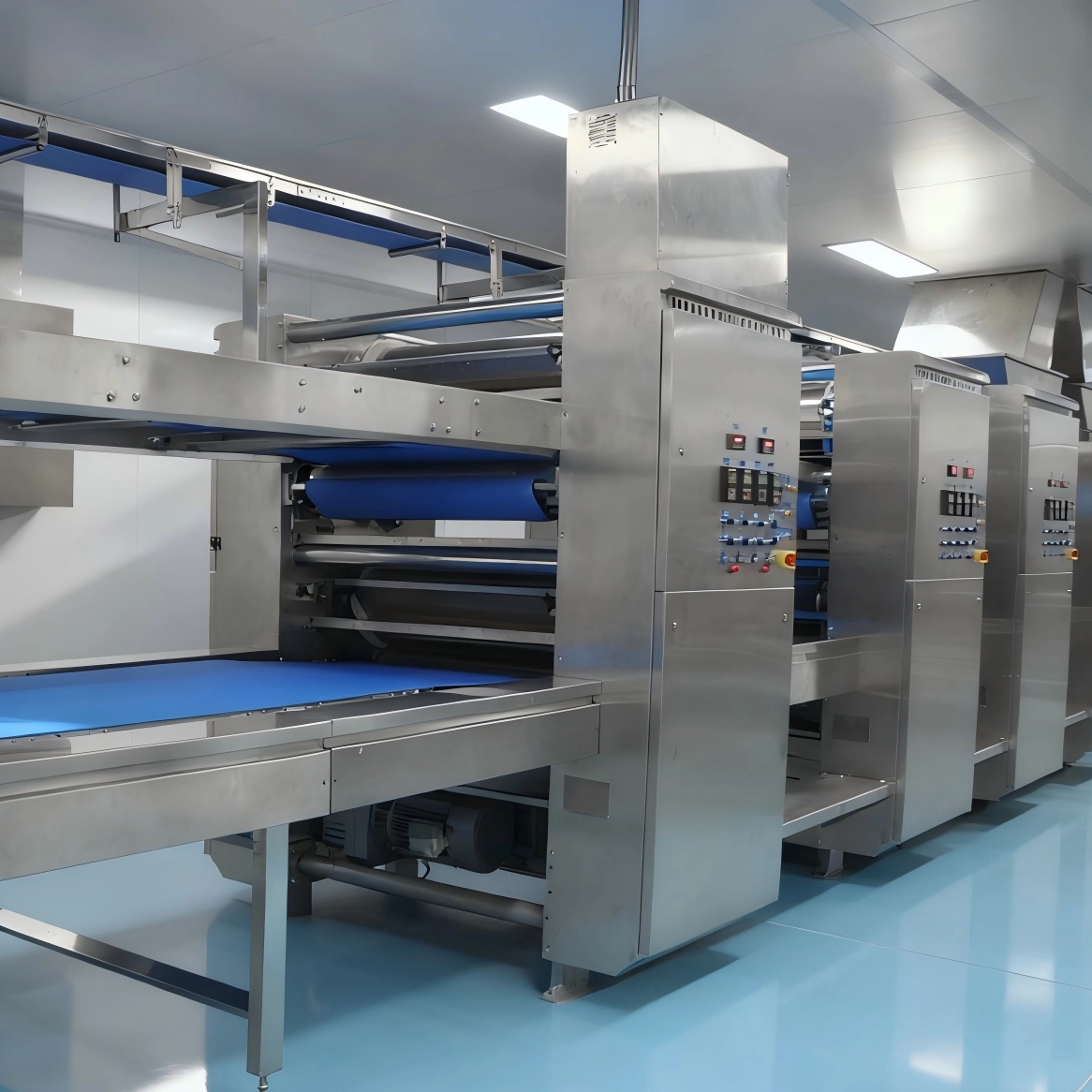
The forming section defines the final product's weight, shape, and structure. Depending on whether you produce hard or soft biscuits, crackers, or filled cookies, lines can include: [py-foodmachine]
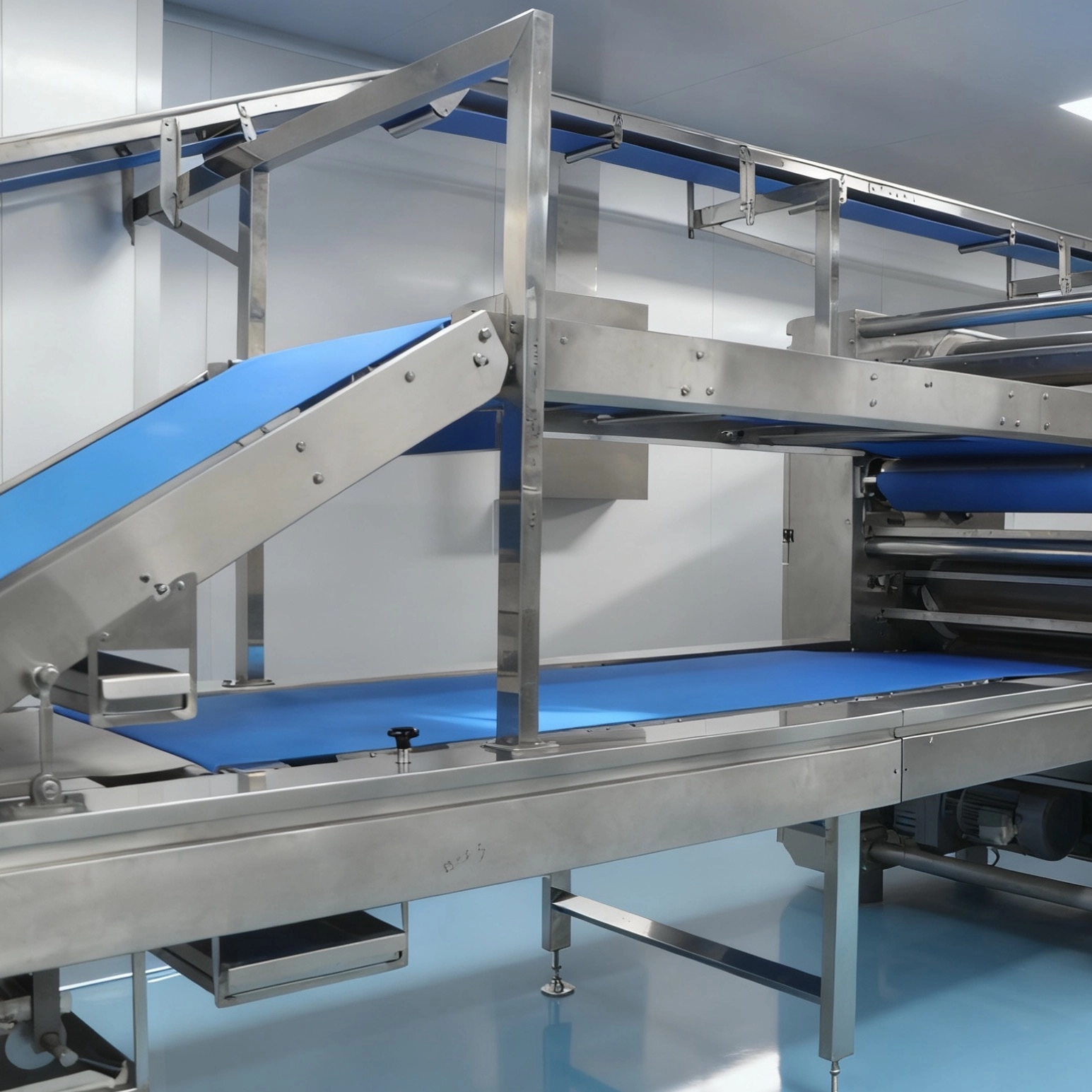
- 3‑roll sheeters to laminate and sheet dough
- Gauge rolls to control sheet thickness
- Rotary cutting systems for hard biscuits and crackers
- Rotary moulders for soft biscuits, cookies, and pet treats
These technologies allow precise control of biscuit dimensions, trim handling, and re‑feed of scrap, which is essential for both yield and consistent baking. [cfabglobal]
The oven is the "heart" of any biscuit production line. Modern tunnel ovens provide multiple heat‑transfer zones—direct gas fired, radiant/convection, and full convection—to fine‑tune color, expansion, and moisture. [cfabglobal]
Key benefits of advanced baking and drying systems include: [cfabglobal]
- Uniform color and texture across the belt width
- Better control of moisture for extended shelf life
- Increased throughput when paired with multi‑pass dryers
For example, some modular systems can reach 250–1,000 kg/hr simply by adjusting the number of oven sections after the sheeting equipment. [py-foodmachine]
Wenva Machine has specialized in automated biscuit production lines for over 40 years, serving manufacturers that export to multiple regions and retail channels. Instead of offering generic bakery equipment, Wenva focuses specifically on high‑yield biscuit and cookie lines tailored to different plant layouts and capacity targets. [wenvamachine]
Our engineering teams study advanced baking technology, then adapt it to robust, easy‑to‑operate machinery that fits the realities of emerging markets and established production hubs. From project design to installation and commissioning, we provide full‑line solutions that bridge local requirements and global standards. [wenvamachine]
Well‑designed automated lines can sustain high hourly throughputs while keeping uniformity across batches. Consistent dough handling, forming, and oven profiles reduce over‑ or under‑baked product and minimize rework. [py-foodmachine]
By automating repetitive steps—such as sheet transfer, cutting, and loading—bakeries can reassign operators to higher‑value quality and maintenance roles. This helps stabilize operations in markets where skilled bakery workers are difficult to recruit and retain. [cfabglobal]
Automated systems lend themselves to clear SOPs, traceable parameters, and easier implementation of quality management systems. Continuous monitoring of critical control points, such as bake time and temperature, supports compliance with customer and regulatory standards. [cfabglobal]
Selecting an automated line is a strategic decision that affects your plant for 10–15 years or more. Rather than focusing on price alone, it is essential to evaluate capacity, layout, technology, and supplier support in combination. [py-foodmachine]
Start with hard numbers on your required output. Industry benchmarks indicate that typical biscuit lines can deliver roughly 100–500 kg/h, with larger modular systems reaching up to 1,000 kg/h for certain snack formats. [py-foodmachine]
Clarify: [py-foodmachine]
- Annual and peak seasonal volumes
- Number of SKUs (shapes, recipes, sizes)
- Future expansion targets over 3–5 years
The broader your product range, the more flexible your forming and baking equipment needs to be. [cfabglobal]
Modern lines can include advanced features such as: [wenvamachine]
- Continuous mixing with automated dosing
- Intelligent temperature and humidity control in ovens
- Automated scrap re‑feed and dough recycling
- Recipe management and data logging for traceability
Balance automation level with your internal capabilities. Over‑specifying features you cannot maintain can be as risky as under‑investing. [py-foodmachine]
Efficient layouts separate mixing, baking, cooling, and packing into logical zones while keeping material and operator flows short and safe. [cfabglobal]
When planning your factory, consider: [py-foodmachine]
- Clear paths between mixing, forming, baking, and cooling
- Space for maintenance access and sanitation
- Proper ventilation and exhaust in baking areas
- Future extensions for additional ovens or packaging lines
A well‑designed layout not only boosts productivity but also supports food safety and ergonomic working conditions. [cfabglobal]
A line is only as strong as the support behind it. Reliable suppliers should provide: [py-foodmachine]
- Pre‑sale consulting on line selection and layout
- On‑site installation and commissioning
- Operator and maintenance training
- Ongoing technical support and spare‑parts availability
For growing bakeries, it is especially valuable to work with partners who can scale systems over time rather than forcing a full replacement when capacity needs increase. [linkedin]
Many successful automation projects follow a phased approach instead of replacing everything at once. This minimizes disruption and lets teams build confidence with new equipment. [linkedin]
1. Audit your current line: Identify bottlenecks, downtime reasons, and quality issues from mixing to packaging. [cfabglobal]
2. Prioritize critical steps: Automate the stages that impact capacity and quality the most (often mixing, forming, or baking). [linkedin]
3. Pilot and stabilize: Run trials, collect performance data, and refine parameters before scaling to full capacity. [linkedin]
4. Train your team: Invest in structured training for operators, maintenance, and quality staff to maximize equipment use. [cfabglobal]
5. Expand automation scope: Once stable, extend automation to upstream ingredient handling and downstream packaging and palletizing. [linkedin]
By treating automation as a continuous improvement program rather than a one‑time purchase, bakeries can unlock long‑term ROI and stay ahead of competitor upgrades. [wenvamachine]
Retailers increasingly demand private‑label and seasonal products, pushing biscuit manufacturers toward more frequent changeovers and smaller batch sizes. This trend favors lines with quick tool‑change features, flexible forming, and recipe management systems that switch parameters at the touch of a screen. [wenvamachine]
Energy‑efficient ovens, heat recovery systems, and reduced scrap handling are becoming non‑negotiable in new projects. Bakeries that lower energy consumption per kilogram of biscuits gain a competitive advantage while supporting corporate sustainability goals. [wenvamachine]
Manufacturers are increasingly embedding sensors and data logging into their lines to monitor performance in real time. This allows maintenance teams to act before failures occur and helps management benchmark productivity across multiple sites. [linkedin]
Use this concise checklist when comparing automated biscuit production lines from different suppliers. [py-foodmachine]
- Defined hourly and annual output targets
- Clear product portfolio (hard, soft, cream‑sandwich, etc.)
- Layout drawings with zoning and future expansion provisions
- Specifications for mixers, sheeters, gauge rolls, moulders, and ovens
- Utility requirements (power, gas, compressed air, ventilation)
- Hygiene and cleaning strategy (CIP options, access points)
- Training and after‑sales service plan
Documenting these elements upfront helps align internal stakeholders and ensures you ask each vendor the same technical questions. [py-foodmachine]
The table below shows a simplified example of how a mid‑capacity biscuit line may be configured for mixed hard/soft biscuit production. [py-foodmachine]
| Line Section | Typical Equipment | Main Function | Notes |
|---|---|---|---|
| Mixing | Continuous mixer with automated dosing (py-foodmachine) | Stable dough quality | Suited for multiple recipes |
| Dough handling | Dough feed conveyor and lamination (py-foodmachine) | Transfer and condition dough | Supports scrap re‑feed |
| Forming | 3‑roll sheeter, gauge rolls, rotary cutter/moulder | Define shape and thickness | Fast product changeovers |
| Baking | Multi‑zone tunnel oven with DGF and convection | Control color, texture, moisture | Modular for capacity upgrades |
| Drying/cooling | Multi‑pass dryer and cooling conveyors (py-foodmachine) | Stabilize moisture and structure | Supports shelf life targets |
| Downstream | Optional sandwiching and packaging interfaces (py-foodmachine) | Prepare for final packing | Integrates with existing packers |
This kind of modular setup allows manufacturers to start at a certain capacity and add oven sections or extra forming modules as demand grows. [py-foodmachine]
With four decades of biscuit‑line specialization, Wenva Machine supports customers from initial concept to final commissioning. Our engineers help you analyze your target output, product mix, and local utilities, then propose a line layout that makes the best use of your available space. [wenvamachine]
Beyond equipment delivery, we provide installation, operator training, and ongoing technical support to help your team run the line confidently and continuously. For manufacturers planning to enter new export markets or upgrade from semi‑automatic to fully automatic lines, this end‑to‑end support significantly reduces risk. [wenvamachine]
If you are planning a new factory or upgrading an existing plant, now is an ideal time to evaluate an automated biscuit production line that can carry your brand for the next decade. [wenvamachine]
1. How long does it take to install an automated biscuit production line?
Installation and commissioning time depends on line complexity and site readiness, but many projects move from equipment arrival to first production within a few weeks when foundations, utilities, and layout are prepared in advance. [linkedin]
2. Can one line handle both hard and soft biscuits?
Yes, with the right combination of sheeting, gauging, and rotary moulding equipment, a single line can produce both sheeted hard biscuits and rotary‑moulded soft biscuits, allowing flexible use of your investment. [py-foodmachine]
3. What kind of maintenance do these lines require?
Automated lines require regular cleaning, lubrication, and preventive checks on critical components such as bearings, belts, and burners, with schedules coordinated around your production plan to avoid unplanned downtime. [linkedin]
4. How do automated lines help with food safety?
Automation standardizes processing conditions, improves traceability, and reduces direct product handling, which together make it easier to comply with food safety audits and customer quality programs. [cfabglobal]
5. Is it possible to start with partial automation and expand later?
Many manufacturers begin by automating high‑impact stages like mixing and baking, then expand to additional forming or packaging automation as demand and internal capabilities grow, using modular equipment designs. [linkedin]
1. Reading Bakery Systems – "Automated Bakery Equipment Solutions." [Link]
2. Wenva Machine – Official Website and Company Information. [Link] [wenvamachine]
3. Wenva Machine – "The Future of Biscuit Production Lines: Trends To Watch." [Link] [wenvamachine]
4. "2026 How to Choose the Best Biscuit Making Production Line?" [Link] [py-foodmachine]
5. CFAB Global – "Baking Better: Strategies to Improve Bakery Production." [Link] [cfabglobal]
6. LinkedIn – "Essential Bakery Automation Equipment: Making it Scalable." [Link] [linkedin]


