
Views: 222 Author: Wenva Machine Publish Time: 2026-05-13 Origin: Site
As a biscuit production line engineer who has worked with automated baking equipment for decades, I've seen cookie maker machines evolve from simple depositors into highly intelligent components of fully automated biscuit lines. Today, choosing the right cookie maker machine is no longer just about shaping dough; it is about integrating experience‑driven design, consistent quality, and scalable automation into your entire biscuit production strategy. [foodsmachine]

A cookie maker machine is a dedicated forming unit that shapes dough into cookies with consistent weight, size, and pattern before baking, and it sits at the heart of a modern biscuit or cookie production line. In a typical layout, dough moves from the mixer to the cookie maker, then into the tunnel oven, through cooling, metal detection, and finally to packaging. For manufacturers, this single machine largely determines your product uniformity, yield, and line efficiency. [biscuitequipments]
From an industrial standpoint, cookie maker machines now range from compact semi‑automatic units for flexible small‑batch production to fully integrated, servo‑driven formers that run 24/7 in high‑capacity plants. [xunlianbaking.en.made-in-china]
In practice, most industrial biscuit plants rely on three main cookie forming technologies, each matching different dough types and product portfolios. [foodsmachine]
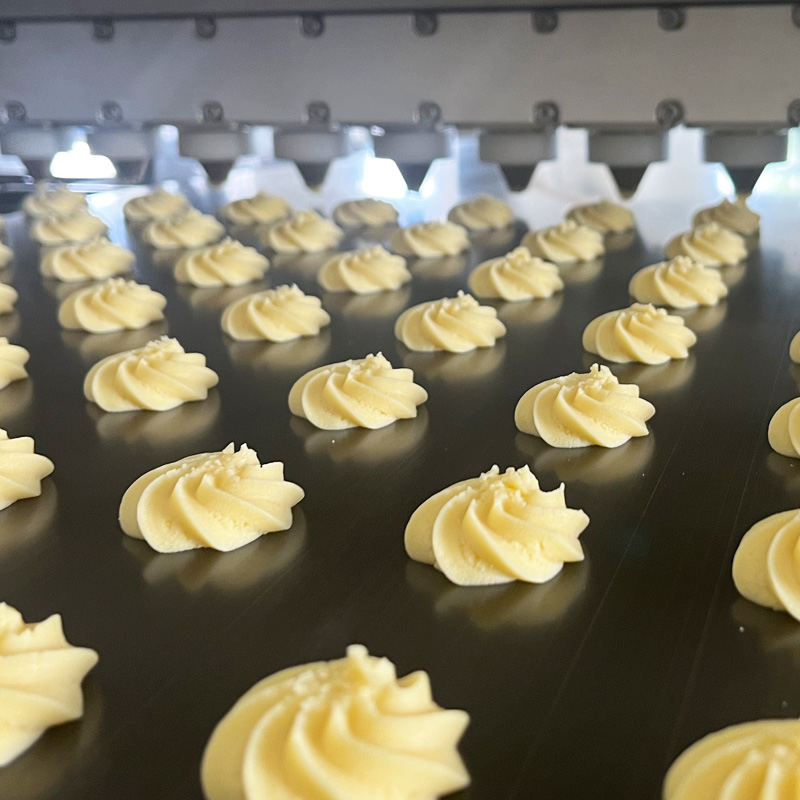
Wire‑cut machines are designed for soft, high‑fat, or sticky doughs such as chocolate chip cookies, oatmeal cookies, or inclusions‑rich formulas. A pump or screw feeds the dough through nozzles, and a moving wire slices each piece onto the baking band, enabling intricate shapes and controlled portion sizes. These machines are ideal when you need high‑speed production without sacrificing uniqueness in cookie appearance. [youtube]
*Typical applications:* soft cookies, chip cookies, two‑color cookies, and filled cookies (when combined with co‑extrusion units). [biscuitequipments]
Rotary moulders are used for low‑moisture, short dough types that need embossed patterns or fine details on the surface. Dough is pressed into a patterned moulding roller, excess is scraped off, and formed pieces are transferred onto the belt in a continuous motion. This technology offers excellent shape stability and repeatability, which is critical for sandwich biscuits or brand‑defining decorative biscuits. [wenva]
For hard biscuits, crackers, and certain cookie formats, sheeting plus rotary cutting remains a robust solution. Dough sheets are rolled to precise thickness, then a rotary cutter tool stamps shapes and trims scrap for recirculation. This setup supports high throughput and tight weight control, making it suitable for large‑scale, multi‑SKU biscuit plants. [wenva668.en.made-in-china]
When I audit or design automated biscuit lines, I focus on a few non‑negotiable features in cookie maker machines because they directly impact yield and product consistency. [wenvamachine]
- Adjustable dough consistency and pressure control: Ensures stable shaping across different recipes and flour qualities. [wenva668.en.made-in-china]
- Flexible size, weight, and shape settings: Servo‑controlled nozzles and programmable recipes allow quick changeovers between SKUs. [foodsmachine]
- Hygienic design and easy cleaning: Tool‑less disassembly and smooth stainless surfaces reduce downtime and contamination risk. [xunlianbaking.en.made-in-china]
- Synchronization with tunnel oven and conveyor speed: Stable transfer from forming to baking avoids deformation and weight variation. [youtube]
- Energy‑efficient drives: Modern lines integrate optimized motors and controls to reduce overall energy consumption per tonne of biscuit. [wenvamachine]
From a UX perspective, intuitive touch‑screen HMIs, recipe libraries, and guided fault diagnostics dramatically reduce operator learning curves and human error. [wenvamachine]
Many earlier articles focus on home‑use cookie maker machines, but industrial biscuit lines have very different priorities. In factories, the decision criteria revolve around capacity, total cost of ownership, and integration into existing production workflows. [archeratr]
Below is a concise comparison to clarify expectations.
Industrial vs Home Cookie Maker Machines
| Aspect | Industrial cookie maker machine | Household cookie maker machine |
|---|---|---|
| Typical capacity | 100–1000 kg/h continuous output | 1–5 kg per batch |
| Operation mode | Fully or semi‑automatic, integrated into line biscuitequipments | Manual or small electric stand‑alone |
| Recipe flexibility | Multiple stored recipes, fast changeovers foodsmachine | Limited dough types and shapes |
| Hygiene & cleaning | CIP‑friendly design, tool‑less parts removal | Basic detachable parts for washing |
| Investment focus | ROI, uptime, spare parts & service support wenvamachine | Convenience, compact size, price |
| Integration | Linked with mixers, ovens, cooling, packaging biscuitequipments | No integration, stand‑alone use |
For manufacturers like Wenva Machine, cookie maker machines are engineered as strategic assets inside a turnkey automated biscuit production solution, not just single appliances. [wenva]
User reviews of cookie maker machines from industrial bakeries highlight a consistent pattern: once properly installed and tuned, these machines deliver reliable, repeatable results with much lower manual labor. Operators frequently mention consistent size and color, reduced waste, and the ability to maintain quality even with less experienced staff. [py-foodmachine]
However, several recurring challenges appear in user commentary: [foodsmachine]
- Machines require regular cleaning to prevent dough buildup and sticking, especially with high‑fat or sticky formulations.
- Some lines need fine‑tuning of temperature and speed settings when new recipes are introduced, or when seasonal humidity changes occur. [scribd]
- If staff are not trained on recipe management and settings, they may struggle to troubleshoot weight drift or shape deformation quickly. [spotlight.evrentan]
In my own commissioning work on biscuit production lines, I've seen that most "machine problems" actually come from inconsistent dough preparation or lack of preventive maintenance rather than design flaws. [wenva]
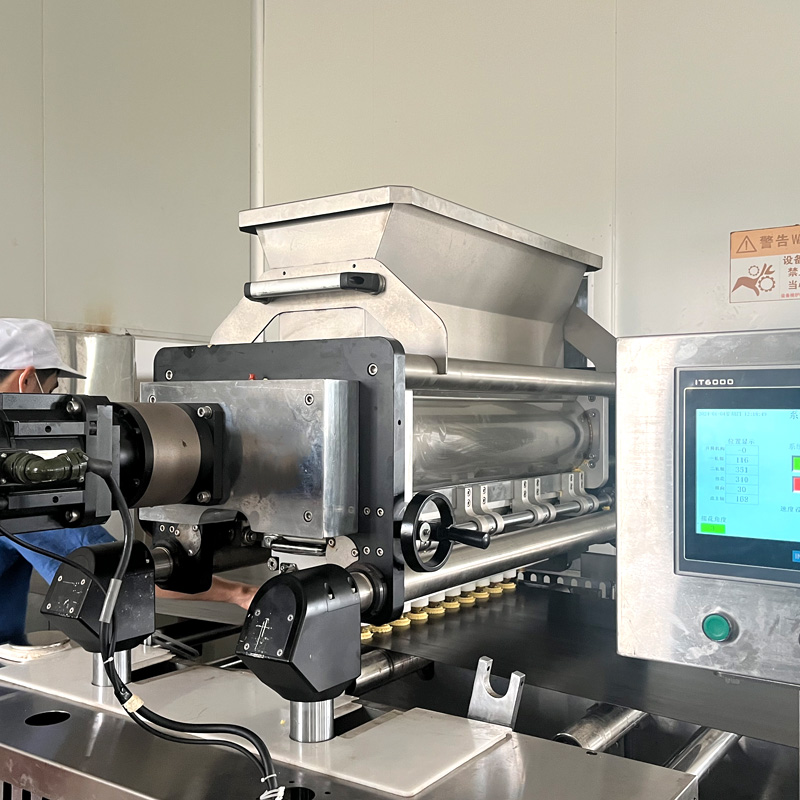
When a plant manager asks me which cookie maker machine to buy, I walk them through a structured, experience‑based checklist. [wenvamachine]
- Define your core SKUs and planned new products for the next 3–5 years: soft cookies, sandwich biscuits, wire‑cut gourmet cookies, etc. [scribd]
- Identify critical attributes: diameter, thickness, weight range, inclusions, pattern or embossing, surface texture. [biscuitequipments]
- Clarify whether you need single‑color, two‑color, or filled cookies, which will determine wire‑cut and co‑extrusion requirements. [elearning.passivehouse]
- Estimate target kg/h capacity and number of production shifts to size the machine properly. [scribd]
- Check available floor space and required line length to integrate the machine between the dough mixer and the tunnel oven. [wenva]
- Consider access paths for sanitation and maintenance so operators can reach key components safely. [wenva668.en.made-in-china]
- Assess the supplier's real industry experience and reference projects in your target market. [wenva668.en.made-in-china]
- Confirm availability of local after‑sales service, spare parts stock, and remote diagnostics options. [facebook]
- Review training plans for your operators, maintenance team, and quality control staff to ensure long‑term stable operation. [ahrefs]
In industrial projects, the cheapest machine often becomes the most expensive once you factor in downtime, waste, and lost opportunities. Look at energy efficiency, unplanned stoppages history, changeover time, and spare parts costs across a multi‑year horizon. [ejurnal.swadharma.ac]
The global biscuit market is increasingly driven by product diversity, energy efficiency, and automation across the entire line. From trade shows and recent projects, several trends stand out in cookie maker machine design and usage: [foodsmachine]
- Higher automation and smart controls: Integration of PLCs, servo drives, and recipe databases allows faster start‑ups and consistent performance between shifts. [youtube]
- Energy‑efficient tunnel ovens and forming‑oven synchronization: Line‑level optimization reduces fuel and electricity consumption without compromising bake quality. [py-foodmachine]
- Flexible forming for short product life cycles: Manufacturers want forming equipment that can support frequent SKU innovations and seasonal limited editions. [foodsmachine]
- Stronger hygiene standards and audit readiness: Food safety regulations push for better wash‑down capability and documentation of maintenance routines. [wenvamachine]
Manufacturers like Wenva Machine emphasize not only standalone equipment but complete automated biscuit production solutions, including dough mixing, forming, baking, cooling, and packaging, backed by experience centers and real running lines for customer trials. [wenva]
Drawing on both user feedback and my own line audits, a few simple disciplines make a big difference to uptime and consistency. [wenva]
- Always stabilize dough temperature and consistency before feeding the machine to avoid weight drift and shape changes. [ejurnal.swadharma.ac]
- Standardize start‑up and shut‑down SOPs, including pre‑checks of belts, scrapers, nozzles, and lubrication points. [wenva668.en.made-in-china]
- Keep a log of recipe settings (speed, stroke length, pressure, wire speed) and link them to specific dough formulations for faster problem‑solving. [spotlight.evrentan]
The original article correctly notes that regular cleaning is essential to prevent dough sticking and equipment issues, and this is even more critical in industrial plants. To keep your machine running smoothly:
1. Unplug or lock out equipment before cleaning or servicing. [wenva668.en.made-in-china]
2. Remove detachable parts such as nozzles, scrapers, and belts according to the manual and wash them with warm, soapy water. [wenva668.en.made-in-china]
3. Avoid submerging components that contain bearings or electrical parts; wipe instead. [xunlianbaking.en.made-in-china]
4. Inspect seals, gaskets, and scrapers regularly and replace them proactively to prevent leakage and contamination. [xunlianbaking.en.made-in-china]
5. Store the machine and spare parts in a dry, well‑ventilated space away from corrosive environments. [wenva668.en.made-in-china]
Well‑planned preventive maintenance schedules significantly extend machine life and keep your biscuit line within specification for weight and appearance. [wenva]
The base chocolate chip cookie formula in the original article can be used as a starting point, but scaling to an automated cookie maker machine requires process alignment, not just ingredient multiplication.
- Maintain the original ratio of flour, fats, sugars, and inclusions, but adjust total batch size for your mixer and cookie maker capacities. [xunlianbaking.en.made-in-china]
- Monitor dough viscosity and temperature after mixing; both strongly affect how the dough behaves in wire‑cut or rotary systems. [scribd]
- Use test runs to fine‑tune forming settings (stroke, cutting wire speed, band speed) until you achieve target weight and shape consistency. [biscuitequipments]
For crunchy versus chewy cookies, operators can adjust oven zones, baking time, and moisture targets, while keeping the forming machine recipe fixed. This separation of responsibilities between forming and baking improves process control and simplifies training. [biscuitequipments]
Choosing a cookie maker machine is easier and safer when you work with a manufacturer that designs the entire automated biscuit production line rather than just a single machine. Companies like Wenva Machine bring decades of experience in biscuit production line design, layout engineering, and end‑to‑end project implementation, from plant planning through installation, commissioning, and staff training. [wenvamachine]
For global customers, this means:
- A solution tailored to your factory layout, oven type, and local energy conditions. [wenvamachine]
- Proven references from hundreds of production lines already in operation. [wenva]
- Direct access to engineers and biscuit technologists who can help you optimize recipes, forming settings, and oven curves. [wenvamachine]
If you are planning a new biscuit factory or upgrading an existing line, investing in the right cookie maker machine can transform your productivity, product consistency, and flexibility for years to come. To explore a turnkey automated biscuit production solution—from design, dough mixing, forming, baking, and cooling to final packaging—reach out to an experienced manufacturer that has been refining biscuit line technology for decades. [foodsmachine]
You can request a customized line design, visit a biscuit production experience center, or arrange live demonstrations to see how a modern cookie maker machine will perform with your own recipes and capacity targets. [wenvamachine]
1. What capacity range should I look for in an industrial cookie maker machine?
Most automated cookie makers for industrial biscuit lines operate between roughly 100–1000 kg/h, depending on product type and oven length. Your ideal range depends on your market demand, number of shifts, and expansion plans. [scribd]
2. Can one cookie maker machine handle both soft cookies and hard biscuits?
Some flexible lines can cover multiple products through different forming technologies, but in many cases you will use wire‑cut for soft cookies and rotary or sheeting for hard biscuits. A line‑level design study is recommended to avoid compromises in quality or efficiency. [biscuitequipments]
3. How often should I clean an industrial cookie maker machine?
Light cleaning is typically done after every production run, with deeper sanitation according to your HACCP plan and local regulations. Sticky or high‑fat doughs may require more frequent cleaning of nozzles and belts to prevent buildup. [wenva668.en.made-in-china]
4. What information should I share with the equipment supplier when requesting a quotation?
Provide your target products, expected capacity (kg/h), available factory layout, energy options (gas, electric, hybrid), and any hygiene or certification standards you must meet. The more detailed your brief, the more accurately they can configure the forming equipment and full line. [wenva]
5. How long does it take to install and commission a new automated biscuit line with a cookie maker machine?
Lead times vary by project size and customization, but full lines typically require several months from order to start‑up, including manufacturing, shipment, installation, and commissioning. On‑site training and initial recipe optimization are usually part of the commissioning phase. [wenvamachine]
1. Golden Bake. "A Cookie Maker Machine Manufacturers: A Detailed Review." [https://www.foodsmachine.net/a-cookie-maker-machine-manufacturers-a-detailed-review.html] [foodsmachine]
2. Golden Bake. "Applications and Recipes – Cookie Maker Machines." [https://www.foodsmachine.net/a-cookie-maker-machine-a-detailed-review.html]
3. Golden Bake. "Cookie Producing Line | Biscuit Machinery." [http://biscuitequipments.com/1-9-cookies.html] [biscuitequipments]
4. Golden Bake. "Single/Two‑Color Cookie Production Line." YouTube. [https://www.youtube.com/watch?v=1j1zhUAE1C4] [youtube]
5. WENVA MACHINE Official Website. "Production Line Series." [http://www.wenva.net/pro/Production_line_series/] [wenva]
6. WENVA MACHINE. "About Us." [http://www.wenva.net/about/] [wenva]
7. Yangjiang Wenva Yuandong Industry Co., Ltd. Company Profile. Made‑in‑China. [https://wenva668.en.made-in-china.com] [wenva668.en.made-in-china]
8. Google. "Creating Helpful, Reliable, People‑First Content." [https://developers.google.com/search/docs/fundamentals/creating-helpful-content] [developers.google]
9. Ahrefs. "E‑E‑A‑T: How to Build Trust and Boost Web & AI Visibility." [https://ahrefs.com/blog/eeat-seo/] [ahrefs]
10. Innovation Visual. "Google's EEAT Guidelines – How To Remain Compliant." [https://www.innovationvisual.com/knowledge-hub/resources/google-eeat-guidelines-how-to-remain-compliant] [innovationvisual]
11. Golden Bake. "The Complete Guide to Automating Your Biscuit Production Line." [https://www.foodsmachine.net/a-news-the-complete-guide-to-automating-your-biscuit-production-line.html] [foodsmachine]
12. Manufacturing SEO Strategy Article. "Manufacturing SEO: 10 Proven Strategies for Top Rankings." [https://bigmarketing.com/manufacturing-seo/] [bigmarketing]
13. EUMETSAT Training Portal. "The Ultimate Solution for Cookie and Biscuit Production: Golden Bake's Wire Cut Cookie Machines." [elearning.passivehouse]
14. Biscuit Production Automation Tips PDF. "Biscuit Production Facility." Scribd. [scribd]


