
Views: 222 Author: Wenva Machine Publish Time: 2026-06-22 Origin: Site
Content Menu
● What Is an Automated Biscuit Production Line?
● Why Automated Biscuit Lines Matter for Your Business
● Inside the Line: Core Stages of Biscuit Production
>> Stacking, Counting, and Packaging
● Key Components of an Automated Biscuit Line
● How Automation and Industry 4.0 Are Changing Biscuit Production
● Expert Perspective: What 40 Years in Biscuit Lines Teaches You
● Practical Checklist: Choosing the Right Biscuit Production Line
● Why Manufacturers Choose Wenva Machine
● When to Upgrade or Replace Your Biscuit Line
● Call to Action: Design Your Next High‑Yield Biscuit Line
● Frequently Asked Questions (FAQ)
Automated biscuit production lines are no longer just about output—they are strategic assets that shape product quality, energy efficiency, and long‑term profitability for modern bakeries worldwide. Drawing on Wenva Machine's 40 years of engineering experience in automated biscuit lines, this guide walks you through how a biscuit production line really works, why it matters to your business, and how to choose and optimize the right solution for your factory layout and growth plans. [wenvamachine]

An automated biscuit production line is a fully integrated system that transforms raw ingredients into packaged biscuits through a connected sequence of machines—from dough mixing, sheeting, and forming, to baking, cooling, stacking, and packaging. Instead of handling each step manually, the line runs as one coordinated process, controlled by programmable logic controllers (PLCs) and sensors to keep quality and throughput stable. [iba-tradefair]
For manufacturers, this means the production line becomes the "spine" of the factory: it defines capacity, product range, energy consumption, labor needs, and even how quickly you can respond to new market trends such as low‑sugar or gluten‑free biscuits. A well‑designed line is not just a machine purchase—it is a long‑term operations strategy. [annali.iss]
Modern biscuit manufacturers face three pressures at the same time: cost, consistency, and flexibility. An automated biscuit line directly addresses all three. [foodsmachine]
Key advantages include:
- Consistent quality at scale – Automated dosing, forming, and baking keep texture, shape, and color within tight tolerances across thousands of biscuits per hour. This consistency is crucial when supplying retail chains or export markets with strict specifications. [alibaba]
- High throughput with fewer bottlenecks – Interlinked modules (mixers, sheeters, ovens, coolers, stackers, packers) are balanced to run continuously, minimizing idle time between processes. [wenvamachine]
- Lower unit cost – Automation reduces manual handling, lowers wastage, and improves energy utilization, which all contribute to a lower cost per kilogram of finished biscuits. [foodsmachine]
- Scalability and export readiness – Lines designed to international standards (for example with CE and ISO certifications) support clean documentation and easier approval in regulated export markets. [wenvamachine]
For Wenva Machine, the design philosophy is simple: a line that can "run stably for 10 years" while supporting recipe and format changes with minimal downtime. That is the foundation for predictable ROI. [wenva668.en.made-in-china]
From an engineering standpoint, every automated biscuit production line follows a similar logical flow, even though the configuration is customized to each plant. [iba-tradefair]
In industrial production, dough preparation is about precision and repeatability, not just mixing ingredients. [wenvamachine]
Typical features of automated dough systems include:
- Automatic flour feeding and weighing to avoid variation between batches. [wenvamachine]
- Horizontal or vertical dough mixers chosen based on dough type (short dough vs. hard dough). [wenvamachine]
- Recipe programs that standardize mixing time, speed, and temperature for each product. [iba-tradefair]
The result is a dough with predictable rheology, which is essential for stable sheeting, moulding, and baking behavior. [wenvamachine]
For crackers and layered biscuits, dough goes through laminators and sheeters to build controlled layers and reach a uniform thickness. [wenvamachine]
A typical setup includes:
- Multi‑roll sheeters and reduction stations to gradually reduce thickness without stressing the dough. [wenvamachine]
- Scrap return conveyors to re‑feed edge trims without increasing waste. [wenvamachine]
Uniform sheeting is what makes baked crackers "snap" instead of crumble and ensures that every biscuit in the pack has the same bite. [iba-tradefair]
Next, the dough sheet is transformed into recognizable biscuit shapes using rotary moulders, cutting rollers, or wire‑cut systems, depending on the product family. [wenvamachine]
- Rotary moulders are common for shaped and embossed biscuits.
- Wire‑cut cookie machines handle high‑fat or soft doughs that do not sheet well. [wenvamachine]
- Interchangeable mold inserts or modular rollers let manufacturers switch shapes faster and reduce downtime for seasonal products. [wenvamachine]
Here, precision in forming directly affects weight control, bake uniformity, and overall line efficiency.
The formed dough pieces travel through industrial tunnel ovens, which can be electric, gas‑fired, or hybrid. [wenvamachine]
Key parameters that engineers focus on include:
- Temperature profiles and baking zones – Multi‑zone designs allow you to manage oven spring, moisture removal, and color development step by step. [wenvamachine]
- Heat technology – Direct gas firing vs. indirect heat exchange vs. hybrid designs each deliver different texture and energy profiles. [wenvamachine]
- Exhaust and heat recovery – Modern lines increasingly capture waste heat to reduce energy consumption and improve sustainability. [wenvamachine]
Baking is where the final structure of the biscuit—porosity, moisture, and crunch—is locked in. [wenvamachine]
After baking, biscuits often pass through oil spraying or sprinkling units. [wenvamachine]
- Fine oil sprays enhance gloss, mouthfeel, and flavor while helping toppings adhere. [wenvamachine]
- Sugar, salt, seeds, or spices can be sprinkled with controlled dosing systems. [wenvamachine]
Advanced spray systems use electrostatic nozzles and precise flow control to reduce oil wastage and keep the line cleaner. [wenvamachine]
Biscuits must be cooled in a controlled way to reach a temperature and moisture condition suitable for packaging. [wenvamachine]
- Multi‑tier cooling conveyors save floor space and ensure sufficient retention time. [wenvamachine]
- Controlled airflow prevents condensation and preserves crispiness ahead of packing. [iba-tradefair]
Poor cooling design is a hidden cause of broken biscuits, short shelf life, and packaging failures.
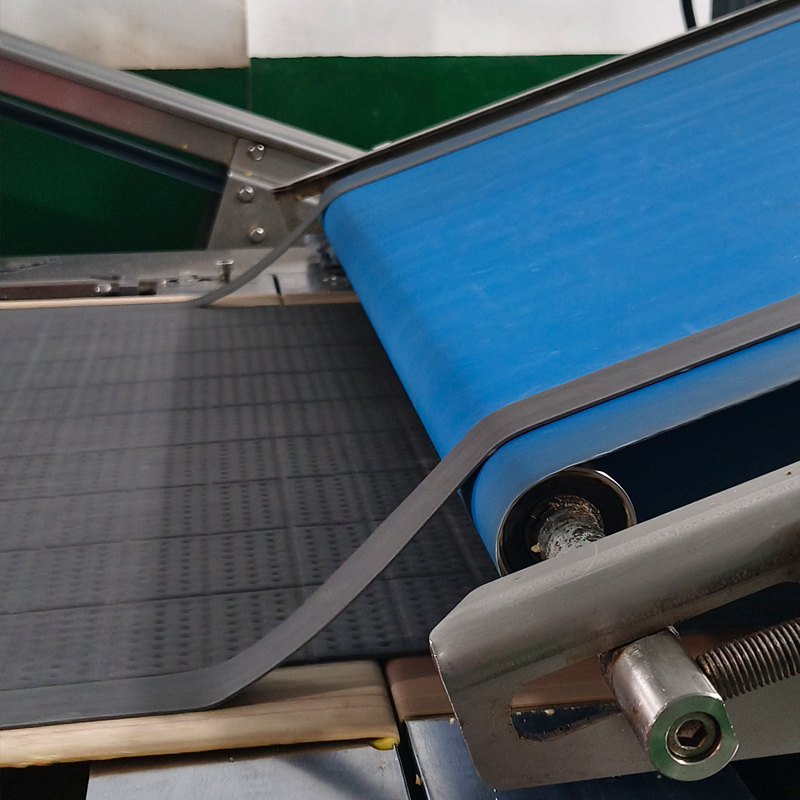
In the final stage, biscuits are stacked, counted, and automatically fed into packaging machines. [wenvamachine]
- Intelligent stackers align biscuits and reject damaged or misaligned pieces in real time. [wenvamachine]
- Feeders synchronize with primary packaging (flow‑wrap, trays, pouches) and secondary packaging (cartons, cases). [wenvamachine]
Well‑integrated packaging systems are critical for meeting retail and export requirements around hygiene, pack weight tolerance, and presentation. [iba-tradefair]
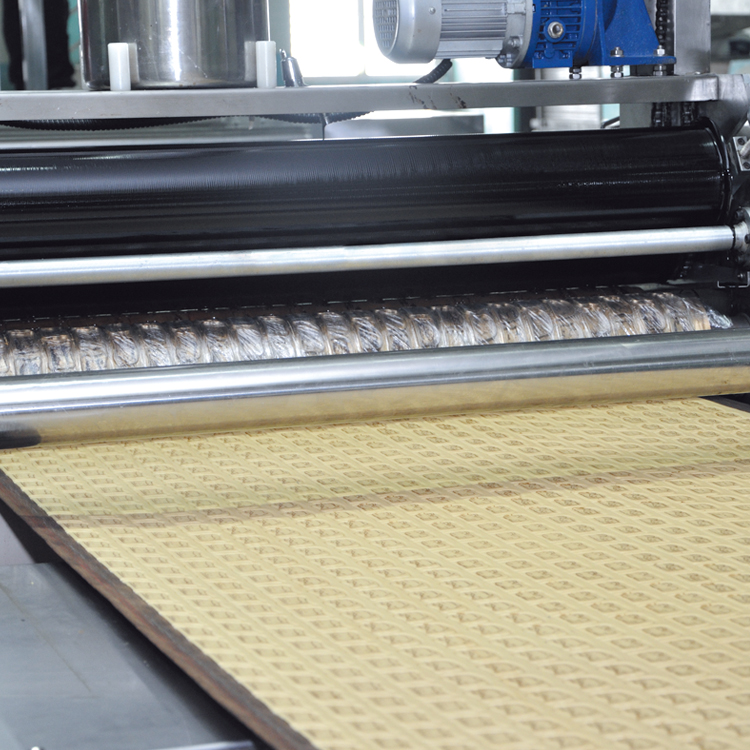
Below is a simplified view of core equipment you would expect in a modern line:
| Process Stage | Typical Equipment | Role in the Line |
|---|---|---|
| Ingredient handling | Automatic flour feeding & weighing system | Precise dosing, consistent batches. (wenvamachine) |
| Mixing | Horizontal/vertical dough mixers | Develop dough structure. (wenvamachine) |
| Sheeting/lamination | Dough sheeters, laminators | Control thickness and layers. (wenvamachine) |
| Forming | Rotary moulders, cookie makers, moulds | Define shape, weight, embossing. (wenvamachine) |
| Baking | Electric/gas/hybrid tunnel ovens | Develop texture, color, flavor. (wenvamachine) |
| Post‑bake treatment | Oil sprayer, sugar/salt sprinklers | Enhance gloss and taste. (wenvamachine) |
| Cooling | Multi‑tier cooling conveyors | Stabilize biscuits before packing. (wenvamachine) |
| End‑of‑line | Stackers, turning units, pack feeders | Prepare for packaging, reduce breakage. (wenvamachine) |
Wenva Machine designs and manufactures all these modules as part of integrated automated biscuit production lines, which helps ensure mechanical compatibility and simpler commissioning. [alibaba]
The biscuit sector is rapidly adopting Industry 4.0 technologies—not as buzzwords, but as practical tools for uptime, quality, and energy control. [annali.iss]
Newer lines now feature:
- Predictive maintenance – Sensors monitor motor loads, temperatures, and vibration to flag potential issues before they stop the line. [annali.iss]
- Real‑time OEE dashboards – Operators can see availability, performance, and quality metrics in one view and react quickly. [wenvamachine]
- Energy and exhaust management – Heat recovery units and smart oven controls reduce fuel consumption and support sustainability targets. [wenvamachine]
These capabilities shift biscuit manufacturing from reactive troubleshooting to data‑driven optimization, which is especially important for multi‑line plants serving multiple brands and SKUs. [annali.iss]
From Wenva Machine's experience installing nearly 300 production lines across climates from tropical Southeast Asia to temperate regions, several practical lessons stand out. [facebook]
1. Layout is as critical as equipment.
A high‑spec oven cannot compensate for a poor factory layout. Careful planning of line length, people flow, and raw‑material logistics often yields more uptime than simply buying bigger machinery. [alibaba]
2. Choose flexibility where it really matters.
For many factories, interchangeable molds, modular forming units, and quick‑change conveyors provide a better ROI than adding a completely separate line for every new biscuit format. [wenvamachine]
3. Invest early in operator training.
Lines designed for "10‑year stability" only deliver on that promise if operators understand recipe profiles, startup and shutdown sequences, and preventive maintenance routines. [foodsmachine]
4. Think in terms of lifecycle cost, not purchase price.
Energy use, spare parts availability, local service support, and changeover time often outweigh the initial equipment cost after just a few years of operation. [foodsmachine]
When evaluating a new automated biscuit production line, use a structured approach. Below is a practical, expert‑level checklist you can apply during vendor discussions and factory planning.
Technical and Product Fit
1. Define your core product families (e.g., soft biscuits, hard crackers, sandwich biscuits, filled cookies) and required capacity per shift. [iba-tradefair]
2. Check that the line can handle your dough types (short, hard, alkaline, gluten‑free) without compromising texture or color. [annali.iss]
3. Confirm oven type and zoning are designed for your target products and future expansion. [wenvamachine]
Factory Layout and Utilities
4. Map your available floor space and ceiling height, then simulate line layout and operator paths with the vendor. [wenvamachine]
5. Verify gas, power, and ventilation requirements, especially for multi‑zone or hybrid tunnel ovens. [wenvamachine]
6. Plan for cooling and packaging areas that maintain hygiene and climate control suitable for your market. [iba-tradefair]
Automation, Data, and Maintenance
7. Ask how the line integrates with your existing PLC/SCADA or MES systems and what data points are available (temperature, speed, rejects, energy). [annali.iss]
8. Review preventive maintenance schedules and confirm spare parts availability in your region. [facebook]
9. Evaluate training programs and remote support options to ensure fast problem diagnosis. [foodsmachine]
Compliance and Certification
10. Confirm that equipment meets required certifications (such as CE, food‑grade materials, safety guards) for your current and target markets. [wenva668.en.made-in-china]
11. Check documentation and traceability features that support audits from large retailers or regulatory bodies. [wenvamachine]
Approaching your investment with this checklist helps ensure you are buying a long‑term solution, not just a machine set. [foodsmachine]
As a biscuit machinery manufacturer with 40 years dedicated to automated biscuit production lines, Wenva Machine has become a preferred partner for many factories in China and worldwide. [wenva668.en.made-in-china]
From a buyer's perspective, several factors stand out:
- Deep market validation – Over 70% of biscuit enterprises in Fujian and Guangdong provinces rely on Wenva equipment, and the company has installed nearly 300 production lines globally, expanding at roughly 35 new lines per year. [facebook]
- Integrated production base – A 30,000㎡ modern facility equipped with laser cutting (precision ±0.05 mm), CNC bending (angle error ≤1°), and strict WMS‑managed warehousing ensures stable quality and on‑time delivery. [wenvamachine]
- End‑to‑end custom solutions – Wenva supports customers from formula adaptation and trial runs in its Biscuit Production Line Experience Center, through line design, manufacturing, installation, and commissioning. [alibaba]
- Certified quality and innovation – Multiple patents in mechanical design and automation, plus CE and ISO certifications, reinforce the company's commitment to safety, performance, and continuous R&D. [wenvamachine]
For manufacturers that need a single partner capable of engineering, building, and supporting complete biscuit production ecosystems, Wenva's combination of experience, in‑house capacity, and global service network is a clear differentiator. [wenva668.en.made-in-china]
Many factories run older, semi‑automatic lines that still work—but quietly reduce competitiveness. Common signs it may be time to upgrade include: [foodsmachine]
- Frequent unplanned downtime and rising maintenance costs.
- Difficulty meeting new product requirements (for example, healthier recipes, special shapes, or export‑grade packaging).
- High energy consumption compared to modern benchmarks.
- Inconsistent product quality across shifts or seasons.
Moving to a modern automated biscuit production line with optimized ovens, cooling, and end‑of‑line automation can quickly improve overall equipment effectiveness (OEE), reduce waste, and support higher‑margin product launches. [foodsmachine]
If you are planning a new biscuit factory or upgrading an existing plant, the fastest way to move forward is to review your requirements with an experienced engineering team that has seen hundreds of real‑world layouts and products. [alibaba]
Wenva Machine can help you:
- Evaluate your current line capacity, bottlenecks, and energy use.
- Design a customized automated biscuit production line that fits your plant layout and product roadmap.
- Implement, train, and support your team so the line runs stably for years, not just months. [facebook]
Contact Wenva Machine's engineering team to discuss your project and see how a carefully designed automated biscuit production line can become your next competitive advantage. [alibaba]
1. What is an automated biscuit production line?
An automated biscuit production line is a series of interconnected machines that continuously transform raw ingredients into finished, packaged biscuits with minimal manual intervention. [alibaba]
2. Which biscuits can be produced on one line?
Depending on the configuration, a single line can produce shortbread, hard biscuits, crackers, sandwich biscuits, and specialty cookies, using interchangeable forming tools and recipe‑specific baking profiles. [wenvamachine]
3. How much space do I need for a complete biscuit line?
Space requirements depend on capacity and oven length, but complete lines typically occupy a long, linear footprint that must also allow for operator movement, cooling, and packaging zones; Wenva engineers tailor layouts to each factory. [alibaba]
4. How long does installation and commissioning take?
Project duration varies by scale, but a full line installation typically includes equipment delivery, mechanical and electrical installation, test runs, recipe tuning, and operator training, all scheduled to minimize disruption to existing production. [facebook]
5. How can I reduce energy consumption on my biscuit line?
Upgrading to modern tunnel ovens with multi‑zone controls, exhaust heat recovery, and optimized insulation, combined with smart control of idle times and speeds, can significantly cut fuel usage without compromising product quality. [foodsmachine]
1. New Era Machines. “A Complete Guide To Biscuit Manufacturing Machines Lines: How They Work And How They Matter?” https://www.neweramachines.com/a-complete-guide-to-biscuit-manufacturing-machines-lines-how-they-work-and-how-they-matter/
2. Wenva Machine – Biscuit Machinery Manufacturer (Official Website). https://www.wenvamachine.com
3. IBA. “Biscuit Making Machine: The Complete FAQ Guide.” https://www.iba-tradefair.com/en/c/biscuit-making-machine-the-complete-faq-guide.62755
4. Alibaba. “Wenva biscuit production line.” https://www.alibaba.com/showroom/wenva-biscuit-production-line.html
5. Foodsmachine. “The Importance of Automation in Biscuit Production Line.” https://www.foodsmachine.net/a-news-the-importance-of-automation-in-biscuit-production-line.html
6. Made‑in‑China. “Yangjiang Wenva Yuandong Industry Co., Ltd.” https://wenva668.en.made-in-china.com
7. Wenva Machine. “A Cookie Maker Machine: An Expert Review for Modern Automated Biscuit Production.” https://www.wenvamachine.com/a-cookie-maker-machine-an-expert-review-for-modern-automated-biscuit-production.html
8. Wenva Machine. “The Future of Biscuit Production Lines: Trends To Watch.” https://www.wenvamachine.com/the-future-of-biscuit-production-lines-trends-to-watch.html
9. “Emerging Trends in Biscuit Production Technology.” https://annali.iss.it
10. Facebook – Yangjiang Wenva Yuandong Industry Co., Ltd. https://www.facebook.com/WENVAMACHINE/


