
Views: 222 Author: Wenva Machine Publish Time: 2026-06-25 Origin: Site
Content Menu
● What This Article Will Cover
● Batter vs. Dough: The Technical Foundation
● Key Differences That Matter In Automation
>> 1. Flow Behavior and Handling
>> 2. Shaping and Final Product Geometry
● How Batter and Dough Choices Shape Your Biscuit Line
>> Soft Dough / Batter-Like Biscuit Lines
● From Artisan Know‑How To Automated Control
● Industry Trends Affecting Batter and Dough Management
>> Trend 1: Higher Automation and Vertical Integration
>> Trend 2: Health‑Focused and Customized Products
>> Trend 3: Energy Efficiency and Sustainability
● Practical Steps To Optimize Batter and Dough On Your Line
● Example: Hard Dough vs Soft Dough Biscuit Line Configuration
● How Wenva Machine Designs Lines Around Batter and Dough
● When Should You Upgrade To An Automated Biscuit Production Line?
● Actionable Checklist Before You Talk To A Supplier
● Call To Action: Plan Your Next High‑Yield Biscuit Line
● FAQ
As a bakery engineer who has spent years inside biscuit plants, I can tell you that truly consistent products start long before the oven – they start with how you manage batter and dough on your line. Understanding these two foundations of baking is not just a "theory" topic; it directly affects texture, yield, downtime, and your return on investment in an automated biscuit production line. [wenvamachine]
In this guide, I will walk you through the real-world differences between batter and dough, how they behave on industrial equipment, and how to choose and configure an automated biscuit production line to handle both soft and hard biscuit formulations reliably. Drawing on 40 years of biscuit line engineering experience at Wenva Machine, I will also share practical frameworks, line design tips, and QA checkpoints you can apply immediately to your own factory. [wenvamachine]
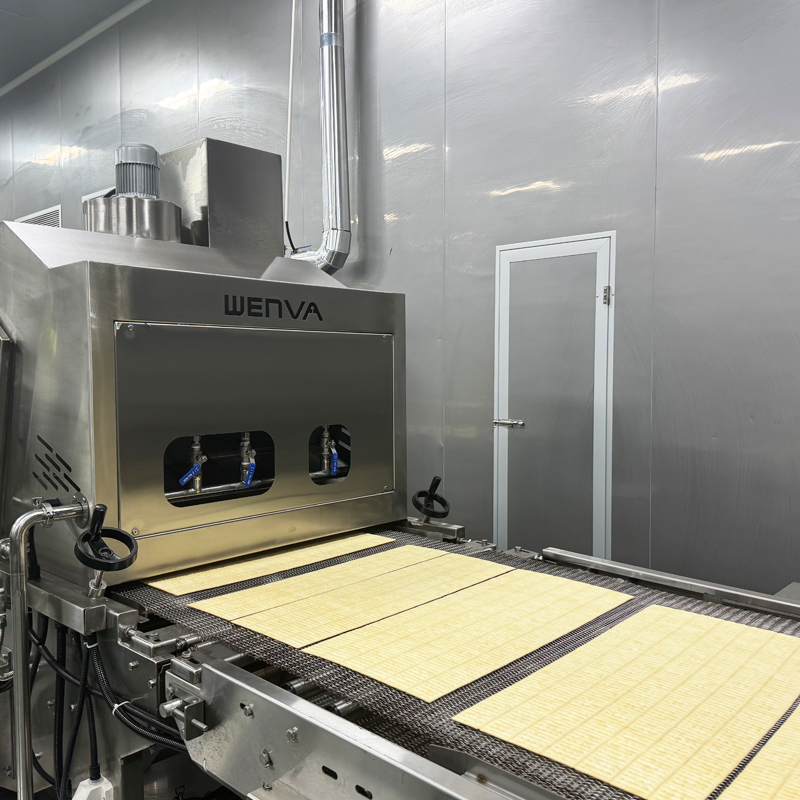
From a production standpoint, the most important difference between batter and dough is consistency – in other words, the ratio of liquids to flour and how that mixture behaves under mechanical stress. [foodandwine]
- Batter is a thin, pourable or scoopable mixture with a higher liquid-to-flour ratio. It flows and takes its final shape from pans, molds, or depositors. [neweramachines]
- Dough is thick, kneadable, and shape-retaining, with more flour than liquid. It holds shape after forming and can be laminated, sheeted, or molded. [foodandwine]
In classic baking, batter tends to be used for cakes, pancakes, waffles, and some cookies, while dough is used for bread, pizza, and many rolled or cut cookies. In biscuit manufacturing, you typically work with two broad families: soft dough (more batter-like behavior) and hard dough (more traditional dough behavior). [thespruceeats]
For process engineers, the question is: *Can the mixture flow, or must we mechanically shape it?*
- Batter:
- Flows under gravity or low mechanical force. [neweramachines]
- Ideal for depositors, injectors, and continuous mixers with pump-fed systems. [alibaba]
- Sensitive to over-mixing and aeration – too much shear changes volume and texture. [foodandwine]
- Dough:
- Resists flow, requires mechanical work to knead, sheet, or cut. [neweramachines]
- Needs robust mixers, laminators, rollers, and cutters on the line. [wenva668.en.made-in-china]
- Gluten development and mechanical work strongly affect bite and snap. [thespruceeats]
In an automated biscuit production line, these flow properties dictate everything from your mixing system to the choice of forming modules and conveyor surface materials. [py-foodmachine]
Because batter and dough behave differently, the way you set up forming equipment changes dramatically. [foodandwine]
- Batter-based products rely on:
- Pans, molds, or depositing heads to define shape. [neweramachines]
- Precise volumetric control for weight accuracy and consistent thickness. [neweramachines]
- Dough-based biscuits rely on:
- Rotary molding, wire-cut, or sheeting-and-cutting units. [alibaba]
- Mechanical tolerance control (roller gaps, cutter depth) to maintain weight and shape. [wenva668.en.made-in-china]
In practice, a hard biscuit line that uses sheet-and-cut technology will have very different upstream design from a soft biscuit line that uses a wire-cut or depositing system. [py-foodmachine]
Soft dough or batter-like formulations are common in cookies and certain sandwich biscuits with a tender bite. On an automated line, they typically require: [foodandwine]
- High-precision mixers that avoid overworking and maintain consistent viscosity. [alibaba]
- Depositors or wire-cut machines for portioning instead of full sheeting. [alibaba]
- Ovens configured for controlled spread, browning, and moisture loss. [aocno]
Because these mixtures respond quickly to small changes in water, fat, or mixing time, process control and recipe standardization become critical to prevent differences in spread and thickness. [foodandwine]
Hard dough formulations are common for crackers, Marie biscuits, and many low-moisture products with a crisp snap. A typical hard dough automated biscuit production line includes: [loyal-machine]
- Robust dough mixers capable of large batch sizes and controlled gluten development. [alibaba]
- Sheeters and laminators to create layered structure and uniform thickness. [loyal-machine]
- Rotary cutters for shapes and patterns, integrated with scrap return systems. [wenva668.en.made-in-china]
- Tunnel ovens optimized for even bake and moisture distribution. [wenvamachine]
Here, dough temperature, resting time, and laminating ratio all have clear influence on texture and breakage rates in packaging. [loyal-machine]
In a small bakery, a skilled baker can "feel" whether batter or dough is right. In an automated plant, you must convert that intuition into measurable parameters and machine settings. [py-foodmachine]
A practical framework used by many industrial bakeries includes:
1. Define target rheology
Set acceptable ranges for viscosity (for batter) or dough stiffness based on lab tests and pilot batches. [neweramachines]
2. Lock down recipe tolerances
Specify tight limits for flour moisture, water addition, fat type, and mixing time. [py-foodmachine]
3. Translate to machine parameters
Connect those tolerances to mixer speed, mixing time, dough resting time, sheeter gap, and oven profile. [py-foodmachine]
4. Monitor in real time
Use inline sensors, sample checks, and line-side QA to catch deviations early. [aocno]
With 40 years in automated biscuit lines, Wenva Machine has seen that plants with clear, quantified targets for batter and dough behavior experience fewer unplanned stops and more consistent output across shifts and operators. [wenvamachine]
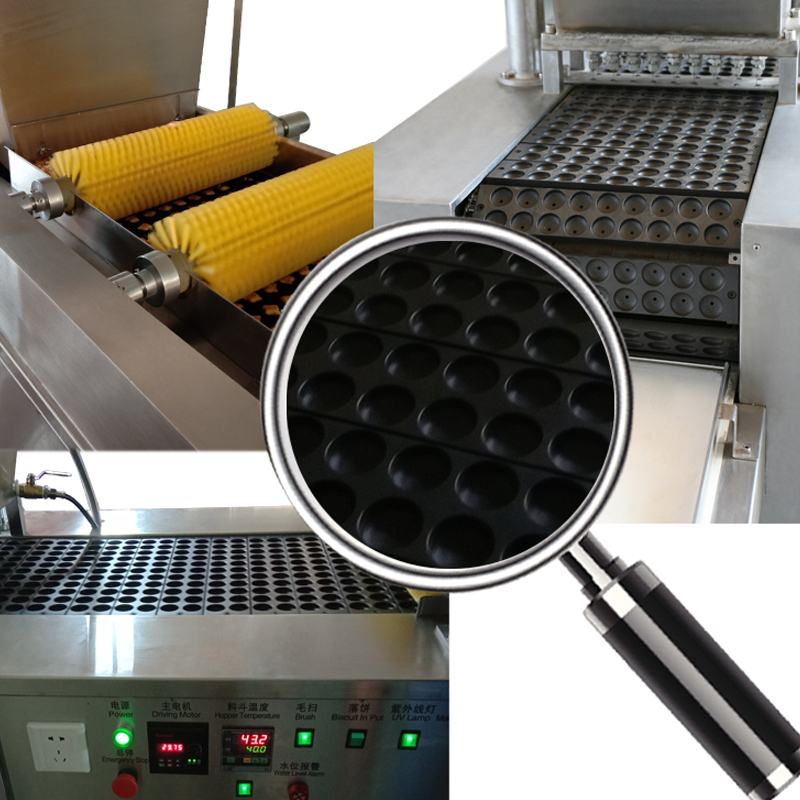
Modern biscuit factories increasingly aim for vertical integration from ingredient handling through mixing, forming, baking, and packaging in one connected line. This means your batter and dough decisions have to be compatible with: [wenvamachine]
- Automated ingredient dosing and pre-mixing. [aocno]
- Connected control systems that share data across mixers, ovens, and packaging machines. [wenvamachine]
- Predictive maintenance and uptime monitoring on critical units like mixers and sheeters. [aocno]
For both soft and hard dough biscuits, a fully integrated line lets you stabilize product quality and reduce manual interventions that often introduce inconsistency. [wenvamachine]
Demand for reduced sugar, higher fiber, and clean-label biscuits is reshaping formulations – and with them, batter and dough behavior. Health-focused recipes often: [aocno]
- Replace part of the flour with whole grains or fibers, changing water absorption. [aocno]
- Reduce fat or sugar, which can stiffen doughs or thin batters. [aocno]
To handle these changes at scale, bakery engineers are re-optimizing water ratios, mixing steps, and forming equipment to keep lines efficient while delivering new product profiles. [wenvamachine]
Ovens and mixers are significant energy consumers, so energy-efficient configurations are now a competitive advantage. Well‑controlled batter and dough properties allow: [wenvamachine]
- Shorter bake times without compromising texture. [wenvamachine]
- Reduced scrap and fewer re-bakes due to off-spec moisture or spread. [alibaba]
Wenva Machine's newer biscuit production lines are designed to balance product quality with energy-saving oven profiles and optimized conveying paths. [wenvamachine]
If you are upgrading or planning an automated biscuit production line, here is a simplified workflow many of our industrial clients follow. [py-foodmachine]
1. Clarify product portfolio
Decide what percentage of your volume will be soft dough/batter-based cookies vs hard dough biscuits and crackers. [py-foodmachine]
2. Standardize base recipes
Define "master" formulations with clear tolerance ranges for each ingredient and water addition. [foodandwine]
3. Run pilot trials
Test in smaller batches, adjusting mixing time, temperature, and fat type to hit target viscosity or dough stiffness. [foodandwine]
4. Translate into specification sheets
Create line-side spec sheets that link recipe parameters to specific mixer settings, sheeter gaps, depositor nozzles, and oven zones. [alibaba]
5. Train operators on visual and tactile cues
Even in automated settings, teaching operators what "correct" batter or dough looks and feels like helps them react faster to unexpected variation. [neweramachines]
6. Review results quarterly
As raw materials or product requirements change, revisit your parameters, especially for newer health-focused or customized SKUs. [py-foodmachine]
The table below summarizes how a typical hard dough line differs from a soft dough / batter‑like line in an industrial setting. [wenva668.en.made-in-china]
| Aspect | Hard Dough Biscuit Line | Soft Dough / Batter-Like Biscuit Line |
|---|---|---|
| Typical products | Crackers, Marie, hard sweet biscuits (neweramachines) | Cookies, sandwich biscuits, soft textured items (neweramachines) |
| Mixing | Robust spiral or horizontal mixers with strong gluten development control (neweramachines) | Planetary or horizontal mixers focusing on uniformity, minimal over‑mixing (neweramachines) |
| Forming | Sheeting, laminating, rotary cutting and scrap return systems (loyal-machine) | Depositing, wire‑cut, or rotary molding with precise portion control (alibaba) |
| Dough/batter behavior | Stiff, shape-retaining, requires mechanical work (foodandwine) | Flows or deforms easily, relies on depositors/molds (foodandwine) |
| Oven configuration | Longer bake, strong moisture control for snap and shelf life (wenvamachine) | Focus on spread, color, internal moisture for soft bite (wenvamachine) |
| Line flexibility | Often optimized for a family of similar hard biscuits (py-foodmachine) | Often designed for quick changeovers between cookie SKUs (alibaba) |
With four decades focused on automated biscuit production lines, our engineering team at Wenva Machine starts every project by mapping your targeted product range to the right batter and dough handling strategy. [wenvamachine]
Typical support we provide to global clients includes:
- Joint review of recipes to classify products as soft, hard, or hybrid, then recommending appropriate mixing and forming modules. [alibaba]
- Configuring mixing systems (batch or continuous) to maintain stable viscosity or dough consistency across long production runs. [neweramachines]
- Designing flexible layouts that fit existing plant constraints while allowing future line extensions or product diversification. [wenvamachine]
For customers new to large-scale automation, we also provide commissioning, operator training, and after‑sales service to keep your batter and dough systems performing reliably season after season. [loyal-machine]
From my experience walking through plants around the world, there are a few clear signals that it is time to move from semi‑manual production to a fully automated line designed for both batter and dough processing. [alibaba]
- Your current ovens and mixers run at maximum capacity but still cannot meet demand peaks. [aocno]
- Product variability between shifts is causing rejected lots or customer complaints. [py-foodmachine]
- New SKUs (such as healthier or customized biscuits) are difficult to run on your existing equipment without excessive changeover time or scrap. [aocno]
In such cases, a modern, integrated biscuit line can give you higher throughput, more stable quality, and better visibility of your process data from raw materials to packed cartons. [aocno]
Before you reach out to a biscuit production line manufacturer, it helps to prepare a short internal brief. Based on industry best practice and global project experience, here is a checklist we often walk through with clients. [loyal-machine]
- Define your top 5 current products, plus 3–5 future SKUs you want to launch.
- Categorize each product as mainly hard dough, soft dough, or batter-like.
- Estimate required hourly capacity for each product family and your peak seasonal demand. [py-foodmachine]
- Document available floor space, utility constraints, and existing upstream/downstream equipment to be integrated. [loyal-machine]
- Clarify quality standards (texture, color, moisture, weight tolerance) and certification requirements in your markets. [aocno]
With this preparation, your discussions with suppliers like Wenva Machine become more concrete, and you can evaluate proposals on a technical and ROI basis rather than just on initial price. [loyal-machine]
If you are evaluating how to balance batter and dough in your current plant – or planning a new factory – now is the ideal time to review your production strategy and line configuration. By optimizing formulations, rheology targets, and equipment selection together, you can reduce waste, stabilize quality, and open space for new, higher‑margin biscuit products. [wenvamachine]
To explore what an integrated automated biscuit production line could look like for your specific products and site constraints, you can connect with a specialized manufacturer such as Wenva Machine and request a tailored line design and capacity analysis based on your portfolio and growth plans. [wenvamachine]
Q1: Are batter and dough the same in industrial biscuit production?
No, batter and dough behave very differently in industrial settings because their liquid-to-flour ratios and flow properties are not the same, even if they share similar ingredients. [foodandwine]
Q2: Can one automated biscuit line handle both hard and soft dough products?
A well‑designed line can handle multiple product types, but you may need modular forming sections and recipe‑specific settings to manage both hard and soft dough efficiently. [alibaba]
Q3: How does automation improve biscuit quality consistency?
Automation stabilizes mixing, forming, baking, and cooling parameters, reducing human variability and keeping batter or dough characteristics within tight target ranges. [wenvamachine]
Q4: Is a hard dough biscuit manufacturing machine different from a soft dough machine?
Yes, hard dough systems emphasize strong mixing and sheeting/laminating, while soft dough systems often focus on depositing or wire‑cut forming and gentler mixing. [wenva668.en.made-in-china]
Q5: What data should I monitor to control batter and dough quality?
Key data points include dough or batter temperature, mixing time and speed, water addition, dough resting time, oven zone temperatures, and product moisture out of the oven. [neweramachines]
1. New Era Machines – "Batter vs. Dough: Understanding the Foundation of Baking" (2025). [https://www.neweramachines.com/batter-vs-dough-understanding-thefoundation-of-baking/]
2. The Spruce Eats – "Batter vs. Dough: What's the Difference?" [https://www.thespruceeats.com/batter-vs-dough-427616]
3. Food & Wine – "What makes batter and dough different?" (2024). [https://www.foodandwine.com/what-makes-batter-and-dough-different-8699662]
4. Wenva Machine – Company website and biscuit production line information. [https://www.wenvamachine.com]
5. Alibaba – "Wenva biscuit production line" product overview. [https://www.alibaba.com/showroom/wenva-biscuit-production-line.html]
6. Loyal – "揭开完整饼干生产线的秘密:综合指南". [https://loyal-machine.com/zh-CN/blog/unlocking-the-secrets-of-complete-biscuit-production-line-a-comprehensive-guide/]
7. AOCNO – "Industrial Bakery Automation: Top 5 Trends Scaling Production in 2026". [https://www.aocno.com/Industrial-Bakery-Automation-Top-5-Trends-Scaling-Production-in-2026-id47561365.html]
8. PY Food Machine – "2026 How to Choose the Best Biscuit Making Production Line?". [https://www.py-foodmachine.com/blog/2026-best-biscuit-making-production-line/]
9. Made‑in‑China – "Wenva Full Automatic Biscuit Bakery Equipment". [https://wenva668.en.made-in-china.com/product/vBRESLsVlIky/China-Wenva-Full-Automatic-Biscuit-Bakery-Equipment.html]


