
Views: 222 Author: Wenva Machine Publish Time: 2026-06-24 Origin: Site
Content Menu
● Why food safety drives bakery automation
● From manual bakery to automated biscuit line
● How commercial bakery equipment protects food safety
>> Product consistency and microbial safety
● Hygienic design and automated cleaning
>> Why hygienic design matters more at scale
>> Automated cleaning and sanitation
● Allergen management in automated lines
● Traceability, data logging, and digital proof
● Reduced human contact and safer workflows
● HACCP and regulatory compliance in automated bakeries
● Newer trends in bakery automation for 2026 and beyond
>> Smart monitoring and predictive maintenance
● Expert perspective: designing safer automated biscuit lines
● Practical implementation steps for bakery managers
>> Step 1: Map current risks and manual touchpoints
>> Step 2: Prioritize automation that reduces risk
>> Step 3: Standardize recipes and parameters
>> Step 4: Build digital traceability
● Where automated biscuit lines add unique value
>> Continuous high‑volume production
>> Integrated stacking, cooling, and packaging
● Choosing an automation partner for food‑safe growth
● Clear next steps for bakeries
● FAQs
Automation in commercial bakery equipment is now one of the most powerful levers bakeries can pull to improve food safety, product consistency, and profitability—especially for high‑volume lines such as automated biscuit production. [mixing-experts]
Drawing on over 40 years of automated biscuit line engineering at Wenva Machine, this guide explains how to design and operate automated bakery systems that protect food safety while scaling output.

In global bakery markets, food safety and compliance are now as critical as taste and texture. [food-safety]
Regulators and brand owners expect traceable processes, verifiable temperature controls, and robust allergen management across every production shift. [food-safety]
For high‑throughput biscuit plants, manual handling is the weakest link in food safety because every touchpoint adds risk of contamination or inconsistency. [bakingbusiness]
Automation in commercial bakery equipment minimizes this risk by standardizing critical control points, recording data, and reducing human contact with open product. [bakingbusiness]
When bakeries transition from semi‑manual operations to a fully automated biscuit production line, the biggest changes are not just speed and capacity—they are repeatability, cleanability, and control. [helitool]
A typical automated biscuit line integrates:
- Dough mixing and feeding
- Forming (rotary moulder or cutter)
- Baking via industrial tunnel ovens
- Cooling, stacking, and buffering
- Primary and secondary packaging
By engineering these stages as a single, synchronized system instead of isolated machines, it becomes far easier to design and validate a coherent food safety strategy. [mixing-experts]
Modern industrial baking ovens and tunnel ovens maintain tightly controlled temperature, humidity, and baking time across the full belt width. [mixing-experts]
This level of control is crucial for avoiding underbaked zones where microbial risks can persist inside biscuits or cookies. [mixing-experts]
Automated ovens support:
- Validated bake profiles to ensure full lethality at the product core
- Uniform heat distribution across all lanes in the tunnel oven
- Recipe recall for different SKUs, reducing operator errors
In biscuit production, consistent moisture and structure not only improve texture but also extend shelf life by lowering water activity into a safe range. [mixing-experts]
When a line runs 16–24 hours a day, even small design flaws—dead corners, exposed threads, unsealed joints—can accumulate residue that threatens food safety. [food-safety]
This is why modern commercial bakery equipment increasingly follows hygienic design principles such as smooth welds, sloped surfaces for drainage, and tool‑less disassembly of product‑contact parts. [food-safety]
Automated cleaning cycles in tunnel ovens and conveyors reduce reliance on manual scrubbing and hard‑to‑verify cleaning results. [food-safety]
In practice, this often includes:
- In‑place belt cleaning systems (dry scraping, brushing, or controlled wet cleaning)
- Programmable cleaning sequences for ovens and enclosures
- Sensor‑based alerts when cleaning intervals are due
By standardizing cleaning procedures, bakeries can document sanitation more easily and reduce variability between shifts. [food-safety]
With more SKUs and more special‑diet products, allergen management is a top priority for global biscuit brands. [food-safety]
Automation makes it feasible to enforce strict segregation and validated cleaning between allergen and non‑allergen runs.
Key design strategies include:
- Dedicated equipment and lines for allergen‑heavy recipes whenever feasible
- Configured product changeover sequences with defined purge and cleaning steps
- Digital checklists and interlocks that prevent starting a non‑allergen batch before required cleaning is confirmed
When combined with traceability systems, this allows rapid, targeted recalls rather than broad, brand‑damaging withdrawals. [food-safety]
In an automated biscuit production environment, data is as important as stainless steel. [food-safety]
Modern commercial bakery equipment logs baking curves, belt speeds, downtimes, ingredient batches, and cleaning cycles for every production run. [food-safety]
A well‑designed system typically captures:
- Oven zone temperatures and times for each batch
- Dough and forming parameters (mix time, feed rate, scrap ratio)
- Start–stop events and alarms at critical control points
- Cleaning and inspection confirmations by user ID
This digital record offers powerful proof of safety during audits and customer visits and dramatically simplifies root‑cause analysis after a deviation. [food-safety]
Every time an operator manually stacks, transfers, or reworks biscuits, the line exposes the product to air and touch. [bakingbusiness]
Automated transfer, stacking, and packaging systems reduce these touches while maintaining alignment, count, and orientation. [bakingbusiness]
For example:
- Robotic or mechanical stackers eliminate manual cookie stacking, cutting one of the highest‑risk contact points. [bakingbusiness]
- Enclosed conveyors and depanners shield hot product from the surrounding environment.
- Automated reject systems remove out‑of‑spec product without needing manual sorting over open belts.
The result is lower contamination risk and a more ergonomic workplace, which also supports labor retention and training. [helitool]
Well‑designed commercial bakery automation supports HACCP‑based food safety plans by making critical control points easy to measure and enforce. [food-safety]
Typical CCPs in an automated biscuit line include baking, cooling, metal detection, and sometimes sieving and mixing. [food-safety]
Automation supports HACCP by:
- Enforcing minimum bake times and temperatures through interlocks
- Integrating metal detectors and checkweighers with reject and logging logic
- Linking alarms and deviations directly to batch records
Because regulators now expect documentation and verification, not just procedures, the combination of hygienic design, automation, and data logging has become a competitive necessity. [food-safety]
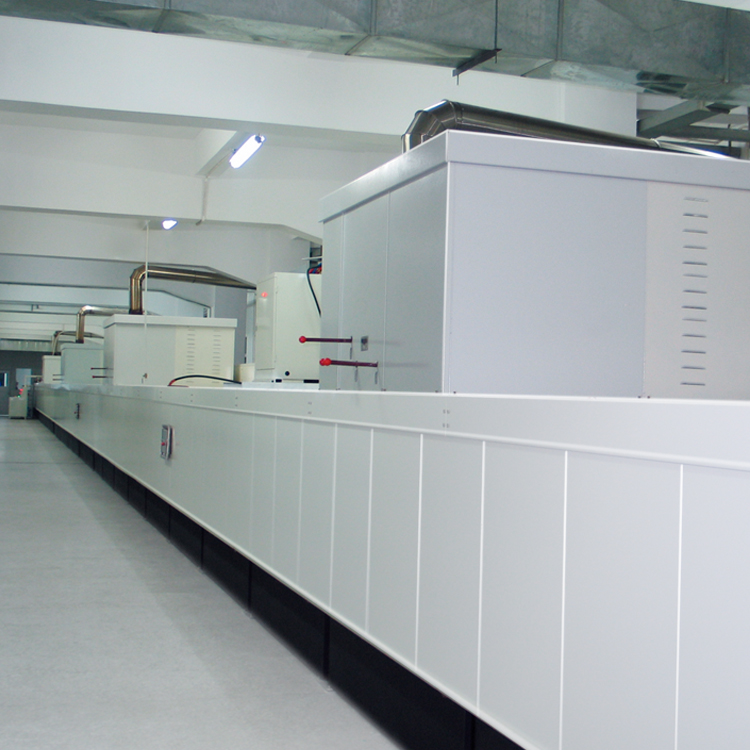
Recent projects show a clear move from stand‑alone machines toward vertically integrated lines that connect raw material handling to packaging in one data environment. [aocno]
This allows bakeries to see, for example, how dough temperature at the mixer correlates with micro‑cracks in finished biscuits on specific days. [aocno]
Modern bakery machines increasingly use sensors and analytics to detect abnormal vibrations, temperature drifts, or motor loads. [helitool]
For food safety, this means:
- Early warnings when an oven zone is no longer holding set temperature
- Alerts when a belt cleaning device fails to activate
- Reduced unplanned downtime that might force rushed restarts and shortcuts
These capabilities help bakeries move from reactive to predictive food safety and maintenance. [helitool]
From the point of view of a manufacturer with 40 years of biscuit‑line experience, food safety is engineered, not inspected in. [instagram]
The most successful projects treat food safety as a design requirement from day one, not an afterthought once capacity and budget are set. [food-safety]
When we support a new line design, our process typically includes:
- Reviewing factory layout to separate raw, processing, and packaging zones
- Choosing oven and conveyor configurations that minimize product exposure
- Specifying materials and finishes to match cleaning chemistry and frequency
- Defining digital signals needed for HACCP logging and alarms
By aligning engineering, quality, and operations teams early, bakeries avoid expensive retrofits and can validate their automated biscuit line faster. [wenvamachine]
Start by mapping every step where product is exposed and handled manually—from dough loading to palletizing.
Identify where cross‑contamination, underbaking, or foreign material risks are highest. [bakingbusiness]
Next, focus automation investments where they deliver the greatest food‑safety impact, such as:
1. Upgrading to a tunnel oven with precise zone control and data logging
2. Automating stacking and transfer from oven to packaging
3. Adding automated belt cleaning and inspection points
This phased approach makes it easier to justify capex using both safety and labor‑efficiency ROI. [helitool]
Use your equipment's recipe management to standardize:
- Temperature and time profiles for each product
- Allowable ranges for dough temperature and moisture
- Belt speeds and loading patterns
Standardization makes training easier and reduces operator‑dependent variability, a common source of food safety incidents. [food-safety]
Ensure line controls store data in a way that can be linked to batch, shift, and SKU. [food-safety]
Even a modest system that captures oven logs, metal detector events, and cleaning confirmations can dramatically improve incident response time. [food-safety]
Automated biscuit lines are designed for long runs with minimal changeover, which reduces frequent start‑stop cycles that tend to generate quality and safety issues. [mixing-experts]
Continuous throughput also means fewer partially filled trays or pans sitting in the danger zone of temperature and time. [mixing-experts]
In a well‑engineered biscuit line, the transition from oven to cooling conveyor, then to stacking and primary packaging, happens in a controlled, largely enclosed flow. [mixing-experts]
Integrated design allows for:
- Controlled cooling curves to prevent condensation and mold risk
- Gentle product handling that minimizes breakage and fines accumulation
- Straightforward implementation of metal detection and X‑ray at the right points
These features support both brand protection and regulatory compliance. [bakingbusiness]
For bakeries upgrading or building new plants, selecting an equipment partner is ultimately a food safety decision as much as a capacity decision. [food-safety]
When evaluating suppliers, pay special attention to:
- Proven experience with fully automated biscuit or cookie lines
- Ability to customize layouts to your plant and zoning requirements
- Support for commissioning, validation, and operator training
- Availability of remote diagnostics and after‑sales service
Suppliers like Wenva Machine, with decades focused specifically on automated biscuit production lines, can design an integrated solution from dough feeding to packaging with food safety embedded at every step. [instagram]
If you are planning to upgrade from semi‑manual operations or add a new line, now is the time to integrate food safety, automation, and scalability into a single project roadmap. [aocno]
By doing so, you protect your brand, reduce recall risk, and build a production platform that can support new recipes and market growth for years to come. [mixing-experts]
Ready to modernize your biscuit production?
Work with an automation partner that can analyze your current line, model a customized automated biscuit production solution, and support you from design through installation, commissioning, and long‑term optimization.
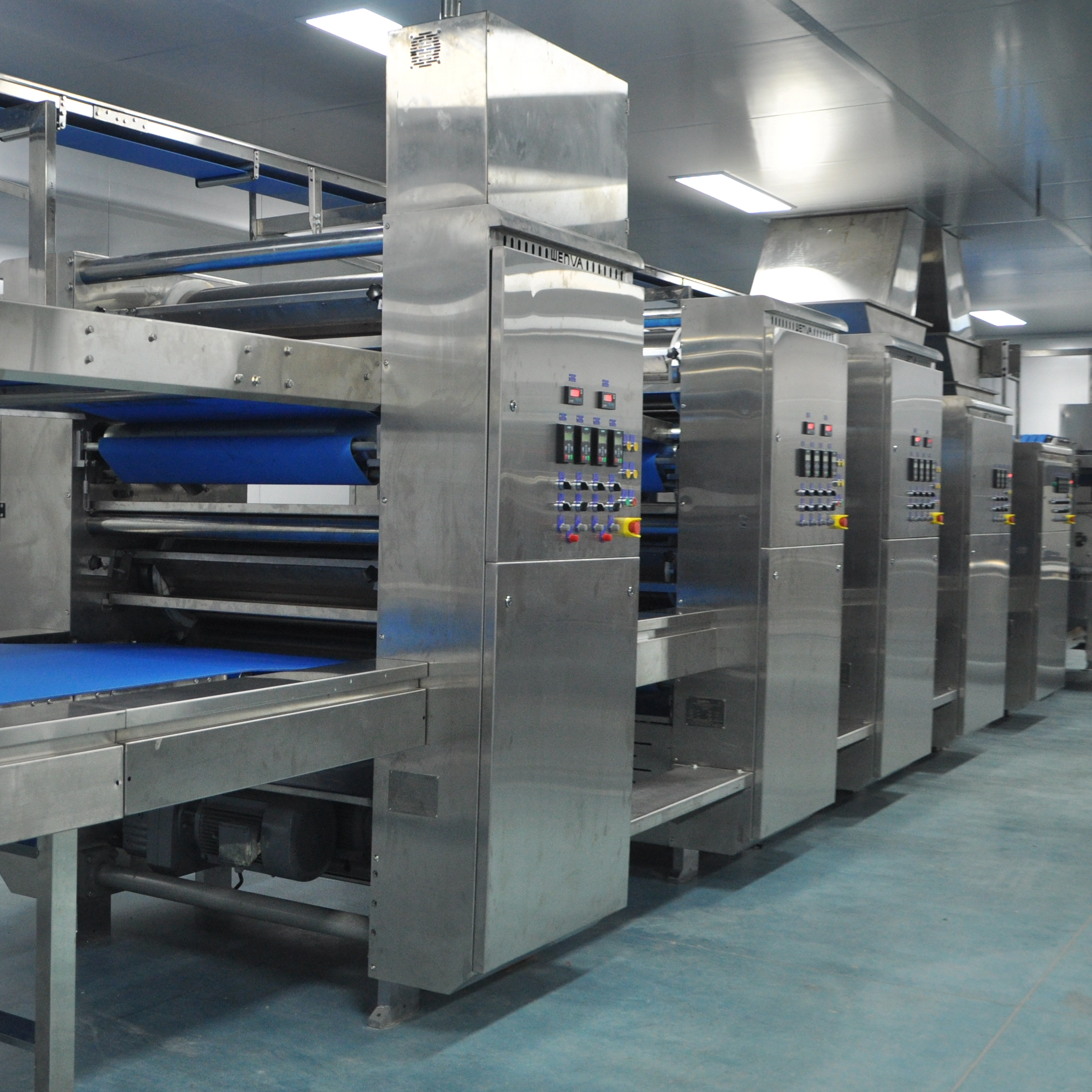
1. How does automation directly improve food safety in biscuit production?
Automation improves food safety by standardizing baking conditions, reducing manual handling, and logging process data, which together minimize contamination risk and support rapid root‑cause analysis. [bakingbusiness]
2. Are automated biscuit lines only suitable for very large factories?
No, modular automated lines can be scaled for mid‑size bakeries, allowing them to start with critical stages like baking and stacking and later add more automation as demand grows. [helitool]
3. How does automation help with allergen control?
Automated systems enforce cleaning and changeover protocols, segregate allergen runs, and record parameters so you can prove that required procedures were followed before producing non‑allergen products. [food-safety]
4. Is it difficult to train operators on highly automated bakery equipment?
Modern HMIs, recipe management, and alarm systems are designed to be intuitive, and structured training during commissioning usually enables operators to manage automated lines confidently in a short time. [helitool]
5. What is the typical ROI for investing in bakery automation?
While ROI varies, bakeries often see returns through reduced labor, lower waste, fewer quality incidents, and stronger brand protection, making automation a strategic investment rather than a pure cost. [helitool]
1. New Era Machines – “Automation in Commercial Bakery Equipment for Food Safety.” https://www.neweramachines.com/automation-in-commercial-bakery-equipment-for-food-safety/
2. Wenva Machine – “Customized Biscuit Production Line, Dough Mixer Manufacturing.” https://www.wenvamachine.com
3. BakingBusiness – “Bakeries turn to automation to suppress food safety risks.” https://www.bakingbusiness.com/articles/49932-bakeries-turn-to-automation-to-suppress-food-safety-risks
4. Food Safety Magazine – “Automation and the Future of Food Equipment.” https://www.food-safety.com/articles/7467-automation-and-the-future-of-food-equipment
5. AOCNO – “Industrial Bakery Automation: Top 5 Trends Scaling Production in 2026.” https://www.aocno.com/Industrial-Bakery-Automation-Top-5-Trends-Scaling-Production-in-2026-id47561365.html
6. Helitool – “Top 5 Bakery Machines for Efficient Production in 2026.” https://www.helitool.com/blog/top-bakery-machines-efficient-production-2026/


