
Views: 0 Author: WENVA machine Publish Time: 2025-11-17 Origin: Site
Content Menu
● What Is a Double Layered Biscuit?
>> Key Variants of Double Layered Biscuits
● Double Layered Biscuits vs. Traditional Biscuits
● Key Ingredients and Texture Design
>> Texture and Flavor Strategy
● Double Layered Biscuit Production Process
>> Flow Diagram
● WENVA Double Layer Biscuit Production Line
>> Key Features of the Wenva Double Layer Biscuit Production Line
● Emerging Trends and Market Applications
● FAQ: Double Layered Biscuit Production
Double layered biscuits have emerged as one of the most innovative and versatile categories in the global biscuit market. These biscuits, which consist of multiple layers of dough either laminated or sandwiched together, offer a unique combination of textures, flavors, and visual appeal that sets them apart from traditional single-layer or sandwich biscuits. As consumer preferences lean toward products with layered complexity and diverse sensory experiences, manufacturers are increasingly exploring the double layered biscuit segment as a way to differentiate their products and capture new market niches.
This comprehensive guide provides a deep dive into the double layered biscuit category, covering its definition, ingredient design, production processes, equipment solutions, and technological considerations. A special focus is placed on the advanced production line solutions by Wenva Biscuit Machine, one of China's leading food machinery manufacturers dedicated to delivering automated and customizable biscuit production lines tailored to industry demands.
A double layered biscuit is a type of baked snack composed of two or more dough sheets combined through lamination or stacking, either with or without a filling. This creates a biscuit with a multi-dimensional texture and layered structure. Unlike conventional biscuits, double layered biscuits provide a contrast in crunch, moisture, and flavor within the same bite, which is why they're increasingly favored by brands targeting the premium snack segment.
Double layered biscuits can be categorized into several types based on their structure and production technique:
Laminated Double Layer Biscuits: These biscuits are produced by folding dough layers over each other, often with fat or other ingredients trapped between each layer. This technique results in flaky texture similar to puff pastry.
Sandwich-Type Double Layered Biscuits: These are made by laminating two thin biscuit sheets with a layer of filling in between. Unlike traditional sandwich biscuits, the dough layers are thinner and more integrated into the final bake.
Sheet-Laminated Biscuits: In these products, the dough undergoes multiple folding, layering, and rerolling steps to create thin layers within the biscuit dough itself, producing a honeycomb-like internal structure after baking.
These different structures not only enhance the visual appeal but also enable a diverse range of flavor combinations.
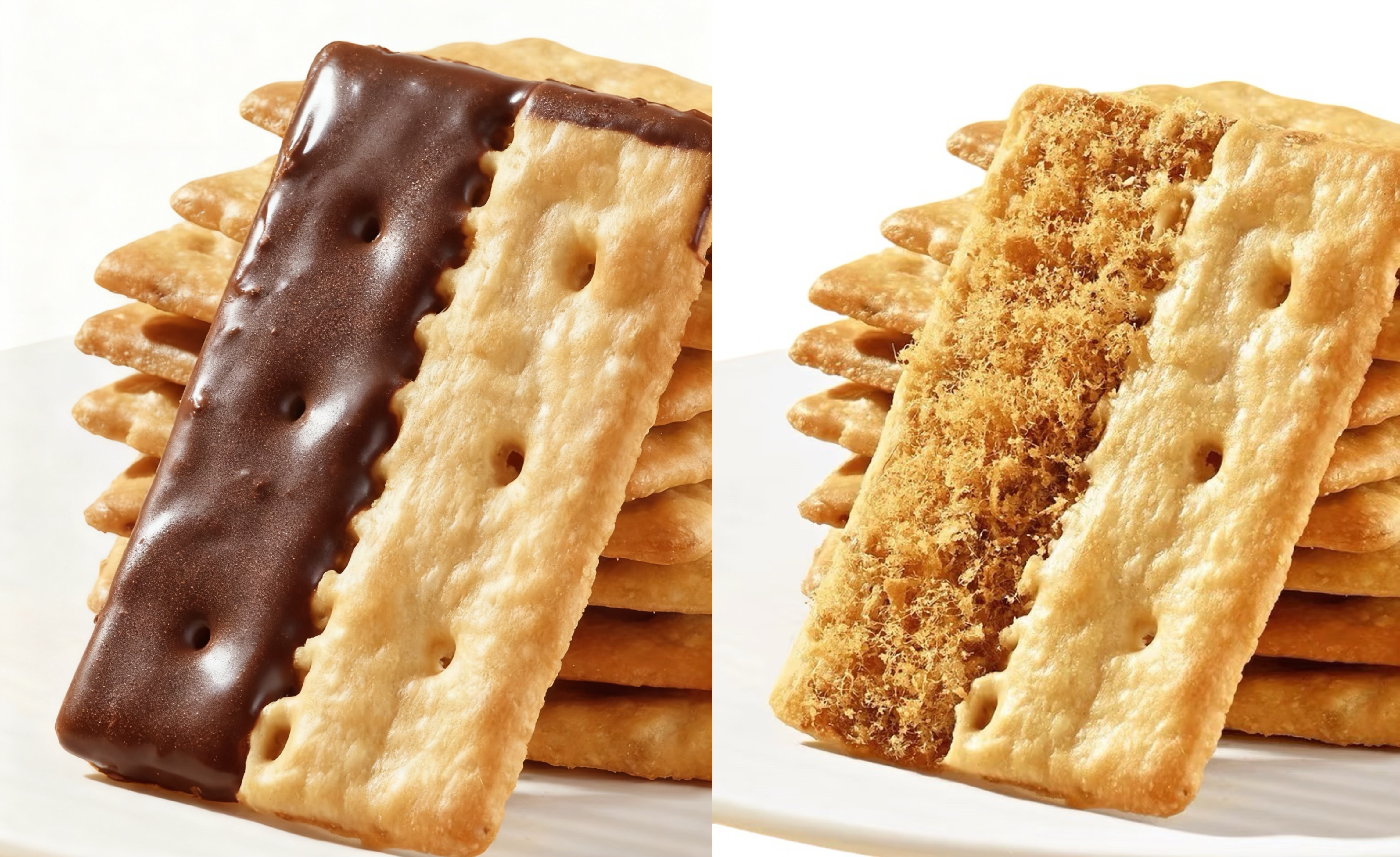
To better understand the innovation behind double layered biscuits, it's helpful to compare them with two more familiar biscuit types: traditional single-layer biscuits and sandwich biscuits.
Traditional biscuits are made from a single layer of dough that is shaped and baked. They're simple to produce and generally fall into categories of hard and soft biscuits, ranging from crunchy crackers to sweet cookies. Sandwich biscuits, on the other hand, consist of two baked biscuit shells with a sweet or savory filling in between, offering more richness and texture.
Double layered biscuits differ from both by combining dough layering techniques with optional fillings. Their structure is more intricate than single-layer biscuits and more integrated than sandwich biscuits, offering unique mouthfeel and taste experiences. Brands can introduce subtle differences in flavor between layers or use contrasting colors or textures to appeal to the eyes and palate.
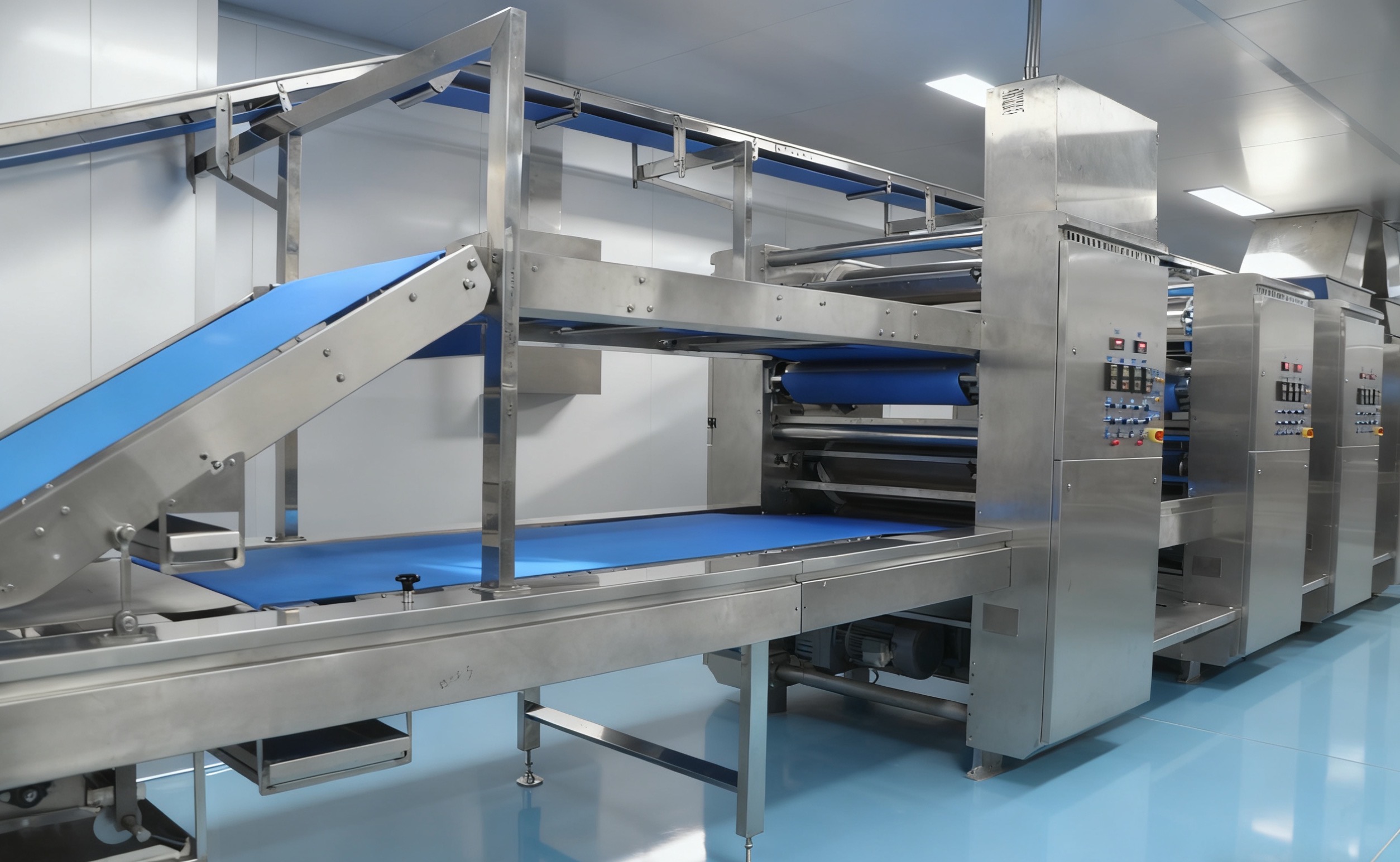
Successful production of double layered biscuits relies not just on the process but also on precise ingredient formulation. Here are the fundamental elements that go into crafting double layered biscuits:
Flour: A blend of low-gluten and medium-gluten wheat flours helps achieve the desired balance between crispness and flexibility.
Fat: Butter, margarine, or shortening are used both in the dough and sometimes between layers to aid lamination.
Sugar: Granulated or powdered sugar contributes sweetness, browning, and tenderness.
Leavening Agents: Baking powder or ammonium bicarbonate are used to aerate the dough for a light, multi-layered texture.
Liquids: Water or milk hydrate the dough, while eggs add richness and help with binding.
Fillings (Optional): These may include chocolate, cream, jam, peanut butter, or fruit paste, adding flavor and moisture.
Designing layered biscuits requires special attention to texture. The target mouthfeel can range from light and flaky to crispy or slightly chewy, depending on the formulation and process. Laminated layers often have fat spread between them, resulting in airy, puffed layers during baking. For layered biscuits with filling, the inclusion of high-fat fillings can complement or contrast the base dough.
Flavor-wise, double layered biscuits offer endless possibilities. Manufacturers can experiment with combinations like vanilla dough paired with chocolate filling, matcha and cream layers, or savory cheese layers combined with curry-flavored fillings. Natural colors or textured additions, such as seeds or cocoa powder stripes, can also be introduced into the dough sheets before folding to further differentiate the product.
Producing double layered biscuits requires specialized machinery and a carefully controlled process. A typical industrial production workflow includes:
Dough Mixing: Ingredients are mixed to form a cohesive dough, with attention paid to gluten development and hydration. Automated mixers provide consistency and reduce contamination risk.
Sheeting and Rolling: The dough is rolled into thin sheets using a series of rollers. Dough thickness is carefully controlled to ensure uniformity across layers.
Lamination or Folding: Multiple sheets are layered or folded with fat layers or fillings in between, depending on biscuit type. This step is essential to achieve the layered structure.
Cutting or Forming: The laminated sheets are cut into desired shapes using dies or rotary cutters. Complex shapes or patterns can be incorporated during this step for brand customization.
Baking: Biscuits are baked in a tunnel oven, typically heated by gas or electricity. Baking zones are individually controlled to maintain optimal temperature profiles for drying, puffing, and browning.
Cooling: After baking, biscuits pass through a cooling conveyor to bring them to ambient temperature, preventing moisture buildup and maintaining structure.
Packaging: High-speed packaging lines preserve freshness and protect delicate layers during transport.
(Ingredient Mixing)➡(Dough Rolling)➡(Layering & Folding)➡(Forming & Cutting)➡(Tunnel Oven Baking)➡(Cooling Conveyor)➡(Automatic Packaging)
The Double Layer Biscuit Production Line by Wenva Biscuit Machine is designed for manufacturers seeking to produce premium biscuits with distinct layers, flavors, and textures. Compared to single-layer biscuits, double layered biscuits offer greater variety in structure, taste, and fillings, making them highly appealing in both high-end and mass-market segments.
As a professional biscuit production line manufacturer and supplier in China, Wenva provides a complete set of cookie machines and fully automated biscuit production lines that integrate dough mixing, forming, baking, cooling, and packaging. Their production lines are equipped with features like adjustable sheet thickness, precise layering mechanisms, tunnel baking with zoned temperature control, and versatile filling systems.
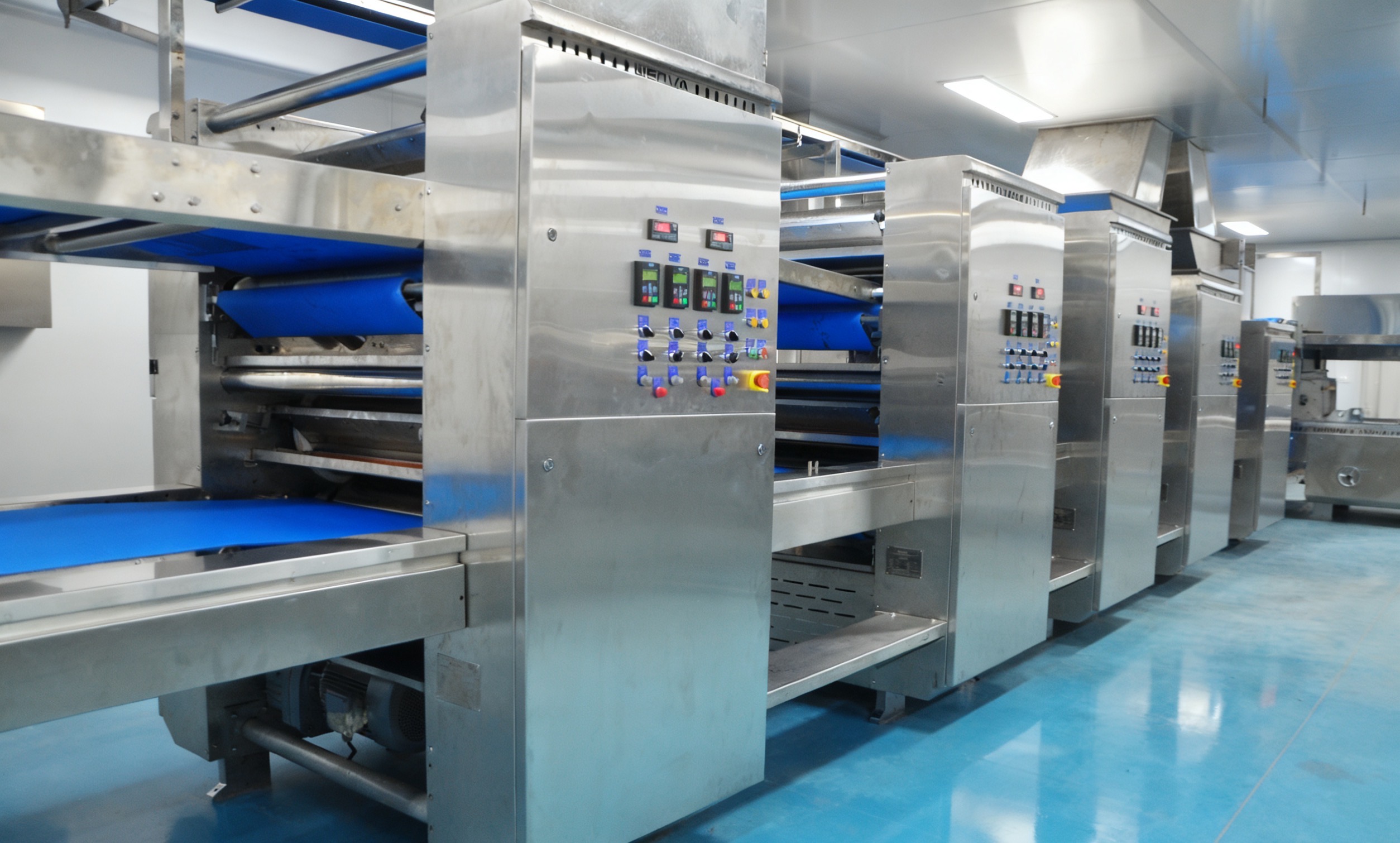
Multi-Stage Rolling System: Ensures dough sheets are consistently uniform, supporting delicate layer formation.
Integrated Lamination and Folding Unit: Allows seamless production of laminated biscuits without manual intervention.
Flexible Forming Tools: Allows switching between different biscuit shapes and design patterns, even during production cycles.
Advanced Tunnel Oven: Optimized for even heat distribution, ensuring each layer is properly baked.
High Production Speed: Up to several hundred kilograms per hour depending on configuration.
Hygienic Design and Easy Maintenance: Food-grade materials and modular construction make cleaning and part replacement seamless.
PLC Control System: Assures precision and stability in every production stage, with recipes and parameters easily adjustable via touch screen.
With decades of experience in biscuit machinery manufacturing, Wenva has built a reputation for delivering reliable, cost-effective solutions that support manufacturers in producing versatile and market-ready products. Their double layer production lines are particularly valued in Southeast Asia, the Middle East, Africa, and emerging markets where layered biscuits are gaining ground.
Double layered biscuits offer versatility that aligns with several modern snacking trends:
Health and Wellness: Creating healthier layered biscuits using wholegrain flours, natural sweeteners, plant-based fats, and reduced sugars.
Gourmet and Premiumization: Using luxurious ingredients like imported cream, cocoa butter, fruit puree, and exotic spices.
Customization and Limited Editions: Offering seasonal flavors, themed designs, and co-branded products using unique shaping and printing rollers.
Dual-Function Biscuits: Combining biscuit and confectionery techniques to produce biscuits with chocolate-coated layers or gel fillings.
These innovations allow manufacturers to position layered biscuits in premium retail channels, including boutique bakeries, online stores, and gourmet gift packs.
1,What's the main challenge in producing double layered biscuits?
Achieving consistent layer structure is key. Variations in dough thickness or lamination can affect appearance and texture.
2,Can one machine produce both layered and sandwich biscuits?
Yes, modular production lines like Wenva's allow operators to switch between processes with minor adjustments.
3,What is the typical shelf life of double layered biscuits?
Usually 6 to 12 months with proper packaging, depending on the filling type and moisture content.
4,How do you avoid oil migration or sogginess in layered biscuits?
This depends on controlled baking, low-moisture fillings, and using moisture barriers in edible coatings.


