
Views: 292 Author: Wenva Machine Publish Time: 2026-07-02 Origin: Site


Content Menu
● Understanding Rotary Biscuit Moulders
● From Dough to Design: Step‑by‑Step Working Principles
● Dough Rheology: Why Short Dough Behavior Matters
● Engineering Design: Rolls, Materials, and Machine Layout
● Integration into an Automated Biscuit Production Line
● Advancements: From Mechanical Control to Smart Automation
● Practical Setup and Optimization: Expert Tips from the Line
● Why Rotary Biscuit Moulders Matter for Modern Biscuit Factories
● Choosing a Rotary Biscuit Moulder and Line Partner
● Call to Action: Design Your Next Line with Wenva Machine
● Frequently Asked Questions (FAQ)
A rotary biscuit moulder is the heart of modern short‑dough biscuit production, transforming soft dough into high‑precision shapes at industrial speed while ensuring consistency, hygiene, and profitability for biscuit manufacturers worldwide. Drawing on Wenva Machine's 40 years of engineering automated biscuit production lines, this article explains how rotary moulders work, why dough science matters, and how a well‑designed moulder fits into a fully automated biscuit production line. [scribd]

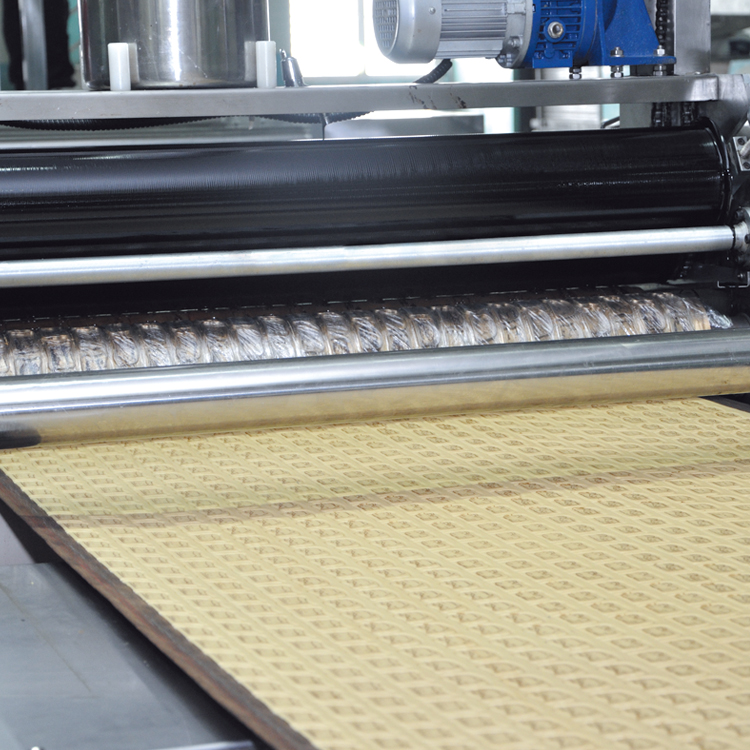
A rotary biscuit moulder is a specialized forming machine used mainly for short dough biscuits, crackers, and sandwich bases, where dough is soft, rich in fat, and needs precise embossing. Instead of hand‑cutting shapes, the rotary moulder uses an engraved die roll, a feed roll, a pressure roll, and a web belt to mold thousands of identical biscuits per hour. [foodmachineryint]
In a typical automated biscuit production line, the rotary moulder sits between the dough mixer and the tunnel oven, acting as the critical bridge that converts bulk dough into uniform pieces ready for baking. For biscuit manufacturers upgrading from semi‑manual production, this machine is often the single biggest leap in capacity and product consistency. [wenvamachine]
A modern rotary moulder follows a highly engineered sequence to turn plastic dough into finished biscuit blanks. At Wenva Machine, this sequence is tuned based on dough type, oven capacity, and target throughput to integrate smoothly with the rest of the production line. [wenvamachine]
Core operating steps of a rotary biscuit moulder: [scribd]
1. Dough feeding and conditioning
Dough from the mixer is fed into a hopper above the moulder at a stable rate, ensuring the machine is never starved or overloaded. [scribd]
For short dough (high fat, low water), operators adjust dough plasticity, temperature, and moisture so it remains soft, plastic, and non‑sticky, which is essential for clean moulding and release. [scribd]
2. Forcing (feed) roll action
The forcing roll presses dough against the engraved die roll, filling each cavity evenly. [scribd]
Its diameter is typically smaller than the die roll (around 50–65% of die diameter) to generate enough pressure and torque without damaging the dough structure. [scribd]
3. Die roll and cavity moulding
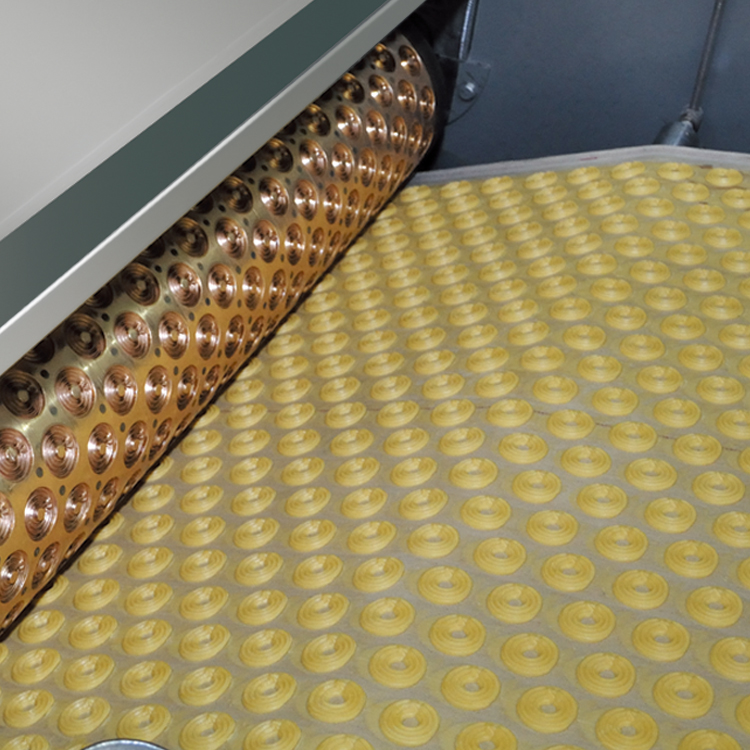
The die roll is a rotating cylinder engraved with biscuit shapes, logos, and textures. [scribd]
As the die turns, dough is forced into each cavity; engraving depth directly controls biscuit thickness and design clarity, especially for thin crackers and embossed biscuits. [scribd]
4. Scraper knife and excess dough removal
A scraper knife mounted against the die roll removes excess dough from the surface, leaving only dough inside the cavities. [scribd]
The scraper angle and sharpness are critical: improper adjustment can damage embossed designs or leave streaks and tails on the biscuits. [scribd]
5. Web (canvas) belt pick‑up and transfer
A web belt or canvas belt contacts the die roll, gently lifting biscuits out of the cavities. [scribd]
Correct belt tension and surface texture help ensure smooth release, prevent deformation, and maintain fine details on low‑fat or very thin biscuits. [scribd]
6. Transfer to the oven conveyor
The formed biscuits move from the moulder belt onto the tunnel oven band, where baking starts immediately to lock in shape and design. [scribd]
Precise synchronization between moulder speed and oven belt speed minimizes product overlap, gaps, and weight variation. [interpack]
When these steps are correctly calibrated, a rotary moulder can run continuously with high yield, low scrap, and excellent repeatability across long production runs. [neweramachines]
From an engineering perspective, the science of dough flow (rheology) is as important as the mechanics of the rotary moulder. Short dough behaves differently from bread dough: it is less elastic, more plastic, and highly sensitive to temperature and fat crystallization. [foodmachineryint]
Key rheological factors for rotary moulding include: [foodmachineryint]
- Moisture content and fat level: High‑fat, low‑water doughs are ideal for crisp, moulded biscuits, but they must remain plastic enough to fill cavities without cracking.
- Dough temperature: Slightly warm dough improves fill and release, while overly cold dough causes poor cavity fill and surface defects. [scribd]
- Gluten development: Over‑mixed dough becomes too elastic and resists moulding; rotary doughs are mixed just enough for cohesion, not stretch. [foodmachineryint]
In practice, Wenva Machine's engineers tune dough formulations and moulder settings together—adjusting emulsifiers, dough rest time, and die roll temperature to keep rheology stable at industrial scale. This is especially important when switching between high‑fat butter biscuits and lower‑fat crackers, which require different rubber roller hardness and belt characteristics. [wenvamachine]
Behind the smooth motion of a rotary moulder is a set of carefully engineered components designed for durability, hygiene, and easy maintenance. Over decades, Wenva Machine has refined these designs based on real factory feedback, balancing robustness with cleanability. [wenva]
Critical engineering elements:
- Die roll (moulding roll)
Engraved in stainless steel or brass with food‑grade surfaces to resist corrosion and wear. [interpack]
Cavity design accounts for air venting and dough release, particularly for deep embossing or complex logos.
- Rubber (pressure) roll
Presses the web belt against the die to lift biscuits; diameter is kept close to die roll diameter (e.g., 10.0–10.2 inches for a 10.2‑inch die) to maintain uniform pressure. [scribd]
Rubber hardness is matched to dough type—soft rubber for high‑fat dough, harder rubber (around 70–75 Shore A) for low‑fat dough to prevent sticking and preserve design clarity. [scribd]
- Forcing roll (feed roll)
Smaller diameter (often 5.0–6.5 inches on a 10.2‑inch die) to generate sufficient pressure and avoid slippage. [scribd]
Surface pattern may be selected to improve dough grip and cavity filling without over‑working the dough.
- Frame, bearings, and drives
Heavy‑duty frames limit vibration, improving print quality at high speed. [interpack]
Modern moulders increasingly use servo drives and independent web drives to fine‑tune tension and synchronization, reducing breakage and enhancing texture. [neweramachines]
All contact parts are designed for easy disassembly and cleaning, reflecting the industry's shift toward hygienic design with smooth surfaces, minimal crevices, and food‑grade materials. This supports compliance with FDA, EFSA, and major retailer audit standards in global markets. [foodmachineryint]
A rotary moulder does not operate in isolation; its performance depends on proper integration with dough mixing, sheeting, tunnel oven, cooling conveyors, and packaging systems. With 40 years of automation experience, Wenva Machine designs lines so that forming capacity, oven width, and cooling length are balanced from the start. [wenvamachine]
In a typical Wenva automated biscuit production line: [wenvamachine]
- Dough mixers (200–1000 kg per batch) feed the rotary moulder through controlled dough feeding systems.
- Tunnel ovens with multiple zones (gas, electric, or hybrid) bake products at capacities from 50 kg/hour up to more than 3,000 kg/hour, depending on line width and product type. [scribd]
- Multi‑tier cooling conveyors and inspection systems handle fragile biscuits carefully before packaging, reducing breakage and ensuring consistent quality. [scribd]
Because Wenva customizes production lines for each factory's layout, utilities, and product portfolio, rotary moulders are specified jointly with the oven and post‑baking automation to ensure stable throughput and energy‑efficient operation. [wenvamachine]
The original rotary moulder article mentions computerized control systems, but the industry has moved further toward Industry 4.0‑ready, data‑driven lines. Wenva Machine's experience echoes published industry trends: biscuit plants now rely on integrated PLC/HMI platforms, sensor networks, and remote diagnostics to keep lines running at peak efficiency. [interpack]
Modern rotary biscuit moulders commonly feature: [interpack]
- Servo‑controlled drives for precise speed and pressure settings, supporting quick product changeovers.
- Recipe management via HMI, where operators select biscuit SKUs and the system automatically sets feed speed, die roll speed, scraper position, and belt tension. [scribd]
- Predictive maintenance monitoring of vibration, temperature, and motor load to reduce unplanned downtime by around 20% in fully automated lines. [scribd]
When integrated with the full production line, these smart features enable real‑time OEE tracking, energy monitoring, and batch traceability, which are now essential for large biscuit manufacturers serving multiple export markets. [scribd]
From a practical engineering viewpoint, achieving a stable, efficient rotary moulding process requires structured setup rather than trial‑and‑error. Wenva's commissioning engineers typically follow a clear sequence when starting or optimizing a line. [wenva]
Practical optimization steps for rotary biscuit moulders: [scribd]
1. Start with dough quality
Confirm dough moisture, fat content, and temperature against a defined specification; unstable dough cannot be fixed by mechanical tweaks alone. [scribd]
2. Set roller clearances and tensions
Adjust the gap between rubber roll and die roll (often in the range of 0.5–1 mm) to achieve clean release without crushing edges. [scribd]
3. Tune scraper angle and pressure
Begin with manufacturer recommendations, then fine‑tune to avoid streaks, double impressions, or damaged embossing. [interpack]
4. Optimize belt tension and tracking
Verify that the canvas belt picks up biscuits consistently across the width, with no deformation or slippage in transfer. [scribd]
5. Run controlled trial batches
Use short runs to collect data on weight, dimension stability, breakage, and oven behavior, then adjust parameters before full‑scale production. [scribd]
Plants that treat these steps as standard operating procedures rather than occasional adjustments typically achieve higher yields and more stable quality over the lifetime of the equipment. [scribd]
For biscuit manufacturers in 2026, rotary moulders are more than just shaping machines; they are strategic assets that influence line flexibility, brand differentiation, and profitability. A well‑specified rotary moulder allows factories to produce: [neweramachines]
- High‑speed embossed biscuits and crackers with fine logo detail. [scribd]
- Thin, uniform products (such as 1 mm crackers), which Wenva first engineered in the late 1990s. [wenvamachine]
- Multiple shapes and SKUs on a single line through rapid tool changes, supporting frequent promotions and regional variations. [scribd]
Combined with Wenva's full‑line design, these capabilities help global manufacturers respond quickly to trends such as low‑sugar biscuits, high‑protein cookies, and premium embossed products, without building a separate plant for each new product. [wenvamachine]
Selecting a rotary moulder is ultimately part of choosing a long‑term production line partner, not just a single piece of equipment. Published industry guidance and Wenva's own history highlight the following criteria: [wenva]
- Deep biscuit‑specific experience rather than generic bakery machinery. [wenva]
- Customization capability to match factory layout, utilities, and target markets. [wenvamachine]
- End‑to‑end support from plant design and installation to commissioning, training, and after‑sales service. [scribd]
- Documented performance data on capacity, energy consumption, yield, and ROI for different product types. [scribd]
With more than 40 years dedicated to biscuit production automation and installations in over 25 countries, Wenva Machine provides rotary biscuit moulders as part of complete, engineered solutions, not standalone machines. [wenva]
If you are planning to upgrade your biscuit factory or build a new automated plant, a well‑engineered rotary biscuit moulder will determine not only product appearance, but also line efficiency, scrap rates, and long‑term ROI. [neweramachines]
Share your target capacity, biscuit types, and factory layout with Wenva Machine, and our engineering team can propose a customized rotary moulding section and full biscuit production line configuration tailored to your energy constraints, labor situation, and growth plans. By engaging early at the design stage, you can shorten installation time, reduce commissioning risks, and ensure that your rotary biscuit moulder becomes a reliable core of your automated biscuit production line for years to come. [wenvamachine]
1. What types of biscuits are best suited to rotary biscuit moulders?
Rotary moulders are ideal for short dough biscuits, crackers, and sandwich bases, where dough is relatively soft and high in fat. They excel at products needing fine embossing, thin profiles, and high throughput on automated lines. [neweramachines]
2. How does dough formulation affect rotary moulding performance?
Dough moisture, fat level, and temperature directly affect cavity filling, release, and surface quality. Stable short dough formulations, combined with controlled mixing and dough rest, are essential for consistent moulding and to avoid sticking or cracking. [foodmachineryint]
3. What maintenance does a rotary biscuit moulder require?
Routine maintenance includes cleaning die cavities, checking scraper knives, inspecting rubber roll condition, and monitoring bearings and drive components for wear. Plants using predictive maintenance sensors typically reduce unplanned downtime and extend component life. [foodmachineryint]
4. Can one rotary moulder handle different biscuit shapes and logos?
Yes. By changing die rolls, a single rotary moulder can produce multiple shapes, sizes, and branded embossings on the same line. Modern servo‑controlled moulders support rapid changeovers, making multi‑SKU production practical at scale. [neweramachines]
5. How does a rotary biscuit moulder contribute to energy efficiency and sustainability?
While the moulder itself consumes modest power, its consistent shaping and weight control reduce over‑baking, scrap, and rework in the oven and packaging areas. When combined with energy‑efficient tunnel ovens and smart drives, it helps biscuit plants achieve lower energy per kilogram of product and reduced emissions. [scribd]
1. Golden Bake – “The Science Behind a Rotary Biscuit Moulder: How Does it Work?” https://www.foodsmachine.net/a-news-the-science-behind-a-rotary-biscuit-moulder-how-does-it-work.html
2. Scribd – “How Rotary Moulder Working in Biscuit Making”. https://www.scribd.com/document/1000760594/How-Rotary-Moulder-Working-in-Biscuit-Making
3. Wenva Machine – “About Us”. https://www.wenvamachine.com/aboutus.html
4. Wenva Machine – “Automated Biscuit Production Line Solutions: 40 Years of Engineering Cookie Factories for Global Manufacturers”. https://www.wenvamachine.com/automated-biscuit-production-line-solutions-40-years-of-engineering-cookie-factories-for-global-manufacturers.html
5. Ronghua Yuandong / Wenva – Company Profile. http://www.wenva.net/about/
6. Interpack – “ROTARY MOULDER” (Technical brochure). https://www.interpack.de/vis-content/event-interpack2026/exh-interpack2026.3032066/interpack-2026-Polin-Ing.-C.-S.p.A.-Paper-int
7. New Era Machines – “Biscuit Rotary Moulding Machines: Detailed Guide For Manufacturers”. https://www.neweramachines.com/biscuit-rotary-moulding-machines-detailed-guide-for-manufacturers/
8. IODigital – “Google E‑E‑A‑T: Creating Content That Puts People First”. https://www.iodigital.com/en/insights/blogs/google-e-e-a-t-creating-content-that-puts-people-first


