Views: 222 Author: Sara Publish Time: 2025-01-21 Origin: Site
Content Menu
● Understanding Bakery Equipment
● Factors Influencing Repair Costs
● Strategies for Reducing Repair Costs
● Common Bakery Equipment Issues
● The Importance of Preventive Maintenance
● FAQ
>> 1. What is the average monthly cost for bakery equipment maintenance?
>> 2. How often should I perform maintenance on my bakery equipment?
>> 3. What are common signs that my bakery equipment needs repair?
>> 4. Can I perform repairs myself?
>> 5. How can I find a reliable repair technician?
When operating a bakery, one of the most critical aspects to consider is the maintenance and repair of bakery equipment. This investment not only ensures smooth operations but also affects the quality of the products you deliver. In this article, we will explore the costs associated with bakery equipment repair, factors influencing these costs, and best practices for maintaining your equipment to minimize expenses.

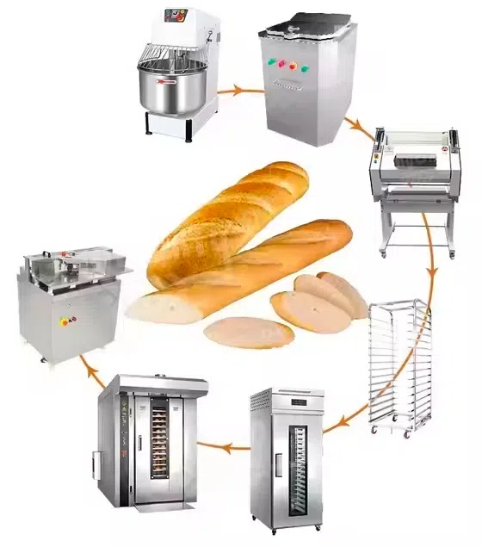
Bakery equipment encompasses a wide range of machines used in the production of baked goods. This includes:
- Ovens: Essential for baking various products, from bread to pastries.
- Mixers: Used for combining ingredients, crucial for achieving the right dough consistency.
- Proofers: Help in the fermentation process, allowing dough to rise properly.
- Dough Dividers: For portioning dough accurately, ensuring uniformity in baked goods.
- Packaging Machines: For wrapping and sealing products efficiently to maintain freshness.
Each piece of equipment has its own maintenance needs and potential repair costs. Understanding how each machine operates and its specific vulnerabilities can help you anticipate potential issues.
The cost of repairing bakery equipment can vary significantly based on several factors, including the type of equipment, its age, and the extent of the damage. Here are some average costs associated with common bakery equipment repairs:
- Mixers: Repairs can range from $200 to $1,000 depending on the issue. Common problems include motor failure or gear issues.
- Ovens: Major repairs may cost between $500 and $2,500, especially if parts need replacement or if there are issues with temperature regulation.
- Proofers and Refrigeration Units: These can also incur costs ranging from $300 to $1,500 for repairs, particularly if there are issues with humidity control or compressor failure.
On average, bakery owners should budget around $200 to $600 per month for maintenance and minor repairs. However, unexpected breakdowns can lead to higher expenses, so it's wise to set aside additional funds for emergencies.
Several key factors influence the overall cost of bakery equipment repair:
- Age and Condition of Equipment: Older machines may require more frequent repairs due to wear and tear. As equipment ages, it becomes less efficient and more prone to breakdowns.
- Complexity of Repairs: More complex machinery often requires specialized technicians, which can increase labor costs. For instance, a high-capacity mixer may need a technician with specific knowledge about its components.
- Availability of Parts: If parts are hard to find or need to be custom-made, this can drive up repair costs. It's beneficial to maintain a relationship with suppliers who can provide parts quickly.
- Preventive Maintenance Practices: Regular maintenance can help identify issues before they escalate into costly repairs. Implementing a proactive maintenance schedule is essential.
To effectively manage repair costs, consider the following strategies:
- Regular Maintenance Schedule: Establish a routine maintenance program to keep your equipment in good condition. This includes regular cleaning, lubrication, and inspections. Keeping a log of maintenance activities can help track performance over time.
- Train Staff on Equipment Use: Proper training can prevent misuse that leads to damage. Ensure that all employees understand how to operate machinery correctly. Regular training sessions can reinforce best practices and update staff on any new procedures.
- Invest in Quality Equipment: While it may be tempting to purchase cheaper equipment, investing in high-quality machines can save money in the long run due to lower repair needs. Look for brands known for durability and reliability.
- Build Relationships with Repair Technicians: Having a reliable technician who understands your equipment can lead to quicker and potentially cheaper repairs. Regular check-ins with your technician can help them stay familiar with your setup.
Understanding common issues that arise with bakery equipment can help you prepare for potential repairs:
- Electrical Failures: Many bakery machines rely on electrical components that can fail due to overloads or short circuits. Regularly checking wiring and connections can prevent these issues.
- Mechanical Wear: Parts such as belts and gears wear out over time. Regular inspections can help identify worn components before they break completely.
- Temperature Control Problems: Ovens and proofers must maintain specific temperatures for optimal results. Malfunctions in temperature sensors or heating elements can lead to inconsistent baking results.
Preventive maintenance is crucial in avoiding costly repairs down the line. Here are some best practices:
- Daily Checks: Conduct daily checks on critical components like mixers and ovens before starting production. Look for signs of wear or unusual noises.
- Monthly Inspections: Schedule monthly inspections where technicians check all machinery thoroughly. This includes examining belts, motors, and electrical systems.
- Cleaning Protocols: Establish cleaning protocols that include deep cleaning of ovens and mixers after production runs. This helps prevent buildup that could lead to malfunctions.
In today's digital age, technology plays an essential role in maintaining bakery equipment:
- Monitoring Systems: Consider investing in monitoring systems that track equipment performance in real-time. These systems can alert you when something is amiss before it leads to a breakdown.
- Software Solutions: Utilize software solutions that help manage maintenance schedules and track repair history. This data-driven approach allows you to make informed decisions about when to repair or replace equipment.
Understanding the costs associated with bakery equipment repair is crucial for any bakery owner. By budgeting appropriately and implementing preventive maintenance strategies, you can ensure that your bakery operates smoothly while minimizing unexpected expenses. Remember that investing in quality equipment and training staff will pay off by reducing long-term repair needs.
Maintaining an efficient operation not only enhances productivity but also contributes positively to product quality and customer satisfaction. By prioritizing maintenance and repair strategies, bakeries can thrive even amidst challenges.

The average monthly cost for bakery equipment maintenance typically ranges from $200 to $600, depending on the size and complexity of your operation.
It is advisable to perform maintenance on your bakery equipment at least once a month or more frequently depending on usage levels.
Common signs include unusual noises during operation, inconsistent product quality, or visible wear and tear on machinery components.
While minor issues can sometimes be addressed by trained staff, it's recommended to hire professionals for significant repairs to ensure safety and compliance with regulations.
Seek recommendations from other bakery owners or check online reviews. Building a relationship with a technician who specializes in your type of equipment is beneficial.
Abstract In modern biscuit production, the double-layered sheet biscuit production line, with its innovative structure and efficient production process, has become a key piece of equipment for improving production efficiency and product quality. Compared to traditional single-layered biscuits, double-layered sheet biscuits offer a richer and more multi-layered texture, giving consumers new choices in biscuit types. Based on the ideas and concepts of double-layered sheet biscuits, Wenva Machinery, in collaboration with our clients, has incorporated new technologies and ideas into its traditional shortbread and chewy biscuit production line, developing a double-layered sheet biscuit production line. This article aims to introduce in detail the working principle, technical advantages, and significant benefits of the double-layered sheet biscuit production line in terms of product taste, appearance, and packaging efficiency. The article also discusses the equipment's automation control, en
This article discusses common tunnel oven problems encountered in biscuit production, including inconsistent baking, underbaked products, and equipment malfunctions. It provides insights into the causes of these issues and offers practical solutions to avoid them. Best practices for tunnel oven operation, such as regular training and maintenance, are also highlighted to ensure efficient and high-quality biscuit production.
In industrial baking production, the tunnel oven length and its temperature zone structure are key technical factors that determine baking quality. A properly designed oven length directly affects the product’s residence time inside the oven, while multi-zone temperature control ensures stable heat distribution and proper product structure formation. Based on tunnel oven operating principles, this article systematically analyzes the relationship between oven length and baking time, the mechanisms of multi-zone temperature control, and the suitability of different tunnel oven structures for various baked products, providing technical guidance for food factories seeking to optimize baking quality.
This article explores custom tunnel oven solutions for biscuit and snack manufacturers, highlighting their efficiency, quality consistency, and flexibility. It discusses the functionality, benefits, and key features of tunnel ovens, as well as their applications in various snack production. The article concludes with guidance on selecting the right oven and answers to common questions.
Choosing the right tunnel oven for biscuit production is a strategic decision that affects capacity utilization, factory layout efficiency, and long-term return on investment. This article explains how to select an industrial baking oven by analyzing the relationship between capacity and oven length, factory layout considerations, and the balance between initial investment and long-term ROI.
The heating system is a critical component of an industrial tunnel oven, directly affecting baking performance, energy efficiency, and operating costs. This article explains how gas and electric tunnel oven heating systems work, compares their energy consumption and maintenance requirements, and analyzes their suitability in different countries and regions, helping manufacturers choose the right tunnel oven solution.
A tunnel oven plays a critical role in modern biscuit production by enabling continuous and stable baking. This article explains how a biscuit tunnel oven works, focusing on its continuous baking principle, temperature zone design, heat transfer methods, and process advantages. It also introduces Wenva Machine’s tunnel oven solutions for industrial biscuit production lines.
This article explores global pretzel biscuit market trends, consumer demand drivers, OEM and private label opportunities, and key considerations for building pretzel biscuit production lines, helping snack manufacturers evaluate market entry and long-term growth strategies.
This article compares automatic pretzel biscuit machines and semi-automatic biscuit machines in terms of labor cost, efficiency, and ROI. It helps startup and established factories choose the right equipment based on production scale, budget, and long-term profitability.
This article explains gas, electric, and diesel tunnel ovens for pretzel biscuits, comparing energy consumption, maintenance, and suitable markets. It highlights why customizable oven length is essential for stable baking, consistent color, and efficient pretzel biscuit production.
This article explains how to choose the right pretzel biscuit production line by analyzing capacity, factory layout, equipment configuration, and ROI. It helps manufacturers select a pretzel biscuit making machine that delivers stable production and long-term profitability.
This article explains how a pretzel biscuit machine works by detailing the complete pretzel biscuit production process, including mixing, forming, alkaline dipping, baking, and cooling. It helps manufacturers understand equipment functions and achieve stable, industrial-scale pretzel biscuit production.
This article explains how to choose the right pretzel biscuit production line by analyzing equipment configuration, automation level, and ROI. It helps manufacturers match production capacity, reduce labor costs, and achieve stable, long-term profitability in pretzel biscuit manufacturing.
Uniform coloring in pretzel biscuits is not achieved by adjusting a single parameter. It is the result of a **well-coordinated system** that includes the alkaline solution tank, press rollers, idler rollers, conveyor belts, and baking oven.By investing in a properly engineered alkaline dipping system, manufacturers can eliminate color inconsistency, stabilize product quality, and enhance the market competitiveness of their pretzel biscuits.
Producing Danish butter cookies at scale is a system challenge rather than a recipe issue. This article analyzes three critical production stages—mixing stability, forming precision, and baking control—using a problem-to-solution approach. It explains why high-butter cookies demand specialized equipment and coordinated process design to achieve consistent appearance, texture, and long-term production stability.
This article provides a comprehensive analysis of industrial double-layer biscuit production lines, covering process flow, key equipment functions, and selection principles. It also compares integrated and modular solution approaches and offers guidance for manufacturers at different development stages, supporting stable and efficient production planning.
Building a successful biscuit factory in Africa requires more than identifying market demand or installing modern equipment. Long-term success depends on the ability of the factory to operate continuously, reliably, and efficiently under local conditions. From a biscuit production line manufacturer’s perspective, sustainable operation is the cornerstone of profitability, product consistency, and competitive strength.This article outlines key considerations for achieving sustainable biscuit production in African markets. It begins by emphasizing the importance of understanding local operating environments, including climate conditions, energy structures, and production rhythms. These factors directly influence production line design and long-term stability.The article highlights the strategic importance of the first production line, noting that a stable and well-planned starting point allows manufacturers to establish reliable operations and quality control systems.
Soda biscuit forming is not the result of trial and error, but a repeatable and controllable scientific process.When temperature, moisture, and rolling control operate as a closed loop, forming stability becomes a built-in capability of the production line.Choosing an industrial biscuit production equipment manufacturer with a deep understanding of processing science ensures not only reliable machinery, but also long-term consistency, efficiency, and product quality.
This article explains common quality defects in butter cookie production and the mechanisms behind them. It provides practical guidance on dough preparation, depositing control, and baking conditions, along with equipment and process adjustments that improve uniformity and stability.
In industrial butter cookie production, achieving the signature “buttery, crisp, melt-in-mouth” texture depends not only on the recipe but on two critical technical pillars: **precise temperature control** and **proper fat management**. High-fat dough is extremely sensitive to temperature changes; e