Views: 272 Author: Wenva Machine Publish Time: 2026-06-30 Origin: Site
Content Menu
● Understanding Your Biscuit Production Line
● Common Symptoms and Why They Matter
● Troubleshooting Inconsistent Biscuit Size and Shape
● Troubleshooting Dough Sticking to Equipment
● Troubleshooting Overbaking and Underbaking
● Troubleshooting Excessive Noise and Vibration
● Troubleshooting Power Supply and Electrical Issues
● Best Practices for Preventive Maintenance
● Leveraging Digital Monitoring and Smart Sensors
● Expert Tips from Wenva Machine's 40+ Years of Practice
● When to Call in the Manufacturer or Service Partner
● Practical Troubleshooting Checklist (Operator-Friendly)
● Why Optimized Troubleshooting Matters for Your Business
● Call to Action: Partner with Wenva Machine for Reliable Biscuit Production
● Frequently Asked Questions (FAQ)
Keeping an automated biscuit machine running smoothly is critical for any modern biscuit factory, especially when you rely on high-speed, continuous production lines to meet customer orders and quality standards. Drawing on over 40 years of experience in designing and manufacturing automated biscuit production lines at Wenva Machine, this guide walks you through real-world troubleshooting steps, expert insights, and best practices to reduce downtime and extend equipment life. [foodsmachine]
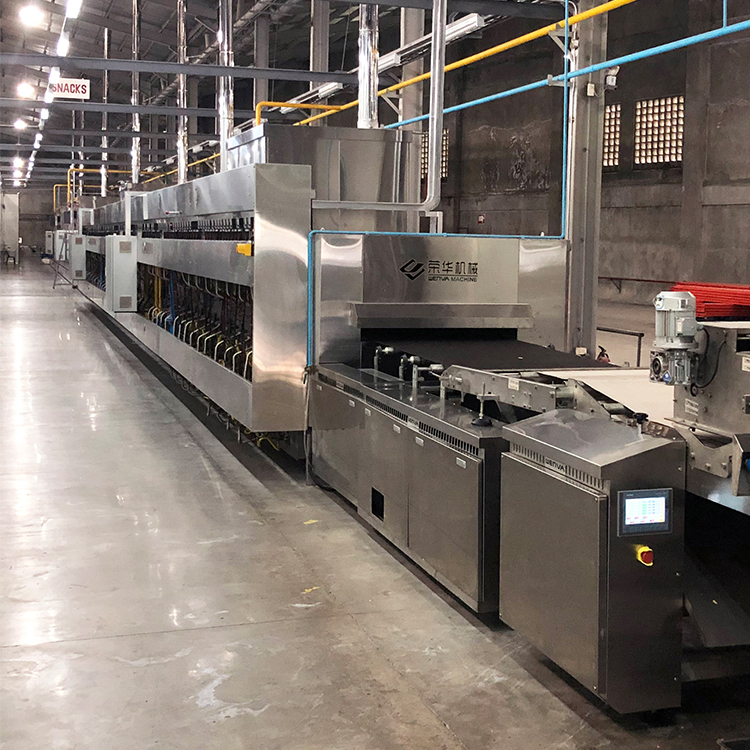
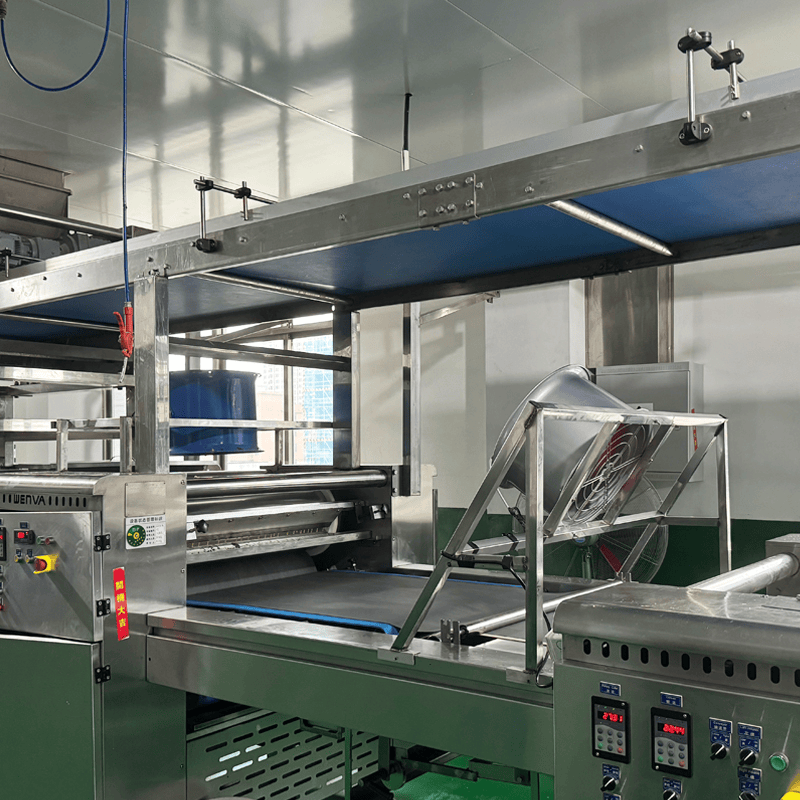
A biscuit production line is a fully integrated system that automates dosing, mixing, forming, baking, cooling, stacking, and packaging to deliver consistent, high-volume output. Core equipment typically includes raw material dosing and mixing systems, horizontal or vertical dough mixers, automatic conveyors and sheeters, laminators, rotary cutters or molding machines, tunnel ovens, cooling conveyors, and automated stacking and packaging units.
When any of these subsystems is misconfigured or poorly maintained, you will see symptoms such as inconsistent biscuit size, uneven baking, dough sticking, product breakage, or unexpected stoppages on the line. By understanding how each section of the line contributes to final product quality, you can troubleshoot issues faster and implement preventive measures instead of reacting to breakdowns. [foodsmachine]
In day-to-day production, most biscuit manufacturers encounter a recurring pattern of issues that directly impact quality, yield, and operating costs. The most frequent symptoms include: [foodsmachine]
- Uneven or inconsistent biscuit size and shape
- Dough sticking to sheeters, cutters, or forming equipment
- Overbaking or underbaking leading to color and texture defects
- Excessive machine noise or vibration
- Power supply or electrical issues causing stop–start operation
Each symptom is a signal of deeper process or mechanical problems, such as poor alignment, dough formulation errors, oven calibration issues, or inadequate maintenance. Treating these issues early protects your line from unplanned downtime, avoids waste, and keeps your biscuits within specification. [foodsmachine]
Inconsistent size and shape often originate from alignment, mechanical wear, or dough variability rather than the oven itself. Diagnose and correct the problem using the following steps: [foodsmachine]
1. Check machine alignment and levelness
- Ensure the machine is installed on a flat, stable surface; misalignment causes irregular forming and uneven cutting. [foodsmachine]
- Verify that conveyors, sheeters, and cutters are aligned and tracking correctly from upstream to downstream.
2. Inspect molds, dies, and rotary cutters
- Look for damage, warping, buildup, or dull edges that deform the dough. [foodsmachine]
- Clean molds and dies thoroughly and replace any worn components to restore uniform geometry. [foodsmachine]
3. Stabilize dough consistency
- Adjust hydration, mixing time, and ingredient ratios to keep dough texture consistent, avoiding overly wet or dry batches. [foodsmachine]
- Monitor sheet thickness at the gauge rolls to maintain a controlled, repeatable thickness entering the cutter or molder.
By combining good mechanical alignment with stable dough properties, you can significantly reduce size and shape variations and improve overall line efficiency.
Dough sticking to mixers, sheeters, or rotary cutters can quickly slow your line, damage surfaces, and create sanitation risks. The root causes typically fall into three categories: dough formulation, surface condition, and lubrication. [foodsmachine]
Key troubleshooting actions:
- Clean and sanitize contact surfaces frequently
Remove dough residue from drums, belts, and dies, paying special attention to rough or hard-to-reach areas where buildup accelerates sticking. [foodsmachine]
- Optimize dough formulation and temperature
Dough that is too sticky because of high moisture content, incorrect fat levels, or temperature fluctuations will adhere more easily to metal and belt surfaces. Adjust ingredient ratios and mixing parameters until you achieve a plastic but non-sticky texture that runs well on your specific line. [hg-machine]
- Use appropriate lubrication or release systems
Apply food-grade lubricants or release agents where permitted to reduce friction and prevent adhesion without compromising food safety. [foodsmachine]
Ensure moving parts are lubricated to reduce mechanical resistance, which also decreases the risk of dough tearing and sticking.
When the line is correctly configured, dough should pass smoothly from mixer to sheeter to cutter with minimal sticking, allowing higher speeds and more consistent output.
Inconsistent baking leads directly to quality complaints and rework, as customers expect consistent color, texture, and bite. Overbaked biscuits may become too dark and brittle, while underbaked ones remain pale and soft. [hg-machine]
Focus on three main areas:
1. Oven calibration and temperature profile
- Regularly verify oven zone temperatures with reliable measurement devices and recalibrate as needed. [foodsmachine]
- Avoid excessive temperature in the initial oven zones, which can cause surface blistering or uneven color development. [hg-machine]
2. Baking time and belt loading
- Adjust belt speed to balance throughput with desired bake; shorter residence time often explains underbaked centers. [foodsmachine]
- Prevent overloading by keeping a uniform pattern of biscuits on the belt to ensure consistent airflow and heat distribution. [foodsmachine]
3. Dough thickness and formulation
- Keep sheet thickness stable across the belt to avoid thin pieces overbaking while thicker pieces underbake. [foodsmachine]
- Review sugar, fat, and leavening levels in the formula, which affect color, spread, and internal structure. [hg-machine]
A well-tuned tunnel oven with a stable recipe and controlled belt loading will consistently deliver biscuits with uniform color and texture from edge to edge.
Unusual noise or vibration is not just a comfort issue; it is often an early warning of mechanical misalignment or component failure. Ignoring it can escalate to chain breakage, bearing seizure, or conveyor damage. [foodsmachine]
Practical steps to reduce noise and vibration:
- Inspect moving parts
Check gears, chains, belts, and bearings for wear, misalignment, or looseness, and replace or tension them according to the manufacturer's guidelines. [foodsmachine]
- Verify foundation and leveling
Ensure machines are firmly anchored and level; an unstable foundation amplifies vibration and can affect product accuracy. [foodsmachine]
- Clean and tighten internal components
Remove accumulated debris that may obstruct moving parts and tighten any loose fasteners, guards, or covers that create rattling during operation. [foodsmachine]
By addressing these mechanical issues early, you maintain safer working conditions and extend the service life of your equipment.
Troubleshooting Power Supply and Electrical Issues
Electrical issues can cause sudden stops, intermittent operation, or even damage to critical control components if left unresolved. Proper electrical troubleshooting focuses on both the external power system and internal wiring. [ruipuhua-machinery]
Key areas to examine:
- Power source and protection devices
Check the main electrical panel, circuit breakers, and disconnect switches for blown fuses, tripped breakers, or loose connections, and correct them before restarting the line. [ruipuhua-machinery]
- Internal wiring and components
Inspect cables, connectors, and control panels for signs of wear, heat damage, or moisture ingress; replace any damaged components and secure loose wiring. [ruipuhua-machinery]
- Load balancing and capacity
Confirm that the production line's power demand does not exceed the available capacity, especially when multiple high-load systems (ovens, compressors, cooling) run simultaneously. [ruipuhua-machinery]
Establishing safe electrical practices and performing regular inspections significantly reduces unexpected outages and protects both personnel and equipment.
While troubleshooting gets you out of trouble, preventive maintenance keeps you out of trouble in the first place. A structured maintenance program adds predictability to production, lowers lifecycle costs, and supports food safety compliance. [ruipuhua-machinery]
Essential preventive practices:
- Implement a proactive maintenance schedule
Define daily, weekly, and monthly tasks such as cleaning, lubrication, inspection, and part replacement for each major subsystem. [ruipuhua-machinery]
- Align maintenance with quality control checks
Combine visual inspections of dough consistency, biscuit size, color, and breakage rates with equipment checks to catch problems early.
- Train operators in basic troubleshooting
Equip line operators with clear SOPs and checklists so they can recognize early warning signs and perform first-level interventions safely. [ruipuhua-machinery]
A well-documented maintenance strategy makes it easier to scale operations, onboard new staff, and sustain high OEE (Overall Equipment Effectiveness) across multiple lines or plants.
Modern biscuit production lines increasingly rely on real-time monitoring and data-driven control to maintain consistency and quickly detect anomalies. Smart sensors and automation technologies help you move from reactive to predictive maintenance.
Typical monitoring tools include:
- Temperature sensors and data loggers to track oven zones and verify continuous compliance with process parameters.
- Moisture meters and weight checks to control dough hydration and final product moisture content.
- Automated quality inspection systems (e.g., vision systems) to detect size, shape, or color deviations in real time and trigger alarms or reject streams.
By integrating these tools into your biscuit line, you can detect drift in the process long before defects appear in finished products, improving both quality and yield.
With four decades focused on automated biscuit production lines, Wenva Machine has observed common patterns in factories worldwide and developed practical guidelines for long-term, trouble-free operation. [wenvamachine]
Three expert-level recommendations:
- Design layout for maintainability
During line design, prioritize clear access to critical equipment (ovens, mixers, stackers) to reduce maintenance time and improve safety during troubleshooting.
- Standardize recipes and settings across lines
Use standard operating recipes, mixing times, and oven profiles for similar products to reduce variability and make root-cause analysis faster.
- Document every issue and solution
Create a log of faults, root causes, corrective actions, and spare parts used; over time this becomes a powerful knowledge base for engineers and operators.
These practices contribute directly to higher uptime, more predictable output, and faster commissioning when you expand capacity or add new products.
Even with a well-trained team, there are cases where involving the equipment manufacturer or an authorized service provider is the safest and most efficient option. [ruipuhua-machinery]
You should consider external support when:
- Repeated failures occur in the same subsystem despite corrective actions
- Critical safety systems, control logic, or PLCs require adjustment or reprogramming
- Major mechanical components (such as oven burners, main drives, or structural elements) show signs of serious wear or damage
Partnering with your original equipment supplier allows you to benefit from their in-depth design knowledge, updated spare parts, and the latest process optimizations from other installations. [wenvamachine]
To improve usability, many factories implement simple, visual checklists that operators can follow before calling maintenance or stopping the line. Below is a simplified example you can adapt: [ruipuhua-machinery]
Before calling maintenance, operators should check:
1. Is the machine powered, emergency stops released, and main switches on?
2. Are all guards closed and safety interlocks satisfied?
3. Is dough consistency within normal range (not too wet/dry, not lumpy)?
4. Are belts tracking correctly and free of visible residue or foreign objects?
5. Are oven temperatures and belt speed within the standard recipe parameters?
If these basic checks do not resolve the problem, the issue should be escalated to maintenance or production engineering with clear notes on observed symptoms and recent changes.
Beyond technical reliability, effective troubleshooting and maintenance directly affect profitability and customer satisfaction. Reduced downtime means higher throughput, fewer rush orders, and more predictable delivery schedules. [wenvamachine]
Consistent product quality supports brand reputation, regulatory compliance, and export readiness, which is especially important for manufacturers supplying multiple markets. When troubleshooting is integrated into a broader continuous improvement program, it becomes a strategic capability rather than just a repair function. [hg-machine]
If your current biscuit machine frequently suffers from inconsistent quality, unplanned downtime, or difficult maintenance, it may be time to upgrade to a fully integrated, customized automated biscuit production line. Wenva Machine designs, manufactures, and commissions complete solutions tailored to your factory layout, capacity, and product range, from hard and soft biscuits to crackers and specialty products.
Reach out to Wenva Machine's engineering team to audit your existing line, identify improvement opportunities, and develop a practical roadmap for upgrading or replacing equipment to ensure stable, high-quality, and cost-efficient biscuit production.
1. What are the most common issues in biscuit production lines?
The most common issues include inconsistent biscuit size and shape, uneven baking, dough sticking to equipment, biscuit breakage during handling, and equipment malfunctions such as mechanical or electrical failures. [foodsmachine]
2. How can I prevent dough from sticking to my biscuit machine?
You can prevent dough sticking by keeping contact surfaces clean, optimizing dough formulation and moisture content, using food-grade release agents where appropriate, and maintaining proper lubrication of moving parts. [foodsmachine]
3. What should I do if my biscuits are breaking during handling?
Biscuit breakage often stems from overly brittle texture due to overbaking or recipe imbalances, as well as rough handling or poorly adjusted conveyors and stackers. Review baking time, temperature, and formulation, then train operators and adjust transfer points to reduce mechanical stress on the biscuits. [hg-machine]
4. How often should I conduct maintenance on my biscuit production line?
Maintenance frequency depends on operating hours and environment, but most lines benefit from daily cleaning checks, weekly lubrication and inspection tasks, and more comprehensive monthly or quarterly mechanical and electrical inspections. A structured, written plan ensures nothing is overlooked. [ruipuhua-machinery]
5. What technologies can help me monitor and troubleshoot my biscuit line?
Temperature sensors, moisture meters, automated weighing systems, and vision-based quality inspection tools enable real-time monitoring of critical parameters such as oven profile, dough moisture, and biscuit geometry. Integrating these tools into your control system helps you detect deviations early and take corrective action before defects appear.
1. Golden Bake Group – “How to Troubleshoot Common Issues with Your Biscuit Machine.” https://www.foodsmachine.net/a-news-how-to-troubleshoot-common-issues-with-your-biscuit-machine.html
2. Wenva Machine – “How To Troubleshoot Common Issues in Biscuit Production Lines.” https://www.wenvamachine.com/how-to-troubleshoot-common-issues-in-biscuit-production-lines.html
3. Wenva Machine – “Cookie Maker Machine Maintenance: An Expert’s Guide to Long-Term Trouble-Free Operation.” https://www.wenvamachine.com/cookie-maker-machine-maintenance-an-expert-s-guide-to-long-term-trouble-free-operation.html
4. Ruipuhua – “How to Troubleshoot Common Issues with Biscuit Packing Machines.” https://www.ruipuhua-machinery.com/article/detail/how-to-troubleshoot-common-issues-with-biscuit-packing-machines.html
5. HG Machinery – “Analysis and Processing of Common Problems When Making Biscuits.” https://www.hg-machine.com/news/industry-information/analysis-and-processing-of-common-problems-when-making-biscuits-by-biscuit-machine.html