
Views: 222 Author: Sara Publish Time: 2025-04-30 Origin: Site
Content Menu
● Introduction to Biscuit and Cookie Production Line Machinery
● Bakery Equipment Market in Thailand
>> Key Suppliers and Distributors in Thailand
● Buying Bakery Equipment for Sale in Thailand: What to Look For
>> 1. Production Capacity and Scalability
>> 3. Versatility and Customization
>> 4. Energy Efficiency and Oven Type
>> 5. After-Sales Support and Maintenance
>> 6. Compliance with Food Safety Standards
● Overview of Biscuit Production Line Machines
>> Baking Ovens
● Why Choose Our Chinese Biscuit Production Line Machines?
● Where Exactly to Buy Bakery Equipment in Thailand?
>> 2. FFT Asia
● Additional Tips for Buying Bakery Equipment in Thailand
● FAQ
>> 1. What types of biscuit production lines are available?
>> 2. Can bakery equipment be customized for different biscuit types?
>> 3. What is the typical capacity range for biscuit production lines?
>> 4. How important is after-sales service for bakery equipment?
>> 5. Where can I find used bakery equipment in Thailand?
As a leading Chinese manufacturer specializing in biscuit and cookie production line machinery, we understand the critical importance of sourcing reliable, high-quality bakery equipment to meet the demands of modern bakeries worldwide. Thailand, with its vibrant food industry and growing bakery market, offers numerous opportunities for purchasing bakery equipment, especially for biscuit and cookie production. This comprehensive article explores where and how to buy bakery equipment for sale in Thailand, focusing on biscuit production line machines, factory setups, and the latest technology to help you make an informed decision.

Biscuit and cookie production lines are complex systems designed to automate the entire baking process, from dough mixing to packaging. These production lines typically include:
- Dough mixers and feeders
- Dough sheeters and rollers
- Biscuit forming and cutting machines
- Tunnel ovens for baking
- Cooling conveyors
- Sandwiching and filling machines (for sandwich biscuits)
- Packaging machines
Our factory specializes in manufacturing these machines with advanced technology to ensure high efficiency, consistent product quality, and versatility to produce various biscuit types such as hard biscuits, soft biscuits, sandwich cookies, and more.
Modern biscuit production lines are engineered to maximize output while minimizing labor costs and waste. Automation plays a key role in achieving uniformity in biscuit size, shape, and texture, which is essential for brand consistency and consumer satisfaction. Additionally, the integration of intelligent control systems allows operators to monitor and adjust production parameters in real-time, ensuring optimal baking conditions and product quality.
Thailand's bakery equipment market is well-developed, with numerous suppliers and distributors offering a wide range of commercial bakery machinery. Many companies import equipment from global manufacturers, including China, Taiwan, the USA, and Europe, ensuring access to the latest innovations.
- Ramita Food Services: A prominent supplier offering commercial bakery equipment including ovens, proofers, dough mixers, and complete production lines. They provide factory design, installation, and maintenance services, making them a one-stop solution for bakery setups in Thailand. Their expertise also extends to customized bakery solutions tailored to client needs.
- FFT Asia: Specializes in commercial bakery and pastry equipment, offering everything from bread moulders to dough dividers and mixers. FFT Asia is known for its comprehensive after-sales support and technical training, which is crucial for smooth bakery operations.
- Kitchen-Tech: Offers a variety of dough dividing and forming machines suitable for bakeries and commercial kitchens. Their equipment is designed for ease of use and reliability, making them a popular choice among small to medium-sized bakeries.
- Local Marketplaces: Platforms like BahtSold offer used and new bakery equipment such as industrial stoves, dough kneaders, and proofers at competitive prices. These marketplaces provide an affordable option for startups or businesses looking to expand without significant capital investment.
Thailand's strategic location in Southeast Asia also makes it a hub for bakery equipment distribution, serving neighboring countries such as Cambodia, Laos, and Myanmar. This regional connectivity enhances the availability and variety of bakery machinery in the Thai market.
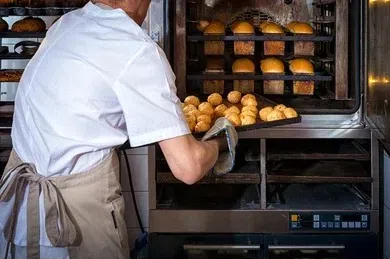
When purchasing bakery equipment, especially biscuit production machinery, consider the following factors to ensure you invest wisely:
Choose machines that match your production volume requirements. For example, biscuit production lines can range from 100 kg/hour to over 2000 kg/hour capacity, depending on the model and configuration. It is important to select equipment that can scale with your business growth, either by modular expansion or by upgrading components.
Higher automation reduces labor costs and increases consistency. Modern biscuit lines integrate automatic dough feeding, forming, baking, cooling, and packaging controlled by PLC (Programmable Logic Controller) systems. Automation also reduces human error and improves hygiene by minimizing manual contact.
Machines should accommodate different biscuit types and shapes. Some production lines allow adding features like sugar sprinkling, egg spraying, and printing to diversify product offerings. Customizable machines enable bakeries to innovate with new recipes and designs, keeping pace with market trends.
Ovens can be electric, gas, diesel, or thermal oil heated. Select based on your energy availability and cost considerations. Energy-efficient ovens reduce operational costs and environmental impact. Some modern ovens also incorporate heat recovery systems to optimize energy use.
Reliable technical support and maintenance services are crucial for minimizing downtime and ensuring smooth operations. Choose suppliers with a strong local presence or global service networks that provide prompt assistance, spare parts availability, and training.
Ensure the equipment complies with international food safety and hygiene standards such as ISO, HACCP, and CE certifications. This guarantees that the machinery meets stringent quality and safety requirements, which is essential for exporting baked goods.
Understanding the components of a biscuit production line helps you select the right equipment for your bakery.
Continuous mixers are popular for consistent dough quality. Our factory offers mixers that handle various dough types, including stiff and high-moisture doughs. These mixers ensure thorough ingredient blending and uniform dough texture, which directly affects the final biscuit quality.
Dough rollers and sheeters flatten dough to desired thickness. Forming machines shape dough into biscuits using molds or rollers, with scrap dough recycled automatically. This process ensures minimal waste and consistent biscuit shapes.
Tunnel ovens with hot air circulation provide uniform baking. Temperature and speed are adjustable to achieve perfect texture and color. Modern ovens feature multi-zone temperature control for precise baking profiles tailored to different biscuit types.
Cooling conveyors prevent moisture buildup and prepare biscuits for packaging. Some lines include oil spraying and turning machines for specific biscuit types. Proper cooling is essential to maintain biscuit crispness and prevent breakage during packaging.
For sandwich biscuits, specialized sandwiching machines apply fillings like jam or cream with high precision. Packaging machines then wrap biscuits for retail, using flow wrapping, vacuum packaging, or tray packing methods. Automated packaging enhances shelf life and product presentation.
- Advanced Technology: We integrate the latest automation and control systems for precision and efficiency. Our machines are equipped with user-friendly touch screens and remote monitoring capabilities.
- Customization: Tailored production lines to meet specific product and capacity needs. We work closely with clients to design lines that fit their unique recipes and production goals.
- Global Experience: Our machines serve clients worldwide including the USA, Middle East, South Africa, and Southeast Asia. This international exposure ensures our equipment meets diverse market requirements.
- Comprehensive Service: From design and manufacturing to installation and training. We provide turnkey solutions that simplify the setup process for our clients.
- Competitive Pricing: High-quality equipment at affordable prices. Our cost-effective solutions help bakeries maximize ROI without compromising on quality.
- Offers a wide range of bakery machines and complete production line solutions.
- Provides factory design and installation.
- Imports machines from global manufacturers.
- Offers maintenance and training services.
Ramita Food Services is known for its personalized customer approach and extensive product portfolio, making it an excellent choice for bakeries seeking end-to-end solutions.
- Supplies commercial bakery and pastry equipment.
- Has showrooms in Pattaya and Phuket.
- Offers a variety of dough dividers, mixers, proofers, and ovens.
FFT Asia emphasizes quality and innovation, providing equipment that meets international standards.
- Specializes in dough dividing and forming machines.
- Suitable for bakeries, hotels, and commercial kitchens.
Kitchen-Tech's equipment is ideal for businesses looking to improve production efficiency with reliable machines.
- Offers used and new bakery equipment at competitive prices.
- Equipment includes industrial stoves, dough kneaders, proofers, and refrigerators.
BahtSold is a useful platform for startups or expanding bakeries seeking cost-effective equipment options.
- Visit Local Trade Shows: Events like the Thailand Bakery & Ice Cream Expo provide opportunities to see equipment firsthand and meet suppliers.
- Request Demonstrations: Before purchasing, ask for live demos or factory tours to evaluate machine performance.
- Check Warranty and Spare Parts Availability: Ensure the equipment comes with a warranty and that spare parts are readily available locally.
- Consider Importing Directly: For specialized or customized machines, importing directly from manufacturers like our Chinese factory may offer cost advantages and tailored solutions.
For bakeries and biscuit manufacturers looking to establish or upgrade their production lines in Thailand, there are multiple reliable sources for bakery equipment for sale. Whether you seek complete biscuit production lines, individual machines, or factory design and installation services, Thailand's market offers diverse options. Our Chinese factory provides advanced, customizable biscuit and cookie production line machines that meet international quality standards and cater to various production capacities.
By partnering with experienced local suppliers like Ramita Food Services or FFT Asia, or directly sourcing from trusted manufacturers, you can ensure your bakery operations run efficiently with high-quality equipment. Investing in the right bakery equipment is essential for producing consistent, delicious biscuits that meet market demands. With the right machinery, your bakery can scale production, innovate product lines, and maintain competitive advantage in Thailand's growing bakery industry.

There are mainly two types: hard biscuit production lines and soft biscuit production lines. Hard biscuit lines include dough rolling and lamination processes, while soft biscuit lines focus on forming and baking with optional sprinkling and spraying machines.
Yes, many manufacturers offer customization options to accommodate various biscuit shapes, sizes, and recipes, including features like sugar sprinkling, egg painting, and filling machines.
Production capacities vary widely, typically from 100 kg/hour for small lines to over 2000 kg/hour for large industrial lines, depending on the model and configuration.
After-sales service is critical for maintenance, troubleshooting, and ensuring continuous production. Choose suppliers who provide comprehensive support and training.
Used bakery equipment can be found on local marketplaces like BahtSold, where industrial stoves, dough kneaders, and proofers are available at affordable prices.


