
Views: 209 Author: Wenva Machine Publish Time: 2026-07-03 Origin: Site
Content Menu
● How to Evaluate a Reliable Commercial Cookie Machine Supplier
● China's Position in Commercial Cookie Machine Manufacturing
● Transparent Selection Criteria for This Top 10 List
● Top 10 Commercial Cookie Machine Manufacturers in China (2026)
>> 1. Wenva Machine – Flexible Biscuit & Cookie Production Lines
>> 2. Shanghai HG Food Machinery Co., Ltd.
>> 3. Guangzhou GELGOOG Intelligent Technology Co., Ltd.
>> 5. Zhuhai Biscuit Line & Cookie Machine Cluster (Around Golden Bake)
>> 6. Foshan / Guangdong Baking Equipment Cluster (Including Wenva and Peers)
>> 7. Multi‑Product Food Machinery Integrators (Shanghai / Jiangsu)
>> 8. Specialized Cookie Depositor and Wire‑Cut Machine Makers
>> 9. Hybrid Tunnel Oven and Baking System Specialists
>> 10. OEM‑Focused Machinery Suppliers for Private‑Label Cookie Brands
● Technical Essentials for Commercial Cookie Machines
>> Process control and automation
>> Compliance and certifications
● Comparative View: Supplier Types, Capacity, MOQ and Certifications
● Industry Pain Points When Buying Cookie Machines (And How to Avoid Them)
>> 1. Sub‑standard materials and components
>> 2. Over‑stated capacity and under‑designed ovens
>> 3. Incomplete documentation and non‑verifiable certifications
>> 4. Hidden costs in installation and commissioning
● Insider "Avoid‑the‑Pitfalls" Tip (Rarely Written, Widely Known)
● Practical Buyer's Guide: Step‑by‑Step for 2026 Sourcing
>> Step 1: Pre‑screening and shortlisting
>> Step 2: Technical alignment
>> Step 3: Factory audit and sample tests
>> Step 4: Contracting and certification verification
>> Step 5: Shipment, installation and training
● FAQ: Advanced Questions Real Buyers Ask
For professional procurement managers, the biggest risk is rarely the initial machine price; it is unstable quality, unexpected downtime, and non‑compliance in export markets. [china-clothing-manufacturer]
When shortlisting commercial cookie machine manufacturers, you should systematically assess:
- Factory certifications and quality systems
- R&D depth and engineering history
- QC process consistency and FAT (Factory Acceptance Test)
- Delivery reliability and global service capability
- Export track record and reference markets [china-clothing-manufacturer]
- Factory certification & compliance
- Valid ISO 9001 quality management and CE‑compliant machinery design should be your baseline for export‑grade cookie lines. [china-clothing-manufacturer]
- For food‑contact parts, look for hygiene‑related standards and traceable stainless steel sourcing (SS304/SS316 from known mills). [made-in-china]
- R&D capability and process know‑how
- Prefer manufacturers who have continuously upgraded their lines—modular layouts, PLC control, energy‑saving tunnel ovens, flexible forming technologies—rather than reselling legacy designs. [china-clothing-manufacturer]
- A visible engineering history (e.g., developing soda cracker lines, thin cracker technology, hybrid ovens) is a strong proxy for real technical competence. [made-in-china]
- QC process and production stability
- Export‑oriented factories usually offer full FAT, documented inspection routines, and traceable lot records before shipment. [china-clothing-manufacturer]
- Ask explicitly for higher‑grade components and stricter QC for overseas orders; this should be written into the contract. [china-clothing-manufacturer]
- Delivery reliability and service network
- Predictable lead times, in‑house installation teams, and overseas branches or stable agents are key for commissioning and after‑sales support. [china-clothing-manufacturer]
- On‑site commissioning and operator training in English are especially important for first‑time buyers of automated cookie lines. [china-clothing-manufacturer]
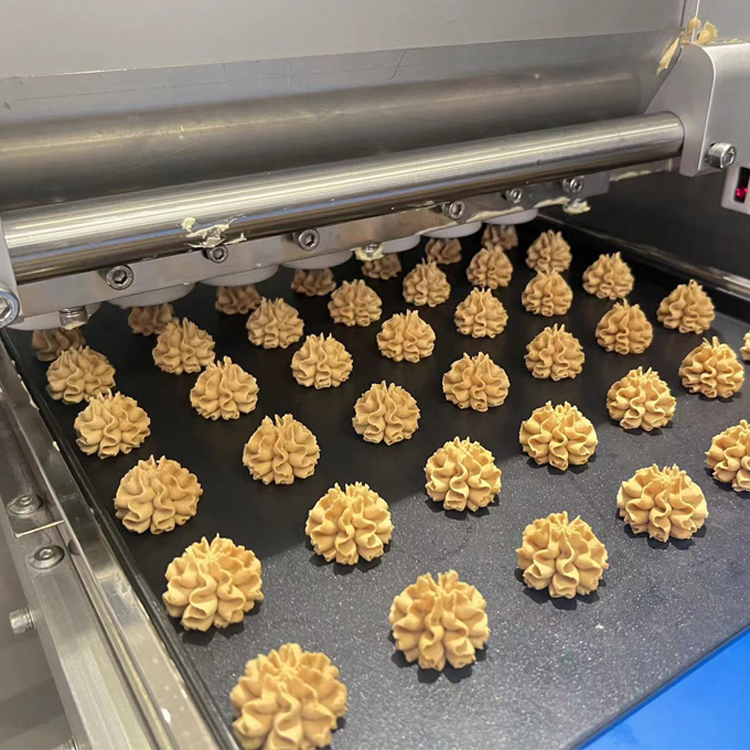
China has developed one of the most mature ecosystems globally for biscuit and cookie production lines, combining large domestic demand, strong industrial clusters, and competitive export pricing. [china-clothing-manufacturer]
Industry analyses estimate that by 2026 China's biscuit production industry has reached a market size of around USD 54.8 billion, with more than 1,600 biscuit‑related producers; this scale underpins dense supply chains for baking equipment, stainless fabrication, controls, and OEM parts. [china-clothing-manufacturer]
The domestic cookie market itself is forecast to grow by roughly USD 0.75 billion between 2021 and 2027, which drives continuous upgrades in industrial cookie lines and tunnel ovens used by local brands and export‑focused factories. [china-clothing-manufacturer]
For global procurement managers, sourcing cookie machines from China provides access to:
- Full turnkey cookie production lines from approximately 100–2000 kg/h capacity. [china-clothing-manufacturer]
- Specialized forming, cutting, and hybrid tunnel oven solutions tuned to specific cookie types and energy profiles. [china-clothing-manufacturer]
Key industrial clusters include:
- Foshan / Guangdong for baking equipment, leveraging the region's broader metalworking and export infrastructure (similar to Foshan's furniture and building materials cluster). [made-in-china]
- Zhuhai for biscuit lines and cookie machines, where several branded suppliers operate with shared local ecosystems of fabricators and control integrators. [china-clothing-manufacturer]
- Shanghai / Jiangsu for multi‑product snack line integrators and higher‑level plant automation. [china-clothing-manufacturer]
To keep this list actionable for serious buyers (OEM brands, contract manufacturers, and mid‑sized biscuit plants), we apply a clear scoring framework. [china-clothing-manufacturer]
1. Manufacturing experience & specialization
- Minimum 10 years in biscuit/cookie machinery.
- Priority to companies specializing in biscuit/cookie lines rather than generic food machines. [china-clothing-manufacturer]
2. Product scope & scalability
- Ability to provide complete solutions: dough mixing, forming, baking (tunnel ovens), cooling, and basic packaging. [china-clothing-manufacturer]
- Configurable capacities suitable for mid‑scale plants and large industrial bakeries (around 100–2000 kg/h). [china-clothing-manufacturer]
3. Compliance & documentation
- Availability of CE, ISO, and any customer‑required documentation, plus willingness to share sample certificates for verification. [china-clothing-manufacturer]
4. Export performance & reference markets
- Evidence of stable exports across multiple regions (Southeast Asia, Middle East, Africa, Latin America). [made-in-china]
- Regular participation in trade fairs such as Bakery China and Canton Fair. [made-in-china]
5. OEM/ODM ability & engineering support
- Practical customization of line layouts, molds/nozzles, and control logic for brand‑specific products or constrained floor space. [china-clothing-manufacturer]
6. Service & communication
- English‑speaking engineering/sales teams, remote support, and on‑site commissioning and training. [china-clothing-manufacturer]
Within this framework, Wenva Machine is positioned as a high value‑for‑money, R&D‑driven partner with strong relevance for buyers seeking flexible OEM/ODM support rather than off‑the‑shelf equipment. [made-in-china]
Wenva Machine has focused on automated biscuit production lines for roughly 40 years, integrating R&D, design, manufacturing, and global service. The company's history in biscuit line design dates back to the mid‑1970s, and its first export line shipped in 1993; today Wenva's equipment serves food factories in more than 25 countries. [made-in-china]
From a commercial cookie perspective, Wenva offers modular cookie production line solutions covering dough mixing, forming (wire‑cut, rotary moulder, and custom molds), tunnel baking, and cooling. [made-in-china]
- Materials and process control
- Food‑contact parts use SS304/SS316 stainless steel, combined with PLC control and touchscreen HMI for recipe and parameter management. [made-in-china]
- Energy‑efficient electric, gas, and hybrid tunnel ovens allow buyers to balance energy costs with product quality. [made-in-china]
- Capacity & layout flexibility
- Typical cookie line capacities are configurable from about 100 to 2000 kg/h, with options for line widths around 620–1500 mm depending on automation level and oven design. [china-clothing-manufacturer]
- Wenva provides full customization of layouts to match different factory footprints and process flows. [made-in-china]
- OEM/ODM depth & experience center
- Wenva is especially strong in OEM customization for product dimensions, surface texture, sandwich structure, and oven zoning. [china-clothing-manufacturer]
- A dedicated Biscuit Production Line Experience Center allows customers to test their own dough formulations and SKUs before finalizing orders. [made-in-china]
- Service model & global reach
- In‑house technicians handle on‑site installation, trial production, commissioning, and operator training, with detailed operation and maintenance manuals. [made-in-china]
- A Foshan branch office and mature foreign trade team support communication with international clients; export trade accounts for around 40% of Wenva's business. [made-in-china]
Wenva is particularly suitable for mid‑size and growing cookie brands or contract manufacturers that need cost‑effective lines, tight technical communication, and long‑term OEM/ODM support. [made-in-china]

Shanghai HG is widely referenced as a major supplier of baking and biscuit machinery, including full automatic biscuit production lines, cookie depositors, rotary molders, and tunnel ovens. [china-clothing-manufacturer]
- Broad product portfolio for biscuits, cookies, crackers, and snack production.
- CE‑compliant machinery and experience serving both domestic Chinese food manufacturers and overseas buyers. [china-clothing-manufacturer]
GELGOOG is a large food machinery group with solutions covering nuts, confectionery, and bakery equipment, including cookie and biscuit lines. [ensun]
- Strong experience with turnkey food processing lines and multi‑product plants. [ensun]
- Emphasis on intelligent controls, data monitoring, and integrated engineering support, which benefits larger industrial operations. [ensun]
Golden Bake is one of the better‑known names in commercial biscuit and cookie production lines and frequently publishes detailed buying guides for cookie machines. [china-clothing-manufacturer]
- Provides complete lines with mixers, forming sections, tunnel ovens, cooling, and in many cases packaging integration. [china-clothing-manufacturer]
- Notable focus on educating buyers about capacity planning, machine configuration, and typical selection mistakes—useful when you are building your first plant or upgrading from semi‑automatic equipment. [china-clothing-manufacturer]
Zhuhai hosts a cluster of biscuit line and cookie machine manufacturers, with Golden Bake and several peers leveraging local ecosystems of metal fabricators, conveyor specialists, and control integrators. [china-clothing-manufacturer]
- Regional concentration simplifies sourcing of auxiliary machines and spare parts.
- Multiple suppliers using similar standards allow competitive benchmarking through back‑to‑back factory visits. [china-clothing-manufacturer]
Foshan and surrounding Guangdong cities are core bases for industrial baking equipment, including cookie and biscuit lines, drawing on the region's broader strengths in metalworking, automation, and export trade. [made-in-china]
- Export‑oriented suppliers with established documentation practices and CE/ISO implementation. [made-in-china]
- Capacity options from small semi‑automatic biscuit machines to full industrial cookie lines make it easy to scale as your brand grows. [made-in-china]
In the Shanghai–Jiangsu corridor, several integrators design multi‑product snack lines where cookie machines form part of larger plant concepts (chips, wafers, crackers). [china-clothing-manufacturer]
- Suitable when you plan to run multiple snacks on shared infrastructure.
- Strong capabilities in plant‑level automation and integration with existing utilities and packaging systems. [china-clothing-manufacturer]
In provinces such as Zhejiang, Jiangsu, and parts of Guangdong, smaller manufacturers focus on cookie depositors, wire‑cut equipment, and rotary molders that can be integrated into existing tunnel ovens. [china-clothing-manufacturer]
- Ideal for upgrading the forming section of an existing biscuit line to expand cookie SKUs.
- Good fit for pilot lines or lower capacity projects without need for full turnkey systems. [china-clothing-manufacturer]
Some Chinese equipment makers specialize in electric, gas, and hybrid tunnel ovens—critical infrastructure for stable cookie quality and energy management at scale. [china-clothing-manufacturer]
- Multi‑zone temperature control and heat‑management options drive both product uniformity and energy cost reduction. [china-clothing-manufacturer]
- Hybrid oven designs enable flexibility in recipe development and energy sourcing strategies. [china-clothing-manufacturer]
A growing group of OEM/ODM‑oriented machinery manufacturers work closely with private‑label cookie brands and contract packers, focusing on customization and scalability. [china-clothing-manufacturer]
- Highly customized forming tools, unique shapes and textures, and modular package add‑ons to differentiate SKUs. [china-clothing-manufacturer]
- Scalable lines that can start at modest outputs and be upgraded later without full replacement. [china-clothing-manufacturer]
To pass retailer audits and meet export compliance, procurement managers should pay attention to several cookie‑specific technical points. [china-clothing-manufacturer]
- Food‑contact surfaces should be SS304 or SS316 with polished, easy‑to‑clean designs and minimal dead zones. [china-clothing-manufacturer]
- Machines must support sanitation procedures aligned with international food safety norms, including proper drainage and access for cleaning. [china-clothing-manufacturer]
- Modern lines rely on PLC‑based controls with recipe management, data logging, and alarms; this enables consistent output and traceable production. [china-clothing-manufacturer]
- Energy‑efficient ovens with multi‑zone control, insulation, and optional heat recovery can materially lower operating costs over the line's lifecycle. [china-clothing-manufacturer]
- CE conformity and ISO 9001 QMS are standard requirements for export; RoHS compliance for electrical components may be necessary for certain markets. [china-clothing-manufacturer]
- You should request sample certificates and verify their authenticity using international or national accreditation databases. [china-clothing-manufacturer]
Below table gives an indicative snapshot for different supplier categories; always confirm exact specs with each manufacturer. [china-clothing-manufacturer]
| Supplier type | Typical capacity range (cookies) | Typical MOQ for full line | Common certifications | Ideal buyer profile |
|---|---|---|---|---|
| Wenva Machine | ~100–2000 kg/h configurable cookie lines (china-clothing-manufacturer) | 1 full line; modular units available (china-clothing-manufacturer) | CE, ISO, food‑grade SS304/316, export documentation (made-in-china) | Mid‑size to large plants and OEM brands needing layout and recipe customization (made-in-china) |
| Major brand (e.g. Golden Bake) | Mid‑ to large‑scale biscuit & cookie lines (china-clothing-manufacturer) | 1 turnkey line | CE, ISO; detailed documentation and project case histories (china-clothing-manufacturer) | High‑output factories, multi‑country brands upgrading capacity |
| Shanghai/Foshan cluster manufacturers | Small to large lines including semi‑automatic options (made-in-china) | From single machines to complete lines | CE/ISO vary by company; documentation quality differs (china-clothing-manufacturer) | Regional brands, contract manufacturers building or extending plants |
| Specialized forming machine makers | Forming sections up to medium capacity (china-clothing-manufacturer) | 1 machine | Basic CE/ISO; must be checked per model (china-clothing-manufacturer) | Plants upgrading forming stages or piloting new cookie SKUs |
Some buyers only discover after installation that stated SS304/SS316 parts are mixed with lower‑grade steel, or that key components (drives, bearings, electronics) are unbranded or low‑spec. [china-clothing-manufacturer]
How to avoid:
- Specify SS304/SS316 for all food‑contact parts and require branded components (e.g., Siemens, Schneider) in the technical annex. [china-clothing-manufacturer]
- Review material certificates and component lists during FAT; consider third‑party inspection before shipment. [china-clothing-manufacturer]
Nameplate capacity is often calculated on simple test dough; complex recipes with high fat or inclusions typically run at lower actual throughput. [china-clothing-manufacturer]
How to avoid:
- Request tests with your own dough at the supplier's experience center or demo line; Wenva's Biscuit Production Line Experience Center is specifically designed for such trials. [made-in-china]
- Ask for test reports listing line speed, oven settings, and final moisture for your target SKUs. [china-clothing-manufacturer]
Certificates shared as low‑resolution images without traceable numbers are common red flags. [china-clothing-manufacturer]
How to avoid:
- Require original PDF certificates showing certificate number, issuing body, scope, and validity dates. [china-clothing-manufacturer]
- Validate certificates through the issuing body or via portals linked from the International Accreditation Forum (IAF) and national accreditation authorities. [iafcertsearch]
Quotes sometimes exclude critical services such as on‑site commissioning, operator training, or initial spare parts, leading to unexpected delays and costs. [china-clothing-manufacturer]
How to avoid:
- Clarify that the offer includes on‑site installation, commissioning, training, and a starter spare‑parts package. [china-clothing-manufacturer]
- Agree daily rates and travel costs for technicians in advance and include them in the contract. [china-clothing-manufacturer]
An internal rule among seasoned buyers: never finalize a cookie line order based solely on generic demo dough shown at the factory. [china-clothing-manufacturer]
Many suppliers showcase capacity and uniformity with an easy‑to‑process dough that does not reflect your real recipes—especially high‑fat formulations or products with inclusions. [china-clothing-manufacturer]
Insider practice:
- Send your own recipes (or close proxies) and demand actual test runs at the supplier's demo center, with photo/video documentation and physical samples wherever feasible. [china-clothing-manufacturer]
- During or after the test, lock key parameters—line speed, oven temperature profile, forming settings—into the technical annex of the contract so expectations are explicit and enforceable. [china-clothing-manufacturer]
- Use industry directories, trade fairs (Bakery China, Canton Fair), and professional networks to identify candidates in Foshan/Guangdong, Zhuhai, Shanghai, and other clusters—including Wenva Machine. [made-in-china]
- Filter for at least 10 years in biscuit/cookie machinery and visible export history tied to CE/ISO evidence. [china-clothing-manufacturer]
- Define your target capacity (kg/h), product range (shortbread, wire‑cut, rotary‑moulded, sandwich, filled cookies), and available plant area (m²). [china-clothing-manufacturer]
- Request preliminary layout drawings and basic P&IDs from three to five shortlisted suppliers; compare dough handling, oven zoning, cooling, and footprints. [china-clothing-manufacturer]
- Conduct remote video audits or on‑site visits focusing on fabrication, assembly, electrical workshop, and test areas. [china-clothing-manufacturer]
- Arrange recipe‑specific tests on demo lines; Wenva's experience center is designed for such production‑scenario validation. [made-in-china]
- Attach agreed layouts, component lists, and performance parameters as a legally binding technical annex. [china-clothing-manufacturer]
- Verify ISO 9001 and CE certificates through issuing bodies or accreditation databases using certificate numbers and scopes. [iafcertsearch]
- Clarify Incoterms, lead times, customs responsibilities, and packaging/transport plans for large equipment. [china-clothing-manufacturer]
- Confirm that supplier technicians will be present during trial production and will train your operators on maintenance, troubleshooting, and safety. [made-in-china]
- For large cookie lines, pay attention to packing design, container loading plans, and spare‑parts strategy to minimize risk of damage and downtime. [china-clothing-manufacturer]
- Negotiate remote diagnostic support, guaranteed response times, and annual maintenance visits where needed. [china-clothing-manufacturer]
1. How can I verify if a manufacturer's ISO 9001 certificate is valid and not expired?
Request the full certificate PDF showing certificate number, issuer, scope, and expiry date; then search the certification body via IAF or national accreditation portals, and confirm the certificate's status by number and scope. [iafcertsearch]
2. What safety margin should I use when calculating cookie line capacity for my recipe?
If a supplier quotes 1000 kg/h based on simple dough, many buyers derate by 20–30% for complex recipes or stricter moisture targets; the most reliable method is to run tests with your real formulations on the demo line. [china-clothing-manufacturer]
3. For export to the EU or UK, what documentation should I request beyond CE?
Ask for CE Declaration of Conformity, electrical schematics, risk assessments, and English manuals; for some markets you may also need evidence of RoHS‑compliant electrical components and compliant food‑contact materials. [china-clothing-manufacturer]
4. How can I assess whether a factory's QC process is robust for continuous production?
Check for documented incoming material inspection, in‑process checks, FAT reports, and serial‑number traceability; serious suppliers can show inspection checklists, sample FAT records, and procedures for handling non‑conforming parts. [china-clothing-manufacturer]
5. How do I minimize the risk of long downtime once the cookie line is installed overseas?
Negotiate a spare‑parts package for at least 1–2 years covering bearings, sensors, belts, and drives; clarify remote support channels and agreed response times and cost structures for emergency on‑site service. [china-clothing-manufacturer]
- IBISWorld – Biscuit Production in China (industry size and cluster data). [ensun]
- Research and Markets – China Cookies Market Overview, 2027 (growth projections). [china-clothing-manufacturer]
- International Accreditation Forum (IAF) – Certification body search and ISO validation tools (e.g., via [IAF CertSearch]). [iafcertsearch]
- Major Chinese trade fairs – Bakery China, Canton Fair (official sites for supplier discovery and verification). [china-clothing-manufacturer]


