
Views: 222 Author: Wenva Machine Publish Time: 2026-05-14 Origin: Site


An automatic dough mixer is one of the fastest ways for a biscuit factory to upgrade dough quality, product consistency, and line efficiency—especially when it is integrated into a fully automated biscuit production line like the systems we engineer at Wenva Machine. [writerzden]
In an automated biscuit production line, dough quality drives everything that follows: forming, baking, texture, and even packaging efficiency. High‑quality dough delivers uniform sheet thickness, consistent piece weight, stable baking color, and predictable moisture content. [shinelongkitchen]
From my experience working with biscuit manufacturers, most chronic quality problems—broken biscuits, color variation, low yield, or high scrap—can be traced back to unstable dough mixing. This is exactly where a modern automatic dough mixer makes a measurable difference. [cnhaiou]
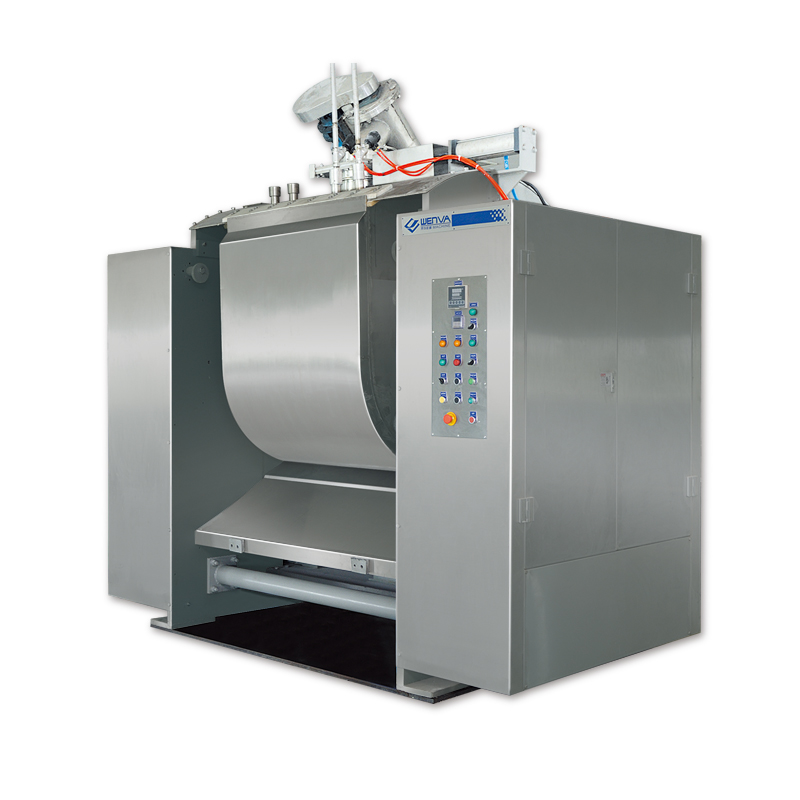
An automatic dough mixer is an industrial machine that automates dosing, mixing, and kneading of dough according to pre‑set recipes and process parameters. In the context of a biscuit production line, it is typically the first core unit following ingredient handling and plays a central role in line performance. [wenvamachine]
Modern mixers used in biscuit plants feature:
- Programmable recipes (time, speed, sequence, and temperature) [magazinebbm]
- Heavy‑duty mixing tools designed for short or long doughs [shinelongkitchen]
- Integration with feeding systems and downstream forming equipment [youtube]
As a manufacturer focused on automated biscuit production lines for nearly 40 years, Wenva Machine designs dough mixers as part of a complete solution—from layout planning to installation and commissioning—rather than as an isolated stand‑alone unit. [wenva]
The biggest advantage of an automatic dough mixer is process repeatability. Instead of relying on an operator's "feeling," the machine follows a predefined recipe for every batch. [writerzden]
Key quality benefits include:
- Stable dough texture: Mixing speed and time are controlled to avoid over‑mixing or under‑mixing. [writerzden]
- Uniform ingredient distribution: Flour, fat, sugar, water, and minor ingredients are thoroughly dispersed to prevent localized pockets and streaks. [shinelongkitchen]
- Predictable baking behavior: When dough density and hydration are stable, oven settings can be optimized and kept constant. [foodsmachine]
In commercial production, this consistency directly supports brand reputation: customers expect the same bite, color, and flavor every time they open a pack. [bigmarketing]
For many biscuit and cracker recipes, controlled gluten development is a critical quality parameter. Automatic dough mixers provide precise kneading profiles that align gluten strands just enough to achieve the desired structure without making the dough too elastic. [magazinebbm]
How the mixer helps:
- Programmed kneading profiles: Different speed stages allow gradual gluten formation tailored to hard biscuits, soft biscuits, or crackers. [writerzden]
- Uniform mechanical energy input: Advanced mixers deliver consistent torque and energy, which is essential for repeatable dough rheology. [magazinebbm]
- Improved gas retention and crumb structure: Well‑developed gluten networks support even fermentation and controlled expansion during baking. [magazinebbm]
Recent industry reports highlight that modern kneading technology, including intelligent control of energy and temperature, has significantly improved texture, volume, and shelf life of baked goods. Integrating this capability into an automatic dough mixer is therefore a direct upgrade to dough quality. [magazinebbm]
Dough temperature is one of the most overlooked variables in biscuit factories, yet it has a strong impact on dough viscosity, gluten behavior, and yeast activity where applicable. [cnhaiou]
Automatic dough mixers can improve temperature control by:
- Adjusting speed and mixing time to limit friction heat generation [magazinebbm]
- Integrating jacketed bowls or cooling options in advanced models for strict temperature control [magazinebbm]
- Providing real‑time temperature feedback on the HMI, allowing operators to act quickly when flour temperature or ambient conditions change [magazinebbm]
Maintaining dough within the target temperature range helps keep sheetability, cutting precision, and baking color within narrow tolerances, especially in high‑speed automated production lines. [ko.decaomachine]
From a factory operations perspective, an automatic dough mixer is both a quality tool and a productivity machine. [shinelongkitchen]
Compared with manual or semi‑automatic mixing:
- Mixing time per batch is reduced, especially for large dough quantities. [cnhaiou]
- One operator can supervise multiple mixers or manage other tasks during the automatic mixing cycle. [cnhaiou]
- Heavy, repetitive manual kneading is eliminated, reducing fatigue and the risk of operator injury. [writerzden]
In commercial kitchens and industrial bakeries, studies show electric and automatic mixers can prepare large dough batches in a fraction of the time and with less labor than manual methods, leading to higher throughput and lower unit cost. For a biscuit production line running multiple shifts, these gains compound into substantial annual savings. [cnhaiou]
One mixer, many recipes—that is often the business case when biscuit factories upgrade to automatic dough mixing. [shinelongkitchen]
Automatic dough mixers can be configured for:
- Hard biscuits and crackers (longer mixing, more gluten development) [writerzden]
- Soft biscuits and cookies (gentler mixing to avoid tough texture) [shinelongkitchen]
- Short doughs with high fat content (careful mixing to avoid over‑developing gluten) [shinelongkitchen]
- Specialty doughs such as whole‑grain, gluten‑reduced, or functional formulations requiring specific handling. [magazinebbm]
Recipe management systems allow operators to store and recall mixing profiles so changeovers between product types become faster and less dependent on individual experience. For a manufacturer with seasonal products or private‑label customization, this flexibility is a significant competitive advantage. [konstructdigital]
Modern automatic dough mixers support a more data‑driven approach to quality. When integrated with a biscuit production line control system, they can log critical process parameters for each batch: [writerzden]
- Mixing time and speed stages
- Dough temperature profile
- Energy input or torque trends
- Operator ID and recipe ID
This data can be used to:
- Investigate customer complaints or internal non‑conformities
- Correlate process drifts with ingredient changes or environmental conditions
- Standardize best‑performing settings across production shifts
Industry experts note that combining automation with data logging in dough mixing allows bakers to refine recipes, maintain consistent product quality, and adapt more easily to new formulations. [bigmarketing]
From an engineering and UX perspective, the automatic dough mixer should not be treated as a standalone purchase but as the starting point of an optimized biscuit production line.
As a specialist manufacturer, Wenva Machine integrates the dough mixer with:
- Dough feeding and resting systems
- Forming equipment (rotary moulder, cutting machine, laminator)
- Tunnel oven, cooling conveyor, and packaging machines [wenvamachine]
This integrated approach offers several benefits:
- Stable dough flow: Mixer discharge volume and cycle time are matched to the forming line capacity, preventing bottlenecks or idle time. [foodsmachine]
- Consistent sheet properties: Mixing parameters are tuned based on actual behavior on the sheeter and in the oven, not only on lab tests. [foodsmachine]
- Simplified operation: Operators manage recipes and production plans through a coordinated control philosophy across the line. [youtube]
Wenva's nearly 40‑year experience with automated biscuit production lines, including a dedicated Biscuit Production Line Experience Center, enables us to validate dough mixer performance with real‑world biscuit formats before installation. This reduces commissioning risks and shortens the ramp‑up period after equipment delivery. [wenvamachine]
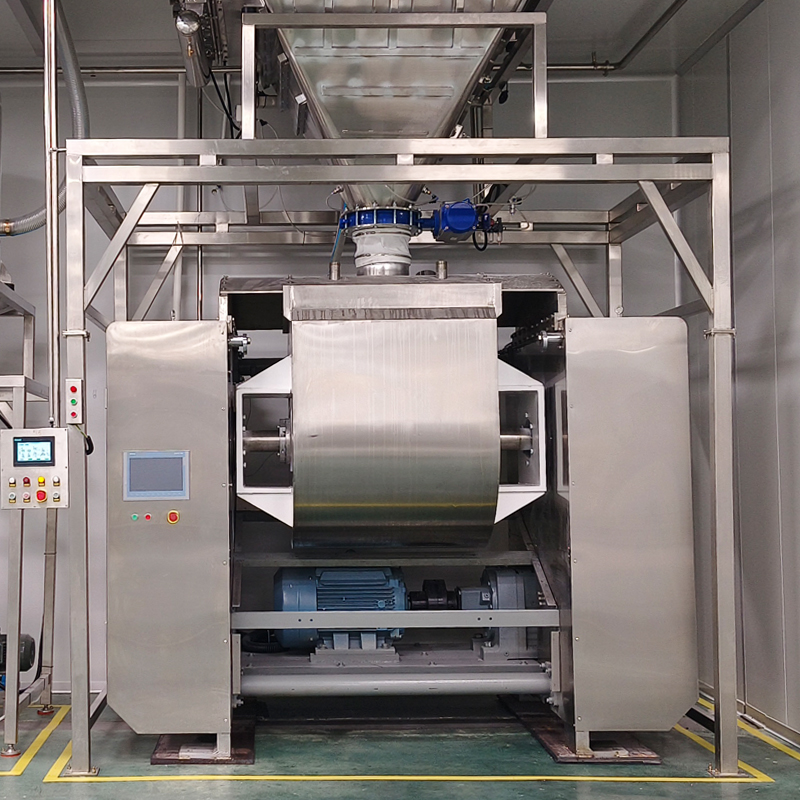
Based on industry data and case observations across food manufacturers adopting automated dough mixing, typical improvements include:
- Higher product consistency: Visible reduction in weight variation, color dispersion, and breakage rates. [cnhaiou]
- Reduced rework and scrap: More stable dough quality means fewer rejected sheets or over‑baked trays. [foodsmachine]
- Labor optimization: Mixing area staff can be reallocated to higher‑value tasks such as quality inspection, maintenance, or changeover preparation. [konstructdigital]
- Faster new product development: Precise recipe control accelerates trials and scale‑up from pilot batches to full line production. [bigmarketing]
When combined with a well‑designed biscuit line layout, these gains translate into higher OEE (Overall Equipment Effectiveness) and better return on investment. [ko.decaomachine]
Even with a high‑performance mixer, results still depend on how it is used. From an operations consulting viewpoint, I recommend biscuit factories focus on the following steps:
1. Standardize flour and fat specifications
Use defined quality specs for flour protein, moisture, and ash, and monitor supplier variation closely. [magazinebbm]
2. Define target dough temperature and consistency
Agree on a numeric target (for example, dough temperature range and firmness) and check it each batch during the validation phase. [cnhaiou]
3. Create and lock mixing recipes
Set parameters—speed, time, sequence of ingredient addition—for each product, and restrict recipe modification to authorized supervisors. [writerzden]
4. Calibrate ingredient dosing
Make sure scales and metering systems are accurate; even an excellent mixer cannot compensate for large dosing errors. [bigmarketing]
5. Train operators on "why," not only "how"
When operators understand gluten development, temperature sensitivity, and hydration, they use the mixer settings more intelligently. [ejurnal.swadharma.ac]
6. Monitor KPIs
Track dough‑related KPIs such as mixing time deviations, dough temperature, scrap rate, and customer complaints related to texture. [bigmarketing]
From an expert standpoint, factories should seriously consider upgrading when they encounter one or more of the following situations:
- Frequent batch‑to‑batch variation in dough quality despite using similar recipes
- Increased production volume or new export orders that require higher consistency and traceability
- Difficulty in recruiting and retaining skilled manual mixers
- Plans to automate upstream or downstream processes (e.g., new tunnel oven or high‑speed packaging line)
Upgrading the dough mixer early in your automation roadmap gives a stronger foundation for future investments in forming, baking, and packaging equipment. [konstructdigital]
If you plan to improve dough quality and overall line performance, it is wise to evaluate the automatic dough mixer together with your biscuit production line layout, capacity goals, and product portfolio. [wenvamachine]
Wenva Machine provides:
- One‑stop solutions from factory layout design to equipment installation and commissioning
- Custom‑engineered dough mixers matched to your biscuit types and capacity
- On‑site or remote support to fine‑tune recipes and process parameters during start‑up [wenva.goldsupplier]
You can contact our technical team to discuss your current mixing challenges, review sample products, and receive a tailored proposal for an automatic dough mixer and complete biscuit production line solution.
1. How does an automatic dough mixer improve dough quality compared with manual mixing?
An automatic dough mixer delivers repeatable mixing time, speed, and temperature, which leads to stable gluten development, uniform ingredient distribution, and more predictable baking results than manual mixing. [shinelongkitchen]
2. Is an automatic dough mixer suitable for both hard and soft biscuit dough?
Yes. By adjusting recipe parameters such as mixing intensity, duration, and ingredient sequence, the same industrial dough mixer can handle hard biscuits, soft biscuits, cookies, and crackers. [wenvamachine]
3. Will automation reduce the need for skilled operators?
Automation reduces manual labor in mixing but still benefits from trained operators who understand dough science and can interpret process data to fine‑tune recipes and respond to raw‑material changes. [cnhaiou]
4. How does automatic dough mixing support food safety and traceability?
Automatic dough mixers can log batch parameters and operator IDs, making it easier to trace issues back to specific batches and demonstrate process control during audits. [bigmarketing]
5. Can an automatic dough mixer be integrated into an existing biscuit production line?
In most cases, yes. A mixer can be retrofitted and synchronized with current forming and baking equipment, especially when the supplier provides engineering support for layout and controls integration. [ko.decaomachine]
1. "How Does an Automatic Dough Mixer Improve Dough Quality?" Foodsmachine – accessed May 2026. [Link] [writerzden]
2. Wenva Machine official website – biscuit production line and dough mixer solutions. [Link] [wenvamachine]
3. Wenva Machinery corporate site and product list. [Link] [wenva]
4. Wenva Machinery YouTube – fully automatic biscuit production line. [Link] [youtube]
5. "Automated Dough Mixers: Maximizing Efficiency and Quality." Shinelong Kitchen. [Link] [shinelongkitchen]
6. "The Impact of Advances in Dough Kneading Technology on Baked Goods." Magazine BBM. [Link] [magazinebbm]
7. "How Can Electric Dough Mixers Improve Efficiency in Commercial Kitchens?" Cnhaiou. [Link] [cnhaiou]
8. "Benefits of Automating Your Biscuit Production Line." Foodsmachine. [Link] [foodsmachine]
9. "Manufacturing SEO: 10 Proven Strategies for Top Rankings." BigMarketing. [Link] [bigmarketing]
10. Company profile of Yangjiang Wenva Yuandong Industry Co., Ltd. [Link] [wenva.goldsupplier]


