
Views: 222 Author: Wenva Machine Publish Time: 2026-05-15 Origin: Site
An automatic powder dosing system is one of the most powerful tools a modern biscuit factory can use to achieve precise, repeatable ingredient measurements, especially when you are running high-speed, fully automated biscuit production lines like those designed by Wenva Machine. [wenvamachine]
In more than 40 years of working around automated biscuit production lines, I have seen one pattern repeat itself: factories that invest early in accurate powder dosing gain an edge in consistency, cost control, and food safety. Whether you are dosing wheat flour, sugar, cocoa or minor ingredients like baking powder and emulsifiers, the way you measure and feed those powders into the mixer directly shapes dough quality, oven performance, and final biscuit texture. [dmcinfo]
From the perspective of both an equipment manufacturer and a plant engineer, the automatic powder dosing system is not just a "nice-to-have" component—it is the measurement backbone of an industrial baking line. In this article, we will look at how these systems work, why they matter for ingredient accuracy, and how they fit inside a fully automated biscuit production line supported by Wenva Machine's long-term engineering experience. [pdfs.semanticscholar]

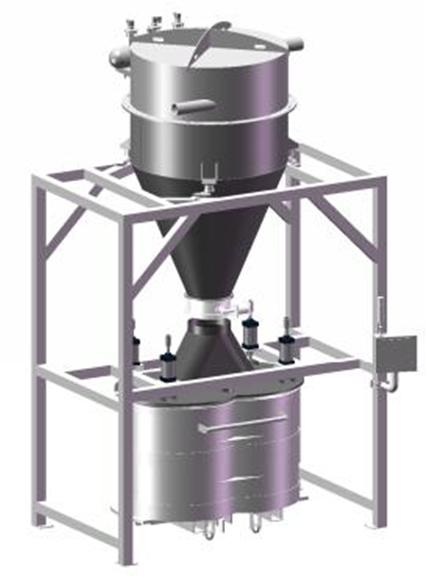
An automatic powder dosing system is an integrated solution that stores, weighs, and dispenses powdered ingredients into your process according to preset recipes, without relying on manual scooping or weighing by operators. It typically includes silos or hoppers, dosing mechanisms (such as augers or vibratory feeders), load cells, sensors, and a PLC or industrial PC that controls the complete sequence. [mt]
In a biscuit plant, this system is usually installed upstream of the dough mixer, feeding flour, sugar, milk powder, cocoa, salt, and minor ingredients directly into the mixing bowl in the right order and at the right mass. Instead of operators carrying bags or buckets to the mixer, the system automatically meters each powder from dedicated storage, tracks every batch, and logs each dosing step for traceability. [dmcinfo]
Automatic powder dosing starts with properly designed hoppers that ensure stable flow and avoid arching or bridging of powders. The dosing mechanism is usually built around:
- Auger feeders for bulk powders like flour, where a rotating screw moves product at a controlled rate. [oalgroup]
- Vibratory feeders for free-flowing powders and granules where gentle vibration yields smooth discharge.
- Robotic or multi-head micro-dosing units for very small, high-value ingredients such as enzymes or leavening agents. [cmsacchi]
Each feeder is driven by a servo or variable-speed motor so that the system can switch between coarse dosing (fast fill) and fine dosing (slow trim) to stay within tight tolerances, often better than ±0.1 g for small doses. [pdfs.semanticscholar]
Accurate ingredient measurement depends on stable weighing technology and real-time feedback. Automatic systems use: [mt]
- High-precision load cells under weighing hoppers or platforms.
- Level sensors in hoppers to avoid starvation or overfilling.
- Flow or torque sensors to detect abnormal resistance and blockages. [mt]
A PLC (Programmable Logic Controller) or industrial PC receives all this sensor data and continuously compares the target recipe weight with the actual measured weight. When the target is reached, the controller stops the feeder, logs the result, and automatically moves to the next ingredient in the recipe. [dmcinfo]
Modern systems are not just mechanical—they are software-driven. Typical functions include: [dmcinfo]
- Storing dozens or hundreds of recipes with ingredient names, target weights, tolerances, and dosing sequence. [dmcinfo]
- Operator-friendly HMI screens for recipe selection, adjustment, and manual override.
- Batch reports with time stamps, operator IDs, actual weights, and alarms for out-of-tolerance events. [dmcinfo]
This recipe and data management is particularly important for biscuit producers selling into export markets, where customers and regulators expect full traceability of every batch. [linkedin]
From a practical plant perspective, moving from manual to automatic powder dosing changes three things: measurement error, process variation, and operator workload. [permixmixers]
Manual weighing is vulnerable to misreading scales, using the wrong scoop, or simply losing focus during a long shift. In contrast, automatic systems: [permixmixers]
- Automatically tare and zero the scale before each dose.
- Follow the same recipe sequence every time, without skipping steps. [dmcinfo]
- Physically prevent dosing of the wrong ingredient into the wrong hopper by using dedicated lines and interlocks. [cmsacchi]
Research on dual-core ARM control systems for powder dosing shows that automated dosing can keep errors below 0.1 g across powders with different physical properties. In biscuit dough, that level of accuracy translates into more consistent water absorption, dough rheology, and final bake color. [pdfs.semanticscholar]
In multi-shift biscuit plants, one of the biggest challenges is maintaining the same product profile regardless of the operator. Automatic dosing systems standardize the measurement process, so dough quality depends on equipment and recipe, not on who is on the line that day. [dmcinfo]
For manufacturers running several production lines—or even multiple factories—using the same dosing technology and recipe database makes it much easier to reproduce the same biscuit across all sites. This consistency builds brand trust and simplifies quality audits and customer approval processes. [wenva]
Accurate powder dosing delivers more consistent dough development, which directly affects sheetability, cutting, embossing, and baking behavior in the tunnel oven. When flour strength, sugar level, and leavening agents are within tight tolerances every time, you avoid: [wenvamachine]
- Over-expansion or under-expansion of biscuits.
- Uneven color across pans and racks.
- Cracking, blistering, or collapsed shapes.
This is particularly critical for high-speed lines where even small formulation deviations can cause substantial rejection downstream. [wenvamachine]
By ensuring each batch is on-target from the start, automatic powder dosing reduces the number of rejected or downgraded batches that need to be thrown away or reworked. Less over-dosing also means you are not giving away raw material in every biscuit. [permixmixers]
Automatic dosing with enclosed conveyors and dedicated ingredient paths also reduces powder spillage and cross-contamination, which lowers cleaning frequency and detergent consumption. This leads to fewer unplanned stops and higher overall line availability. [cmsacchi]
Manual ingredient handling often involves carrying heavy bags, climbing stairs to mixers, and working in dusty environments. Automatic powder dosing systems remove much of this physical workload and reduce dust exposure, improving both ergonomics and safety. [permixmixers]
Operators shift from manual lifting tasks to monitoring, quality checks, and line optimization, which is more sustainable for long-term operations and helps attract and retain skilled staff. [mt]
With nearly four decades in automated biscuit production lines, Wenva Machine designs powder dosing systems as part of a complete process flow rather than as a standalone device. [wenva]
A typical Wenva biscuit line includes ingredient silos, automatic powder dosing, liquid dosing, dough mixing, forming (rotary molder, sheeter, or wire cut), tunnel oven, cooling, and packaging. The powder dosing unit is synchronized with mixer capacity and oven throughput, so ingredient dosing becomes a natural part of the rhythm of the line rather than a bottleneck. [wenva]
By aligning the dosing system with layout constraints and production goals, Wenva's engineers can:
- Optimize hopper sizes for your batch size and changeover strategy.
- Choose auger or vibratory feeders based on your powder types.
- Design hygienic, easy-to-clean paths that respect your allergen and cross-contact rules. [wenva]
Wenva's engineering team has delivered more than 300 biscuit production lines, many of which incorporate automatic dosing solutions tailored to local flour types and product standards. Lessons learned from these installations feed back into new designs—especially around powder flow behavior, environmental conditions, and operator interface preferences. [wenva]
This field experience means Wenva can advise not only on equipment selection, but also on practical details such as calibration routines, cleaning cycles, and integration with existing ERP or MES systems. [wenvamachine]

The global powder dosing feeder market is expanding, driven by AI and automation that enhance precision and reduce wastage. Newer systems use smart sensors and adaptive feedback loops that adjust feed rates in real time as powder characteristics change due to humidity or storage time. [linkedin]
By analyzing historical dosing data, AI models can suggest optimized parameters, indicate when a feeder needs cleaning or maintenance, and even estimate the remaining life of critical components. This predictive maintenance reduces unplanned downtime and keeps ingredient measurement within specification on long runs. [linkedin]
Robotic powder dosing is increasingly used for micro-ingredients where very small errors can make a big difference to product quality or cost. Robotic systems coordinate multiple micro-dosers to reach a target batch recipe with precision down to 0.1 g on a 20 kg scale. [oalgroup]
In the baking sector, this technology is particularly attractive for expensive enzymes, emulsifiers, colorants, or nutraceutical fortification, where minimizing overuse directly improves margins while maintaining product performance. [oalgroup]
As biscuit factories move toward Industry 4.0, automatic powder dosing systems are increasingly connected to plant networks and cloud dashboards. Key capabilities include: [linkedin]
- Real-time dashboards for ingredient consumption and batch status.
- Automatic upload of batch reports to quality systems.
- Integration with barcode or RFID-based lot tracking for incoming powders. [cmsacchi]
This connectivity shortens the time between detecting a deviation and taking corrective action, which is critical for large-scale continuous production. [linkedin]
From an implementation standpoint, most biscuit plants follow a structured approach:
1. Define product and capacity requirements
Identify biscuit types, daily capacity, number of shifts, and acceptable tolerances for key ingredients. [wenva]
2. Analyze existing layout and material flows
Map current powder storage, conveying routes, mixer positions, and access space for maintenance. [wenvamachine]
3. Select dosing technologies and configuration
Choose between auger, vibratory, or robotic dosing for each ingredient, based on powder behavior and dosing range. [oalgroup]
4. Design recipe and control architecture
Decide how recipes are stored, who can change them, and how batch data is logged and reviewed. [dmcinfo]
5. Install, commission, and train operators
Perform calibration, trial batches, and operator training focused on both everyday operation and troubleshooting. [dmcinfo]
6. Monitor performance and optimize
Use recorded data to fine-tune feed rates, tolerance windows, and cleaning schedules. [linkedin]
Working with a line specialist like Wenva Machine ensures that these steps fit naturally into a broader factory upgrade or greenfield project instead of being an isolated equipment purchase. [wenva]
From industry experience, the most frequent pitfalls include:
- Underestimating the impact of powder characteristics (cohesive vs free-flowing, hygroscopic behavior). [mt]
- Not providing enough vertical height or access for hoppers, which complicates maintenance.
- Treating dosing as a stand-alone project instead of a core part of the production line design. [wenva]
Early technical consultation and realistic site surveys help avoid costly redesigns and ensure that the dosing system you select matches both your current and future product roadmap. [wenva]
Below is a sample table that can be adapted on a product page or technical datasheet:
| Parameter | Typical Value for Biscuit Line | Notes |
|---|---|---|
| Main ingredients handled | Flour, sugar, milk powder, cocoa | Based on standard sweet and soda biscuits. wenvamachine |
| Dosing accuracy (bulk) | ±0.2–0.5% of batch weight | Achieved with auger/vibratory feeders and calibrated load cells. |
| Dosing accuracy (micro) | Up to ±0.1 g | For leavening agents and enzymes with robotic or micro-dosers. cmsacchi |
| Batch size range | 50–500 kg per batch | Depends on mixer capacity and line throughput. wenvamachine |
| Control system | PLC + touch-screen HMI | Recipe management and batch data logging. |
| Connectivity | Ethernet / OPC UA / Modbus | Integration with MES / ERP systems. |
| Cleaning options | Manual clean or semi-automatic CIP | Based on hygienic design and allergen strategy. cmsacchi |
If you are planning a new biscuit plant or upgrading an existing line, investing in a well-engineered automatic powder dosing system is one of the fastest ways to improve product consistency, reduce waste, and strengthen food safety compliance. [linkedin]
With nearly 40 years of specialization in automated biscuit production lines, Wenva Machine can help you design, supply, and commission a dosing solution that fits your factory layout, product mix, and budget while integrating seamlessly into the rest of your line. To discuss your project or request a tailored proposal, you can contact Wenva's engineering team via the official website or sales channels listed there. [wenvamachine]
Q1: How accurate does my powder dosing system need to be for biscuit production?
For most bulk ingredients in biscuit dough, a dosing accuracy of ±0.2–0.5% of batch weight is sufficient, while minor ingredients often require precision down to ±0.1 g to avoid quality shifts. [pdfs.semanticscholar]
Q2: Can an automatic powder dosing system handle different biscuit recipes on the same line?
Yes, modern systems store multiple recipes with different target weights and sequences, so you can switch from one biscuit formulation to another by selecting the recipe on the HMI. [dmcinfo]
Q3: What powders are typically automated in a biscuit plant?
Flour, sugar, cocoa powder, milk powder, salt, and leavening agents are usually automated, while very low-usage minor ingredients may be handled with robotic micro-dosers or pre-mixes. [cmsacchi]
Q4: How does automatic dosing improve food safety and allergen control?
Enclosed conveying, dedicated ingredient paths, and automated cleaning cycles reduce cross-contamination risk and provide detailed traceability records for audits and recalls. [cmsacchi]
Q5: Is it possible to connect the dosing system to my ERP or MES?
Yes, many systems offer industrial communication protocols such as Ethernet, Modbus, or OPC UA, allowing integration with higher-level systems for material tracking and production planning. [linkedin]
1. Golden Bake. "How Does an Automatic Powder Dosing System Contribute to Accurate Ingredient Measurements?" [foodsmachine].
2. Wenva Machine – Official website and company profile for automated biscuit production lines. [wenvamachine]
3. Yangjiang Ronghua Yuandong Industrial Co., Ltd. – Corporate background and history of biscuit production line projects. [wenva]
4. Powder dosing control system on dual ARM core – research on dosing accuracy and error levels in automated powder systems. [pdfs.semanticscholar]
5. OAL Group – "Auger vs. Robotic Powder Dosing" (comparison of dosing technologies). [oalgroup]
6. CMS Sacchi – "Introducing the Technology Revolutionizing Powder Dosing" (SmartTipping micro-dosing). [cmsacchi]
7. LinkedIn Insight – "Global Powder Dosing Feeder Market: Impact of AI and Automation." [linkedin]
8. DMC – "Automated Dosing System for Powder Ingredients" (case study). [dmcinfo]
9. PerMix – "Automatic Ingredient Dosing in Powder Mixers" (benefits of automatic dosing for batch time and quality). [permixmixers]
10. METTLER TOLEDO – "Automated Powder Dispensing" (laboratory and industrial perspectives on automated powder handling). [mt]


