Views: 118 Author: WENVA machine Publish Time: 2026-03-31 Origin: Site
Content Menu
● (With Investment Return Analysis)
● Part 1: Ask Yourself 3 Key Questions First
>> 1. What is your target daily production capacity?
>> 2. What is your product positioning?
>> 3. What are your factory conditions and labor setup?
● Part 2: Core Parameters — Understanding the "Internal Strength" of Equipment
>> 1. Tunnel Oven: The Key to Energy Efficiency and Stability
>> 2. Forming Machine: Ensuring Consistency and Reducing Waste
>> 3. Material & Adaptability: Safety and Durability
● Part 3: Investment Return Analysis (Reference Model)
>> 2. Reference Case (Entry-Level Configuration)
>> Comprehensive Product Range
Investing in a high-efficiency, cost-effective biscuit production line is not just about comparing equipment prices. Many factory owners overlook the real "hidden costs"—mismatched capacity, excessive energy consumption, frequent breakdowns, and production downtime. These issues can turn what seems like a good deal into a long-term burden.
Based on our experience working with food factories worldwide, this article will help you understand how to select the right biscuit production line and provide a practical investment return model to support your decision-making.
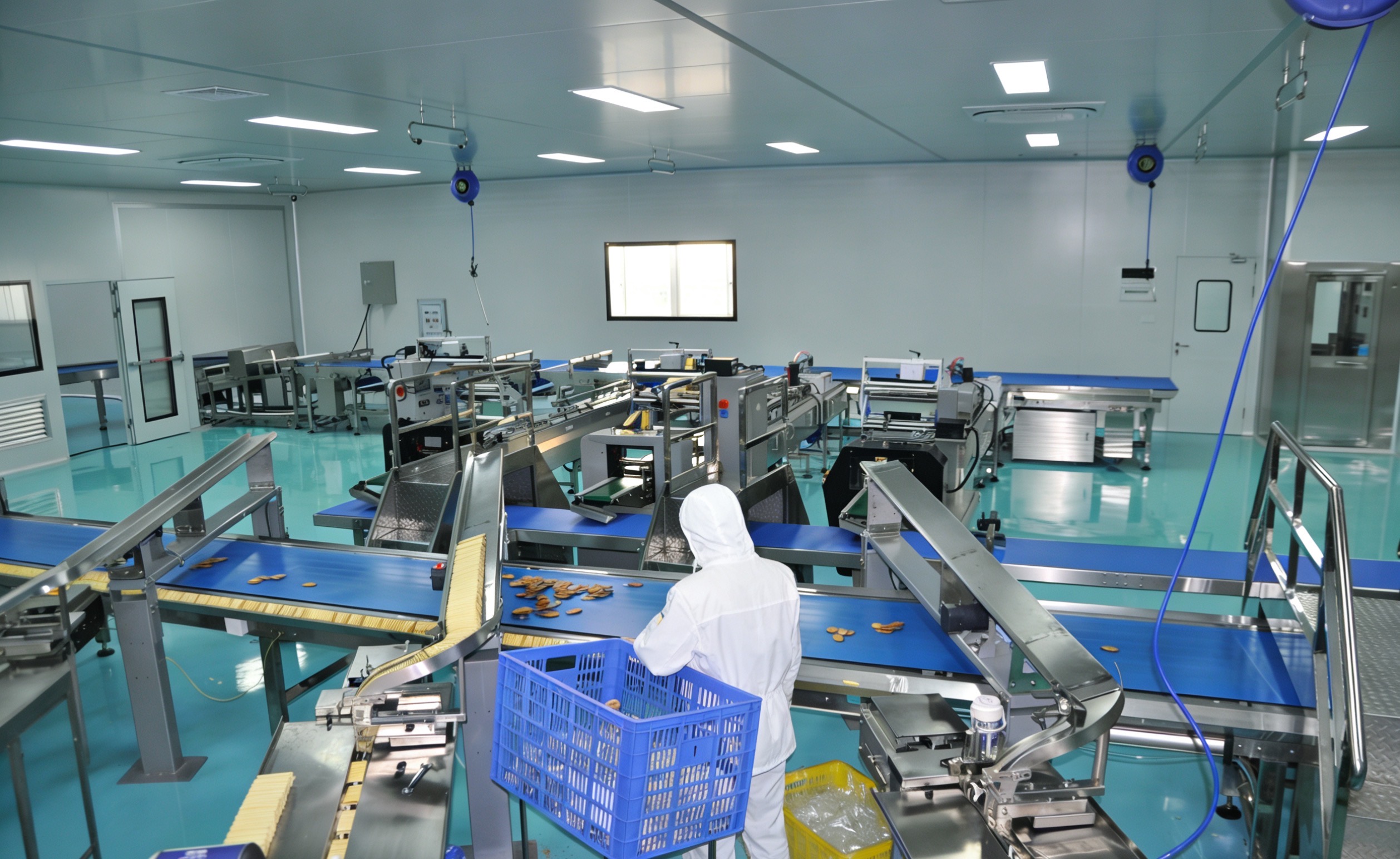
Before contacting any equipment supplier, clarify these three points. Your answers will directly determine the type of production line you need.
Your required output (e.g., 2 tons/day, 5 tons/day, or more) will define the scale and configuration of the entire line.
Are you focusing on soft biscuits, hard biscuits, cookies, or alkaline biscuits? Different products require different forming and baking technologies.
Your available space, worker skill level, and automation expectations will influence layout design and equipment selection.
When choosing a production line, appearance and price are not enough. The internal configuration determines long-term cost, product quality, and operational stability.
The tunnel oven typically accounts for over 60% of total energy consumption. Therefore, it has a major impact on long-term operating costs.
Pay attention to insulation performance (recommended thickness ≥100mm) and insulation materials. In addition, the uniformity of heating system layout directly affects baking consistency and product quality.
The forming machine determines product shape consistency and dough utilization. High-quality machines use 304 stainless steel molds for durability and hygiene.
To ensure stable forming, our process includes three-stage dough sheeting, gradually reducing thickness to achieve uniform dough sheets suitable for precise biscuit shaping.
Food-grade standards are essential. Full-line 304 stainless steel construction and food-grade conveyor belts are industry standards.
Motors should have at least IP55 protection to prevent dust and moisture damage, ensuring long-term stable operation.
Evaluating equipment from these internal factors helps you select a production line that is both cost-efficient and reliable.
Equipment procurement is an investment, not an expense. Since costs vary by country, the following model provides a simplified reference framework for estimating returns.
Note: All figures below are for reference only and should be adjusted based on actual local conditions.
Annual Profit = (Daily Capacity × Working Days × Selling Price) – (Unit Cost × Annual Output) – Depreciation
Breakdown:
Annual Output = Daily Capacity × Working Days
Unit Cost = Raw Materials + Energy + Labor + Packaging & Others
Annual Profit = (Selling Price – Unit Cost) × Annual Output – Depreciation
Using our minimum-capacity soft & hard biscuit production line as an example:
Daily Capacity: ~4 tons
Equipment Investment: ~$230,000
Assumed operating parameters:
| Item | Value | Notes |
|---|---|---|
| Working Days | 300 days | Standard factory schedule |
| Annual Output | 1,200 tons | 4 × 300 |
| Raw Material Cost | $400/ton | Flour, sugar, oil, etc. |
| Energy Cost | $30/ton | Electricity / gas |
| Labor Cost | $15/ton | ~5 operators |
| Packaging & Misc. | $50/ton | Materials & losses |
| Total Cost | $495/ton | - |
| Selling Price | $800/ton | Mid-range market |
Gross Profit per Ton = $305
Annual Gross Profit ≈ $366,000
Depreciation (3 years):
≈ $76,700/year
Estimated Annual Net Profit ≈ $289,300
Payback Period ≈ Total Investment ÷ Annual Net Profit
≈ 230,000 ÷ 289,300 ≈ 0.8 years (9–10 months)
This is a standardized reference model, not a guaranteed return
Actual results depend on:
Local raw material prices
Labor and energy costs
Product positioning (mid-range vs premium)
Market demand and sales channels
We recommend conducting a localized calculation or contacting us for a customized solution.
We provide reliable equipment and proven industry experience to support long-term, sustainable production. Hundreds of our machines are operating steadily worldwide, exported to multiple countries and validated across diverse markets.
We offer a complete industrial baking equipment portfolio, including:
Soft & hard biscuit production lines
Cookie production lines
Alkaline biscuit production lines
Other automated baking machinery
This allows customers to scale from single-product lines to multi-product manufacturing.
We go beyond equipment supply to reduce trial-and-error costs and accelerate project implementation:
Material Testing: Bring your raw materials to our factory for on-site trial production
Factory Layout Planning: Full plant design from raw material storage to packaging
Recipe Support: Proven formulations for various biscuit types
We provide real factory videos and customer installation cases for transparency. Clients are welcome to visit both our manufacturing facility and running production lines.
All equipment complies with international standards, including CE and ISO9001 certifications.
Choosing us means more than buying a machine—it means gaining a complete, reliable, and scalable production solution.
Choosing a production line is not like buying a fast-moving product. One wrong decision can impact your efficiency for 3–5 years.
If you are planning a biscuit production line, feel free to contact us:
Get a free factory layout plan based on your workshop dimensions
Receive machine recommendations based on your product recipes
Schedule a factory visit and trial run to see the equipment in action
We look forward to helping you build your own successful biscuit brand.
This article explains how to select a profitable biscuit production line by focusing on real operational factors such as capacity planning, equipment configuration, and hidden costs. It also provides a practical ROI model based on a 4-ton/day line to help investors evaluate returns and make informed decisions.
In modern biscuit manufacturing, a tunnel oven is far more than a simple heating device—it is a core system that determines final product quality.Through multi-zone precise temperature control, adjustable top and bottom heat ratios, optimized hot air circulation design, and intelligent temperature management systems, modern tunnel ovens significantly improve baking consistency and production stability.For food manufacturers, selecting a tunnel oven with stable performance and precise temperature control is a crucial step toward achieving both high product quality and efficient production.As market demands for product quality and manufacturing efficiency continue to increase, tunnel oven technology will continue to evolve toward higher precision and greater automation, providing more reliable solutions for the industrial baking industry.
This article analyzes the industrial production of Toaster Pastry using a modern Double Layered Biscuit production line. It explores product structure, filling deposition technology, lamination control, tunnel oven baking strategy, and automation upgrades. The solution improves efficiency, structural stability, and product consistency, helping manufacturers enter high-value filled bakery markets.
Abstract In modern biscuit production, the double-layered sheet biscuit production line, with its innovative structure and efficient production process, has become a key piece of equipment for improving production efficiency and product quality. Compared to traditional single-layered biscuits, double-layered sheet biscuits offer a richer and more multi-layered texture, giving consumers new choices in biscuit types. Based on the ideas and concepts of double-layered sheet biscuits, Wenva Machinery, in collaboration with our clients, has incorporated new technologies and ideas into its traditional shortbread and chewy biscuit production line, developing a double-layered sheet biscuit production line. This article aims to introduce in detail the working principle, technical advantages, and significant benefits of the double-layered sheet biscuit production line in terms of product taste, appearance, and packaging efficiency. The article also discusses the equipment's automation control, en
This article discusses common tunnel oven problems encountered in biscuit production, including inconsistent baking, underbaked products, and equipment malfunctions. It provides insights into the causes of these issues and offers practical solutions to avoid them. Best practices for tunnel oven operation, such as regular training and maintenance, are also highlighted to ensure efficient and high-quality biscuit production.
In industrial baking production, the tunnel oven length and its temperature zone structure are key technical factors that determine baking quality. A properly designed oven length directly affects the product’s residence time inside the oven, while multi-zone temperature control ensures stable heat distribution and proper product structure formation. Based on tunnel oven operating principles, this article systematically analyzes the relationship between oven length and baking time, the mechanisms of multi-zone temperature control, and the suitability of different tunnel oven structures for various baked products, providing technical guidance for food factories seeking to optimize baking quality.
This article explores custom tunnel oven solutions for biscuit and snack manufacturers, highlighting their efficiency, quality consistency, and flexibility. It discusses the functionality, benefits, and key features of tunnel ovens, as well as their applications in various snack production. The article concludes with guidance on selecting the right oven and answers to common questions.
Choosing the right tunnel oven for biscuit production is a strategic decision that affects capacity utilization, factory layout efficiency, and long-term return on investment. This article explains how to select an industrial baking oven by analyzing the relationship between capacity and oven length, factory layout considerations, and the balance between initial investment and long-term ROI.
The heating system is a critical component of an industrial tunnel oven, directly affecting baking performance, energy efficiency, and operating costs. This article explains how gas and electric tunnel oven heating systems work, compares their energy consumption and maintenance requirements, and analyzes their suitability in different countries and regions, helping manufacturers choose the right tunnel oven solution.
A tunnel oven plays a critical role in modern biscuit production by enabling continuous and stable baking. This article explains how a biscuit tunnel oven works, focusing on its continuous baking principle, temperature zone design, heat transfer methods, and process advantages. It also introduces Wenva Machine’s tunnel oven solutions for industrial biscuit production lines.
This article explores global pretzel biscuit market trends, consumer demand drivers, OEM and private label opportunities, and key considerations for building pretzel biscuit production lines, helping snack manufacturers evaluate market entry and long-term growth strategies.
This article compares automatic pretzel biscuit machines and semi-automatic biscuit machines in terms of labor cost, efficiency, and ROI. It helps startup and established factories choose the right equipment based on production scale, budget, and long-term profitability.
This article explains gas, electric, and diesel tunnel ovens for pretzel biscuits, comparing energy consumption, maintenance, and suitable markets. It highlights why customizable oven length is essential for stable baking, consistent color, and efficient pretzel biscuit production.
This article explains how to choose the right pretzel biscuit production line by analyzing capacity, factory layout, equipment configuration, and ROI. It helps manufacturers select a pretzel biscuit making machine that delivers stable production and long-term profitability.
This article explains how a pretzel biscuit machine works by detailing the complete pretzel biscuit production process, including mixing, forming, alkaline dipping, baking, and cooling. It helps manufacturers understand equipment functions and achieve stable, industrial-scale pretzel biscuit production.
This article explains how to choose the right pretzel biscuit production line by analyzing equipment configuration, automation level, and ROI. It helps manufacturers match production capacity, reduce labor costs, and achieve stable, long-term profitability in pretzel biscuit manufacturing.
Uniform coloring in pretzel biscuits is not achieved by adjusting a single parameter. It is the result of a **well-coordinated system** that includes the alkaline solution tank, press rollers, idler rollers, conveyor belts, and baking oven.By investing in a properly engineered alkaline dipping system, manufacturers can eliminate color inconsistency, stabilize product quality, and enhance the market competitiveness of their pretzel biscuits.
Producing Danish butter cookies at scale is a system challenge rather than a recipe issue. This article analyzes three critical production stages—mixing stability, forming precision, and baking control—using a problem-to-solution approach. It explains why high-butter cookies demand specialized equipment and coordinated process design to achieve consistent appearance, texture, and long-term production stability.
This article provides a comprehensive analysis of industrial double-layer biscuit production lines, covering process flow, key equipment functions, and selection principles. It also compares integrated and modular solution approaches and offers guidance for manufacturers at different development stages, supporting stable and efficient production planning.
Building a successful biscuit factory in Africa requires more than identifying market demand or installing modern equipment. Long-term success depends on the ability of the factory to operate continuously, reliably, and efficiently under local conditions. From a biscuit production line manufacturer’s perspective, sustainable operation is the cornerstone of profitability, product consistency, and competitive strength.This article outlines key considerations for achieving sustainable biscuit production in African markets. It begins by emphasizing the importance of understanding local operating environments, including climate conditions, energy structures, and production rhythms. These factors directly influence production line design and long-term stability.The article highlights the strategic importance of the first production line, noting that a stable and well-planned starting point allows manufacturers to establish reliable operations and quality control systems.