
Views: 222 Author: Sara Publish Time: 2025-04-10 Origin: Site
Content Menu
● Introduction to Bakery Extruder Machines
>> Key Components of a Bakery Extruder Machine
● How Bakery Extruder Machines Improve Production Efficiency
>> 1. Increased Output and Reduced Labor Costs
>> 2. Flexibility in Product Variety
>> 3. Enhanced Product Consistency
>> 4. Energy Efficiency and Cost Savings
>> 5. Improved Hygiene and Safety
● Integration with Cookie and Biscuit Production Lines
● Advanced Features and Innovations
● Case Studies: Successful Implementation
>> 1. What are the main benefits of using a bakery extruder machine?
>> 2. How does a bakery extruder machine improve product consistency?
>> 3. Can bakery extruder machines be used for both cookies and biscuits?
>> 4. What are some common applications of bakery extruder machines beyond cookies and biscuits?
>> 5. How do bakery extruder machines contribute to cost savings?
In the rapidly evolving landscape of the baking industry, efficiency and innovation are key to staying competitive. One crucial piece of equipment that has revolutionized the production of cookies and biscuits is the bakery extruder machine. This article will delve into how these machines improve production efficiency and explore their role in modern cookie and biscuit manufacturing lines.

Bakery extruder machines are designed to mix, knead, and shape dough into various forms, such as cookies, biscuits, and even extruded snacks like pretzels. These machines are versatile, allowing for the production of a wide range of products with different textures and shapes. The core components of an extruder include the feeding system, extrusion barrel, and cutting system, all of which work together to ensure consistent and high-quality output.
1. Feeding System: This is where raw materials are introduced into the machine. It typically includes a hopper and a metering device to control the flow of ingredients, ensuring a consistent supply for further processing.
2. Extrusion Barrel and Screw: Made from high-strength, heat-resistant materials, these parts mix, knead, and cook the dough under controlled conditions. The design and configuration of the screw play a vital role in determining the size and texture of the final product.
3. Cutting System: Once the dough has been extruded, it moves to the cutting system, where it is cut into uniform pieces. This system uses high-precision blades to ensure that each piece meets the desired specifications.
Bakery extruder machines significantly increase production capacity by automating the dough forming and cutting processes. This automation reduces the need for manual labor, thereby lowering labor costs and minimizing the risk of human error.
These machines allow for quick and easy changeovers between different products. Extruder dies can be custom-designed to produce almost any shape, enabling manufacturers to diversify their product lines without significant additional investment.
Extruders ensure consistent product quality by maintaining precise control over dough temperature, moisture, and texture. This consistency is crucial for meeting consumer expectations and maintaining brand reputation.
Extrusion processes are generally more energy-efficient than traditional methods, as they require less space and energy to produce the same quantity of products. This efficiency translates into cost savings, making extrusion a more economical option for large-scale production.
Modern extruders are designed with hygiene and safety in mind. They feature easy-to-clean components and automated controls that minimize operator exposure to moving parts, reducing the risk of accidents and ensuring compliance with food safety standards.
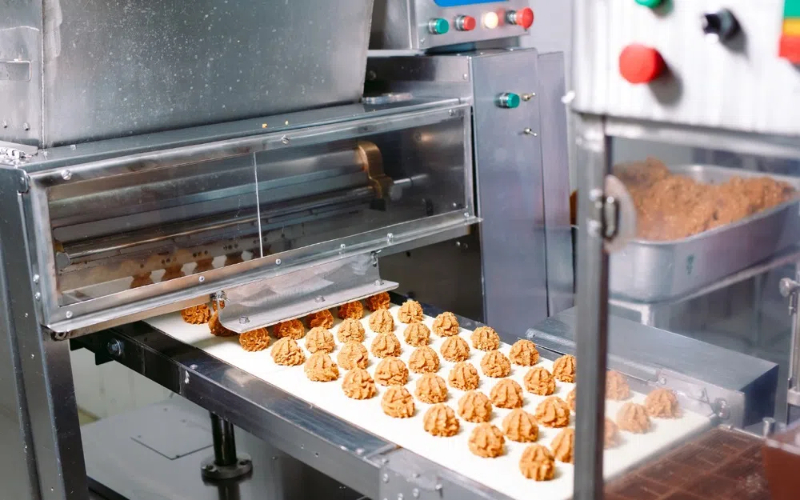
In a typical cookie or biscuit production line, the extruder machine is often integrated with other equipment such as mixers, ovens, and packaging machines. This integration creates a seamless workflow from dough preparation to final packaging, enhancing overall efficiency and reducing production time.
A cookie production line typically includes a dough mixer, wire cut cookie depositor, oven, cooling conveyor, and packing machine. The extruder can be used to create specific cookie shapes or to produce cookie dough that is then formed using other machines.
For biscuits, the production line may include a material dosing machine, vertical dough mixer, laminator, rotary cutters, and baking oven. Extruders can be used to create specific biscuit shapes or to produce dough for further processing.
Recent advancements in bakery extruder technology have introduced features such as:
- Automated Recipe Management: Allows for easy switching between different recipes and ensures precise ingredient dosing.
- Real-Time Monitoring: Enables operators to monitor production parameters in real-time, ensuring optimal conditions for each product.
- Sustainable Materials: Some modern extruders are designed to work with sustainable materials, reducing environmental impact.
Several bakeries have seen significant improvements in production efficiency and product quality after integrating bakery extruder machines into their lines. For example, a leading cookie manufacturer reported a 30% increase in output and a 25% reduction in energy consumption after adopting extrusion technology.
Bakery extruder machines have become indispensable in modern cookie and biscuit manufacturing. By enhancing production efficiency, reducing costs, and improving product consistency, these machines help bakeries stay competitive in a rapidly changing market. As technology continues to evolve, we can expect even more innovative features and capabilities from these machines.

The main benefits include increased production efficiency, reduced labor costs, flexibility in product variety, enhanced product consistency, and improved hygiene and safety.
It maintains precise control over dough temperature, moisture, and texture, ensuring that each product meets the desired specifications.
Yes, they can be used for both cookies and biscuits by adjusting the extruder dies and integrating them with other machinery in the production line.
They are also used for producing pretzels, crackers, and other extruded snacks.
They contribute to cost savings by being more energy-efficient, reducing labor costs, and minimizing waste through consistent product quality.
[1] https://www.readingbakery.com/resourcesbakery-manufacturing-equipment-for-production-of-extruded-snacks.html
[2] https://www.bakerperkins.com/news/extrusion-brings-ingredient-production-cost-savings/
[3] https://www.foodsmachine.net/biscuit-production-line.html
[4] http://www.biscuitmakingline.com/cookie-production-line.html
[5] https://www.apexmeco.com/en/equipment/biscuit-cookies-production-line/
[6] https://www.alamy.com/stock-photo/bakery-machinery.html
[7] https://www.youtube.com/watch?v=4obsML60RjE
[8] https://www.foodmachineryint.com/es/everything-you-need-to-know-about-bakery-granular-bread-crumbs-extruder-machine-made-in-china-in-2024/
[9] https://productionbiscuit.com/10-questions-about-biscuit-making-machine/
[10] https://www.snackandbakery.com/articles/91524-new-extrusion-equipment-offers-better-hygiene-speed-and-flexibility
[11] https://www.foodsmachine.net/a-what-are-the-benefits-of-a-complete-biscuit-production-line-for-large-bakeries.html
[12] https://www.readingbakery.com/low-pressure-extruder-bakery-equipment.html
[13] https://productionbiscuit.com/ultimate-guide-to-faqs-biscuit-making-machine/
[14] https://www.saintyco.com/biscuit-making-machine/
[15] https://haidier.en.made-in-china.com/product/KsBEueNPMLky/China-High-Efficiency-Bakery-Equipment-Cookie-Extruder-Machine-Cookie-Dough-Extruder.html
[16] https://www.bakon.com/bakery-equipment/production-lines/
[17] https://www.bakerperkins.com/food-extrusion/en/
[18] https://bakeryinfo.co.uk/promotional-features/optimising-bakery-efficiency-in-a-tough-market/670926.article
[19] https://farhatbakery.com/machines/dough-preparation-machines/dough-extruder/
[20] http://zlinetech.com/2-zksd600-pastry-production-line.html
[21] https://www.readingbakery.com/resources/efficient-bakery-production-line-equipment-for-high-volume-output.html
[22] https://cfaminternational.com/advantages-of-twin-screw-extrusion-in-the-food-processing-industry/
[23] https://saichikeji.en.made-in-china.com/product/gayRSmQKvLWA/China-Automatic-High-Efficiency-and-Make-Machine-Quality-and-High-Speed-of-The-Horizontal-Extruder.html
[24] https://bakeryinfo.co.uk/equipment-reports/how-to-make-bakery-equipment-more-efficient/654365.article
[25] https://www.snackandbakery.com/articles/94494-snack-and-bakery-extrusion-companies-seek-flexibility-better-sanitation
[26] https://www.bakerperkins.com/biscuit-cookie-cracker/
[27] https://www.brookfood.co.uk/equipment/confectionery/biscuit-machinery/products
[28] https://biscuitpro.com/en/
[29] https://www.readingbakery.com/biscuit-machines-bakery-equipment.html
[30] https://www.unifoodmachinery.com/production-plants/biscuit-production-line/
[31] http://biscuitmakingline.com/cookies.html
[32] http://www.biscuitmakingline.com/biscuit-cookie-line.html
[33] https://productionbiscuit.com/biscuit-production-line/
[34] http://www.skywinbake.com/fhqj/
[35] https://making.com/biscuits
[36] https://www.youtube.com/watch?v=ASPOBViHrAk
[37] https://www.bakerperkins.com/biscuit-cookie-cracker/products/cookie-lines/
[38] https://www.shutterstock.com/search/food-extruders
[39] https://www.shutterstock.com/search/food-extrusion-machine
[40] https://www.youtube.com/watch?v=nM7uAHJDyUg
[41] https://www.freepik.com/free-photos-vectors/bakery-machinery
[42] https://www.pinterest.com/pin/pins-by-you--856246947933759663/
[43] https://www.youtube.com/watch?v=ixoDuND62Gw
[44] https://www.istockphoto.com/photos/bakery-equipment
[45] https://www.solobaker.cz/en/extruder-filling/
[46] https://www.shutterstock.com/video/search/biscuit-factory
[47] https://www.pexels.com/search/bakery%20equipment/
[48] https://www.readingbakery.com/fried-snack-extruder-bakery-equipment.html
[49] https://www.youtube.com/watch?v=plj5dommXlA
[50] https://farhatbakery.com/faq/
[51] https://www.foodmachineryint.com/blog/snack-food-extruder-machine-the-ultimate-guide-to-faqs.pdf
[52] https://www.foodsmachine.net/a-news-how-to-troubleshoot-common-issues-in-your-biscuit-production-line.html
[53] https://www.moffat.com.au/blog/baking/bakery/to-our-bakers-your-questions-our-answers/
[54] https://www.readingbakery.com/resources/snack-extruder-machine.html
[55] https://www.neweramachines.com/blog/biscuit-making-machine-a-faq-guide/
[56] https://zoebakes.com/2022/01/19/faq-baking-equipment/
[57] https://www.neweramachines.com/blog/10-questions-to-select-a-biscuit-making-machine/
[58] https://fbmbakingmachines.com/faq/
[59] https://bakerpedia.com/processes/dough-extrusion/
[60] https://easyfood.ie/articles/biscuit-faq/
[61] https://in-bakery.com/baking-smarter-not-harder/
[62] https://library.e.abb.com/public/d43ac0c30bdf4799ba47114290449f95/LVD-PHPB30U-EN_REVA.pdf
[63] https://www.readingbakery.com/resources/high-pressure-extrusion-systems-for-expanded-snacks.html
[64] https://www.confectioneryproduction.com/feature/36288/focus-exploring-behind-the-scenes-of-extrusion-technology-for-confectionery/
[65] https://machine.goldsupplier.com/food-machine/biscuit-production-line/
[66] https://biscuitpro.com/en/production-lines/cookie-production-line
[67] https://www.sinobake.net/Complete-Hard-and-Soft-Biscuit-Production-Line-Professional-Biscuit-Maker-Machine-pd49235859.html
[68] https://www.alibaba.com/showroom/cookies-production-line.html
[69] https://www.readingbakery.com/resources/cookie-manufacturing-production-line-equipment.html
[70] https://geminibakeryequipment.com/video-gallery/
[71] https://www.bakeryline.com/video/
[72] https://www.istockphoto.com/photos/industrial-bakery
[73] https://atsbakeryequipment.com/video-gallery_1-l
[74] https://www.mirabake.com/bakery-equipment-list/
[75] https://mae-innovation.com/en/bakery-equipment-how-to-choose-it-wisely/
[76] https://www.instructables.com/The-Science-of-Biscuits/


